Key Alexandra P, Jones Dorita, Peters Sarika, Dold Caitlin
Vanderbilt Kennedy Center for Research on Human Development, Vanderbilt University Medical Center, United States; Department of Hearing and Speech Sciences, Vanderbilt University Medical Center, United States; Department of Psychiatry and Behavioral Sciences, Vanderbilt University Medical Center, United States.
Vanderbilt Kennedy Center for Research on Human Development, Vanderbilt University Medical Center, United States.
Brain Cogn. 2018 Dec;128:73-79. doi: 10.1016/j.bandc.2018.11.001. Epub 2018 Nov 22.
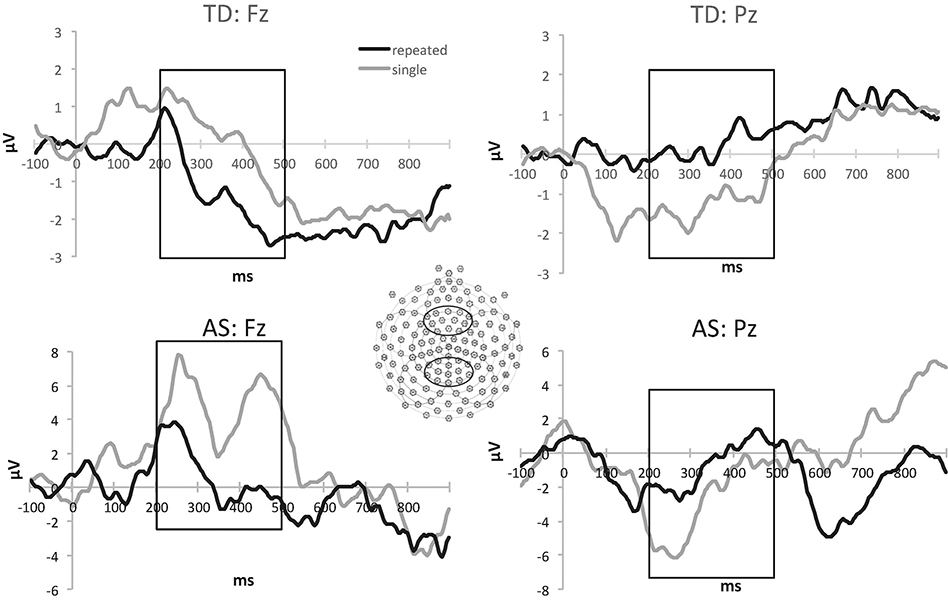
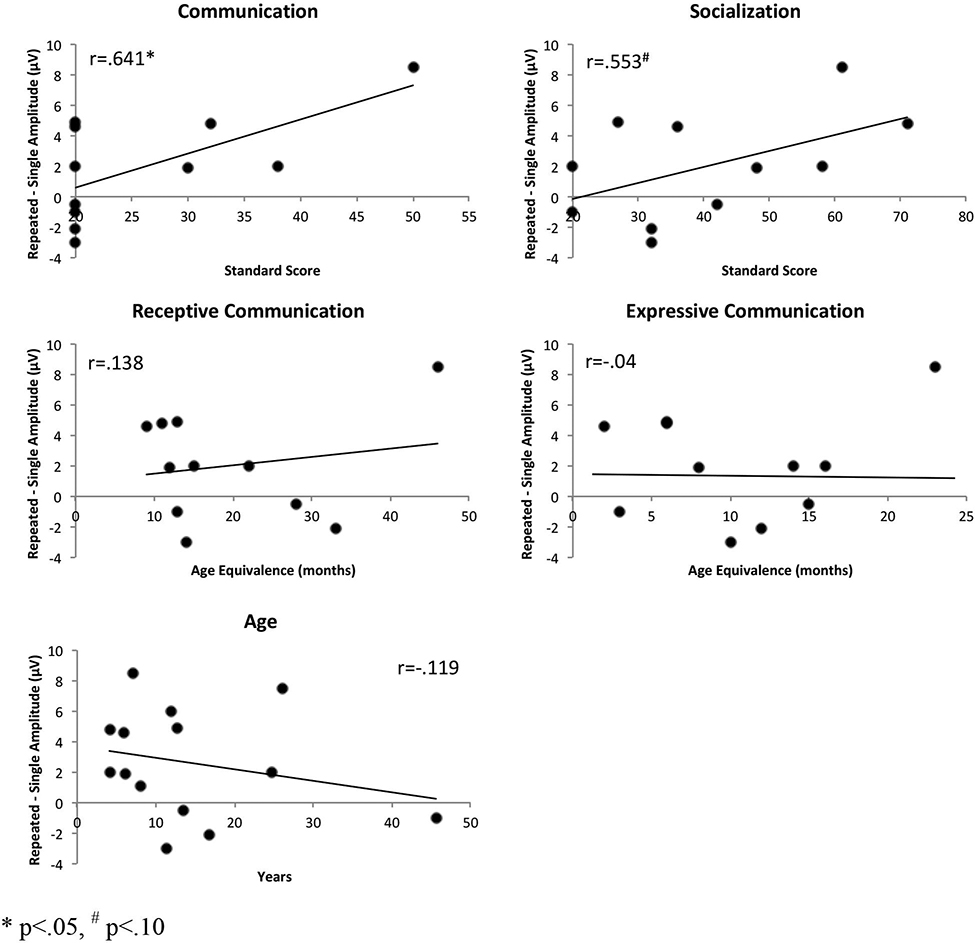
The combination of intellectual, communicative, and motor deficits limit the use of standardized behavioral assessments of cognition in individuals with Angelman syndrome (AS). The current study is the first to objectively evaluate learning and memory in AS using auditory event-related potentials (ERP) during passive exposure to spoken stimuli. Fifteen nonverbal individuals with the deletion subtype of AS (age 4-45 years) completed the auditory incidental memory paradigm. Auditory ERPs were recorded in response to a sequence of unfamiliar nonwords, in which one randomly selected stimulus was repeated multiple times and the rest were presented once. Larger parietal responses within 200-500 ms for the repeated nonword compared to novel distracters were associated with caregiver reports of more adaptive communication skills. These findings demonstrate good tolerability of ERP procedures (94% success rate) and indicate that persons with AS can acquire new information following repeated auditory exposure, even in the absence of explicit memorization instructions. Strong associations between the caregiver reports of adaptive functioning and neural indices of auditory learning and memory support the utility of brain-based measures for objectively evaluating higher-order information processing in nonverbal persons with neurodevelopmental disorders.
智力、沟通和运动方面的缺陷共同限制了对天使综合征(AS)患者进行标准化认知行为评估的应用。本研究首次在被动暴露于言语刺激期间,使用听觉事件相关电位(ERP)对AS患者的学习和记忆进行客观评估。15名患有AS缺失亚型的非言语患者(年龄4至45岁)完成了听觉偶发记忆范式。记录对一系列不熟悉的非词的听觉ERP,其中一个随机选择的刺激被多次重复,其余刺激只呈现一次。与新的干扰项相比,重复非词在200 - 500毫秒内引发的更大顶叶反应与照顾者报告的更具适应性的沟通技能相关。这些发现表明ERP程序具有良好的耐受性(成功率94%),并表明即使没有明确的记忆指令,AS患者在反复听觉暴露后也能获取新信息。照顾者报告的适应性功能与听觉学习和记忆的神经指标之间的强烈关联,支持了基于脑的测量方法在客观评估神经发育障碍非言语患者高阶信息处理方面的实用性。