• 文献检索
  • 文档翻译
  • 深度研究
  • 学术资讯
  • Suppr Zotero 插件Zotero 插件
  • 邀请有礼
  • 套餐&价格
  • 历史记录
应用&插件
Suppr Zotero 插件Zotero 插件浏览器插件Mac 客户端Windows 客户端微信小程序
定价
高级版会员购买积分包购买API积分包
服务
文献检索文档翻译深度研究API 文档MCP 服务
关于我们
关于 Suppr公司介绍联系我们用户协议隐私条款
关注我们

Suppr 超能文献

核心技术专利:CN118964589B侵权必究
粤ICP备2023148730 号-1Suppr @ 2026

文献检索

告别复杂PubMed语法,用中文像聊天一样搜索,搜遍4000万医学文献。AI智能推荐,让科研检索更轻松。

立即免费搜索

文件翻译

保留排版,准确专业,支持PDF/Word/PPT等文件格式,支持 12+语言互译。

免费翻译文档

深度研究

AI帮你快速写综述,25分钟生成高质量综述,智能提取关键信息,辅助科研写作。

立即免费体验

用于微生物活力评估的胞外多糖衍生碳点

Exopolysaccharide-Derived Carbon Dots for Microbial Viability Assessment.

作者信息

Lin Fengming, Li Chengcheng, Chen Zhan

机构信息

State Key Laboratory of Bioelectronics, School of Biological Science and Medical Engineering, Southeast University, Nanjing, China.

Department of Chemistry, University of Michigan, Ann Arbor, MI, United States.

出版信息

Front Microbiol. 2018 Nov 9;9:2697. doi: 10.3389/fmicb.2018.02697. eCollection 2018.

DOI:10.3389/fmicb.2018.02697
PMID:30473686
原文链接:https://pmc.ncbi.nlm.nih.gov/articles/PMC6237930/
Abstract

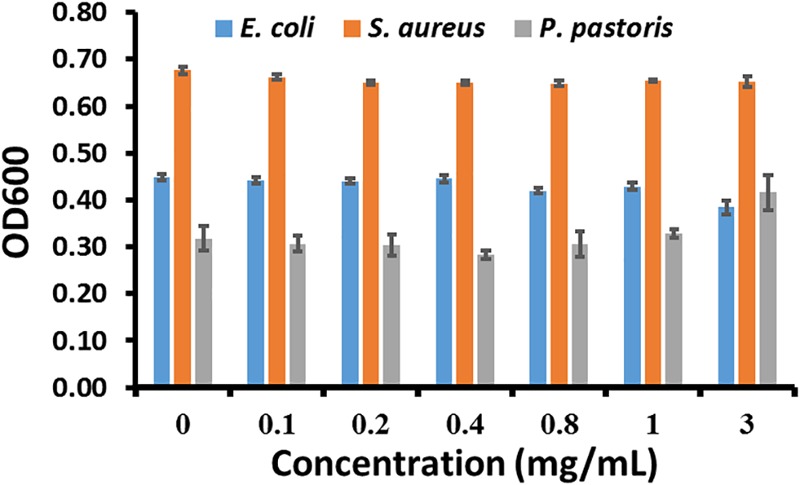
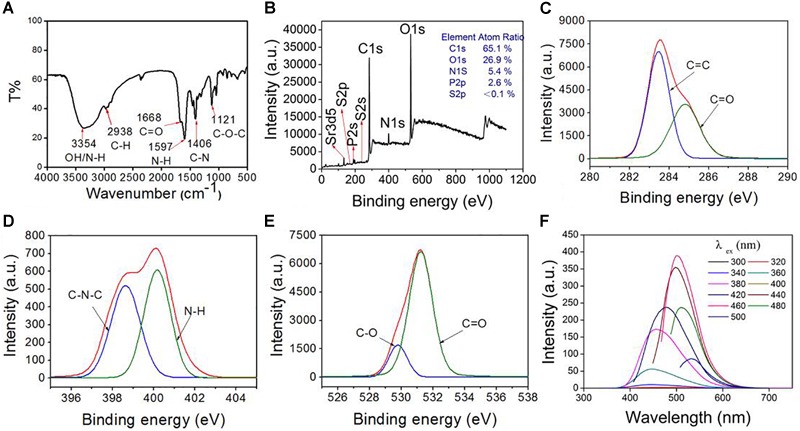
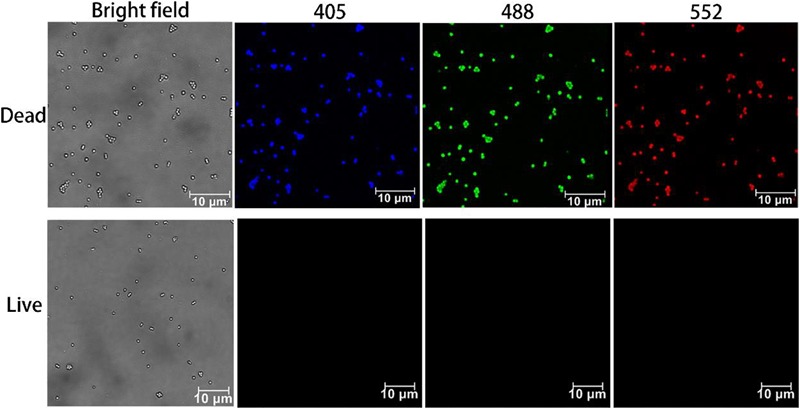
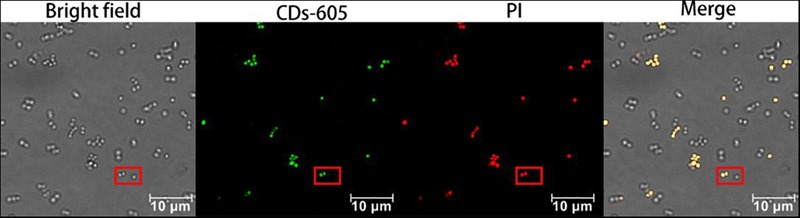
Fluorescent dye staining combined with fluorescence microscopy or flow cytometry is becoming a routine way to monitor microorganism viability that is necessary for food safety, antibiotic development, and human health. However, the conventional live/dead assay dyes suffer from high cost, inconvenient staining steps, and high cytotoxicity, which is urgently needed to overcome. Herein, cheap carbon dots, CDs-EPS605, were reported to successfully assess microbial viability in a convenient way with neglectable cytotoxicity. The fluorescent N-doped CDs-EPS605 could be facilely prepared from bacterial amino exopolysaccharide (EPS) by one-step hydrothermal carbonization, which is cost-effective and sustainable. The negatively charged CDs-EPS605 consisted of C, H, O, N, P, and S, and featured various functional groups, including -COOH, -OH, -CONH-, and -NH. CDs-EPS605 were observed to sensitively and selectively stain dead microorganisms instead of live ones to enable discrimination of live/dead microorganisms. The labeling method with CDs-EPS605 did not require protection from light, or washing, which is convenient. Additionally, CDs-EPS605 displayed better photostability and much less cytotoxicity compared to the commercial counterpart. Altogether, CDs-EPS605 represent a simple, yet powerful staining agent for microbial viability assessment, and at the same time enrich the current applications of microbial EPS.

摘要

荧光染料染色结合荧光显微镜或流式细胞术正成为监测微生物活力的常规方法,这对于食品安全、抗生素开发和人类健康至关重要。然而,传统的活/死检测染料存在成本高、染色步骤不便和细胞毒性高的问题,迫切需要克服。在此,报道了廉价的碳点CDs-EPS605能够以方便的方式成功评估微生物活力,且细胞毒性可忽略不计。荧光N掺杂碳点CDs-EPS605可通过一步水热碳化由细菌氨基胞外多糖(EPS)轻松制备,具有成本效益且可持续。带负电荷的CDs-EPS605由C、H、O、N、P和S组成,并具有多种官能团,包括-COOH、-OH、-CONH-和-NH。观察到CDs-EPS605能灵敏且选择性地对死微生物而非活微生物进行染色,从而实现对活/死微生物的区分。用CDs-EPS605进行标记的方法不需要避光或洗涤,十分方便。此外,与市售同类产品相比,CDs-EPS605表现出更好的光稳定性和更低的细胞毒性。总之,CDs-EPS605是一种用于微生物活力评估的简单而强大的染色剂,同时丰富了微生物EPS的当前应用。
https://cdn.ncbi.nlm.nih.gov/pmc/blobs/656c/6237930/4cda6deeffe6/fmicb-09-02697-g007.jpg
https://cdn.ncbi.nlm.nih.gov/pmc/blobs/656c/6237930/e0dbd0d28e15/fmicb-09-02697-g001.jpg
https://cdn.ncbi.nlm.nih.gov/pmc/blobs/656c/6237930/84cf4766c8c1/fmicb-09-02697-g002.jpg
https://cdn.ncbi.nlm.nih.gov/pmc/blobs/656c/6237930/ae03f4b443a6/fmicb-09-02697-g003.jpg
https://cdn.ncbi.nlm.nih.gov/pmc/blobs/656c/6237930/479942066744/fmicb-09-02697-g004.jpg
https://cdn.ncbi.nlm.nih.gov/pmc/blobs/656c/6237930/91f472abb2cf/fmicb-09-02697-g005.jpg
https://cdn.ncbi.nlm.nih.gov/pmc/blobs/656c/6237930/301389b2b915/fmicb-09-02697-g006.jpg
https://cdn.ncbi.nlm.nih.gov/pmc/blobs/656c/6237930/4cda6deeffe6/fmicb-09-02697-g007.jpg
https://cdn.ncbi.nlm.nih.gov/pmc/blobs/656c/6237930/e0dbd0d28e15/fmicb-09-02697-g001.jpg
https://cdn.ncbi.nlm.nih.gov/pmc/blobs/656c/6237930/84cf4766c8c1/fmicb-09-02697-g002.jpg
https://cdn.ncbi.nlm.nih.gov/pmc/blobs/656c/6237930/ae03f4b443a6/fmicb-09-02697-g003.jpg
https://cdn.ncbi.nlm.nih.gov/pmc/blobs/656c/6237930/479942066744/fmicb-09-02697-g004.jpg
https://cdn.ncbi.nlm.nih.gov/pmc/blobs/656c/6237930/91f472abb2cf/fmicb-09-02697-g005.jpg
https://cdn.ncbi.nlm.nih.gov/pmc/blobs/656c/6237930/301389b2b915/fmicb-09-02697-g006.jpg
https://cdn.ncbi.nlm.nih.gov/pmc/blobs/656c/6237930/4cda6deeffe6/fmicb-09-02697-g007.jpg

相似文献

1
Exopolysaccharide-Derived Carbon Dots for Microbial Viability Assessment.用于微生物活力评估的胞外多糖衍生碳点
Front Microbiol. 2018 Nov 9;9:2697. doi: 10.3389/fmicb.2018.02697. eCollection 2018.
2
Imaging biofilm-encased microorganisms using carbon dots derived from L. plantarum.利用来源于 L. plantarum 的碳点对包被生物膜的微生物进行成像。
Nanoscale. 2017 Jul 6;9(26):9056-9064. doi: 10.1039/c7nr01975k.
3
Bacteria-derived fluorescent carbon dots for microbial live/dead differentiation.细菌衍生的荧光碳点用于微生物死活区分。
Nanoscale. 2017 Feb 9;9(6):2150-2161. doi: 10.1039/c6nr06558a.
4
Rose Bengal-Derived Ultrabright Sulfur-Doped Carbon Dots for Fast Discrimination between Live and Dead Cells.玫瑰红衍生的高亮硫掺杂碳点用于快速区分活细胞和死细胞。
Anal Chem. 2022 Mar 15;94(10):4243-4251. doi: 10.1021/acs.analchem.1c04658. Epub 2022 Mar 2.
5
High photoluminescence nitrogen, phosphorus co-doped carbon nanodots for assessment of microbial viability.高磷氮共掺杂碳点用于评估微生物活力。
Colloids Surf B Biointerfaces. 2020 Jul;191:110987. doi: 10.1016/j.colsurfb.2020.110987. Epub 2020 Mar 27.
6
Fluorescent carbon dots for labeling of bacteria: mechanism and prospects-a review.用于细菌标记的荧光碳点:机制与展望——综述
Anal Bioanal Chem. 2024 Jul;416(17):3907-3921. doi: 10.1007/s00216-024-05300-1. Epub 2024 Apr 24.
7
Beer yeast-derived fluorescent carbon dots for photoinduced bactericidal functions and multicolor imaging of bacteria.啤酒酵母衍生的荧光碳点用于光诱导杀菌功能和细菌的多色成像。
Appl Microbiol Biotechnol. 2019 Jun;103(11):4585-4593. doi: 10.1007/s00253-019-09782-3. Epub 2019 Apr 8.
8
Fluorescent carbon dots with highly negative charges as a sensitive probe for real-time monitoring of bacterial viability.带高度负电荷的荧光碳点作为实时监测细菌活力的灵敏探针。
J Mater Chem B. 2017 Aug 14;5(30):6008-6015. doi: 10.1039/c7tb01092c. Epub 2017 Jul 18.
9
One-pot synthesis of fluorescent nitrogen-doped carbon dots with good biocompatibility for cell labeling.一锅法合成具有良好生物相容性用于细胞标记的荧光氮掺杂碳点。
Luminescence. 2017 Dec;32(8):1488-1493. doi: 10.1002/bio.3349. Epub 2017 Jun 7.
10
Efficient Imaging of Based on B- and N-Doped Carbon Dots.基于 B、N 共掺杂碳点的高效成像。
J Agric Food Chem. 2020 Sep 16;68(37):10223-10231. doi: 10.1021/acs.jafc.0c04251. Epub 2020 Sep 2.

引用本文的文献

1
Comparative genomics of species reveals diversity in novel biosynthetic gene clusters and ecological adaptation to different eukaryotic hosts and host niches.物种的比较基因组学揭示了新型生物合成基因簇的多样性,以及对不同真核宿主和宿主小生境的生态适应性。
Microb Genom. 2022 Sep;8(9). doi: 10.1099/mgen.0.000854.
2
One-step synthesis of M13 phage-based nanoparticles and their fluorescence properties.基于M13噬菌体的纳米颗粒的一步合成及其荧光特性。
RSC Adv. 2021 Jan 5;11(3):1367-1375. doi: 10.1039/d0ra02835e. eCollection 2021 Jan 4.
3
Potential of Flow Cytometric Approaches for Rapid Microbial Detection and Characterization in the Food Industry-A Review.

本文引用的文献

1
Transfection efficiency and internalization of the gene carrier prepared from a triple-helical β-glucan and polydeoxyadenylic acid in macrophage RAW264.7 cells.由三螺旋β-葡聚糖和聚脱氧腺苷酸制备的基因载体在巨噬细胞RAW264.7中的转染效率及内化情况。
J Mater Chem B. 2015 May 14;3(18):3789-3798. doi: 10.1039/c4tb02127d. Epub 2015 Apr 9.
2
A novel gene carrier prepared from triple helical β-glucan and polydeoxyadenylic acid.一种由三螺旋β-葡聚糖和聚脱氧腺苷酸制备的新型基因载体。
J Mater Chem B. 2014 Feb 28;2(8):933-944. doi: 10.1039/c3tb21195a. Epub 2014 Jan 7.
3
Antimicrobial carbon nanospheres.
流式细胞术在食品工业中快速微生物检测与表征的潜力——综述
Foods. 2021 Dec 15;10(12):3112. doi: 10.3390/foods10123112.
4
Recent Advances in Carbon Nanodots: A Promising Nanomaterial for Biomedical Applications.碳点的最新进展:一种用于生物医学应用的有前途的纳米材料。
Int J Mol Sci. 2021 Jun 24;22(13):6786. doi: 10.3390/ijms22136786.
5
How to Evaluate Non-Growing Cells-Current Strategies for Determining Antimicrobial Resistance of VBNC Bacteria.如何评估非生长细胞——检测活的非可培养细菌抗菌耐药性的当前策略
Antibiotics (Basel). 2021 Jan 26;10(2):115. doi: 10.3390/antibiotics10020115.
6
Carbon Nanoparticles Inhibit Α-Glucosidase Activity and Induce a Hypoglycemic Effect in Diabetic Mice.碳纳米粒子抑制α-葡萄糖苷酶活性并诱导糖尿病小鼠产生降血糖作用。
Molecules. 2019 Sep 6;24(18):3257. doi: 10.3390/molecules24183257.
抗菌碳纳米球。
Nanoscale. 2017 Oct 26;9(41):15786-15795. doi: 10.1039/c7nr04679k.
4
Porphyra polysaccharide-derived carbon dots for non-viral co-delivery of different gene combinations and neuronal differentiation of ectodermal mesenchymal stem cells.紫菜多糖衍生碳点用于非病毒共递送不同基因组合和外胚层间充质干细胞的神经分化。
Nanoscale. 2017 Aug 3;9(30):10820-10831. doi: 10.1039/c7nr03327c.
5
Imaging biofilm-encased microorganisms using carbon dots derived from L. plantarum.利用来源于 L. plantarum 的碳点对包被生物膜的微生物进行成像。
Nanoscale. 2017 Jul 6;9(26):9056-9064. doi: 10.1039/c7nr01975k.
6
Self-Assembled Exopolysaccharide Nanoparticles for Bioremediation and Green Synthesis of Noble Metal Nanoparticles.自组装胞外多糖纳米颗粒用于生物修复和绿色合成贵金属纳米颗粒。
ACS Appl Mater Interfaces. 2017 Jul 12;9(27):22808-22818. doi: 10.1021/acsami.7b02908. Epub 2017 Jun 26.
7
Microbial exopolysaccharide-mediated synthesis and stabilization of metal nanoparticles.微生物胞外多糖介导的金属纳米粒子的合成与稳定化。
Crit Rev Microbiol. 2017 Nov;43(6):731-752. doi: 10.1080/1040841X.2017.1306689. Epub 2017 Apr 25.
8
Bacteria-derived fluorescent carbon dots for microbial live/dead differentiation.细菌衍生的荧光碳点用于微生物死活区分。
Nanoscale. 2017 Feb 9;9(6):2150-2161. doi: 10.1039/c6nr06558a.
9
Carbon Dot-Based Platform for Simultaneous Bacterial Distinguishment and Antibacterial Applications.基于碳点的平台用于细菌的同时鉴别和抗菌应用。
ACS Appl Mater Interfaces. 2016 Nov 30;8(47):32170-32181. doi: 10.1021/acsami.6b10398. Epub 2016 Nov 15.
10
A Novel Technique of Synthesis of Highly Fluorescent Carbon Nanoparticles from Broth Constituent and In-vivo Bioimaging of C. elegans.一种从肉汤成分合成高荧光碳纳米颗粒的新技术及秀丽隐杆线虫的体内生物成像
J Fluoresc. 2016 Sep;26(5):1541-8. doi: 10.1007/s10895-016-1854-8. Epub 2016 Jul 5.