• 文献检索
  • 文档翻译
  • 深度研究
  • 学术资讯
  • Suppr Zotero 插件Zotero 插件
  • 邀请有礼
  • 套餐&价格
  • 历史记录
应用&插件
Suppr Zotero 插件Zotero 插件浏览器插件Mac 客户端Windows 客户端微信小程序
定价
高级版会员购买积分包购买API积分包
服务
文献检索文档翻译深度研究API 文档MCP 服务
关于我们
关于 Suppr公司介绍联系我们用户协议隐私条款
关注我们

Suppr 超能文献

核心技术专利:CN118964589B侵权必究
粤ICP备2023148730 号-1Suppr @ 2026

文献检索

告别复杂PubMed语法,用中文像聊天一样搜索,搜遍4000万医学文献。AI智能推荐,让科研检索更轻松。

立即免费搜索

文件翻译

保留排版,准确专业,支持PDF/Word/PPT等文件格式,支持 12+语言互译。

免费翻译文档

深度研究

AI帮你快速写综述,25分钟生成高质量综述,智能提取关键信息,辅助科研写作。

立即免费体验

翻译起始因子 eIF5 取代 40S 核糖体亚基上的 eIF1 以促进起始密码子的识别。

Translational initiation factor eIF5 replaces eIF1 on the 40S ribosomal subunit to promote start-codon recognition.

机构信息

MRC Laboratory of Molecular Biology, Cambridge, United Kingdom.

Instituto de Biomedicina de Valencia (IBV-CSIC), Valencia, Spain.

出版信息

Elife. 2018 Nov 30;7:e39273. doi: 10.7554/eLife.39273.

DOI:10.7554/eLife.39273
PMID:30475211
原文链接:https://pmc.ncbi.nlm.nih.gov/articles/PMC6298780/
Abstract

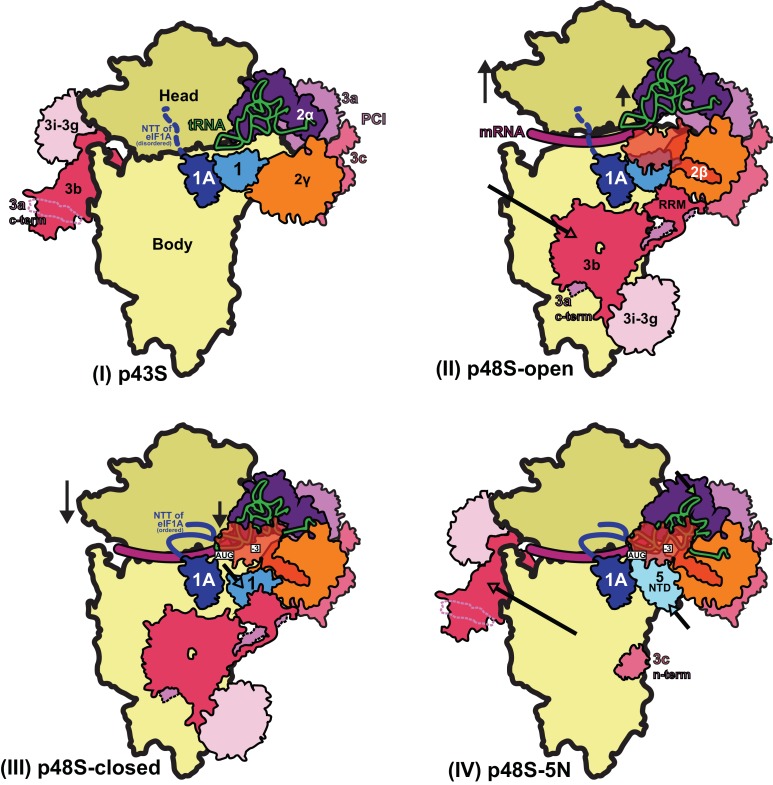
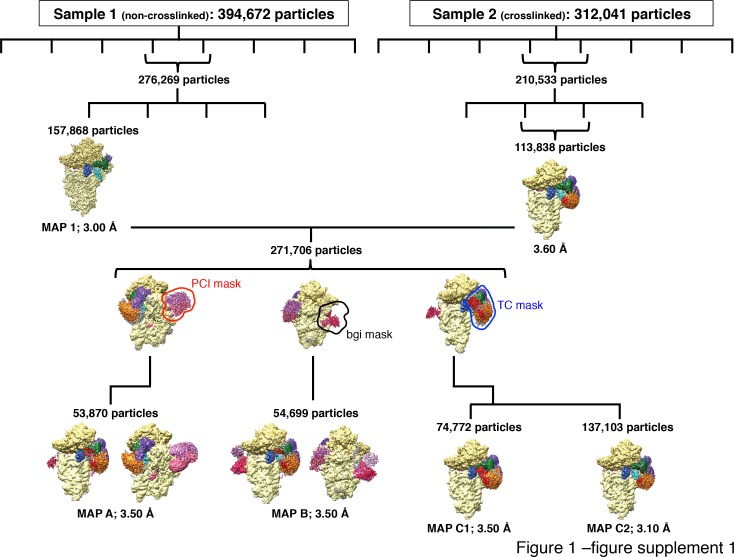
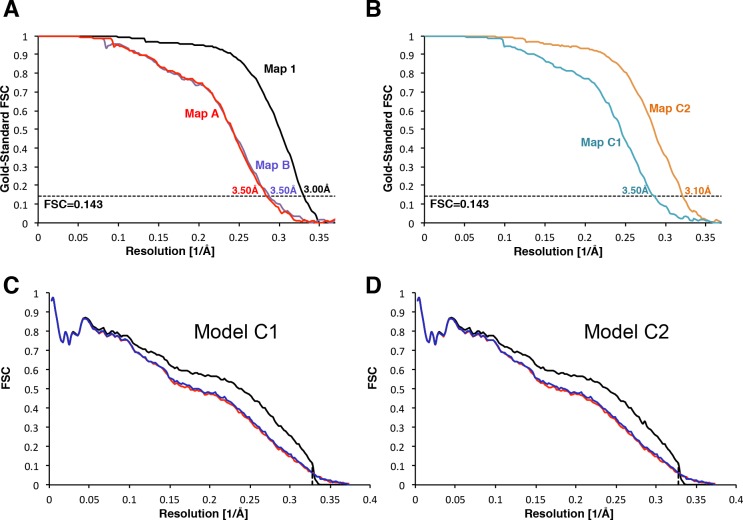
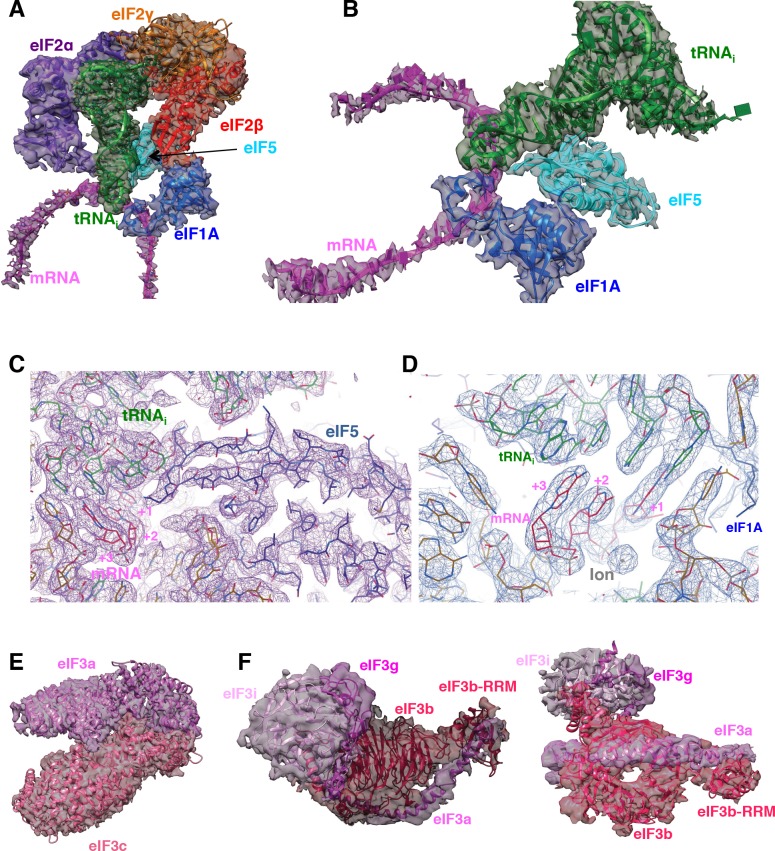
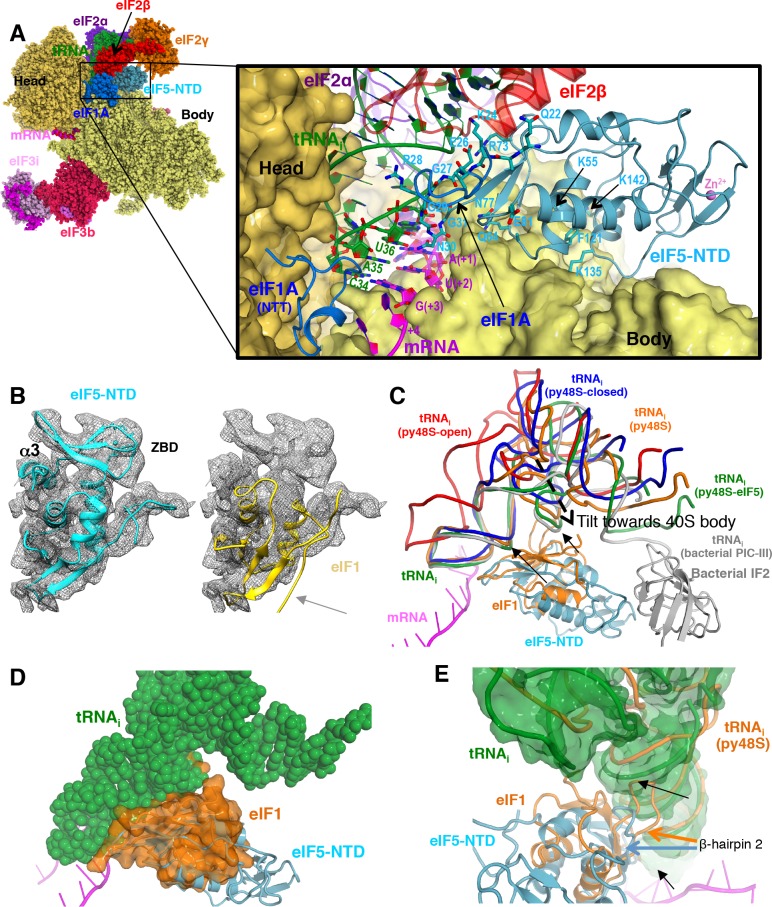
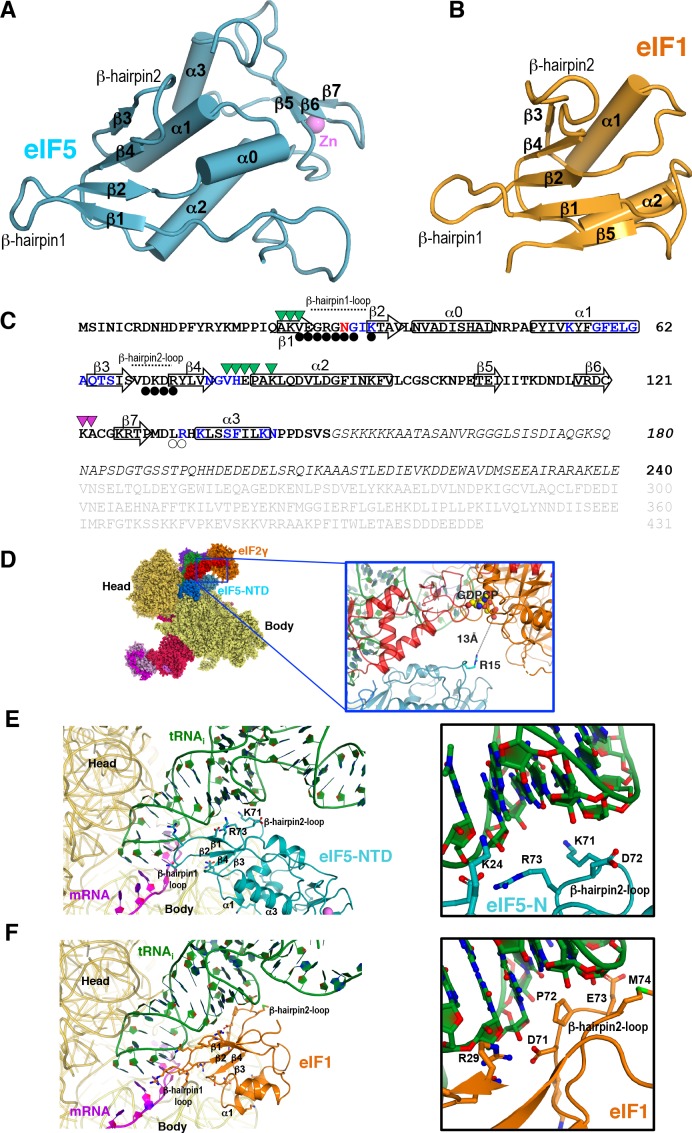
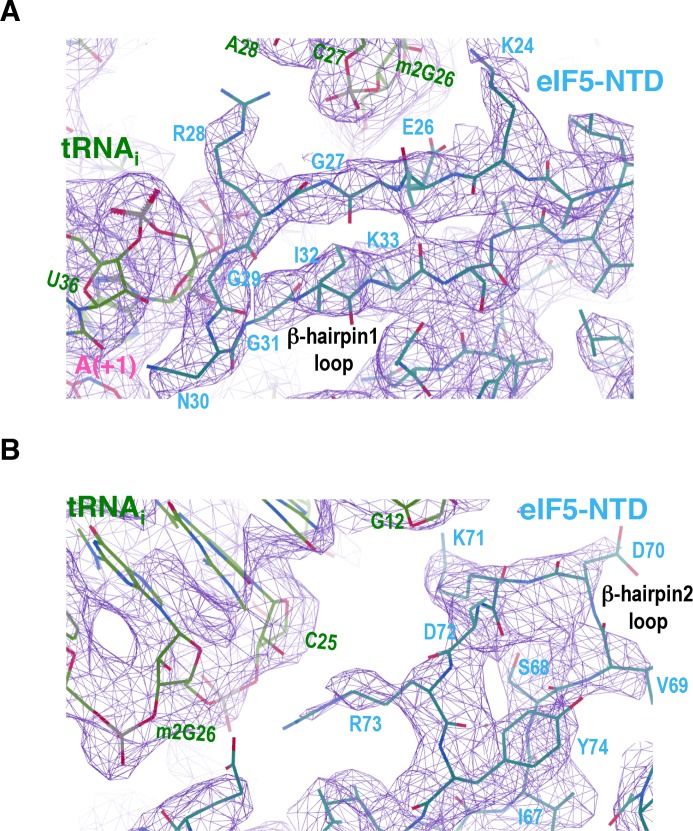
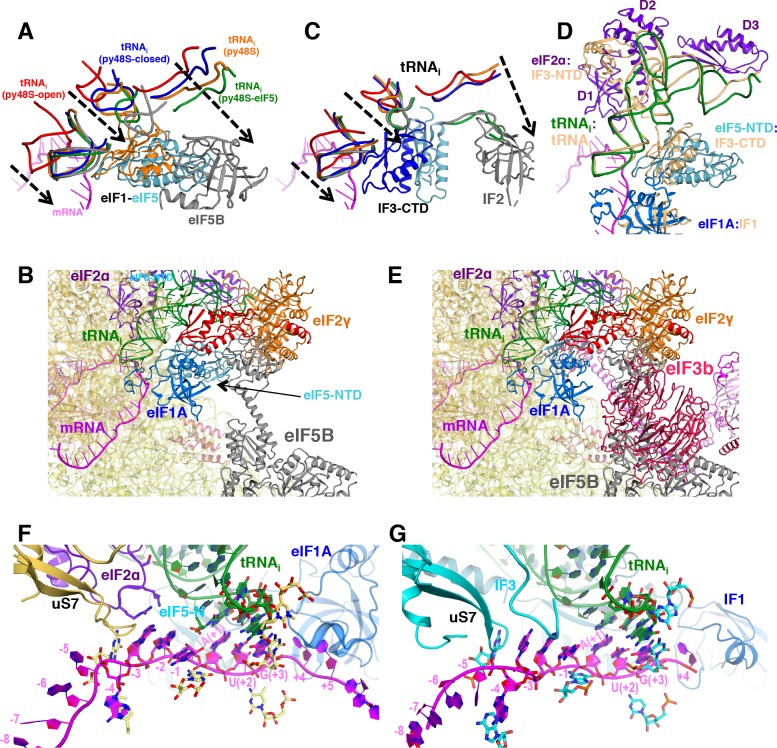
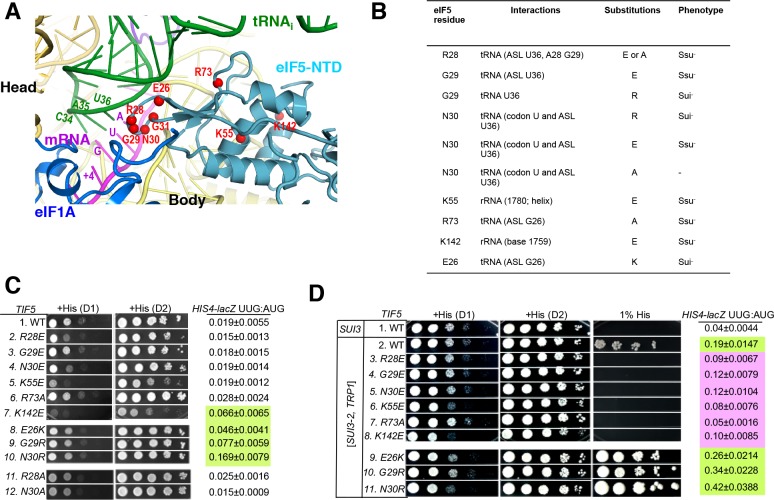
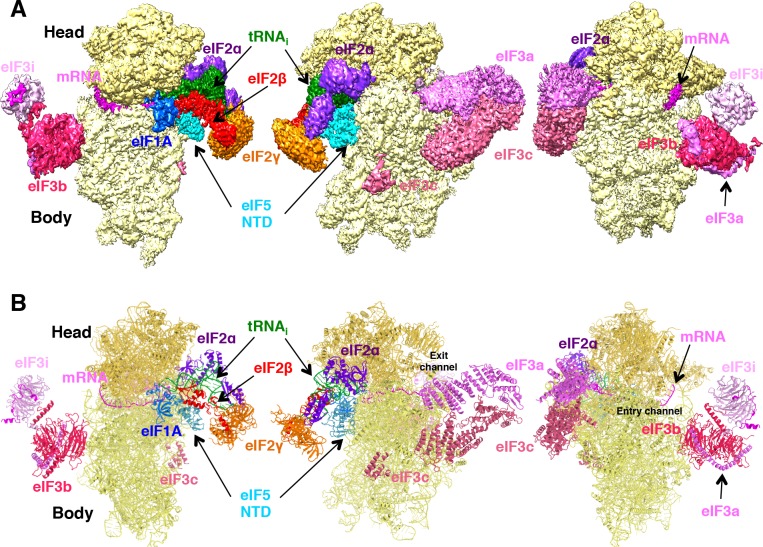
In eukaryotic translation initiation, AUG recognition of the mRNA requires accommodation of Met-tRNA in a 'P' state, which is antagonized by the factor eIF1. eIF5 is a GTPase activating protein (GAP) of eIF2 that additionally promotes stringent AUG selection, but the molecular basis of its dual function was unknown. We present a cryo-electron microscopy (cryo-EM) reconstruction of a yeast 48S pre-initiation complex (PIC), at an overall resolution of 3.0 Å, featuring the N-terminal domain (NTD) of eIF5 bound to the 40S subunit at the location vacated by eIF1. eIF5 interacts with and allows a more accommodated orientation of Met-tRNA. Substitutions of eIF5 residues involved in the eIF5-NTD/tRNA interaction influenced initiation at near-cognate UUG codons and the closed/open PIC conformation in vitro, consistent with direct stabilization of the codon:anticodon duplex by the wild-type eIF5-NTD. The present structure reveals the basis for a key role of eIF5 in start-codon selection.

摘要

在真核翻译起始中,AUG 对 mRNA 的识别需要使 Met-tRNA 适应“P”状态,而这一状态会受到因子 eIF1 的拮抗。eIF5 是 eIF2 的 GTP 酶激活蛋白 (GAP),它还促进严格的 AUG 选择,但它的双重功能的分子基础尚不清楚。我们展示了一个酵母 48S 起始前复合物 (PIC) 的冷冻电镜 (cryo-EM) 重建,整体分辨率为 3.0 Å,其中 eIF5 的 N 端结构域 (NTD) 结合在 40S 亚基上,占据了 eIF1 离开的位置。eIF5 与 Met-tRNA 相互作用,并允许其更适应的取向。与 eIF5-NTD/tRNA 相互作用相关的 eIF5 残基的取代会影响近同功 UUG 密码子的起始和体外封闭/开放 PIC 构象,这与野生型 eIF5-NTD 直接稳定密码子:反密码子二聚体一致。目前的结构揭示了 eIF5 在起始密码子选择中关键作用的基础。
https://cdn.ncbi.nlm.nih.gov/pmc/blobs/4d4f/6298780/033c260e4e03/elife-39273-fig10.jpg
https://cdn.ncbi.nlm.nih.gov/pmc/blobs/4d4f/6298780/1cdbdc4f6414/elife-39273-fig1.jpg
https://cdn.ncbi.nlm.nih.gov/pmc/blobs/4d4f/6298780/d30f24e4a667/elife-39273-fig1-figsupp1.jpg
https://cdn.ncbi.nlm.nih.gov/pmc/blobs/4d4f/6298780/24b5bf7c865b/elife-39273-fig1-figsupp2.jpg
https://cdn.ncbi.nlm.nih.gov/pmc/blobs/4d4f/6298780/d960ff9f7de6/elife-39273-fig1-figsupp3.jpg
https://cdn.ncbi.nlm.nih.gov/pmc/blobs/4d4f/6298780/9c7166f8d314/elife-39273-fig1-figsupp4.jpg
https://cdn.ncbi.nlm.nih.gov/pmc/blobs/4d4f/6298780/33665ba6364e/elife-39273-fig1-figsupp5.jpg
https://cdn.ncbi.nlm.nih.gov/pmc/blobs/4d4f/6298780/07002e4bf1fe/elife-39273-fig1-figsupp6.jpg
https://cdn.ncbi.nlm.nih.gov/pmc/blobs/4d4f/6298780/defc4ba6256b/elife-39273-fig2.jpg
https://cdn.ncbi.nlm.nih.gov/pmc/blobs/4d4f/6298780/4c786c40a28f/elife-39273-fig2-figsupp1.jpg
https://cdn.ncbi.nlm.nih.gov/pmc/blobs/4d4f/6298780/56460c2dbe94/elife-39273-fig2-figsupp2.jpg
https://cdn.ncbi.nlm.nih.gov/pmc/blobs/4d4f/6298780/33cafa37761d/elife-39273-fig2-figsupp3.jpg
https://cdn.ncbi.nlm.nih.gov/pmc/blobs/4d4f/6298780/7b57c81e82e3/elife-39273-fig3.jpg
https://cdn.ncbi.nlm.nih.gov/pmc/blobs/4d4f/6298780/86f5b45c7d93/elife-39273-fig3-figsupp1.jpg
https://cdn.ncbi.nlm.nih.gov/pmc/blobs/4d4f/6298780/ecc0dc66e301/elife-39273-fig3-figsupp2.jpg
https://cdn.ncbi.nlm.nih.gov/pmc/blobs/4d4f/6298780/af7ad293288c/elife-39273-fig4.jpg
https://cdn.ncbi.nlm.nih.gov/pmc/blobs/4d4f/6298780/d91098dd8663/elife-39273-fig5.jpg
https://cdn.ncbi.nlm.nih.gov/pmc/blobs/4d4f/6298780/57a93044fc62/elife-39273-fig6.jpg
https://cdn.ncbi.nlm.nih.gov/pmc/blobs/4d4f/6298780/4b7e489f4b2e/elife-39273-fig7.jpg
https://cdn.ncbi.nlm.nih.gov/pmc/blobs/4d4f/6298780/01bfd5d1e58a/elife-39273-fig8.jpg
https://cdn.ncbi.nlm.nih.gov/pmc/blobs/4d4f/6298780/e31ce5d46807/elife-39273-fig9.jpg
https://cdn.ncbi.nlm.nih.gov/pmc/blobs/4d4f/6298780/033c260e4e03/elife-39273-fig10.jpg
https://cdn.ncbi.nlm.nih.gov/pmc/blobs/4d4f/6298780/1cdbdc4f6414/elife-39273-fig1.jpg
https://cdn.ncbi.nlm.nih.gov/pmc/blobs/4d4f/6298780/d30f24e4a667/elife-39273-fig1-figsupp1.jpg
https://cdn.ncbi.nlm.nih.gov/pmc/blobs/4d4f/6298780/24b5bf7c865b/elife-39273-fig1-figsupp2.jpg
https://cdn.ncbi.nlm.nih.gov/pmc/blobs/4d4f/6298780/d960ff9f7de6/elife-39273-fig1-figsupp3.jpg
https://cdn.ncbi.nlm.nih.gov/pmc/blobs/4d4f/6298780/9c7166f8d314/elife-39273-fig1-figsupp4.jpg
https://cdn.ncbi.nlm.nih.gov/pmc/blobs/4d4f/6298780/33665ba6364e/elife-39273-fig1-figsupp5.jpg
https://cdn.ncbi.nlm.nih.gov/pmc/blobs/4d4f/6298780/07002e4bf1fe/elife-39273-fig1-figsupp6.jpg
https://cdn.ncbi.nlm.nih.gov/pmc/blobs/4d4f/6298780/defc4ba6256b/elife-39273-fig2.jpg
https://cdn.ncbi.nlm.nih.gov/pmc/blobs/4d4f/6298780/4c786c40a28f/elife-39273-fig2-figsupp1.jpg
https://cdn.ncbi.nlm.nih.gov/pmc/blobs/4d4f/6298780/56460c2dbe94/elife-39273-fig2-figsupp2.jpg
https://cdn.ncbi.nlm.nih.gov/pmc/blobs/4d4f/6298780/33cafa37761d/elife-39273-fig2-figsupp3.jpg
https://cdn.ncbi.nlm.nih.gov/pmc/blobs/4d4f/6298780/7b57c81e82e3/elife-39273-fig3.jpg
https://cdn.ncbi.nlm.nih.gov/pmc/blobs/4d4f/6298780/86f5b45c7d93/elife-39273-fig3-figsupp1.jpg
https://cdn.ncbi.nlm.nih.gov/pmc/blobs/4d4f/6298780/ecc0dc66e301/elife-39273-fig3-figsupp2.jpg
https://cdn.ncbi.nlm.nih.gov/pmc/blobs/4d4f/6298780/af7ad293288c/elife-39273-fig4.jpg
https://cdn.ncbi.nlm.nih.gov/pmc/blobs/4d4f/6298780/d91098dd8663/elife-39273-fig5.jpg
https://cdn.ncbi.nlm.nih.gov/pmc/blobs/4d4f/6298780/57a93044fc62/elife-39273-fig6.jpg
https://cdn.ncbi.nlm.nih.gov/pmc/blobs/4d4f/6298780/4b7e489f4b2e/elife-39273-fig7.jpg
https://cdn.ncbi.nlm.nih.gov/pmc/blobs/4d4f/6298780/01bfd5d1e58a/elife-39273-fig8.jpg
https://cdn.ncbi.nlm.nih.gov/pmc/blobs/4d4f/6298780/e31ce5d46807/elife-39273-fig9.jpg
https://cdn.ncbi.nlm.nih.gov/pmc/blobs/4d4f/6298780/033c260e4e03/elife-39273-fig10.jpg

相似文献

1
Translational initiation factor eIF5 replaces eIF1 on the 40S ribosomal subunit to promote start-codon recognition.翻译起始因子 eIF5 取代 40S 核糖体亚基上的 eIF1 以促进起始密码子的识别。
Elife. 2018 Nov 30;7:e39273. doi: 10.7554/eLife.39273.
2
eIF1 Loop 2 interactions with Met-tRNA control the accuracy of start codon selection by the scanning preinitiation complex.eIF1 环 2 与 Met-tRNA 的相互作用控制了扫描起始前复合物选择起始密码子的准确性。
Proc Natl Acad Sci U S A. 2018 May 1;115(18):E4159-E4168. doi: 10.1073/pnas.1800938115. Epub 2018 Apr 16.
3
Enhanced eIF1 binding to the 40S ribosome impedes conformational rearrangements of the preinitiation complex and elevates initiation accuracy.增强的 eIF1 与 40S 核糖体的结合抑制了起始前复合物构象的重排,并提高了起始的准确性。
RNA. 2014 Feb;20(2):150-67. doi: 10.1261/rna.042069.113. Epub 2013 Dec 13.
4
Interactions of eukaryotic translation initiation factor 3 (eIF3) subunit NIP1/c with eIF1 and eIF5 promote preinitiation complex assembly and regulate start codon selection.真核生物翻译起始因子3(eIF3)亚基NIP1/c与eIF1和eIF5的相互作用促进起始前复合物组装并调节起始密码子选择。
Mol Cell Biol. 2004 Nov;24(21):9437-55. doi: 10.1128/MCB.24.21.9437-9455.2004.
5
β-Hairpin loop of eukaryotic initiation factor 1 (eIF1) mediates 40 S ribosome binding to regulate initiator tRNA(Met) recruitment and accuracy of AUG selection in vivo.真核起始因子 1(eIF1)的β-发夹环介导 40S 核糖体结合,以调节起始 tRNA(Met)的募集,并在体内调节 AUG 选择的准确性。
J Biol Chem. 2013 Sep 20;288(38):27546-27562. doi: 10.1074/jbc.M113.498642. Epub 2013 Jul 26.
6
A multifactor complex of eukaryotic initiation factors, eIF1, eIF2, eIF3, eIF5, and initiator tRNA(Met) is an important translation initiation intermediate in vivo.真核生物起始因子的多因子复合物,即eIF1、eIF2、eIF3、eIF5和起始tRNA(Met),是体内重要的翻译起始中间体。
Genes Dev. 2000 Oct 1;14(19):2534-46. doi: 10.1101/gad.831800.
7
A network of eIF2β interactions with eIF1 and Met-tRNAi promotes accurate start codon selection by the translation preinitiation complex.一个 eIF2β 与 eIF1 和 Met-tRNAi 的相互作用网络促进了翻译起始复合物对正确起始密码子的选择。
Nucleic Acids Res. 2019 Mar 18;47(5):2574-2593. doi: 10.1093/nar/gky1274.
8
Coordinated movements of eukaryotic translation initiation factors eIF1, eIF1A, and eIF5 trigger phosphate release from eIF2 in response to start codon recognition by the ribosomal preinitiation complex.真核翻译起始因子 eIF1、eIF1A 和 eIF5 的协调运动响应核糖体起始前复合物识别起始密码子,触发 eIF2 上的磷酸基团释放。
J Biol Chem. 2013 Feb 22;288(8):5316-29. doi: 10.1074/jbc.M112.440693. Epub 2013 Jan 4.
9
Multiple roles for the C-terminal domain of eIF5 in translation initiation complex assembly and GTPase activation.真核生物翻译起始因子5(eIF5)的C末端结构域在翻译起始复合物组装和GTP酶激活中的多种作用。
EMBO J. 2001 May 1;20(9):2326-37. doi: 10.1093/emboj/20.9.2326.
10
Structural basis of AUC codon discrimination during translation initiation in yeast.酵母翻译起始过程中 AUC 密码子识别的结构基础。
Nucleic Acids Res. 2024 Oct 14;52(18):11317-11335. doi: 10.1093/nar/gkae737.

引用本文的文献

1
5' untranslated regions tune translation.5'非翻译区调控翻译。
bioRxiv. 2025 Jul 14:2025.07.14.664749. doi: 10.1101/2025.07.14.664749.
2
eIF1 and eIF5 dynamically control translation start site fidelity.真核起始因子1(eIF1)和真核起始因子5(eIF5)动态控制翻译起始位点的保真度。
Nat Struct Mol Biol. 2025 Jul 28. doi: 10.1038/s41594-025-01629-y.
3
Characterizing the Human Fetal Perimeiotic 45,X Ovary at Single-Cell Resolution.以单细胞分辨率表征人类胎儿减数分裂前期45,X卵巢。

本文引用的文献

1
eIF1 Loop 2 interactions with Met-tRNA control the accuracy of start codon selection by the scanning preinitiation complex.eIF1 环 2 与 Met-tRNA 的相互作用控制了扫描起始前复合物选择起始密码子的准确性。
Proc Natl Acad Sci U S A. 2018 May 1;115(18):E4159-E4168. doi: 10.1073/pnas.1800938115. Epub 2018 Apr 16.
2
eIF1A residues implicated in cancer stabilize translation preinitiation complexes and favor suboptimal initiation sites in yeast.涉及癌症的 eIF1A 残基稳定翻译起始复合物,并有利于酵母中次优起始位点的翻译。
Elife. 2017 Dec 5;6:e31250. doi: 10.7554/eLife.31250.
3
Embraced by eIF3: structural and functional insights into the roles of eIF3 across the translation cycle.
J Endocr Soc. 2025 May 29;9(7):bvaf094. doi: 10.1210/jendso/bvaf094. eCollection 2025 Jul.
4
Exploring the interaction dynamics of eukaryotic translation initiation factor 2.探索真核生物翻译起始因子2的相互作用动力学。
Biochem Soc Trans. 2025 Jun 30;53(3):593-602. doi: 10.1042/BST20253022.
5
A structural element within the 5'UTR of β-catenin mRNA modulates its translation under hypoxia.β-连环蛋白信使核糖核酸5'非翻译区内的一种结构元件在缺氧条件下调节其翻译。
Nucleic Acids Res. 2025 Apr 22;53(8). doi: 10.1093/nar/gkaf321.
6
Distinct uS11/Rps14 interactions with the translation preinitiation complex differentially alter the accuracy of start codon recognition.不同的uS11/Rps14与翻译起始前复合物的相互作用以不同方式改变起始密码子识别的准确性。
Nucleic Acids Res. 2025 Mar 20;53(6). doi: 10.1093/nar/gkaf163.
7
Principles, challenges, and advances in ribosome profiling: from bulk to low-input and single-cell analysis.核糖体分析的原理、挑战与进展:从大量样本到低投入样本及单细胞分析
Adv Biotechnol (Singap). 2023 Dec 1;1(4):6. doi: 10.1007/s44307-023-00006-4.
8
Structures of Saccharolobus solfataricus initiation complexes with leaderless mRNAs highlight archaeal features and eukaryotic proximity.嗜热栖热菌无先导mRNA起始复合物的结构突出了古菌特征和与真核生物的相似性。
Nat Commun. 2025 Jan 2;16(1):348. doi: 10.1038/s41467-024-55718-5.
9
Nuclear release of eIF1 restricts start-codon selection during mitosis.核内释放 eIF1 限制有丝分裂中起始密码子的选择。
Nature. 2024 Nov;635(8038):490-498. doi: 10.1038/s41586-024-08088-3. Epub 2024 Oct 23.
10
Structural basis for translational control by the human 48S initiation complex.人类48S起始复合物进行翻译控制的结构基础。
Nat Struct Mol Biol. 2025 Jan;32(1):62-72. doi: 10.1038/s41594-024-01378-4. Epub 2024 Sep 17.
被真核生物翻译起始因子3(eIF3)所包含:对eIF3在整个翻译循环中作用的结构和功能见解
Nucleic Acids Res. 2017 Nov 2;45(19):10948-10968. doi: 10.1093/nar/gkx805.
4
Structural Insights into the Mechanism of Scanning and Start Codon Recognition in Eukaryotic Translation Initiation.结构洞察真核翻译起始中扫描和起始密码子识别的机制。
Trends Biochem Sci. 2017 Aug;42(8):589-611. doi: 10.1016/j.tibs.2017.03.004. Epub 2017 Apr 22.
5
Rps3/uS3 promotes mRNA binding at the 40S ribosome entry channel and stabilizes preinitiation complexes at start codons.核糖体蛋白S3/uS3促进mRNA在40S核糖体进入通道处的结合,并稳定起始密码子处的起始前复合物。
Proc Natl Acad Sci U S A. 2017 Mar 14;114(11):E2126-E2135. doi: 10.1073/pnas.1620569114. Epub 2017 Feb 21.
6
Eukaryotic aspects of translation initiation brought into focus.翻译起始的真核生物方面受到关注。
Philos Trans R Soc Lond B Biol Sci. 2017 Mar 19;372(1716). doi: 10.1098/rstb.2016.0186.
7
Eukaryotic translation initiation factor 3 plays distinct roles at the mRNA entry and exit channels of the ribosomal preinitiation complex.真核翻译起始因子 3 在核糖体起始前复合物的 mRNA 进入和出口通道中发挥不同的作用。
Elife. 2016 Oct 26;5:e20934. doi: 10.7554/eLife.20934.
8
Large-Scale Movements of IF3 and tRNA during Bacterial Translation Initiation.细菌翻译起始过程中IF3和tRNA的大规模运动
Cell. 2016 Sep 22;167(1):133-144.e13. doi: 10.1016/j.cell.2016.08.074.
9
eIF3 Peripheral Subunits Rearrangement after mRNA Binding and Start-Codon Recognition.eIF3 外周亚基在 mRNA 结合和起始密码子识别后的重排。
Mol Cell. 2016 Jul 21;63(2):206-217. doi: 10.1016/j.molcel.2016.05.033. Epub 2016 Jun 30.
10
Global translational impacts of the loss of the tRNA modification tA in yeast.酵母中tRNA修饰tA缺失的全球翻译影响。
Microb Cell. 2016 Jan 1;3(1):29-45. doi: 10.15698/mic2016.01.473.