ISGlobal, Hospital Clínic - Universitat de Barcelona, Barcelona, Spain.
Institute for Computational Biomedicine, Department of Physiology and Biophysics, Weill Cornell Medicine, New York, NY, USA.
Nat Microbiol. 2019 Jan;4(1):144-154. doi: 10.1038/s41564-018-0291-7. Epub 2018 Nov 26.
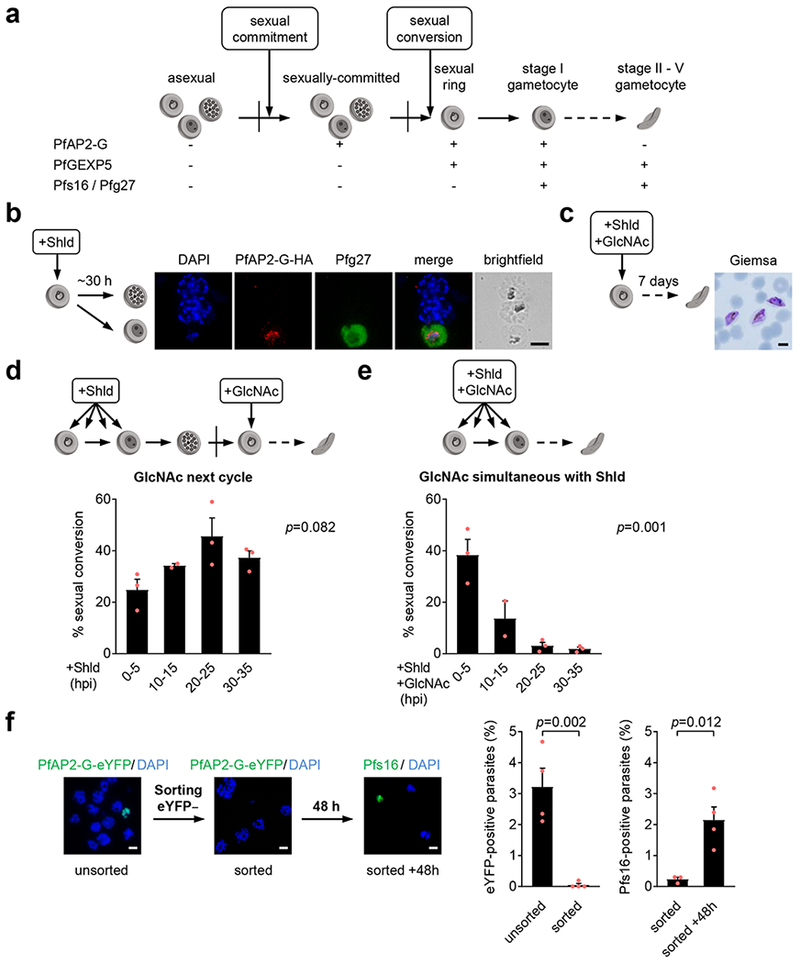
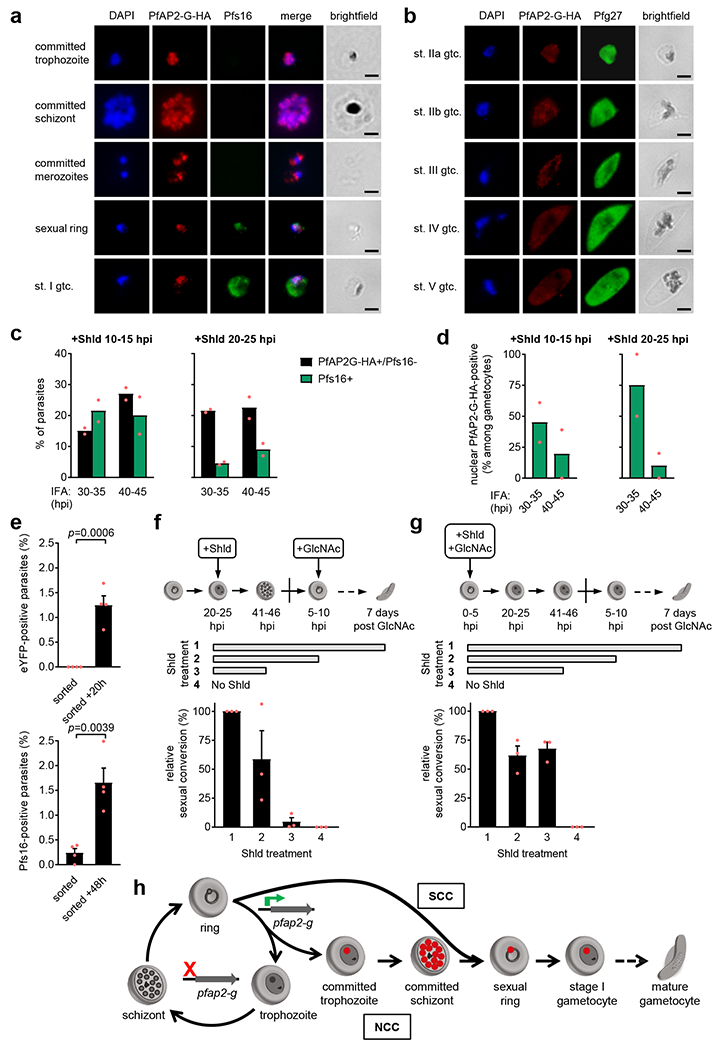
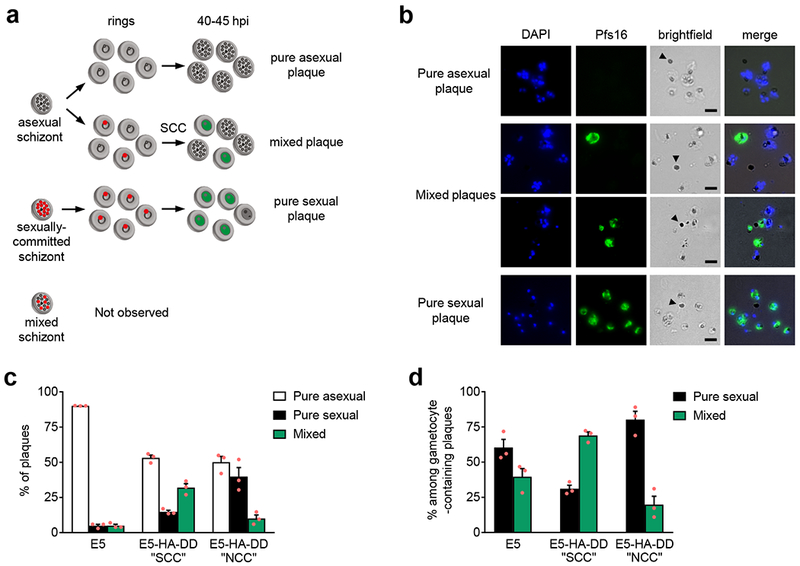
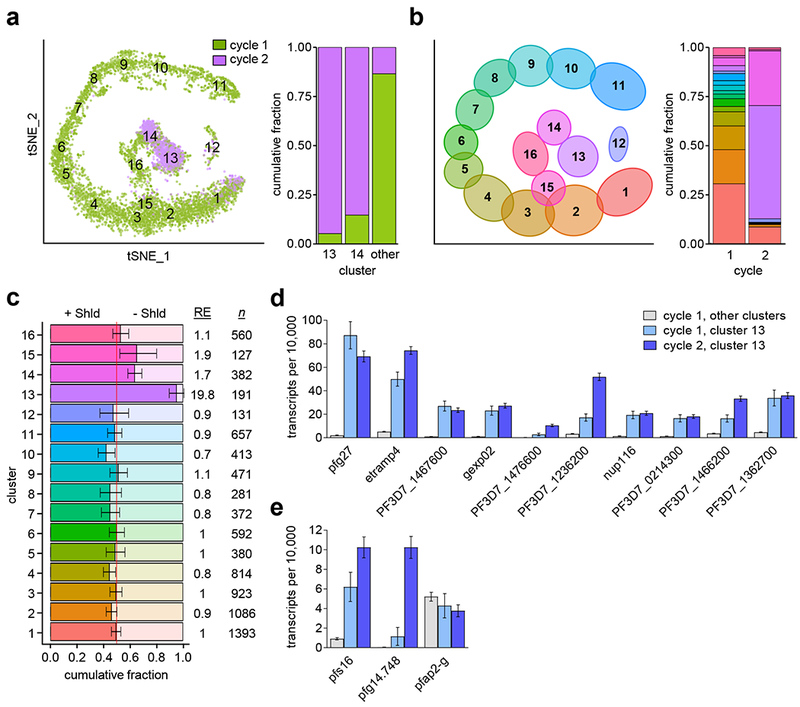
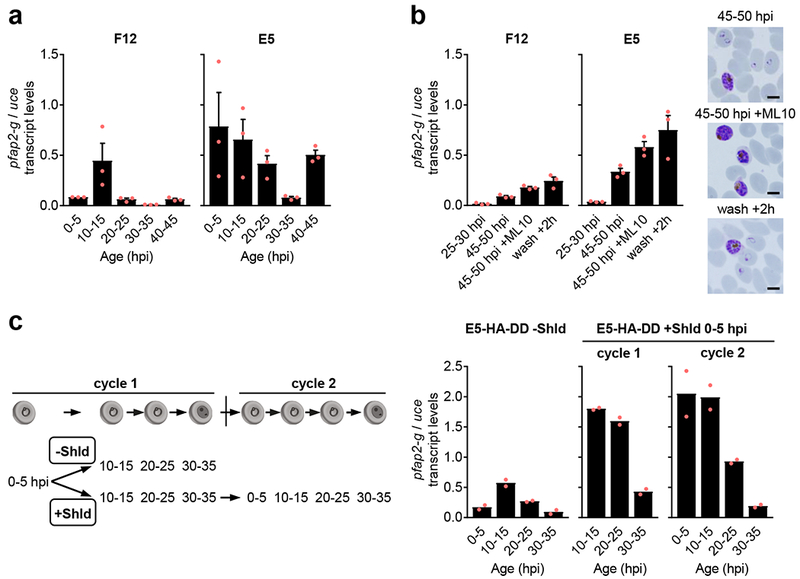
Human to vector transmission of malaria requires that some blood-stage parasites abandon asexual growth and convert into non-replicating sexual forms called gametocytes. The initial steps of gametocytogenesis remain largely uncharacterized. Here, we study this part of the malaria life cycle in Plasmodium falciparum using PfAP2-G, the master regulator of sexual conversion, as a marker of commitment. We demonstrate the existence of PfAP2-G-positive sexually committed parasite stages that precede the previously known committed schizont stage. We also found that sexual conversion can occur by two different routes: the previously described route in which PfAP2-G-expressing parasites complete a replicative cycle as committed forms before converting into gametocytes upon re-invasion, or a direct route with conversion within the same cycle as initial PfAP2-G expression. The latter route is linked to early PfAP2-G expression in ring stages. Reanalysis of published single-cell RNA-sequencing (RNA-seq) data confirmed the presence of both routes. Consistent with these results, using plaque assays we observed that, in contrast to the prevailing model, many schizonts produced mixed plaques containing both asexual parasites and gametocytes. Altogether, our results reveal unexpected features of the initial steps of sexual development and extend the current view of this part of the malaria life cycle.
疟原虫从人体到媒介的传播需要一些血期寄生虫放弃无性生长并转化为非复制的有性形式,称为配子体。配子体发生的初始步骤在很大程度上仍未被描述。在这里,我们使用 PfAP2-G(性转换的主要调节剂)作为承诺的标志,研究恶性疟原虫生命周期的这一部分。我们证明了 PfAP2-G 阳性的有性承诺寄生虫阶段的存在,这些阶段先于先前已知的承诺裂殖体阶段。我们还发现性转换可以通过两种不同的途径发生:以前描述的途径是 PfAP2-G 表达的寄生虫在转化为配子体之前作为承诺形式完成一个复制周期,或者是在同一周期内直接转化的途径,最初表达 PfAP2-G。后一种途径与环阶段早期 PfAP2-G 的表达有关。对已发表的单细胞 RNA 测序(RNA-seq)数据的重新分析证实了这两种途径的存在。与这些结果一致,使用噬菌斑测定法,我们观察到与流行模型相反,许多裂殖体产生了混合噬菌斑,其中包含无性寄生虫和配子体。总的来说,我们的结果揭示了性发育初始步骤的意外特征,并扩展了对这部分疟原虫生命周期的当前认识。