Complejo Hospitalario Universitario Ourense, Calle Ramon Puga Noguerol, 54, 32005, Ourense, Spain.
Complejo Universitario Ourense, Ourense, Spain.
BMC Cancer. 2018 Nov 29;18(1):1185. doi: 10.1186/s12885-018-5101-3.
Treatment with nab-paclitaxel plus gemcitabine increases survival in patients with metastatic pancreatic cancer. However, the assessment of treatment efficacy and safety in non-selected patients in a real-life setting may provide useful information to support decision-making processes in routine practice.
Retrospective, multicenter study including patients with metastatic pancreatic cancer, who started first-line treatment with nab-paclitaxel plus gemcitabine between December 2013 and June 2015 according to routine clinical practice. In addition to describing the treatment pattern, overall survival (OS) and progression-free survival (PFS) were assessed for the total sample and the exploratory subgroups based on the treatment and patients' clinical characteristics.
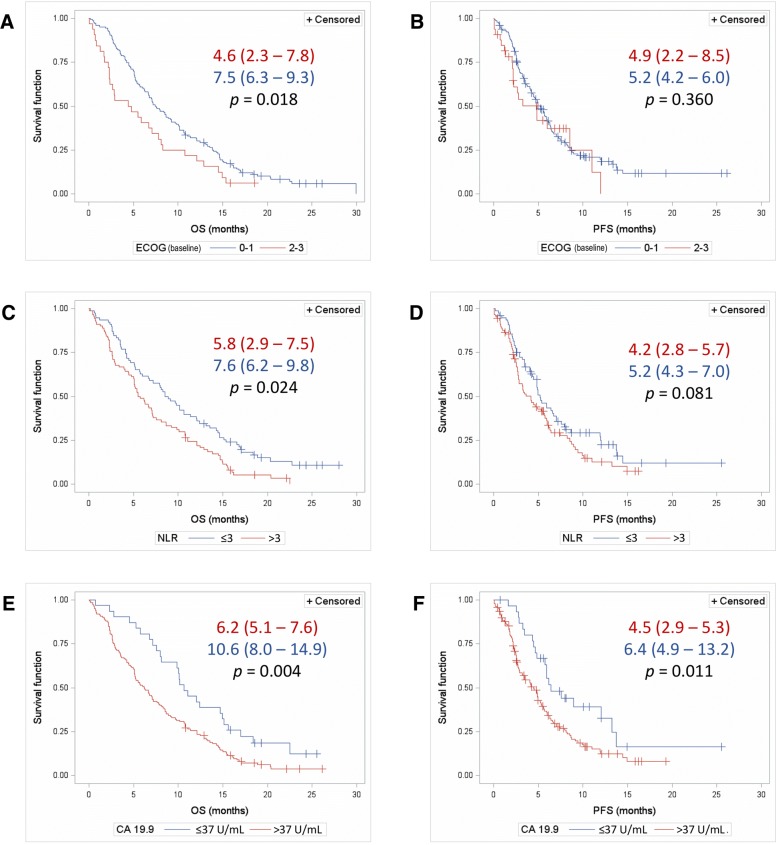
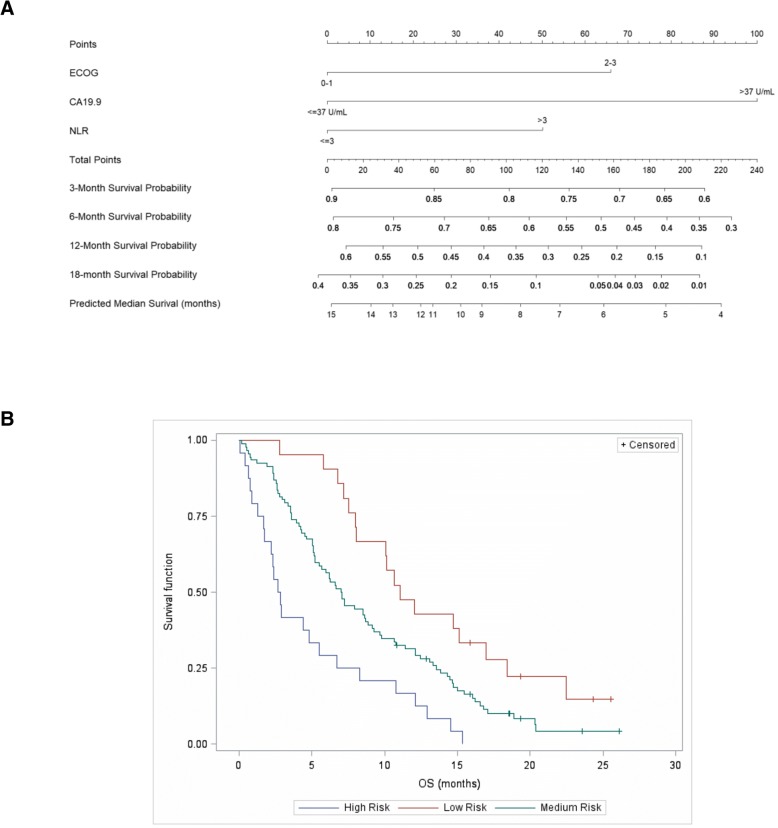
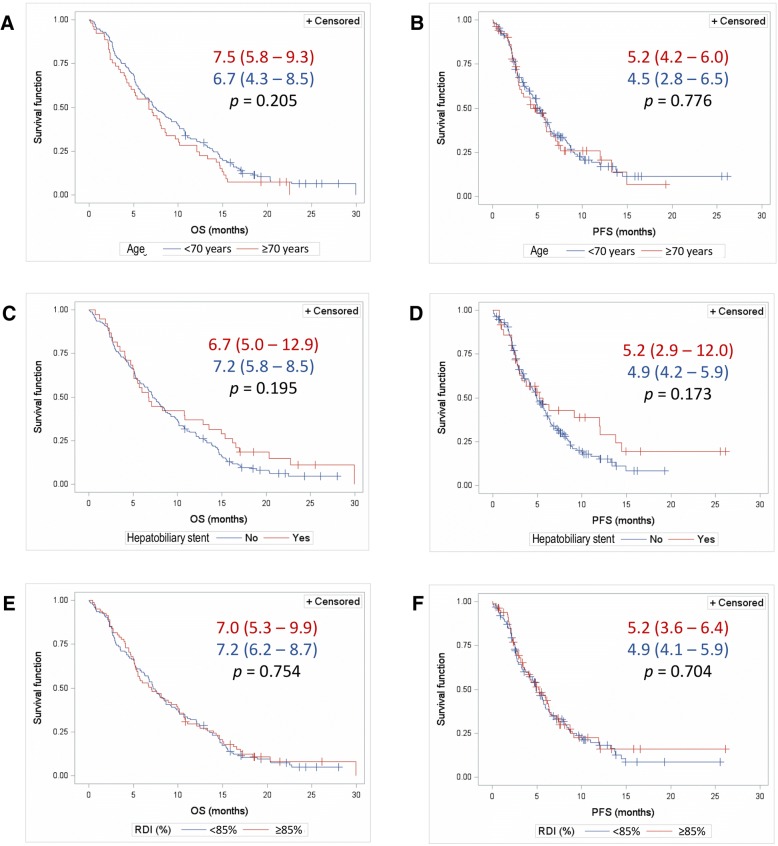
All 210 eligible patients had a median age of 65.0 years (range 37-81). Metastatic pancreatic adenocarcinoma was recurrent in 46 (21.9%) patients and de novo in 164 (78.1%); 38 (18%) patients had a biliary stent. At baseline, 33 (18.1%) patients had an ECOG performance status ≥2. Patients received a median of four cycles of treatment (range 1-21), with a median duration of 3.5 months; 137 (65.2%) patients had a dose reduction of nab-paclitaxel and/or gemcitabine during treatment, and 33 (17.2%) discontinued treatment due to toxicity. Relative dose intensity (RDI) for nab-paclitaxel, gemcitabine, and the combined treatment was 66.7%. Median OS was 7.2 months (95% CI 6.0-8.5), and median PFS was 5.0 months (95% CI 4.3-5.9); 50 patients achieved either a partial or complete response (ORR 24.6%). OS was influenced by baseline ECOG PS, NLR and CA 19.9, but not by age ≥ 70 years and/or the presence of hepatobiliary stent or RDI < 85%. All included variables, computed as dichotomous, showed a significant contribution to the Cox regression model to build a nomogram for predicting survival in these patients: baseline ECOG 0-1 vs. 2-3 (p = 0.030), baseline NLR > 3 vs. ≤ 3 (p = 0.043), and baseline CA 19.9 > 37 U/mL vs. ≤37 U/mL (p = 0.004).
Nab-Paclitaxel plus gemcitabine remain effective in a real-life setting, despite the high burden of dose reductions and poorer performance of these patients. A nomogram to predict survival using baseline ECOG performance status, NLR and CA 19.9 is proposed.
白蛋白结合型紫杉醇联合吉西他滨治疗转移性胰腺癌可延长患者的生存期。然而,在真实环境中对未经选择的患者进行治疗效果和安全性评估可能会为常规实践中的决策过程提供有用的信息。
这是一项回顾性、多中心研究,纳入了 2013 年 12 月至 2015 年 6 月期间根据常规临床实践接受白蛋白结合型紫杉醇联合吉西他滨一线治疗的转移性胰腺癌患者。除了描述治疗模式外,还评估了总样本和基于治疗和患者临床特征的探索性亚组的总生存期(OS)和无进展生存期(PFS)。
所有 210 例符合条件的患者中位年龄为 65.0 岁(范围 37-81 岁)。转移性胰腺腺癌复发 46 例(21.9%),初诊 164 例(78.1%);38 例(18%)患者有胆道支架。基线时,33 例(18.1%)患者的 ECOG 体能状态≥2 分。患者中位接受 4 个周期的治疗(范围 1-21 个),中位治疗持续时间为 3.5 个月;137 例(65.2%)患者在治疗过程中降低了白蛋白结合型紫杉醇和(或)吉西他滨的剂量,33 例(17.2%)因毒性而停止治疗。白蛋白结合型紫杉醇、吉西他滨和联合治疗的相对剂量强度(RDI)为 66.7%。中位 OS 为 7.2 个月(95%CI 6.0-8.5),中位 PFS 为 5.0 个月(95%CI 4.3-5.9);50 例患者获得了部分或完全缓解(ORR 24.6%)。OS 受基线 ECOG PS、中性粒细胞与淋巴细胞比值(NLR)和 CA 19.9 的影响,但不受年龄≥70 岁和/或存在胆道支架或 RDI<85%的影响。所有纳入的变量,计算为二分类变量,均对 Cox 回归模型有显著贡献,可构建一个列线图来预测这些患者的生存:基线 ECOG 0-1 与 2-3(p=0.030),基线 NLR>3 与≤3(p=0.043),和基线 CA 19.9>37 U/mL 与≤37 U/mL(p=0.004)。
在真实环境中,白蛋白结合型紫杉醇联合吉西他滨仍然有效,尽管这些患者的剂量减少负担较高,且疗效较差。提出了一种使用基线 ECOG 表现状态、NLR 和 CA 19.9 预测生存的列线图。