Department of Genetics, Institute for Cancer Research, Oslo University Hospital Radiumhospitalet, Postboks 4953 Nydalen, 0424, Oslo, Norway.
KG Jebsen Center for Breast Cancer Research, Institute for Clinical Medicine, University of Oslo, Oslo, Norway.
Genome Med. 2018 Nov 29;10(1):92. doi: 10.1186/s13073-018-0601-y.
Chemotherapeutic agents such as anthracyclines and taxanes are commonly used in the neoadjuvant setting. Bevacizumab is an antibody which binds to vascular endothelial growth factor A (VEGFA) and inhibits its receptor interaction, thus obstructing the formation of new blood vessels.
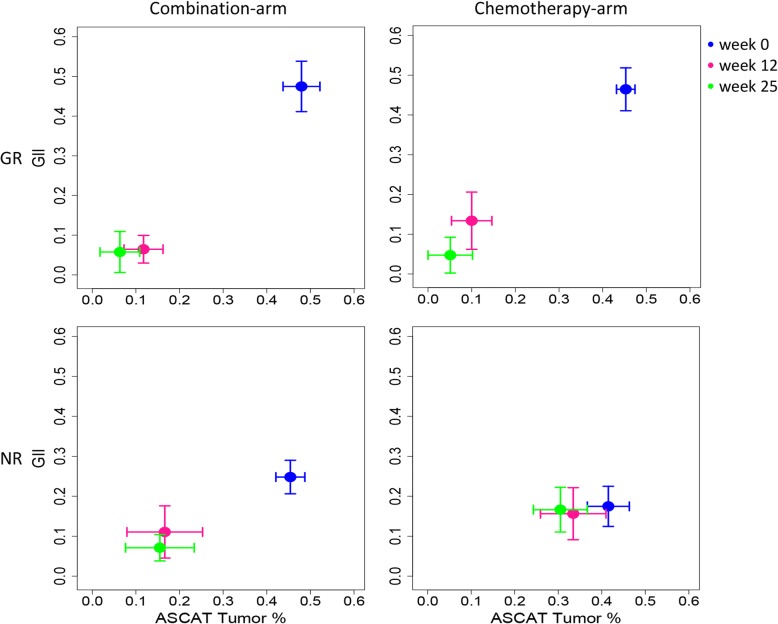
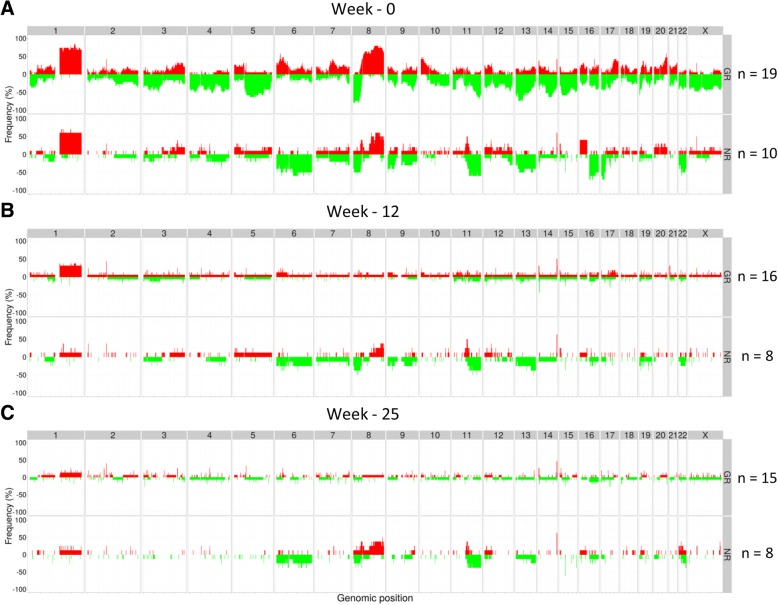
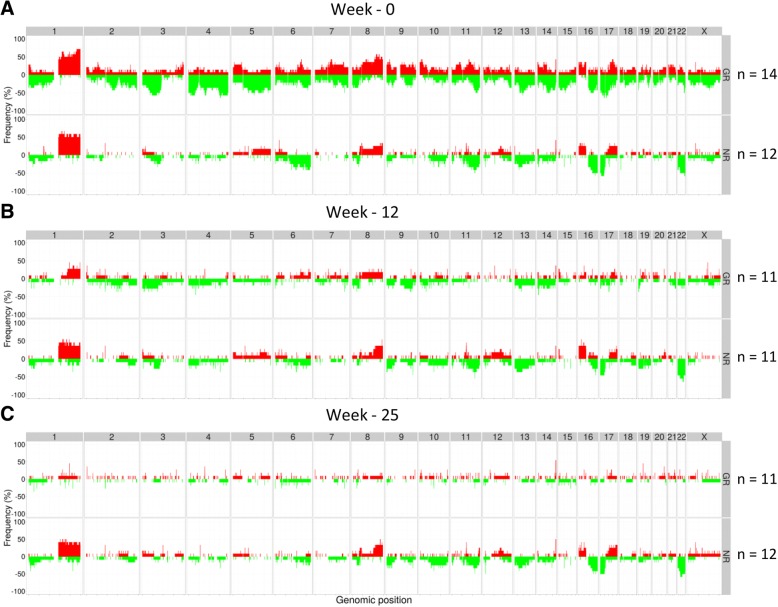
A phase II randomized clinical trial of 123 patients with Her2-negative breast cancer was conducted, with patients treated with neoadjuvant chemotherapy (fluorouracil (5FU)/epirubicin/cyclophosphamide (FEC) and taxane), with or without bevacizumab. Serial biopsies were obtained at time of diagnosis, after 12 weeks of treatment with FEC ± bevacizumab, and after 25 weeks of treatment with taxane ± bevacizumab. A time course study was designed to investigate the genomic landscape at the three time points when tumor DNA alterations, tumor percentage, genomic instability, and tumor clonality were assessed. Substantial differences were observed with some tumors changing mainly between diagnosis and at 12 weeks, others between 12 and 25 weeks, and still others changing in both time periods.
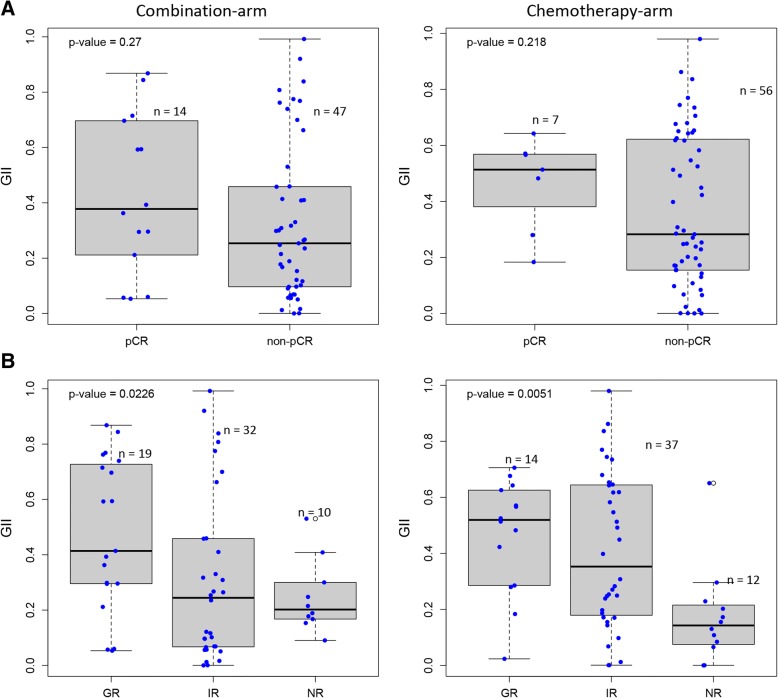
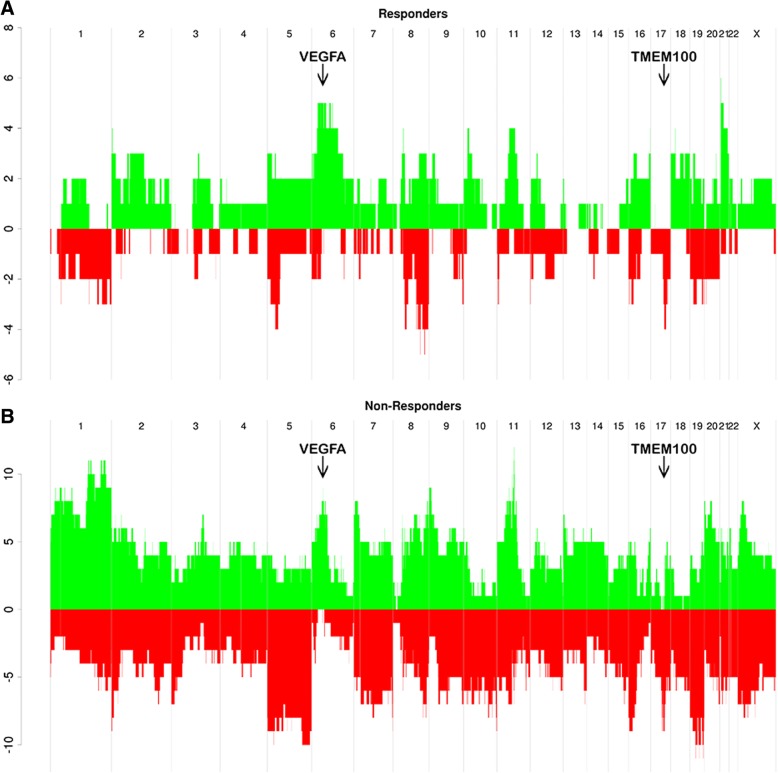
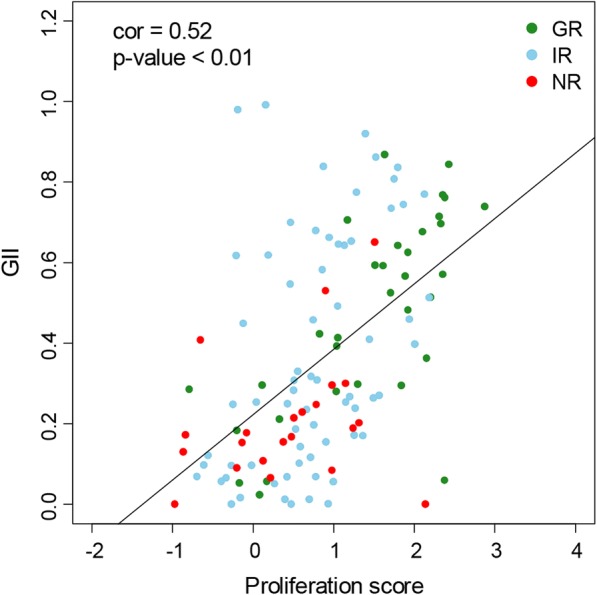
In both treatment arms, good responders (GR) and non-responders (NR) displayed significant difference in genomic instability index (GII) at time of diagnosis. In the combination arm, copy number alterations at 25 loci at the time of diagnosis were significantly different between the GR and NR. An inverse aberration pattern was also observed between the two extreme response groups at 6p22-p12 for patients in the combination arm. Signs of subclonal reduction were observed, with some aberrations disappearing and others being retained during treatment. Increase in subclonal amplification was observed at 6p21.1, a locus which contains the VEGFA gene for the protein which are targeted by the study drug bevacizumab. Of the 13 pre-treatment samples that had a gain at VEGFA, 12 were responders. Significant decrease of frequency of subclones carrying gains at 17q21.32-q22 was observed at 12 weeks, with the peak occurring at TMEM100, an ALK1 receptor signaling-dependent gene essential for vasculogenesis. This implies that cells bearing amplifications of VEGFA and TMEM100 are particularly sensitive to this treatment regime.
Taken together, these results suggest that heterogeneity and subclonal architecture influence the response to targeted treatment in combination with chemotherapy, with possible implications for clinical decision-making and monitoring of treatment efficacy.
NCT00773695 . Registered 15 October 2008.
蒽环类和紫杉烷类化疗药物常用于新辅助治疗。贝伐珠单抗是一种与血管内皮生长因子 A(VEGFA)结合并抑制其受体相互作用的抗体,从而阻止新血管的形成。
对 123 例 Her2 阴性乳腺癌患者进行了一项 II 期随机临床试验,患者接受新辅助化疗(氟尿嘧啶(5FU)/表柔比星/环磷酰胺(FEC)和紫杉烷),加或不加贝伐珠单抗。在诊断时、FEC ± 贝伐珠单抗治疗 12 周后以及紫杉烷 ± 贝伐珠单抗治疗 25 周后获得连续活检。设计了一项时间过程研究,以评估肿瘤 DNA 改变、肿瘤百分比、基因组不稳定性和肿瘤克隆性在三个时间点的基因组景观。观察到一些肿瘤主要在诊断时和 12 周时发生变化,另一些肿瘤在 12 周和 25 周时发生变化,还有一些肿瘤在两个时间都发生变化,结果存在显著差异。
在两个治疗组中,良好反应者(GR)和非反应者(NR)在诊断时的基因组不稳定性指数(GII)方面存在显著差异。在联合组中,诊断时 25 个位点的拷贝数改变在 GR 和 NR 之间存在显著差异。在联合组中,也观察到两个极端反应组之间的反向畸变模式在 6p22-p12 之间。在治疗过程中,观察到亚克隆减少的迹象,一些畸变消失,另一些畸变保留。在 6p21.1 处观察到亚克隆扩增增加,该基因包含 VEGFA 基因,该基因是研究药物贝伐珠单抗的靶点。在 13 个治疗前样本中,有 12 个样本在 VEGFA 处有增益,这些样本都是有反应者。在 12 周时观察到 17q21.32-q22 处携带增益的亚克隆频率显著降低,峰值出现在 ALK1 受体信号依赖性基因 TMEM100 上,该基因对于血管发生至关重要。这意味着携带 VEGFA 和 TMEM100 扩增的细胞对这种治疗方案特别敏感。
综上所述,这些结果表明异质性和亚克隆结构会影响靶向治疗联合化疗的反应,这可能对临床决策和治疗效果监测具有重要意义。
NCT00773695。于 2008 年 10 月 15 日注册。