Lab. of Molecular and Cellular Basis of Embryonic Development, Max-Delbrueck Center for Molecular Medicine, Robert-Roessle Strasse 10, Berlin, 13125, Germany.
Berlin Institute of Health (BIH), Berlin, 10178, Germany.
Nat Commun. 2018 Nov 30;9(1):5082. doi: 10.1038/s41467-018-07474-6.
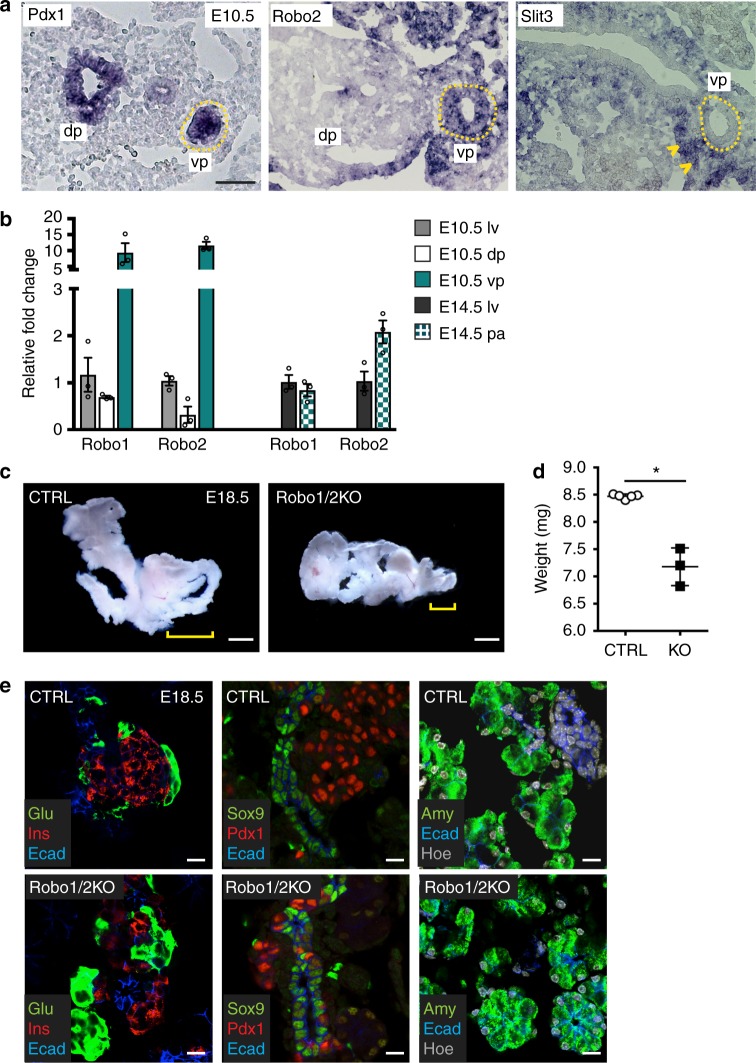
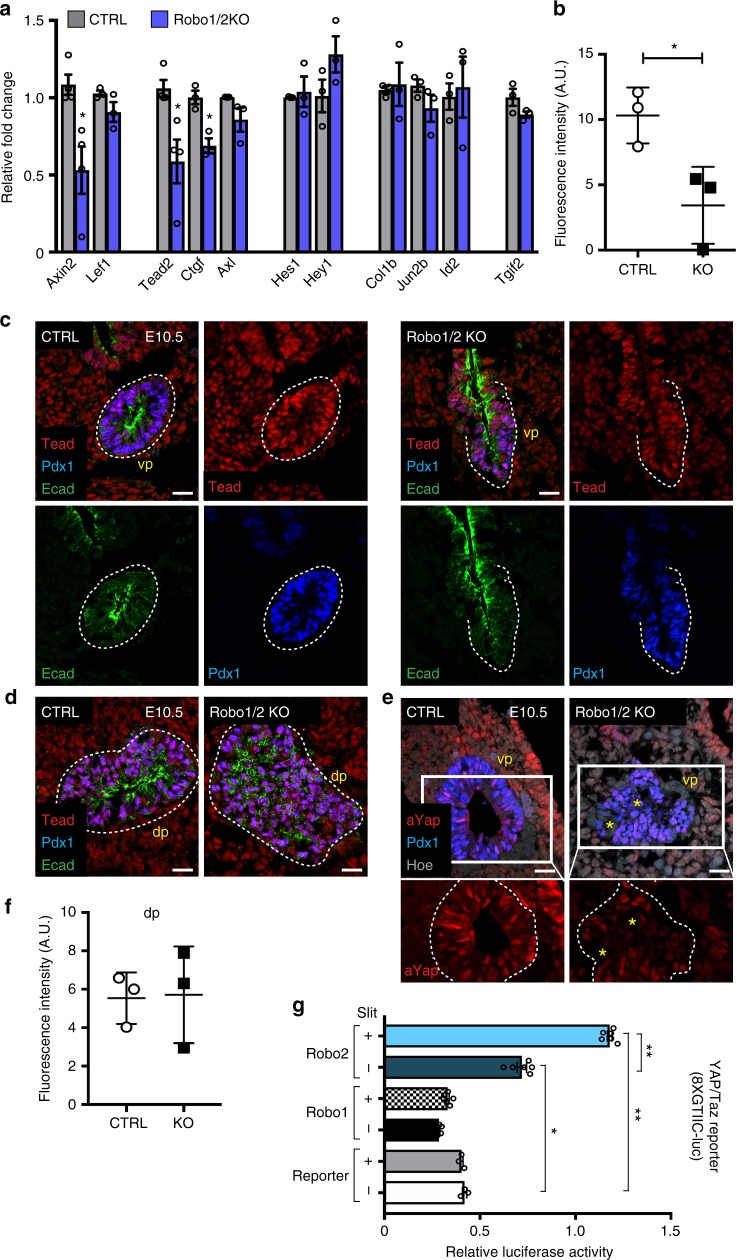
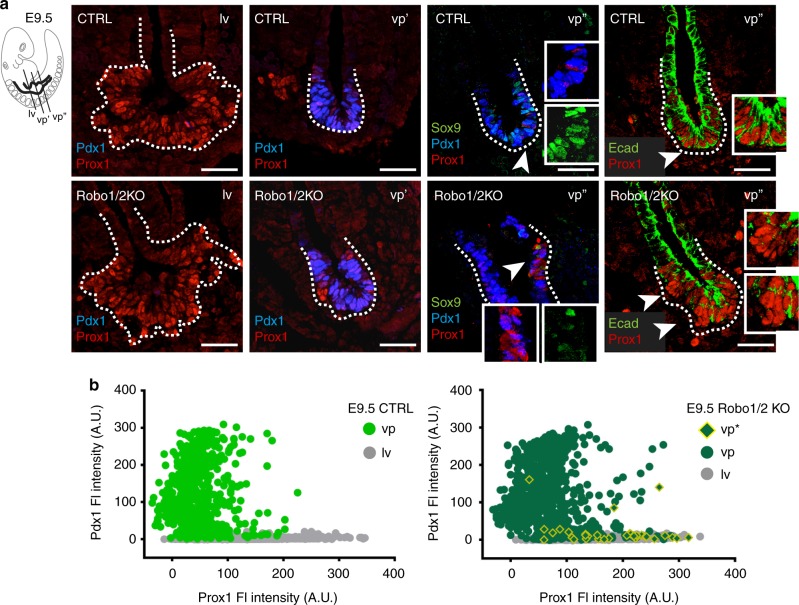
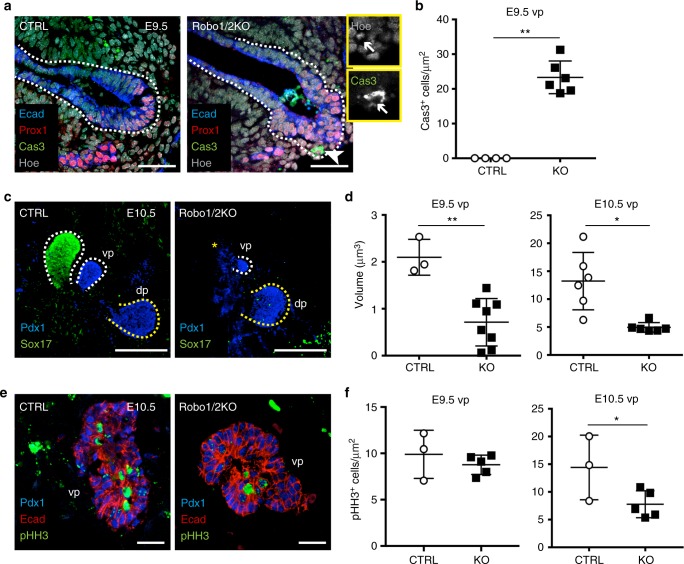
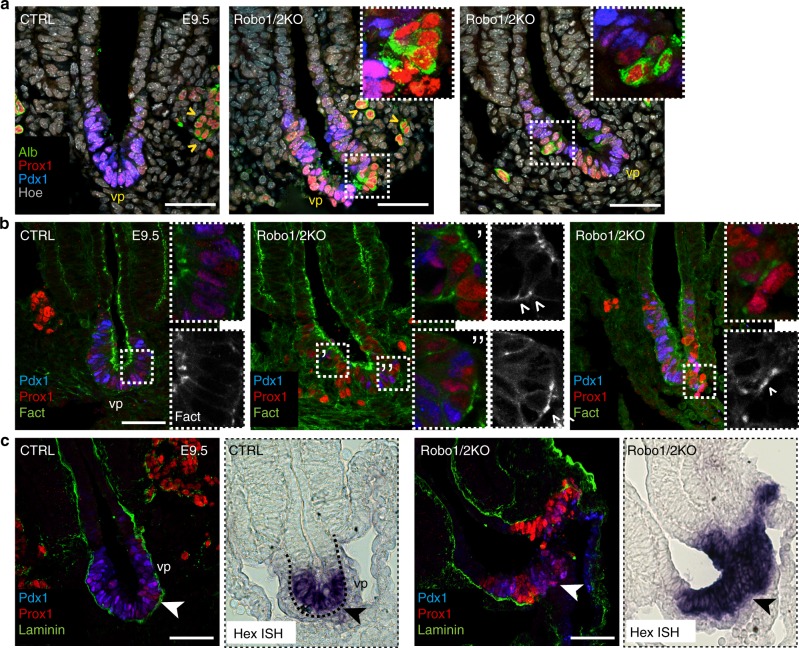
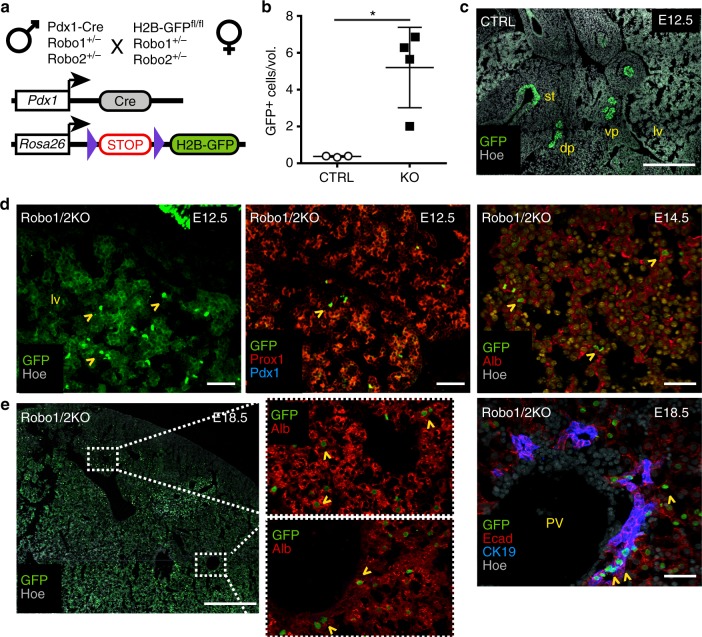
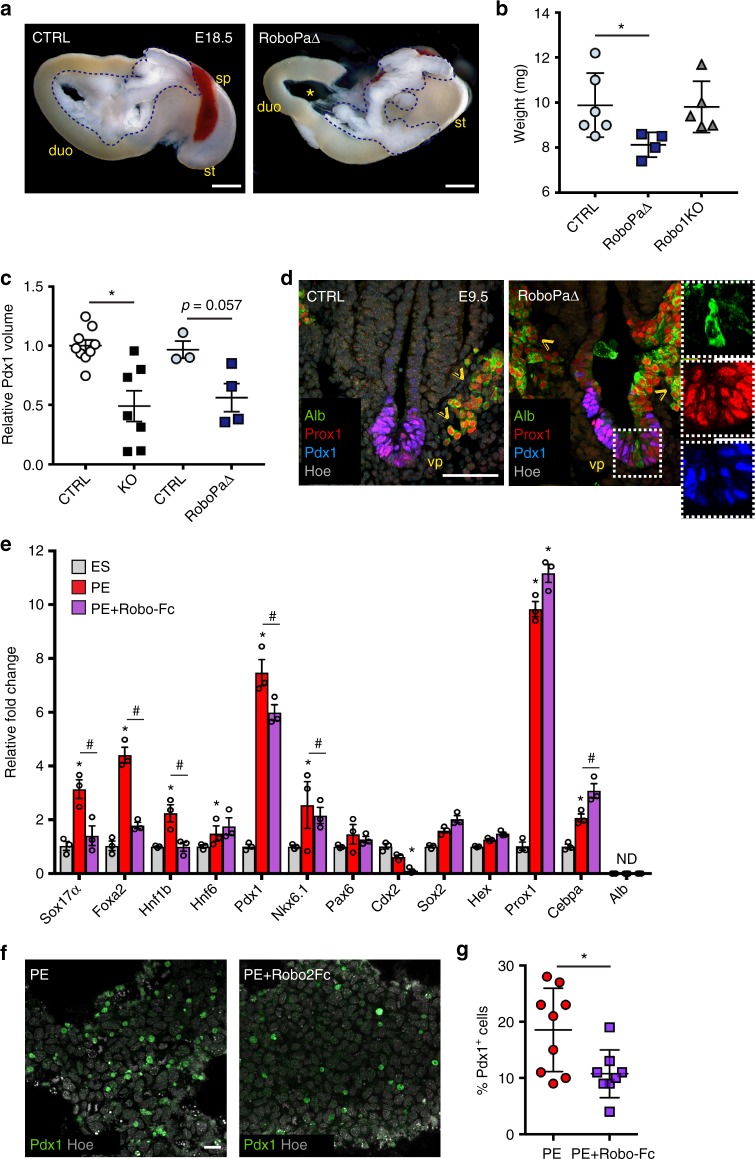
A complex interplay of intrinsic factors and extrinsic signalling pathways controls both cell lineage commitment and maintenance of cell identity. Loss of defined cellular states is the cause of many different cancers, including pancreatic cancer. Recent findings suggest a clinical role for the conserved SLIT/ROBO signalling pathway in pancreatic cancer. However, whilst this pathway has been extensively studied in many processes, a role for Slit and Robo genes in pancreas cell identity and plasticity has not been established yet. Here, we identify Slit/Robo signalling as a key regulator of pancreatic progenitor identity. We find that Robo1 and Robo2 are required for preserving pancreatic cell identity shortly after fate induction and, subsequently, for expansion of the pancreatic progenitor pool in the mouse. Furthermore, we show that Robo receptors control the expression of Tead transcription factors as well as its downstream transcriptional activity. Our work identifies an interplay between Slit/Robo pathway and Tead intrinsic regulators, functioning as gatekeeper of pancreatic cell identity.
内在因素和外在信号通路的复杂相互作用控制着细胞谱系的决定和细胞身份的维持。明确的细胞状态的丧失是许多不同癌症的原因,包括胰腺癌。最近的发现表明,保守的 SLIT/ROBO 信号通路在胰腺癌中具有临床作用。然而,尽管该途径在许多过程中得到了广泛研究,但 Slit 和 Robo 基因在胰腺细胞身份和可塑性中的作用尚未确定。在这里,我们将 Slit/Robo 信号确定为胰腺祖细胞身份的关键调节剂。我们发现,Robo1 和 Robo2 在命运诱导后不久维持胰腺细胞身份是必需的,随后在小鼠中扩大胰腺祖细胞池也是必需的。此外,我们表明 Robo 受体控制 Tead 转录因子的表达及其下游转录活性。我们的工作确定了 Slit/Robo 途径与 Tead 内在调节因子之间的相互作用,作为胰腺细胞身份的守门员。