Department of Prosthodontics and Periodontics, Piracicaba Dental School, University of Campinas, Piracicaba, São Paulo, Brazil.
School of Dentistry, School of Cancer Sciences, University of Birmingham, Birmingham, United Kingdom.
PLoS One. 2018 Dec 3;13(12):e0207873. doi: 10.1371/journal.pone.0207873. eCollection 2018.
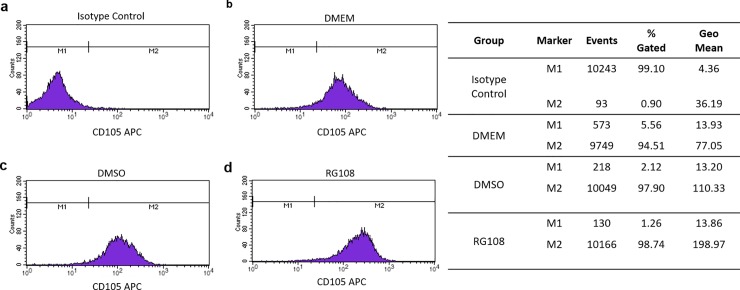
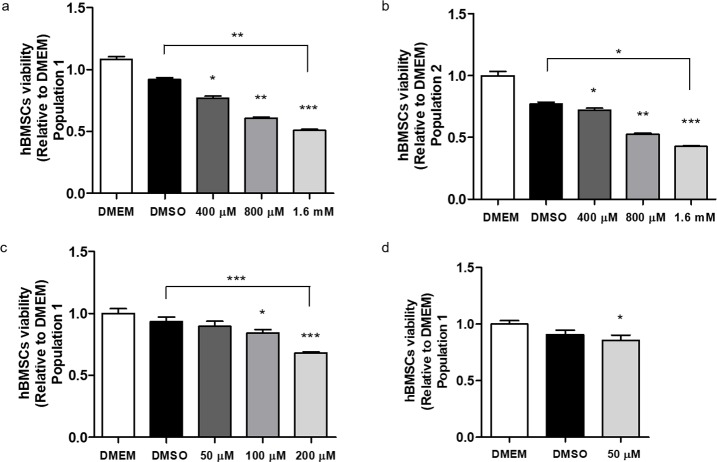
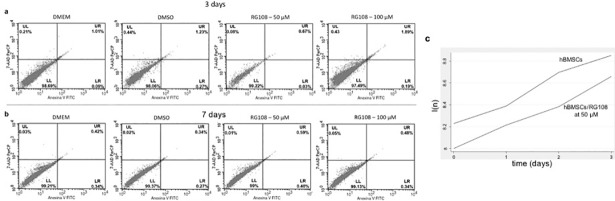
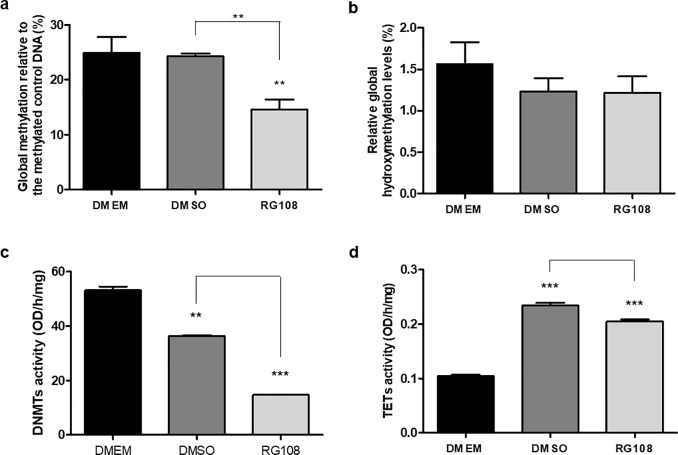
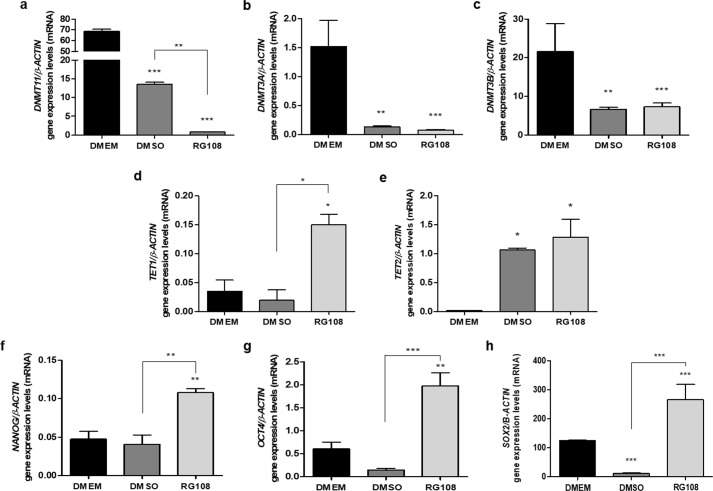
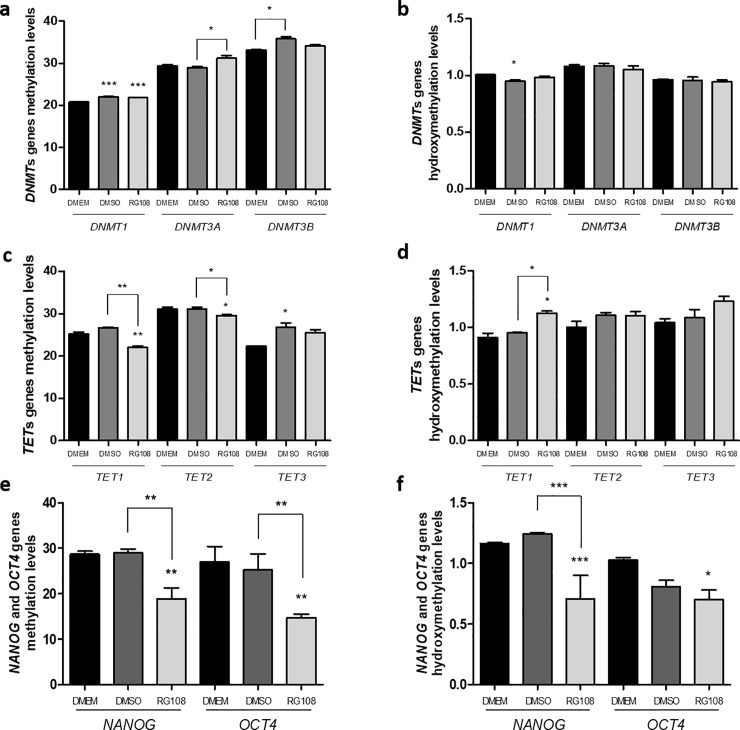
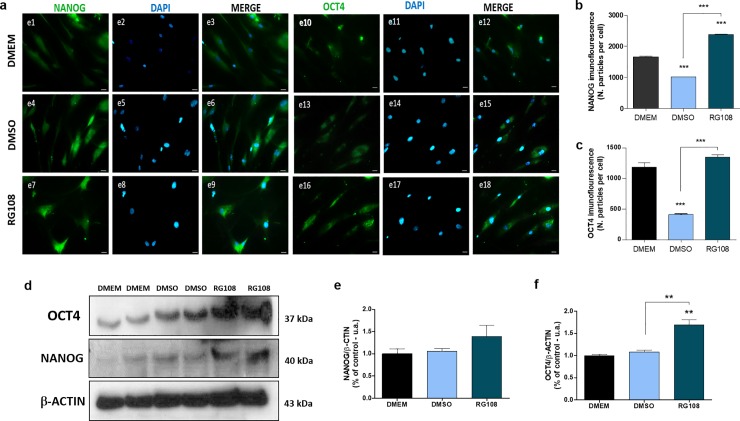
Human bone marrow-derived mesenchymal stem cells (hBMSCs) are important for tissue regeneration but their epigenetic regulation is not well understood. Here we investigate the ability of a non-nucleoside DNA methylation inhibitor, RG108 to induce epigenetic changes at both global and gene-specific levels in order to enhance mesenchymal cell markers, in hBMSCs. hBMSCs were treated with complete culture medium, 50 μM RG108 and DMSO for three days and subjected to viability and apoptosis assays, global and gene-specific methylation/hydroxymethylation, transcript levels' analysis of epigenetic machinery enzymes and multipotency markers, protein activities of DNMTs and TETs, immunofluorescence staining and western blot analysis for NANOG and OCT4 and flow cytometry for CD105. The RG108, when used at 50 μM, did not affect the viability, apoptosis and proliferation rates of hBMSCs or hydroxymethylation global levels while leading to 75% decrease in DNMTs activity and 42% loss of global DNA methylation levels. In addition, DNMT1 was significantly downregulated while TET1 was upregulated, potentially contributing to the substantial loss of methylation observed. Most importantly, the mesenchymal cell markers CD105, NANOG and OCT4 were upregulated being NANOG and OCT4 epigenetically modulated by RG108, at their gene promoters. We propose that RG108 could be used for epigenetic modulation, promoting epigenetic activation of NANOG and OCT4, without affecting the viability of hBMSCs. DMSO can be considered a modulator of epigenetic machinery enzymes, although with milder effect compared to RG108.
人骨髓间充质干细胞(hBMSCs)对于组织再生很重要,但它们的表观遗传调控机制还不是很清楚。在这里,我们研究了一种非核苷类 DNA 甲基化抑制剂 RG108 诱导 hBMSCs 整体和基因特异性水平上的表观遗传变化的能力,以增强间充质细胞标志物。将 hBMSCs 用完全培养基、50μM RG108 和 DMSO 处理 3 天,然后进行细胞活力和细胞凋亡检测、整体和基因特异性甲基化/羟甲基化、表观遗传机制酶和多能性标志物的转录水平分析、DNMTs 和 TETs 的蛋白活性、NANOG 和 OCT4 的免疫荧光染色和 Western blot 分析以及 CD105 的流式细胞术分析。当使用 50μM 的 RG108 时,不会影响 hBMSCs 的活力、凋亡和增殖率,也不会影响羟甲基化的整体水平,而只是导致 DNMTs 活性降低 75%,全基因组 DNA 甲基化水平降低 42%。此外,DNMT1 明显下调,而 TET1 上调,这可能是导致观察到的甲基化大量丢失的原因。最重要的是,间充质细胞标志物 CD105、NANOG 和 OCT4 上调,表明 RG108 可以调节 NANOG 和 OCT4 的基因启动子的表观遗传。我们提出,RG108 可以用于表观遗传调节,促进 NANOG 和 OCT4 的表观遗传激活,而不影响 hBMSCs 的活力。DMSO 可以被认为是表观遗传机制酶的调节剂,尽管与 RG108 相比,其作用较为温和。