Schierloh Ulrike, Aguayo Gloria A, Fichelle Muriel, De Melo Dias Cindy, Celebic Aljosa, Vaillant Michel, Barnard Katharine, Cohen Ohad, de Beaufort Carine
Department of Pediatric Diabetes and Endocrinology, Clinique Pédiatrique, Centre Hospitalier, Luxembourg City, Luxembourg.
Luxembourg Institute of Health, Luxembourg City, Luxembourg.
Trials. 2018 Dec 4;19(1):665. doi: 10.1186/s13063-018-3034-4.
In attempting to achieve optimal metabolic control, the day-to-day management is challenging for a child with type 1 diabetes (T1D) and his family and can have a major negative impact on their quality of life. Augmenting an insulin pump with glucose sensor information leads to improved outcomes: decreased haemoglobin A1c levels, increased time in glucose target and less hypoglycaemia. Fear of nocturnal hypoglycaemia remains pervasive amongst parents, leading to chronic sleep interruption and lack of sleep for the parents and their children. The QUEST study, an open-label, single-centre randomized crossover study, aims to evaluate the impact on time in target, in hypoglycaemia and hyperglycaemia and the effect on sleep and quality of life in children with T1D, comparing a sensor-augmented pump (SAP) with predictive low glucose suspend and alerts to the use of the same insulin pump with a flash glucose measurement (FGM) device not interacting with the pump.
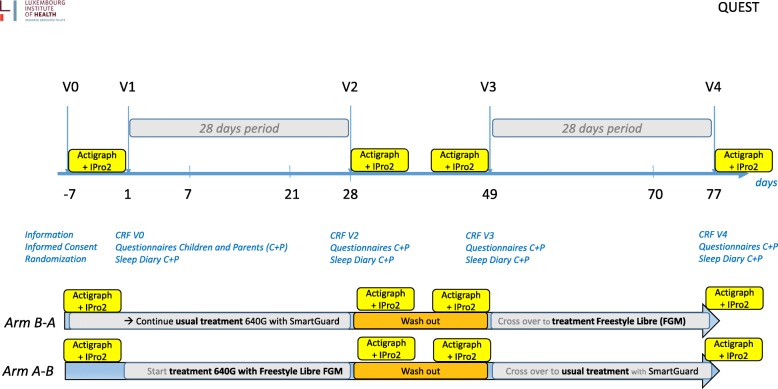
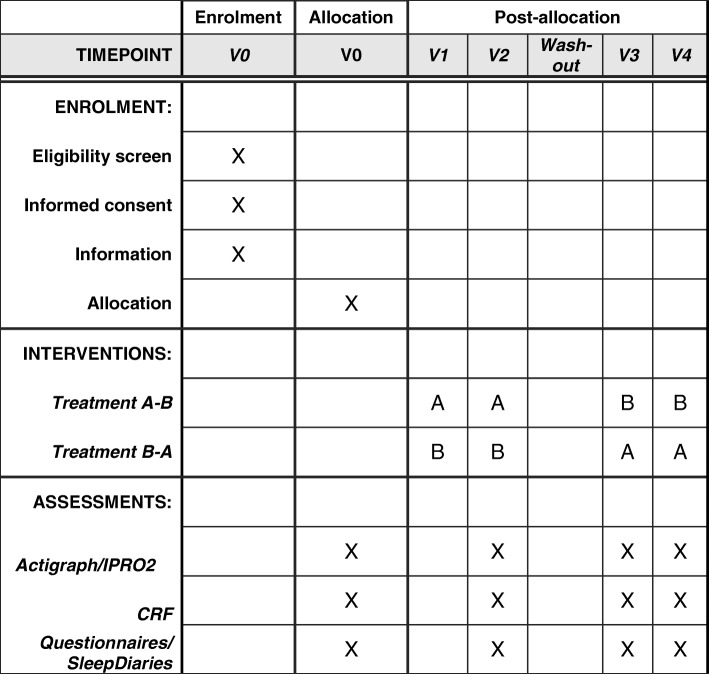
METHODS/DESIGN: Subjects meeting the inclusion criteria are randomized to treatment with the SAP or treatment with an insulin pump and independent FGM for 5 weeks. Following a 3-week washout period, the subjects cross over to the other study arm for 5 weeks. During the week before and in the last week of treatment, the subjects and one of their caregivers wear a sleep monitor in order to obtain sleep data. The primary endpoint is the between-arm difference in percentage of time in glucose target during the final 6 days of each treatment arm, measured by a blinded continuous glucose measurement (CGM). Additional endpoints include comparison of quantity and quality of sleep as well as quality of life perception of the subjects and one of their caregivers in the two different treatment arms. Recruitment started in February 2017. A total of 36 patients are planned to be randomized. The study recruitment was completed in April 2018.
With this study we will provide more information on whether insulin pump treatment combined with more technology (SmartGuard® feature and alerts) leads to better metabolic control. The inclusion of indicators on quality of sleep with less sleep interruption, less lack of sleep and perception of quality of life in both children and their primary caregivers is essential for this study and might help to guide us to further treatment improvement.
ClinicalTrials.gov, NCT03103867 . Registered on 6 April 2017.
在试图实现最佳代谢控制时,1型糖尿病(T1D)患儿及其家庭的日常管理具有挑战性,并且可能对他们的生活质量产生重大负面影响。将葡萄糖传感器信息与胰岛素泵相结合可改善治疗效果:降低糖化血红蛋白水平、增加血糖达标时间并减少低血糖发生。家长们对夜间低血糖的担忧仍然普遍存在,导致家长及其孩子长期睡眠中断和睡眠不足。QUEST研究是一项开放标签、单中心随机交叉研究,旨在评估与预测性低血糖暂停及警报功能相结合的传感器增强型泵(SAP)和使用与泵不交互的闪光葡萄糖监测(FGM)设备的同一胰岛素泵相比,对T1D患儿血糖达标时间、低血糖和高血糖情况的影响以及对睡眠和生活质量的影响。
方法/设计:符合纳入标准的受试者被随机分为接受SAP治疗或接受胰岛素泵及独立FGM治疗5周。经过3周的洗脱期后,受试者交叉至另一研究组再进行5周治疗。在治疗前一周和治疗最后一周,受试者及其一名照料者佩戴睡眠监测仪以获取睡眠数据。主要终点是每个治疗组最后6天血糖达标时间百分比的组间差异,通过盲法连续血糖监测(CGM)测量。其他终点包括比较两个不同治疗组中受试者及其一名照料者的睡眠数量和质量以及生活质量感知。招募工作于2017年2月开始。计划共随机分配36例患者。研究招募工作于2018年4月完成。
通过本研究,我们将提供更多关于胰岛素泵治疗结合更多技术(SmartGuard®功能和警报)是否能带来更好代谢控制的信息。纳入关于睡眠中断更少、睡眠不足更少以及儿童及其主要照料者生活质量感知的睡眠质量指标对本研究至关重要,可能有助于指导我们进一步改善治疗。
ClinicalTrials.gov,NCT03103867。于2017年4月6日注册。