Reach Gérard, Boubaya Marouane, Brami Yoann, Lévy Vincent
Department for Endocrinology, Diabetes and Metabolic Diseases, Avicenne Hospital, APHP, Bobigny, France,
EA 3412, Health Education and Practices Laboratory (LEPS), Paris 13 University, Sorbonne Paris Cité, Bobigny, France,
Patient Prefer Adherence. 2018 Nov 9;12:2363-2375. doi: 10.2147/PPA.S180280. eCollection 2018.
Patients' non-adherence to medical prescriptions is a crucial issue in contemporary medicine because it can jeopardize care efficacy. Non-adherence is especially frequent in patients with chronic diseases. In this article, we propose that a particular condition, which we call disruption in time projection, is a cause of non-adherence to medication therapies in chronic diseases.
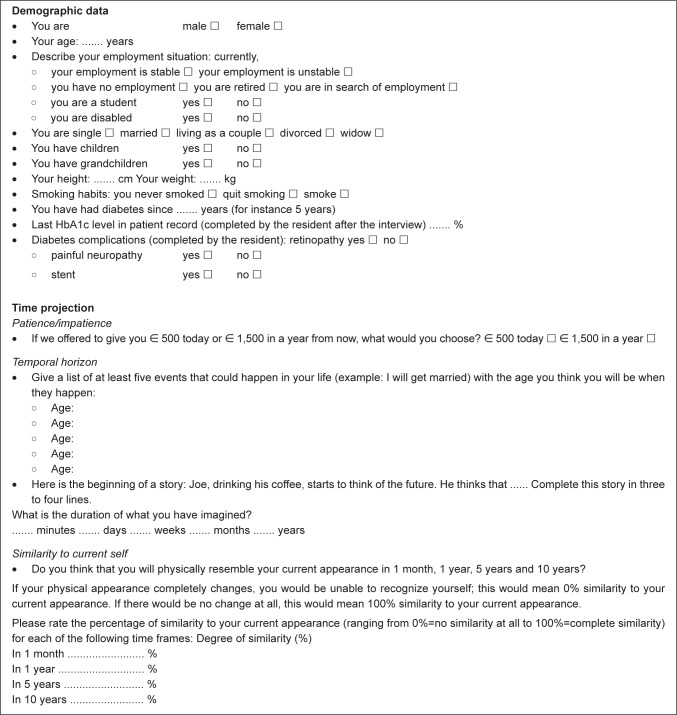
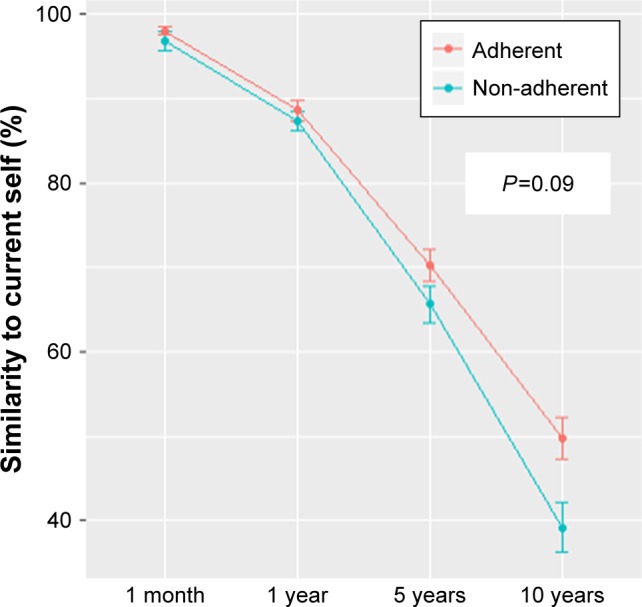
A questionnaire was administered to 120 hospitalized people with type 2 diabetes addressing three psychological constructs defining time projection: patience/impatience in a fictive monetary scenario (preferring to receive €1,500 in 1 year or €500 today), magnitude of temporal horizon (greater or lesser ability to imagine future events) and perception of the degree of physical similarity of current self to self at 1 year, 5 years and 10 years from the present. In addition, the questionnaire evaluated adherence to medication, social deprivation and depression.
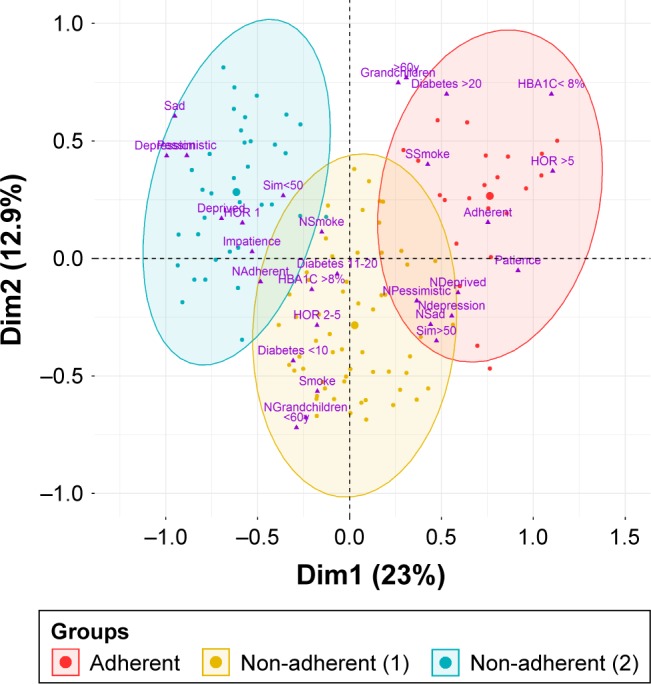
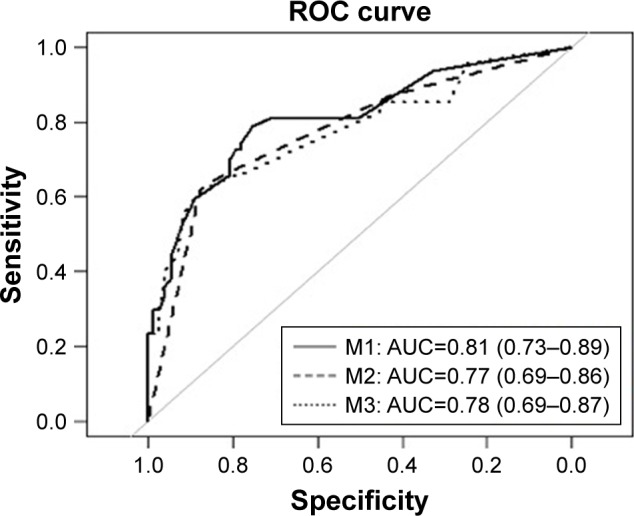
In the multivariate analyses, two factors were associated with adherence to medication: patience (<0.001) and long temporal horizon (=0.006). Two factors were associated with HbA1c ≥8% (64 mmol/mol): non-adherence to medication (=0.003) and short temporal horizon (=0.011). Three factors were associated with long temporal horizon: adherence to medication (<0.001), patience (<0.001) and the existence of grandchildren (=0.002). Social deprivation (<0.001), non-adherence (<0.001), female gender (=0.002) and short temporal horizon (=0.050) were associated with impatience. Finally, an association of adherence to expected similarity in the future to current self, impatience, short temporal horizon, social deprivation and depression was also shown in a multiple correspondence analysis.
What we termed a disruption in time projection may be a unique determinant for non-adherence to long-term therapy and, therefore, may influence the outcome of chronic diseases. We hypothesize that this is involved in both intentional and unintentional non-adherence and that it represents the loss of a protective mechanism. If this novel concept is to be confirmed in other settings and generalized to other chronic diseases, the recognition of its role in disease prognosis may help orient the teaching and practice of medicine.
患者不遵医嘱是当代医学中的一个关键问题,因为它会危及治疗效果。不遵医嘱在慢性病患者中尤为常见。在本文中,我们提出一种特殊情况,即我们所称的时间投射障碍,是慢性病患者不遵医嘱进行药物治疗的一个原因。
对120名住院的2型糖尿病患者进行问卷调查,涉及定义时间投射的三种心理结构:在虚拟货币情景中的耐心/不耐烦(更愿意在1年后收到1500欧元还是现在收到500欧元)、时间跨度大小(想象未来事件的能力强弱)以及对当前自我与1年、5年和10年后自我身体相似程度的感知。此外,问卷还评估了药物依从性、社会剥夺和抑郁情况。
在多变量分析中,有两个因素与药物依从性相关:耐心(<0.001)和时间跨度长(=0.006)。有两个因素与糖化血红蛋白≥8%(64 mmol/mol)相关:不遵医嘱(=0.003)和时间跨度短(=0.011)。有三个因素与时间跨度长相关:药物依从性(<0.001)、耐心(<0.001)和有孙辈(=0.002)。社会剥夺(<0.001)、不遵医嘱(<0.001)、女性(=0.002)和时间跨度短(=0.050)与不耐烦相关。最后,在多重对应分析中还显示了未来自我与当前自我预期相似性、不耐烦、时间跨度短、社会剥夺和抑郁与依从性之间的关联。
我们所称的时间投射障碍可能是不遵行长期治疗的一个独特决定因素,因此可能影响慢性病的治疗结果。我们假设这涉及有意和无意的不遵医嘱行为,并且它代表了一种保护机制的丧失。如果这个新概念要在其他环境中得到证实并推广到其他慢性病,认识到它在疾病预后中的作用可能有助于指导医学教学和实践。