Department of Molecular and Integrative Physiology, University of Illinois at Urbana-Champaign, Urbana, Illinois.
Department of Molecular and Integrative Physiology, University of Illinois at Urbana-Champaign, Urbana, Illinois.
Gastroenterology. 2019 Mar;156(4):1052-1065. doi: 10.1053/j.gastro.2018.11.061. Epub 2018 Dec 3.
BACKGROUND & AIMS: The nuclear receptor subfamily 0 group B member 2 (NR0B2, also called SHP) is expressed at high levels in the liver and intestine. Postprandial fibroblast growth factor 19 (human FGF19, mouse FGF15) signaling increases the transcriptional activity of SHP. We studied the functions of SHP and FGF19 in the intestines of mice, including their regulation of expression of the cholesterol transporter NPC1L1 )NPC1-like intracellular cholesterol transporter 1) and cholesterol absorption.
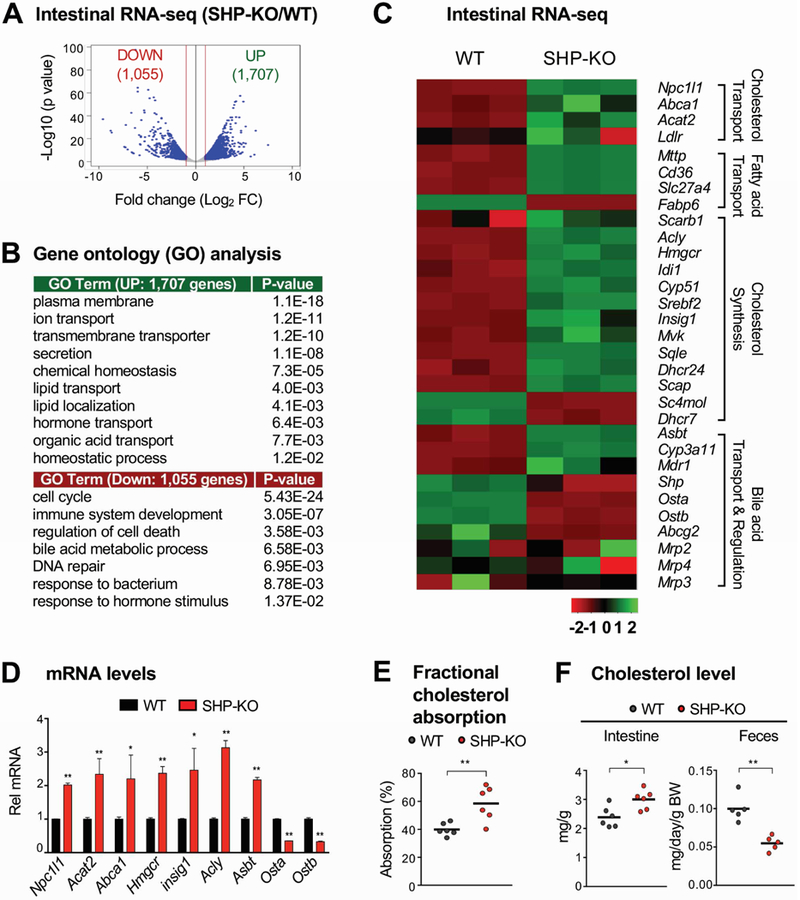
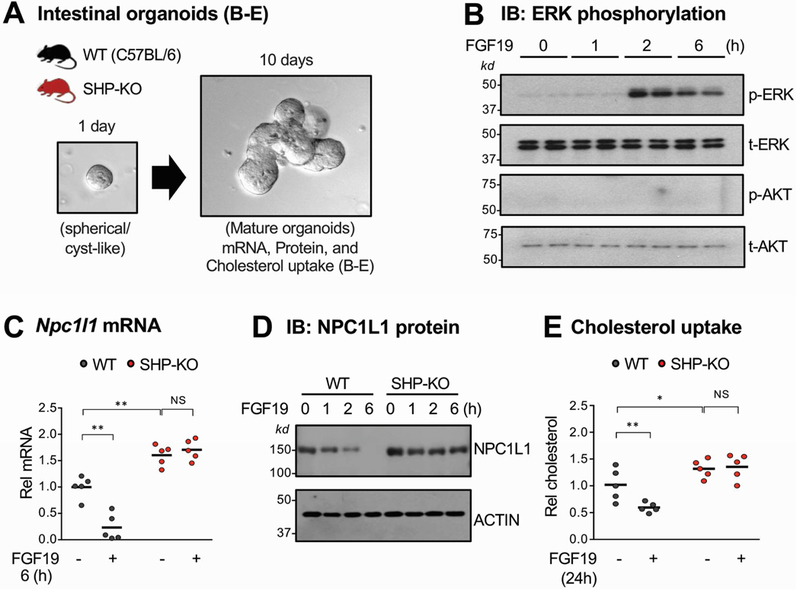
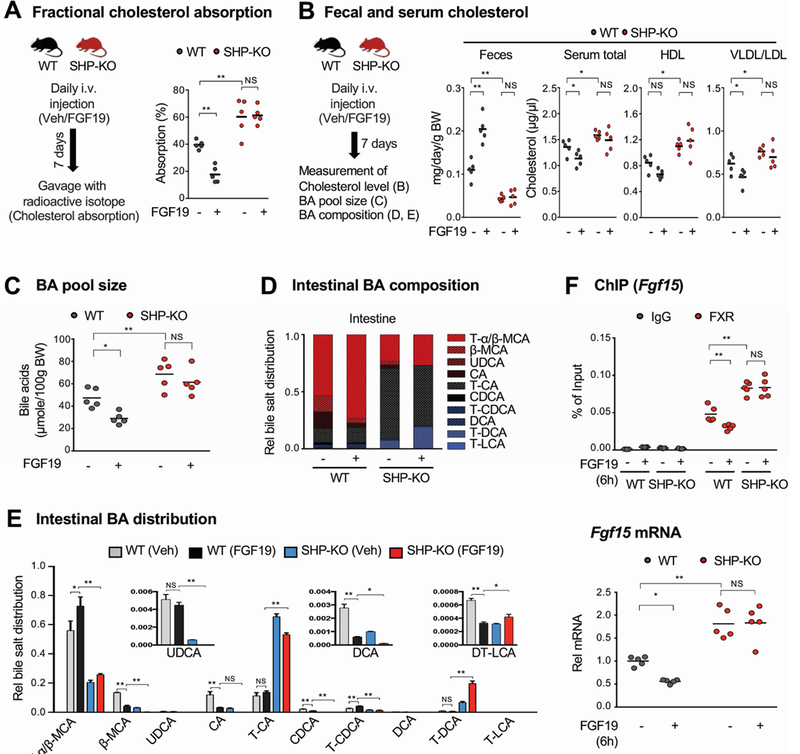
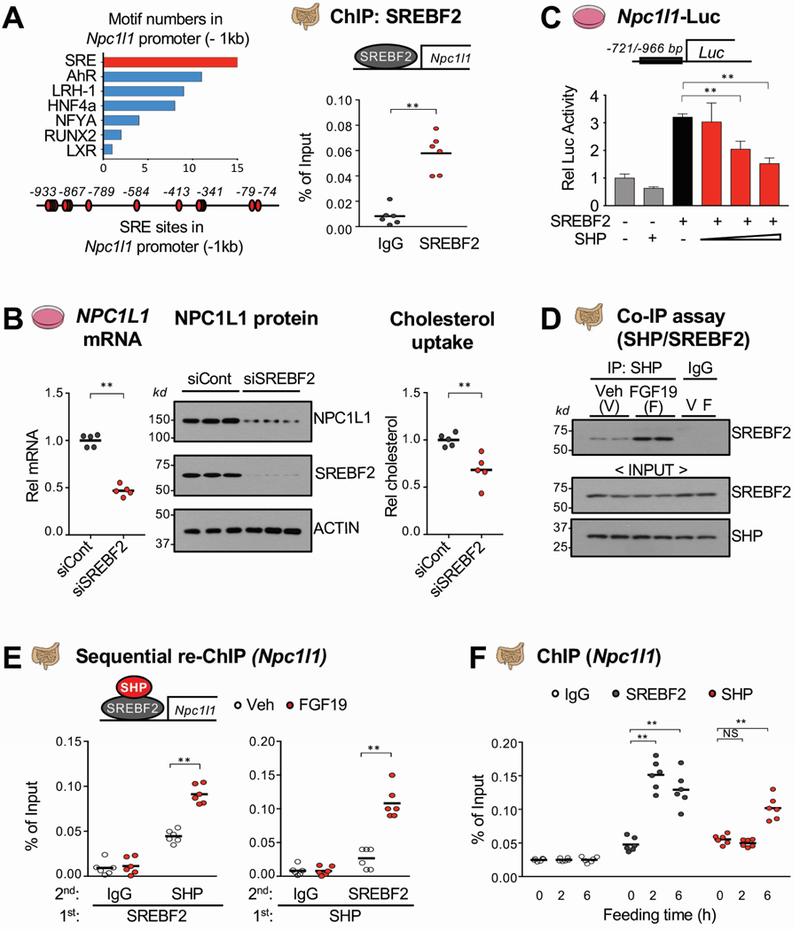
We performed histologic and biochemical analyses of intestinal tissues from C57BL/6 and SHP-knockout mice and performed RNA-sequencing analyses to identify genes regulated by SHP. The effects of fasting and refeeding on intestinal expression of NPC1L1 were examined in C57BL/6, SHP-knockout, and FGF15-knockout mice. Mice were given FGF19 daily for 1 week; fractional cholesterol absorption, cholesterol and bile acid (BA) levels, and composition of BAs were measured. Intestinal organoids were generated from C57BL/6 and SHP-knockout mice, and cholesterol uptake was measured. Luciferase reporter assays were performed with HT29 cells.
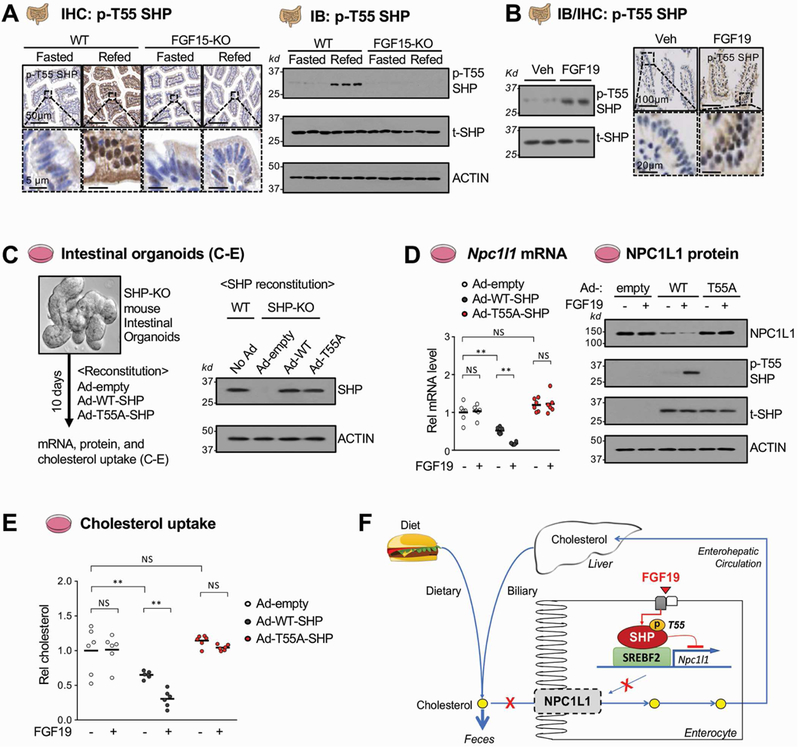
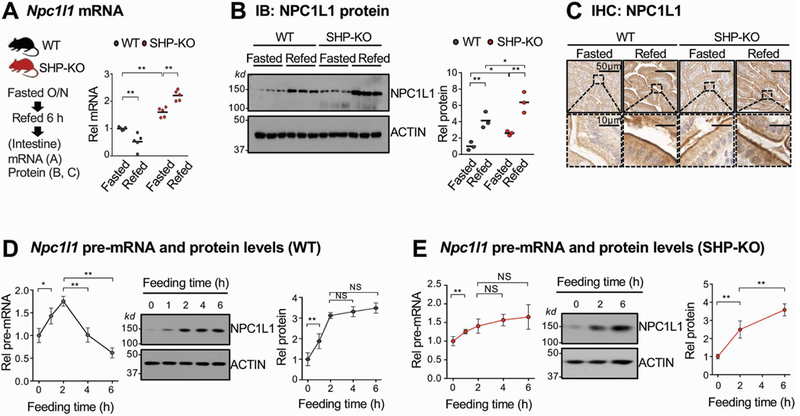
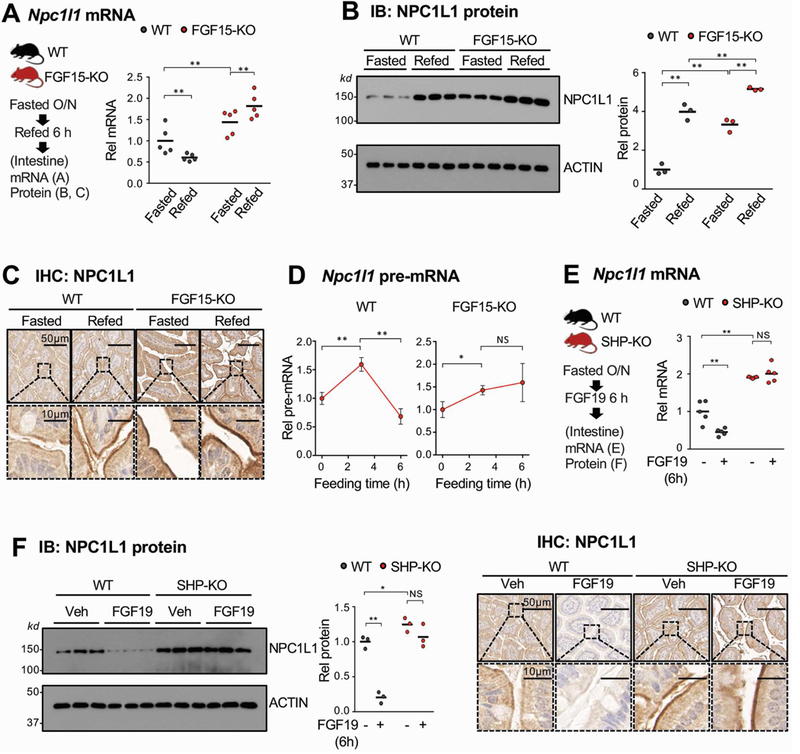
We found that the genes that regulate lipid and ion transport in intestine, including NPC1L1, were up-regulated and that cholesterol absorption was increased in SHP-knockout mice compared with C57BL/6 mice. Expression of NPC1L1 was reduced in C57BL/6 mice after refeeding after fasting but not in SHP-knockout or FGF15-knockout mice. SHP-knockout mice had altered BA composition compared with C57BL/6 mice. FGF19 injection reduced expression of NPC1L1, decreased cholesterol absorption, and increased levels of hydrophilic BAs, including tauro-α- and -β-muricholic acids; these changes were not observed in SHP-knockout mice. SREBF2 (sterol regulatory element binding transcription factor 2), which regulates cholesterol, activated transcription of NPC1L1. FGF19 signaling led to phosphorylation of SHP, which inhibited SREBF2 activity.
Postprandial FGF19 and SHP inhibit SREBF2, which leads to repression of intestinal NPC1L1 expression and cholesterol absorption. Strategies to increase FGF19 signaling to activate SHP might be developed for treatment of hypercholesterolemia.
核受体亚家族 0 组 B 成员 2(NR0B2,也称为 SHP)在肝脏和肠道中高水平表达。餐后成纤维细胞生长因子 19(人 FGF19,鼠 FGF15)信号增加 SHP 的转录活性。我们研究了 SHP 和 FGF19 在小鼠肠道中的功能,包括它们对胆固醇转运蛋白 NPC1L1(NPC1 样细胞内胆固醇转运蛋白 1)和胆固醇吸收的表达的调节。
我们对 C57BL/6 和 SHP 敲除小鼠的肠道组织进行了组织学和生化分析,并进行了 RNA 测序分析以鉴定受 SHP 调节的基因。在 C57BL/6、SHP 敲除和 FGF15 敲除小鼠中,研究了禁食和再喂养对肠道 NPC1L1 表达的影响。用 FGF19 每日处理小鼠 1 周;测量了分数胆固醇吸收、胆固醇和胆汁酸(BA)水平以及 BA 的组成。从小鼠中生成肠道类器官,并测量胆固醇摄取。用 HT29 细胞进行荧光素酶报告基因分析。
我们发现,调节肠道脂质和离子转运的基因,包括 NPC1L1,在 SHP 敲除小鼠中上调,与 C57BL/6 小鼠相比,胆固醇吸收增加。与 C57BL/6 小鼠相比,禁食后再喂养时 NPC1L1 的表达在 C57BL/6 小鼠中减少,但在 SHP 敲除或 FGF15 敲除小鼠中没有减少。与 C57BL/6 小鼠相比,SHP 敲除小鼠的 BA 组成发生改变。FGF19 注射降低 NPC1L1 的表达,减少胆固醇吸收,并增加亲水性 BA 的水平,包括牛磺酸-α-和 -β-鼠胆酸;这些变化在 SHP 敲除小鼠中未观察到。调节胆固醇的固醇调节元件结合转录因子 2(SREBF2)激活 NPC1L1 的转录。FGF19 信号导致 SHP 磷酸化,从而抑制 SREBF2 活性。
餐后 FGF19 和 SHP 抑制 SREBF2,导致肠道 NPC1L1 表达和胆固醇吸收受到抑制。增加 FGF19 信号以激活 SHP 的策略可能被开发用于治疗高胆固醇血症。