van Duijnhoven Hanneke J R, Roelofs Jolanda M B, den Boer Jasper J, Lem Frits C, Hofman Rifka, van Bon Geert E A, Geurts Alexander C H, Weerdesteyn Vivian
Department of Rehabilitation, Donders Institute for Brain, Cognition and Behaviour, Radboud University Medical Center, Nijmegen, Netherlands.
Department of Rehabilitation, Sint Maartenskliniek, Nijmegen, Netherlands.
Front Neurol. 2018 Nov 22;9:980. doi: 10.3389/fneur.2018.00980. eCollection 2018.
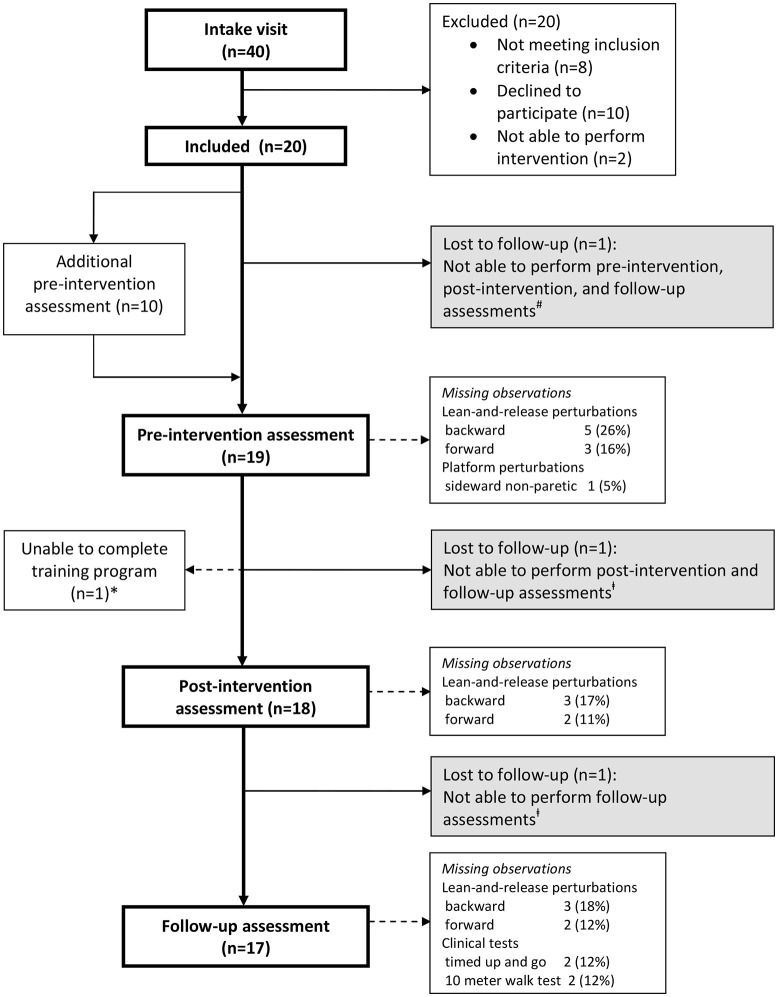
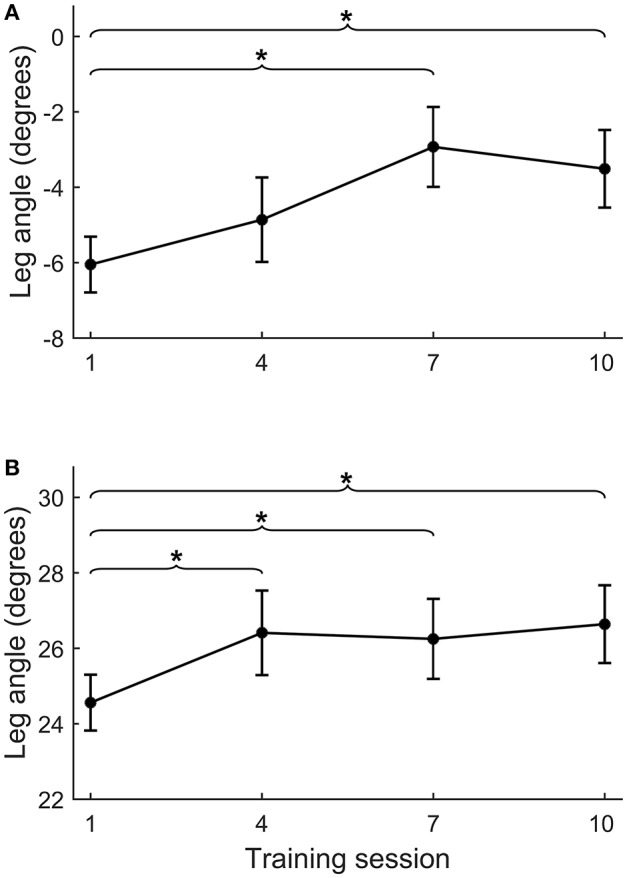
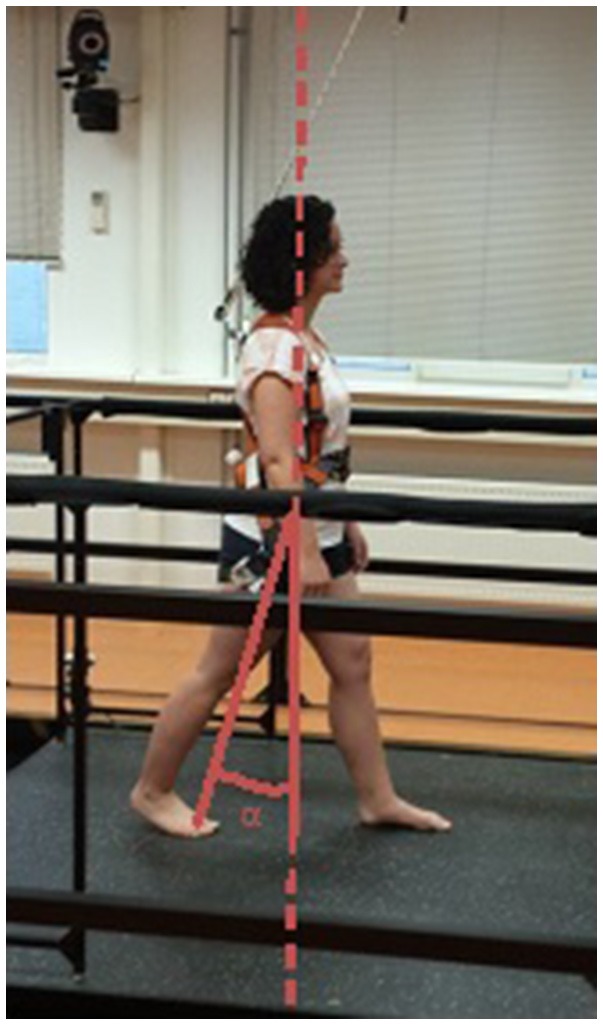
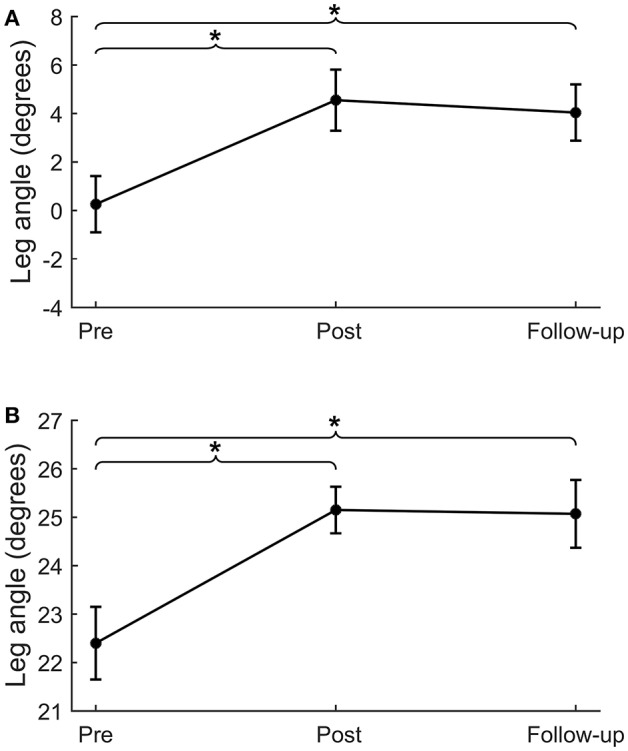
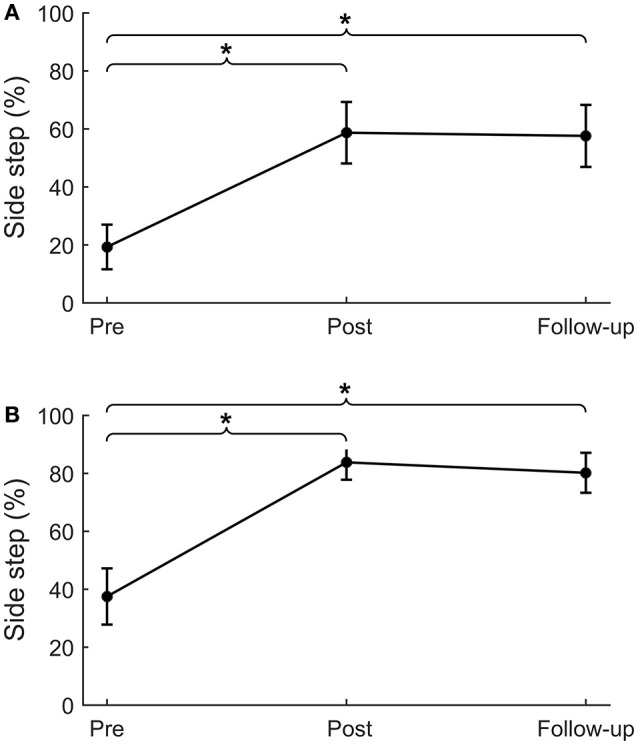
People with stroke often have impaired stepping responses following balance perturbations, which increases their risk of falling. Computer-controlled movable platforms are promising tools for delivering perturbation-based balance training under safe and standardized circumstances. This proof-of-concept study aimed to identify whether a 5-week perturbation-based balance training program on a movable platform improves reactive step quality in people with chronic stroke. Twenty people with chronic stroke received a 5-week perturbation-based balance training (10 sessions, 45 min) on a movable platform. As the primary outcome, backward, and forward reactive step quality (i.e., leg angle at stepping-foot contact) was assessed with a lean-and-release (i.e., non-trained) task at pre-intervention, immediately post-intervention, and 6 weeks after intervention (follow-up). Additionally, reactive step quality was assessed on the movable platform in multiple directions, as well as, the percentage side steps upon sideward perturbations. To ensure that changes in the primary outcome could not solely be attributed to learning effects on the task due to repeated testing, 10 randomly selected participants received an additional pre-intervention assessment, 6 weeks prior to training. Clinical assesments included the 6-item Activity-specific Balance Confidence (6-ABC) scale, Berg Balance Scale (BBS), Trunk Impairment Scale (TIS), 10-Meter Walking Test (10-MWT), and Timed Up and Go-test (TUG). After lean-and-release, we observed 4.3° and 2.8° greater leg angles at post compared to pre-intervention in the backward and forward direction, respectively. Leg angles also significantly improved in all perturbation directions on the movable platform. In addition, participants took 39% more paretic and 46% more non-paretic side steps. These effects were retained at follow-up. Post-intervention, BBS and TIS scores had improved. At follow-up, TIS and 6-ABC scores had significantly improved compared to pre-intervention. No significant changes were observed between the two pre-intervention assessments (n=10). A 5-week perturbation-based balance training on a movable platform appears to improve reactive step quality in people with chronic stroke. Importantly, improvements were retained after 6 weeks. Further controlled studies in larger patient samples are needed to verify these results and to establish whether this translates to fewer falls in daily life. The Netherlands National Trial Register (NTR3804). http://www.trialregister.nl/trialreg/admin/rctview.aspTC=3804.
中风患者在平衡受到干扰后,其迈步反应往往受损,这增加了他们摔倒的风险。计算机控制的可移动平台是在安全和标准化环境下提供基于干扰的平衡训练的有前景的工具。这项概念验证研究旨在确定在可移动平台上进行为期5周的基于干扰的平衡训练计划是否能改善慢性中风患者的反应性迈步质量。20名慢性中风患者在可移动平台上接受了为期5周的基于干扰的平衡训练(共10节,每节45分钟)。作为主要结果,在干预前、干预后即刻以及干预后6周(随访)时,通过倾斜和释放(即未训练的)任务评估向后和向前的反应性迈步质量(即迈步脚接触时的腿部角度)。此外,还在可移动平台上的多个方向评估反应性迈步质量,以及侧向干扰时侧向迈步的百分比。为确保主要结果的变化不能仅仅归因于重复测试对任务的学习效应,随机选择10名参与者在训练前6周进行了额外的干预前评估。临床评估包括6项特定活动平衡信心(6-ABC)量表、伯格平衡量表(BBS)、躯干损伤量表(TIS)、10米步行测试(10-MWT)和计时起立行走测试(TUG)。在倾斜和释放后,我们观察到与干预前相比,干预后向后和向前方向的腿部角度分别增加了4.3°和2.8°。在可移动平台上的所有干扰方向上,腿部角度也有显著改善。此外,参与者患侧的侧向迈步增加了39%,健侧增加了46%。这些效果在随访时得以保持。干预后,BBS和TIS评分有所改善。随访时,与干预前相比TIS和6-ABC评分有显著改善。在两次干预前评估之间(n = 10)未观察到显著变化。在可移动平台上进行为期5周的基于干扰的平衡训练似乎能改善慢性中风患者的反应性迈步质量。重要的是,6周后改善效果得以保持。需要在更大的患者样本中进行进一步的对照研究来验证这些结果,并确定这是否能转化为日常生活中摔倒次数的减少。荷兰国家试验注册库(NTR3804)。http://www.trialregister.nl/trialreg/admin/rctview.aspTC = 3804 。