Department of Dermatology, University of Wisconsin and the Middleton VA Medical Center, Madison, WI.
Department of Dermatology, Stanford University, Stanford, CA.
Neoplasia. 2019 Jan;21(1):82-92. doi: 10.1016/j.neo.2018.11.006. Epub 2018 Dec 4.
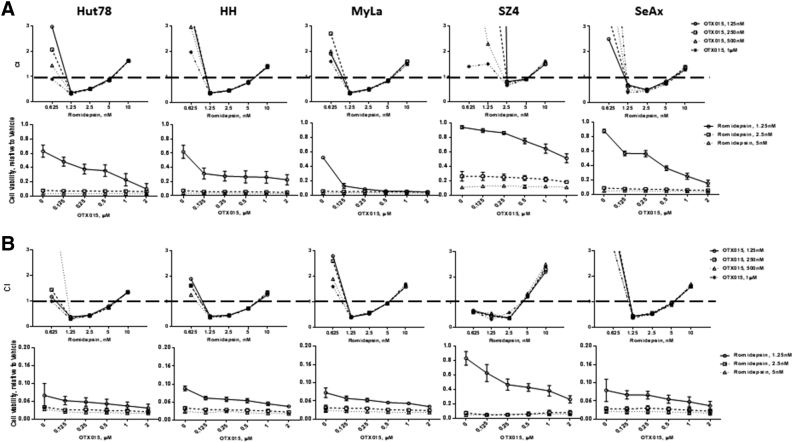
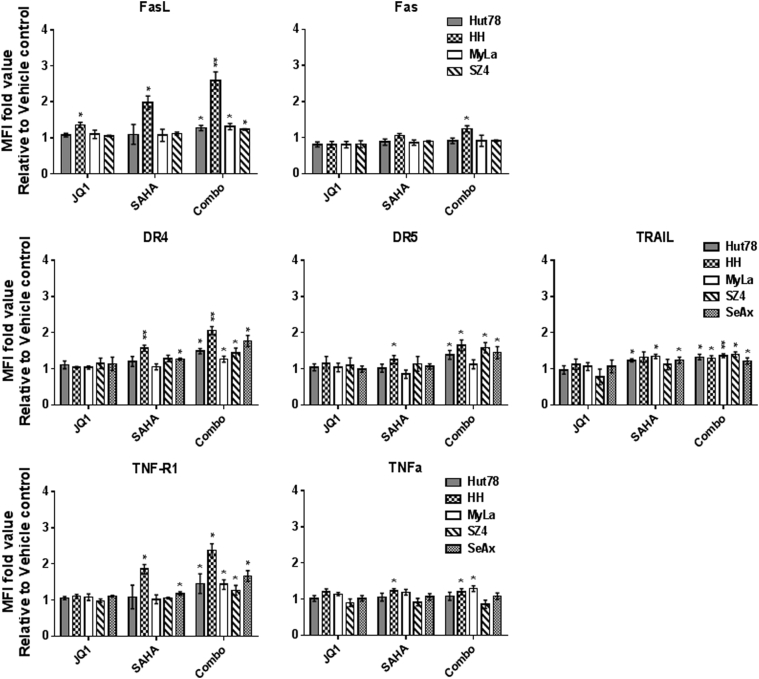
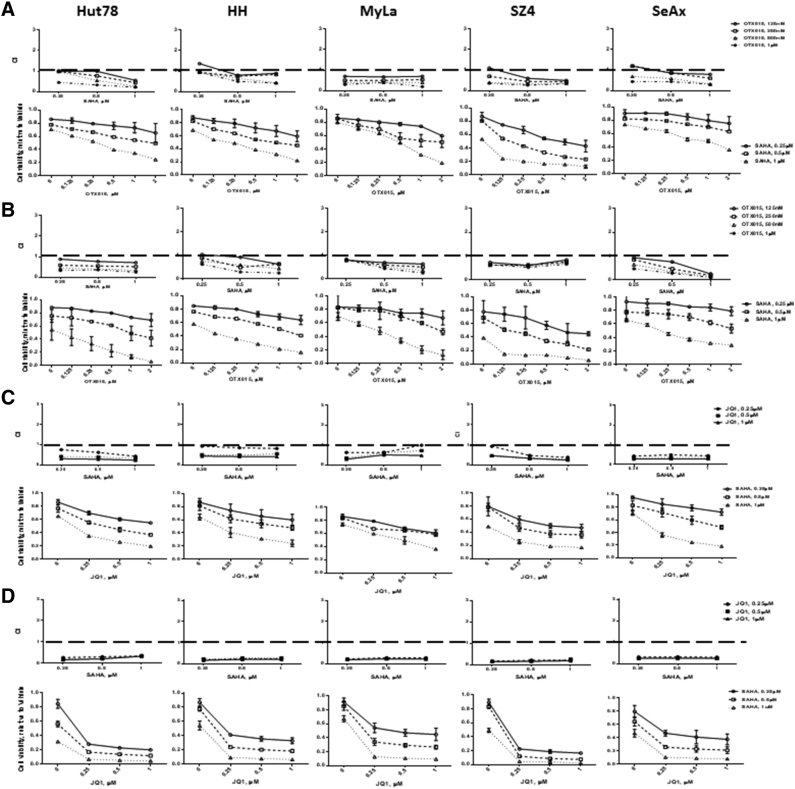
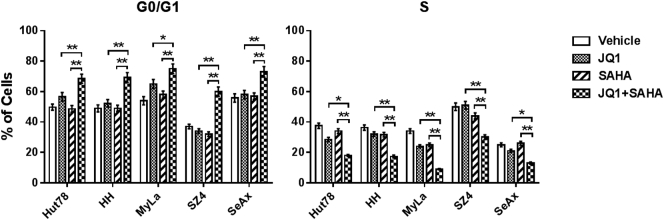
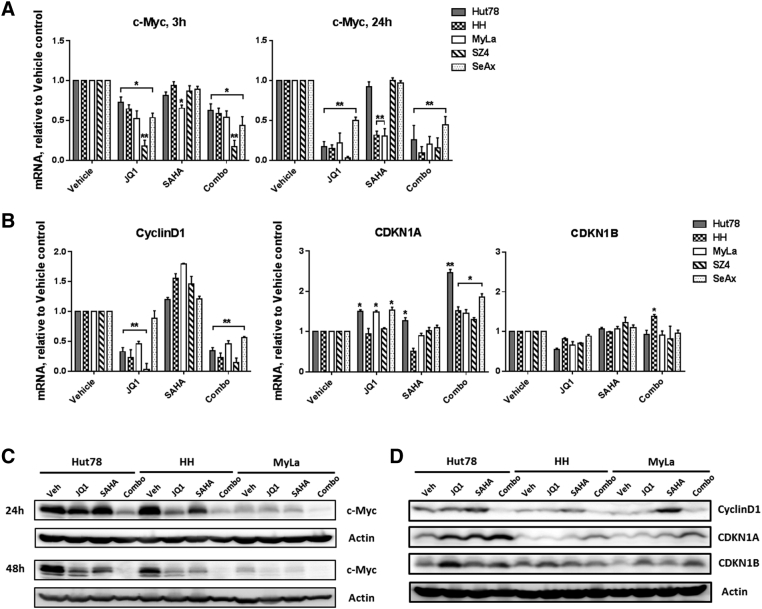
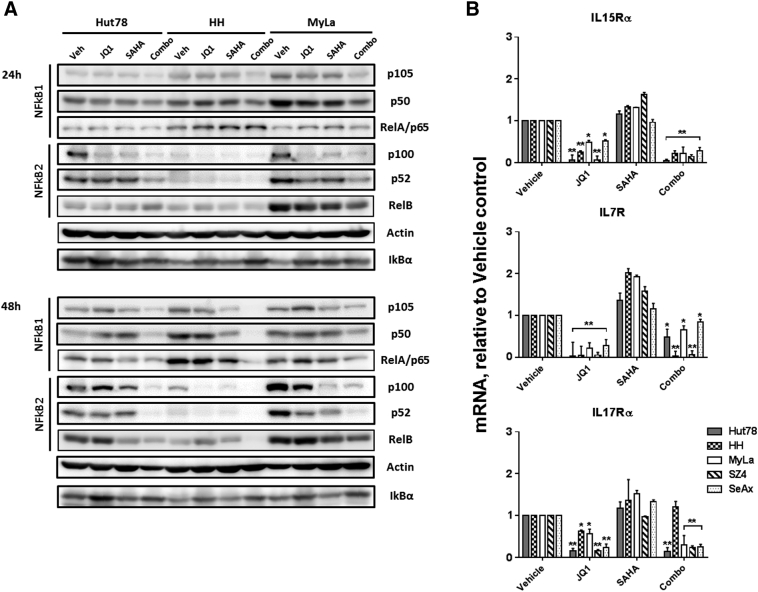
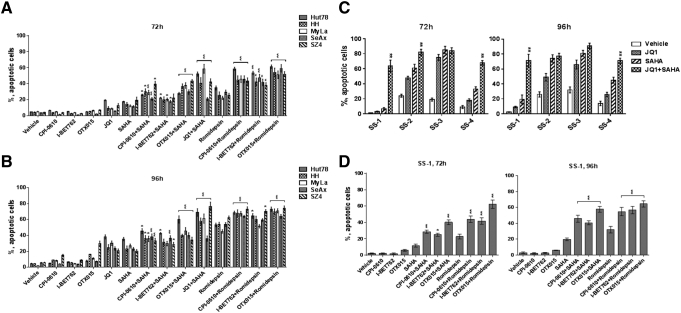
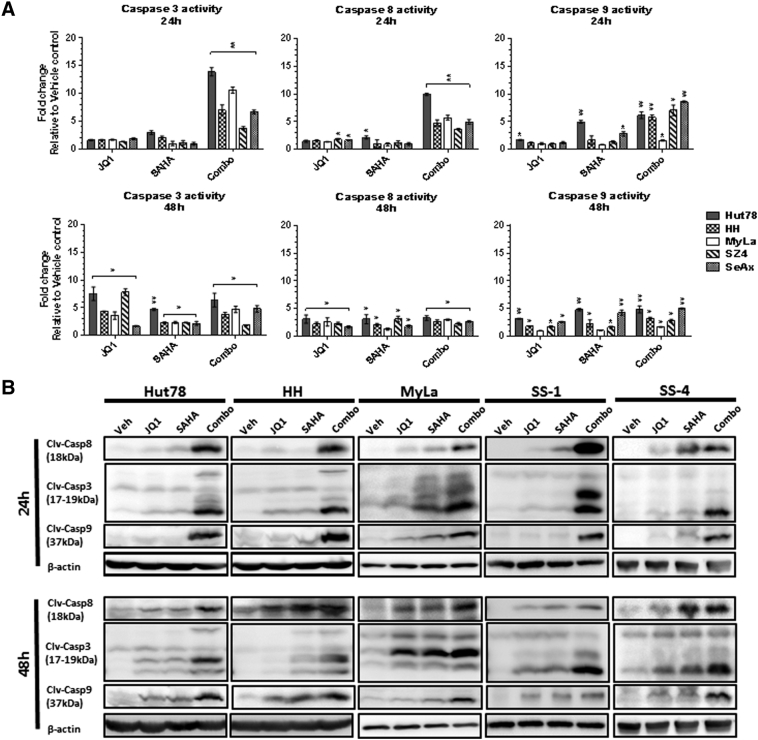
Advanced-stage cutaneous T-cell lymphoma (CTCL) is usually a fatal malignancy despite optimal use of currently available treatments. In this preclinical study of novel CTCL therapy, we performed in vitro and ex vivo experiments to determine the efficacy of combination treatment with a panel of BET bromodomain inhibitors (BETi) (JQ1, OTX015, CPI-0610, I-BET762) and HDAC inhibitors (HDACi) (SAHA/Vorinostat, Romidepsin). BETi/HDACi combinations were synergistic (combination index <1) against cell viability and induced G0/G1 cell cycle arrest. Apoptosis was uniformly enhanced. From a mechanistic standpoint, proliferative drivers c-Myc, Cyclin D1, NFkB, and IL-15Rα were reduced. Inhibitory CDKN1A was increased. CDKN1B, IL-7R, IL-17Rα, STAT3, and STAT5 alterations varied. There were significant increases in extrinsic apoptotic pathway death receptors and ligands (FasL, DR4, DR5, TRAIL, and TNFR1). At clinically tolerable levels of single agents, Romidepsin (1 nM) + OTX015 (125 nM) induced the greatest apoptosis (60%_80%) at 96 hours. Ex vivo studies of leukemic CTCL cells obtained from patients with Sezary syndrome also showed higher levels of apoptosis (about 60%-90%) in response to combination treatments relative to single agents. In contrast, combination treatment of normal CD4+ T cells induced only minimal apoptosis (<10%). Our findings show that the mechanism of action of BETi/HDACi therapy in CTCL involves induction of both cell cycle arrest and apoptosis with reduced proliferative drivers and enhanced expression of apoptotic extrinsic pathway death receptors and ligands. Relative to single agents, the superior anti-CTCL effects of BETi/HDACi combinations in vitro and ex vivo provide a rationale for clinical trials exploring their efficacy as therapy for CTCL.
晚期皮肤 T 细胞淋巴瘤(CTCL)尽管采用了目前可用的治疗方法,但通常仍是一种致命的恶性肿瘤。在这项新型 CTCL 治疗的临床前研究中,我们进行了体外和离体实验,以确定联合使用一组 BET 溴结构域抑制剂(BETi)(JQ1、OTX015、CPI-0610、I-BET762)和组蛋白去乙酰化酶抑制剂(HDACi)(SAHA/伏立诺他、罗米地辛)治疗的疗效。BETi/HDACi 联合用药对细胞活力具有协同作用(组合指数<1),并诱导 G0/G1 细胞周期停滞。细胞凋亡普遍增强。从机制角度来看,增殖驱动因子 c-Myc、Cyclin D1、NFkB 和 IL-15Rα 减少,而抑制性 CDKN1A 增加。CDKN1B、IL-7R、IL-17Rα、STAT3 和 STAT5 的改变各有不同。细胞外凋亡途径的死亡受体和配体(FasL、DR4、DR5、TRAIL 和 TNFR1)显著增加。在单药可耐受的临床水平下,罗米地辛(1 nM)+OTX015(125 nM)在 96 小时诱导最大的细胞凋亡(60%_80%)。来自患有蕈样真菌病的患者的白血病 CTCL 细胞的离体研究也表明,与单药相比,联合治疗诱导的细胞凋亡水平更高(约 60%-90%)。相比之下,联合治疗正常 CD4+T 细胞仅诱导轻微的细胞凋亡(<10%)。我们的研究结果表明,BETi/HDACi 治疗 CTCL 的作用机制涉及诱导细胞周期停滞和凋亡,同时降低增殖驱动因子并增强凋亡细胞外途径死亡受体和配体的表达。与单药相比,BETi/HDACi 联合用药在体外和离体的优越抗 CTCL 作用为探索其作为 CTCL 治疗的疗效的临床试验提供了依据。