Parrine Débora, Wu Bo-Sen, Muhammad Bilal, Rivera Keith, Pappin Darryl, Zhao Xin, Lefsrud Mark
1Department of Bioresource Engineering, Macdonald Campus, McGill University, 21,111 Lakeshore Boulevard, Sainte-Anne-de-Bellevue, Quebec H9X 3V9 Canada.
2Department of Animal Science, Macdonald Campus, McGill University, 21,111 Lakeshore Boulevard, Sainte-Anne-de-Bellevue, QC H9X 3V9 Canada.
Proteome Sci. 2018 Nov 24;16:20. doi: 10.1186/s12953-018-0148-2. eCollection 2018.
Abiotic stress reduces photosynthetic yield and plant growth, negatively impacting global crop production and is a major constraint faced by agriculture. However, the knowledge on the impact on plants under extremely high irradiance is limited. We present the first in-depth proteomics analysis of plants treated with a method developed by our research group to generate a light gradient using an extremely intense light.
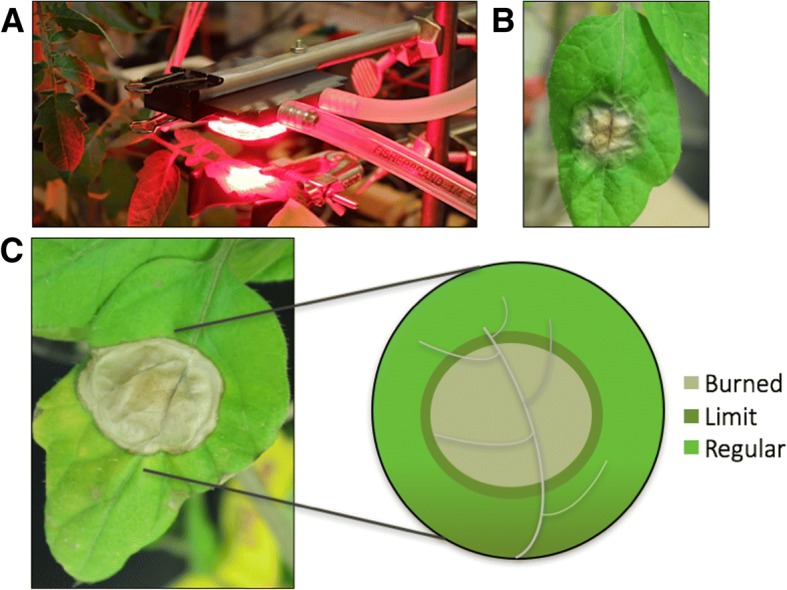
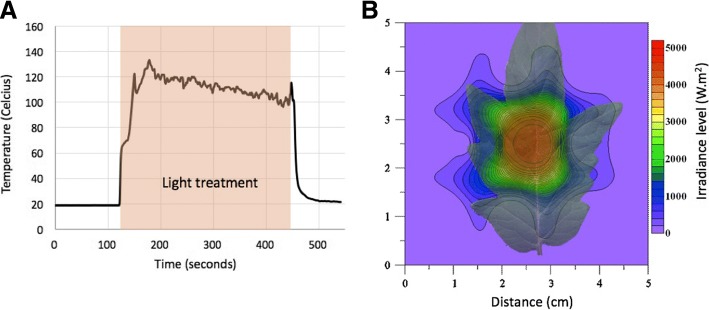
The method consists of utilizing light emitting diodes (LED) to create a single spot at 24,000 μmol m s irradiance, generating three light stress levels. A light map and temperature profile were obtained during the light experiment. The proteins expressed in the treated tomato (, Heinz H1706) leaves were harvested 10 days after the treatment, allowing for the detection of proteins involved in a long-term recovery. A multiplex labeled proteomics method (iTRAQ) was analyzed by LC-MS/MS.
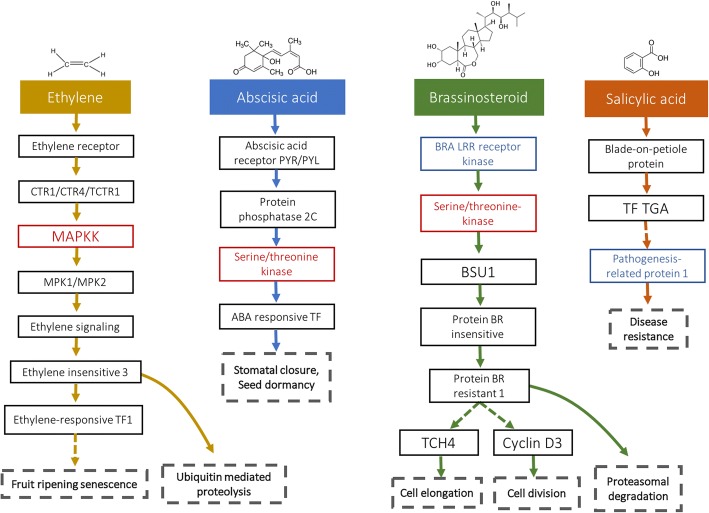
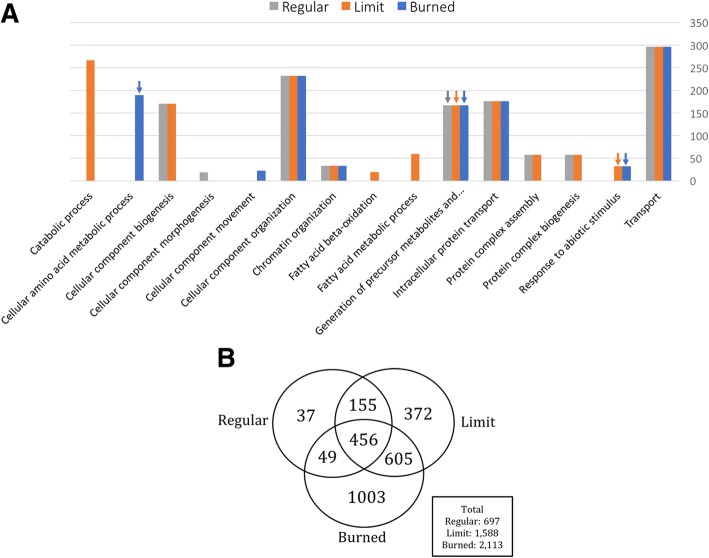
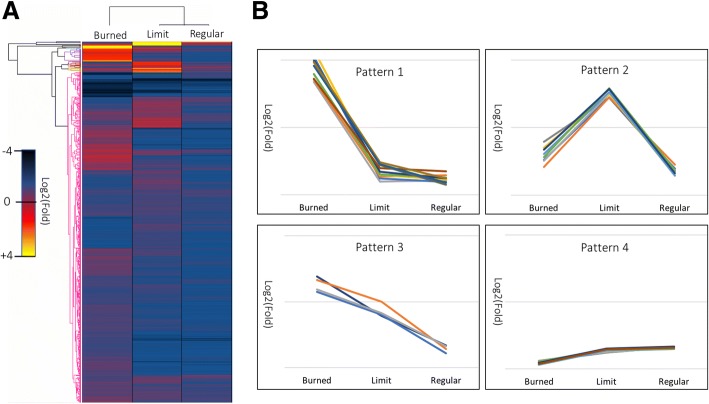
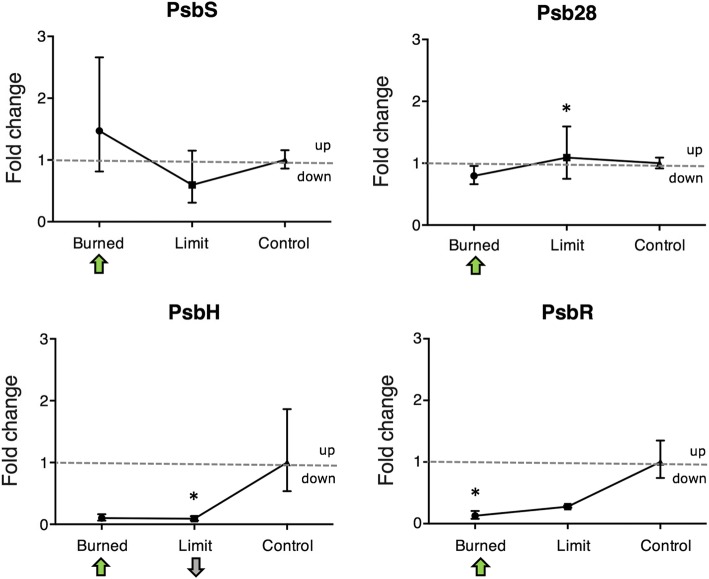
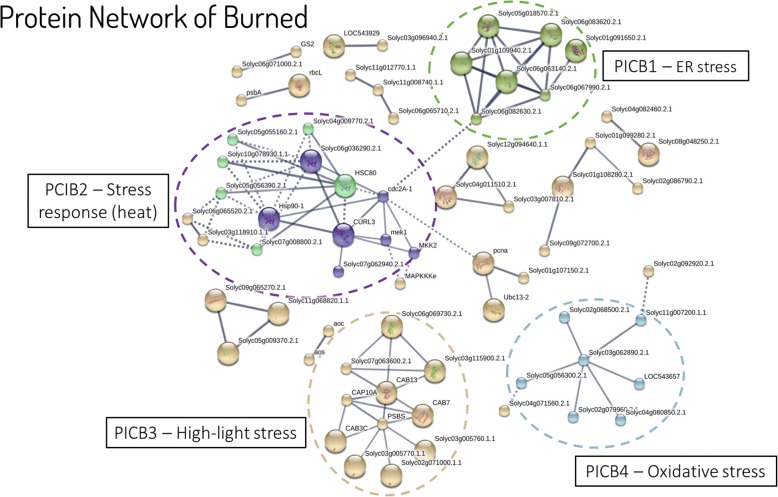
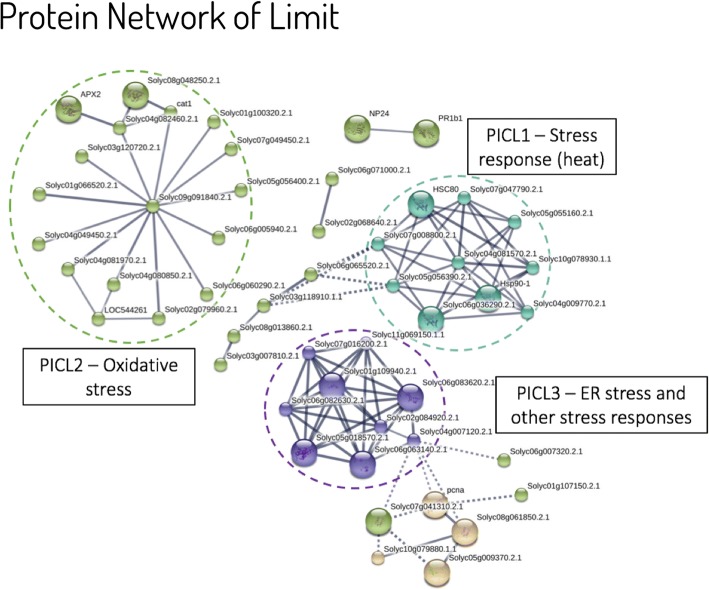
A total of 3994 proteins were identified at 1% false discovery rate and matched additional quality filters. Hierarchical clustering analysis resulted in four types of patterns related to the protein expression, with one being directly linked to the increased LED irradiation. A total of 37 proteins were found unique to the least damaged leaf zone, while the medium damaged zone had 372 proteins, and the severely damaged presented unique 1003 proteins. Oxygen evolving complex and PSII complex proteins (PsbH, PsbS, PsbR and Psb28) were found to be abundant in the most damaged leaf zone. This leaf zone presented a protein involved in the salicylic acid response, while it was not abundant in the other leaf zones. The mRNA level of PsbR was significantly lower (1-fold) compared the control in the most damaged zone of the leaf, while Psb28 and PsbH were lower (1-fold) in the less damaged leaf zones. PsbS mRNA abundance in all leaf zones tested presented no statistically significant change from the control.
We present the first characterization of the proteome changes caused by an extreme level of high-light intensity (24,000 μmol m s). The proteomics results show the presence of specific defense responses to each level of light intensity, with a possible involvement of proteins PsbH, Psb28, PsbR, and PsbS.
非生物胁迫会降低光合产量和植物生长,对全球作物生产产生负面影响,是农业面临的主要制约因素。然而,关于极高辐照度对植物影响的了解有限。我们首次对采用本研究小组开发的利用极强光产生光梯度的方法处理的植物进行了深入的蛋白质组学分析。
该方法包括利用发光二极管(LED)在24000 μmol m⁻² s⁻¹辐照度下创建一个单点,产生三种光胁迫水平。在光照实验期间获得了光照图和温度曲线。处理后的番茄(Heinz H1706)叶片在处理10天后收获,以便检测参与长期恢复的蛋白质。采用多重标记蛋白质组学方法(iTRAQ)通过液相色谱-串联质谱(LC-MS/MS)进行分析。
在1%的错误发现率下共鉴定出3994种蛋白质,并符合其他质量筛选标准。层次聚类分析产生了与蛋白质表达相关的四种模式类型,其中一种与LED照射增加直接相关。在损伤最小的叶区共发现37种独特蛋白质,中度损伤区有372种蛋白质,严重损伤区有1003种独特蛋白质。在损伤最严重的叶区发现放氧复合体和PSII复合体蛋白(PsbH、PsbS、PsbR和Psb28)含量丰富。该叶区呈现一种参与水杨酸反应的蛋白质,而在其他叶区含量不丰富。在叶片损伤最严重的区域,PsbR的mRNA水平比对照显著降低(1倍),而在损伤较轻的叶区,Psb28和PsbH降低(1倍)。在所测试的所有叶区中,PsbS的mRNA丰度与对照相比无统计学显著变化。
我们首次对由极高光强度(24000 μmol m⁻² s⁻¹)引起的蛋白质组变化进行了表征。蛋白质组学结果表明,对每个光强度水平都存在特定的防御反应,可能涉及蛋白质PsbH、Psb28、PsbR和PsbS。