de Pablo Flora, Hernández-Sánchez Catalina, de la Rosa Enrique J
3D Lab, Development, Differentiation and Degeneration, Centro de Investigaciones Biológicas, Consejo Superior de Investigaciones Científicas (CIB/CSIC), Madrid, Spain.
Centro de Investigación Biomédica en Red de Diabetes y Enfermedades Metabólicas Asociadas (CIBERDEM), ISCIII, Madrid, Spain.
Front Mol Neurosci. 2018 Nov 26;11:426. doi: 10.3389/fnmol.2018.00426. eCollection 2018.
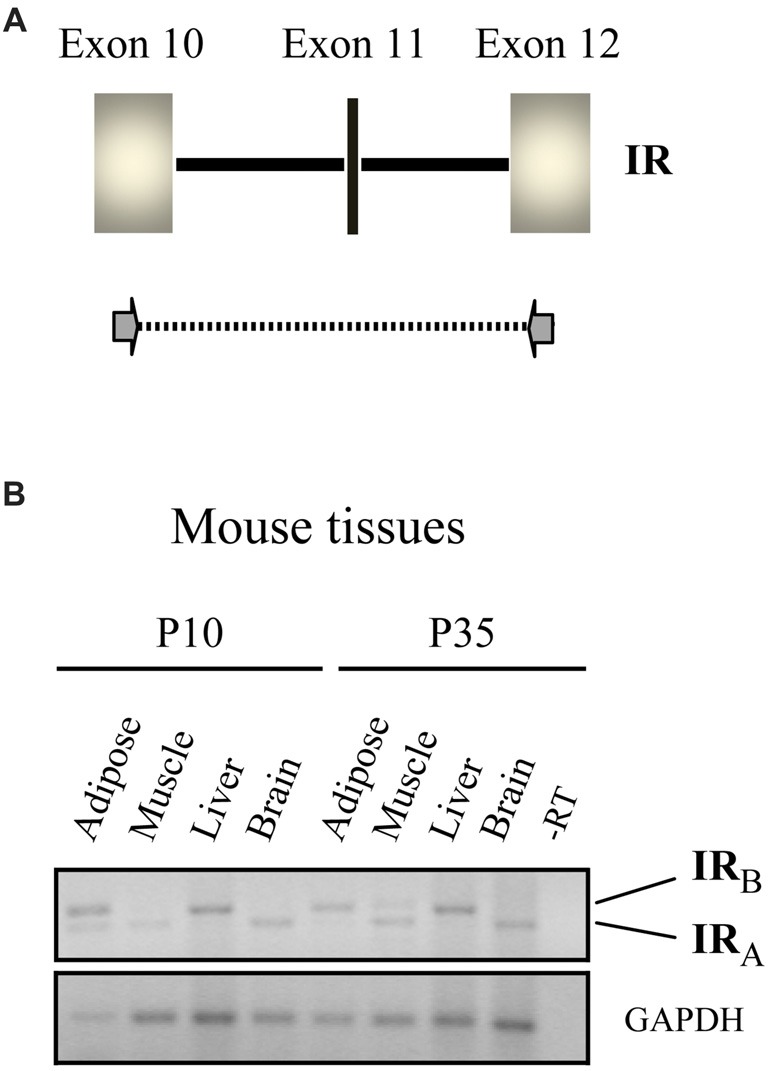
Proinsulin was first identified as the primary translation product of the insulin gene in Donald Steiner's laboratory in 1967, and was the first prohormone to be isolated and sequenced. While its role as an insulin precursor has been extensively studied in the field of endocrinology, the bioactivity of the proinsulin molecule itself has received much less attention. Insulin binds to isoforms A and B of the insulin receptor (IR) with high affinity. Proinsulin, in contrast, binds with high affinity only to IR-A, which is present in the nervous system, among other tissues and elicits antiapoptotic and neuroprotective effects in the developing and postnatal nervous system. Proinsulin specifically exerts neuroprotection in the degenerating retina in mouse and rat models of retinitis pigmentosa (RP), delaying photoreceptor and vision loss after local administration in the eye or systemic (intramuscular) administration of an adeno-associated viral (AAV) vector that induces constitutive proinsulin release. AAV-mediated proinsulin expression also decreases the expression of neuroinflammation markers in the hippocampus and sustains cognitive performance in a mouse model of precocious brain senescence. We have therefore proposed that proinsulin should be considered a functionally distinct member of the insulin superfamily. Here, we briefly review the legacy of Steiner's research, the neural expression of proinsulin, and the tissue expression patterns and functional characteristics of IR-A. We discuss the neuroprotective activity of proinsulin and its potential as a therapeutic tool in neurodegenerative conditions of the central nervous system, particularly in retinal dystrophies.
1967年,胰岛素原在唐纳德·施泰纳的实验室中首次被鉴定为胰岛素基因的主要翻译产物,并且是首个被分离和测序的前激素。虽然其作为胰岛素前体的作用在内分泌学领域已得到广泛研究,但胰岛素原分子本身的生物活性却很少受到关注。胰岛素以高亲和力与胰岛素受体(IR)的A和B亚型结合。相比之下,胰岛素原仅与IR-A以高亲和力结合,IR-A存在于神经系统以及其他组织中,并在发育中和出生后的神经系统中发挥抗凋亡和神经保护作用。在视网膜色素变性(RP)的小鼠和大鼠模型中,胰岛素原在退化的视网膜中特异性地发挥神经保护作用,在眼部局部给药或全身(肌肉内)给药诱导组成型胰岛素原释放的腺相关病毒(AAV)载体后,可延缓光感受器退化和视力丧失。AAV介导的胰岛素原表达还可降低海马体中神经炎症标志物的表达,并在早熟脑衰老的小鼠模型中维持认知能力。因此,我们提出胰岛素原应被视为胰岛素超家族中功能独特的成员。在此,我们简要回顾施泰纳的研究成果、胰岛素原的神经表达以及IR-A的组织表达模式和功能特征。我们讨论了胰岛素原的神经保护活性及其作为中枢神经系统神经退行性疾病,特别是视网膜营养不良治疗工具的潜力。