Smithsonian Tropical Research Institute, Balboa, Ancón, Republic of Panama.
Centre for Tropical Biodiversity and Climate Change, College of Science and Engineering, James Cook University, Townsville, Queensland, Australia.
J Exp Bot. 2019 Nov 29;70(22):6561-6570. doi: 10.1093/jxb/ery431.
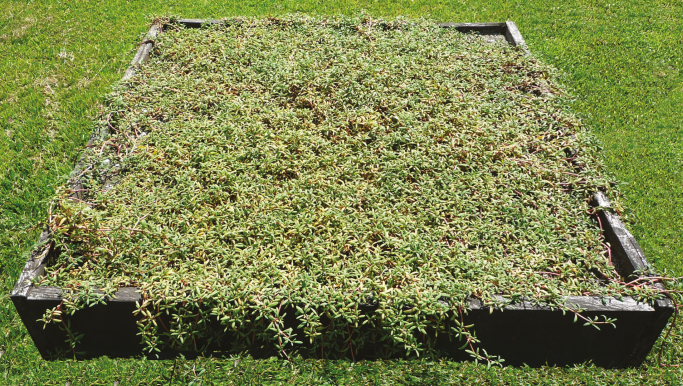
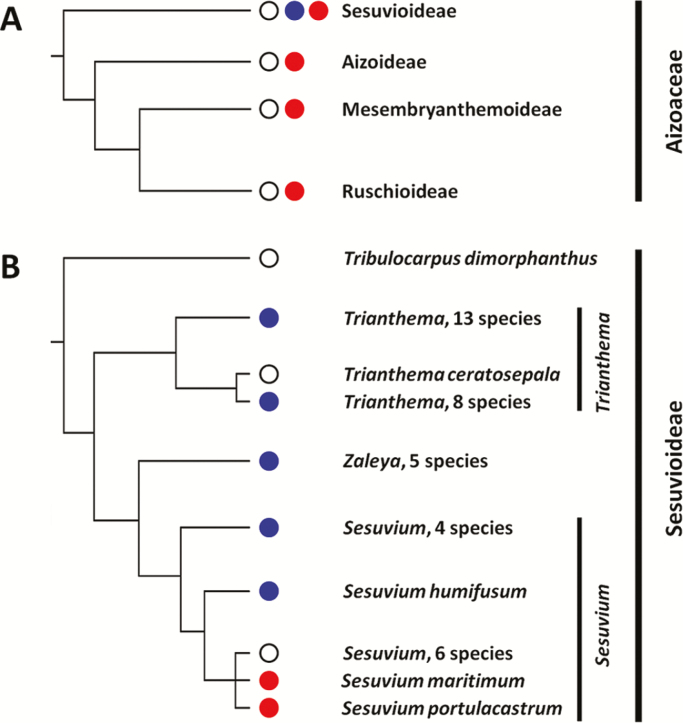
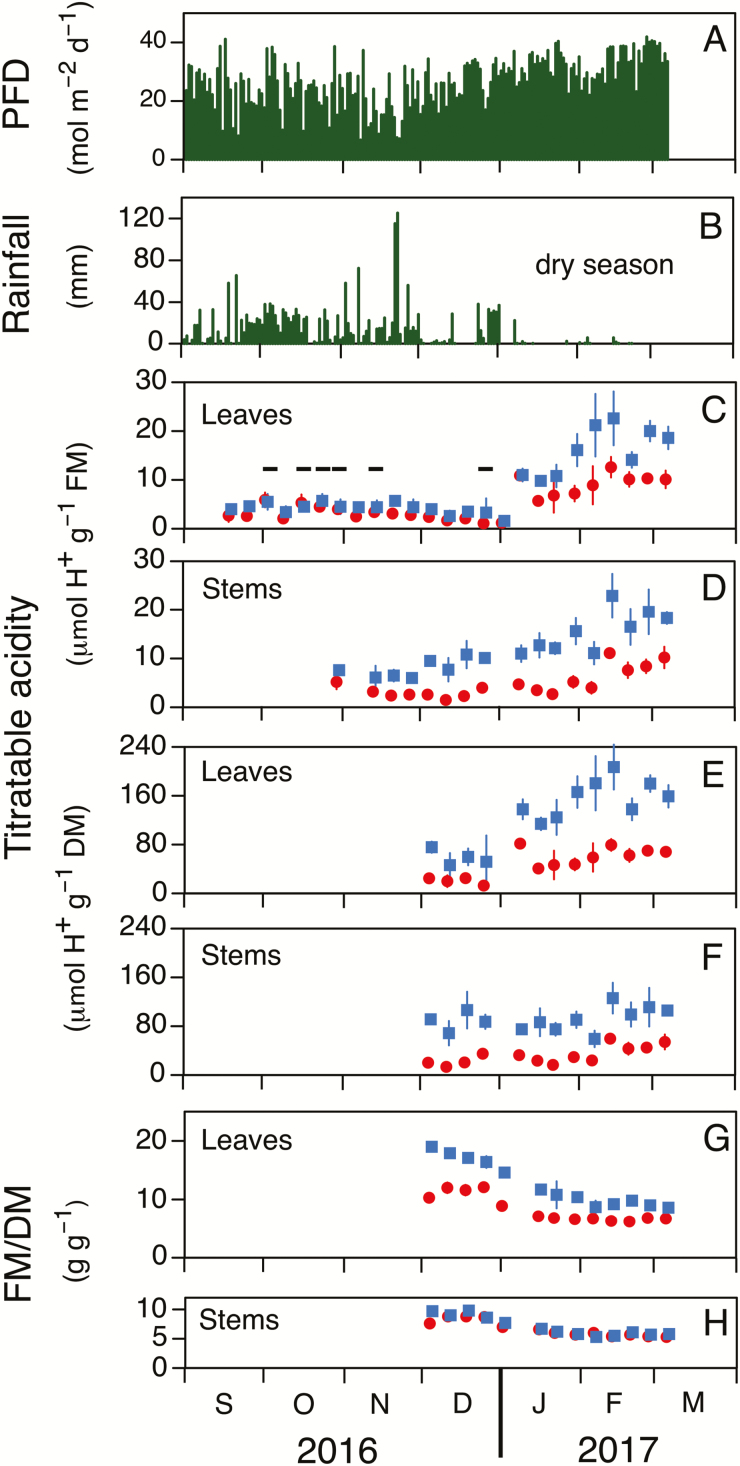
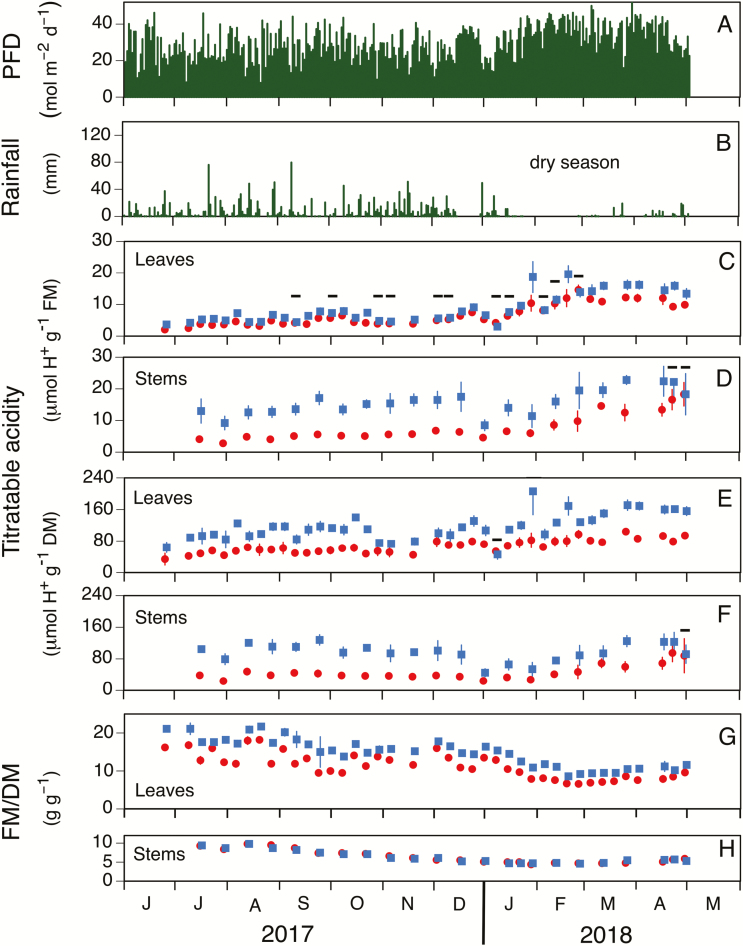
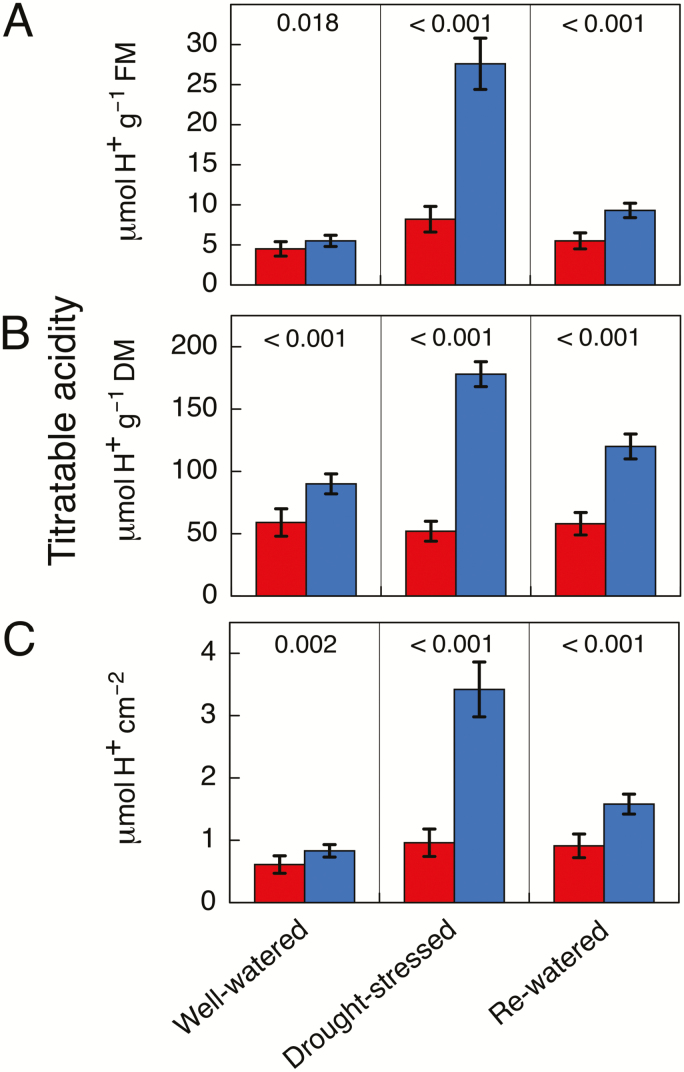
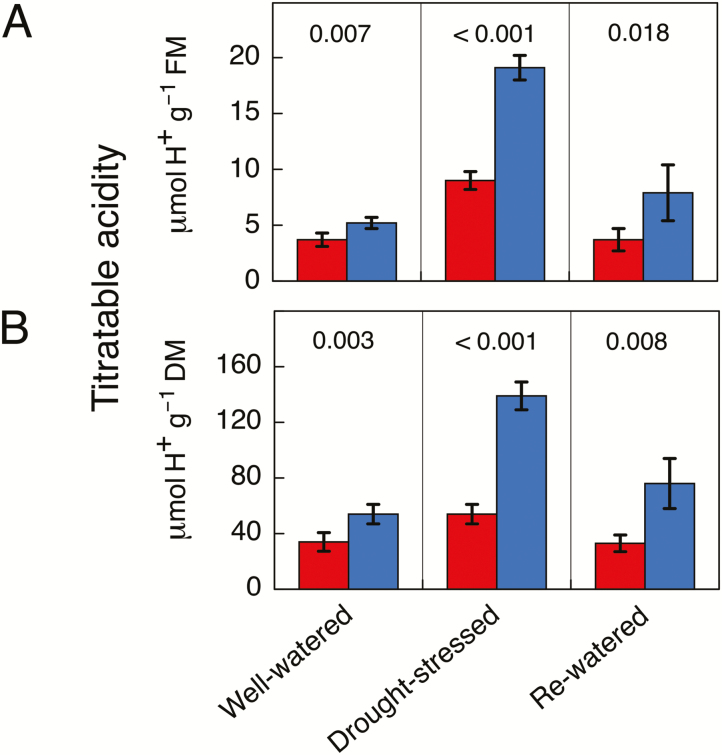
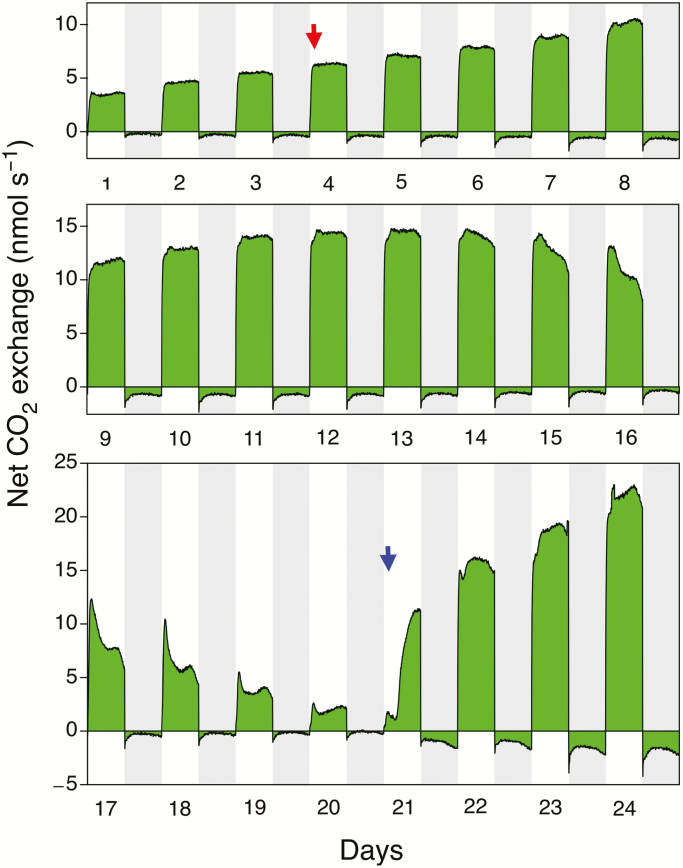
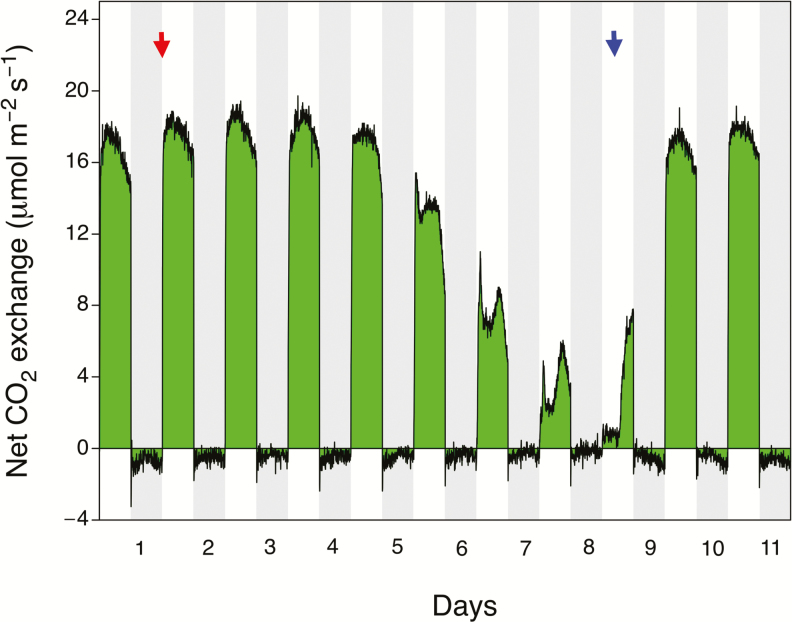
Demonstration of crassulacean acid metabolism (CAM) in species with low usage of this system relative to C3-photosynthetic CO2 assimilation can be challenging experimentally but provides crucial information on the early steps of CAM evolution. Here, weakly expressed CAM was detected in the well-known pantropical coastal, leaf-succulent herb Sesuvium portulacastrum, demonstrating that CAM is present in the Sesuvioideae, the only sub-family of the Aizoaceae in which it had not yet been shown conclusively. In outdoor plots in Panama, leaves and stems of S. portulacastrum consistently exhibited a small degree of nocturnal acidification which, in leaves, increased during the dry season. In potted plants, nocturnal acidification was mainly facultative, as levels of acidification increased in a reversible manner following the imposition of short-term water-stress. In drought-stressed plants, nocturnal net CO2 exchange approached the CO2-compensation point, consistent with low rates of CO2 dark fixation sufficient to eliminate respiratory carbon loss. Detection of low-level CAM in S. portulacastrum adds to the growing number of species that cannot be considered C3 plants sensu stricto, although they obtain CO2 principally via the C3 pathway. Knowledge about the presence/absence of low-level CAM is critical when assessing trajectories of CAM evolution in lineages. The genus Sesuvium is of particular interest because it also contains C4 species.
在与 C3 光合作用 CO2 同化相比,低使用率的物种中展示景天酸代谢(CAM)可能具有挑战性,但这为 CAM 进化的早期步骤提供了关键信息。在这里,在广为人知的泛热带沿海叶肉质草本 Sesuvium portulacastrum 中检测到表达较弱的 CAM,这表明 CAM 存在于 Aizoaceae 科 Sesuvioideae 亚科中,这是尚未明确证明存在 CAM 的唯一亚科。在巴拿马的户外试验中,Sesuvium portulacastrum 的叶片和茎始终表现出轻微的夜间酸化,在旱季,这种酸化在叶片中增加。在盆栽植物中,夜间酸化主要是兼性的,因为在短期胁迫下,酸化水平以可逆的方式增加。在受干旱胁迫的植物中,夜间净 CO2 交换接近 CO2 补偿点,这与足以消除呼吸碳损失的低水平 CO2 暗固定率一致。在 Sesuvium portulacastrum 中检测到低水平的 CAM 增加了越来越多的不能被视为严格意义上的 C3 植物的物种数量,尽管它们主要通过 C3 途径获得 CO2。在评估 CAM 进化轨迹时,了解低水平 CAM 的存在与否至关重要。Sesuvium 属特别有趣,因为它还包含 C4 物种。