Oncohematology Unit, Department of Pediatric Oncology, A. Meyer Children's University Hospital, Florence, Italy.
Department of Experimental and Clinical Medicine, University of Florence, Florence, Italy.
Oxid Med Cell Longev. 2018 Nov 13;2018:6816508. doi: 10.1155/2018/6816508. eCollection 2018.
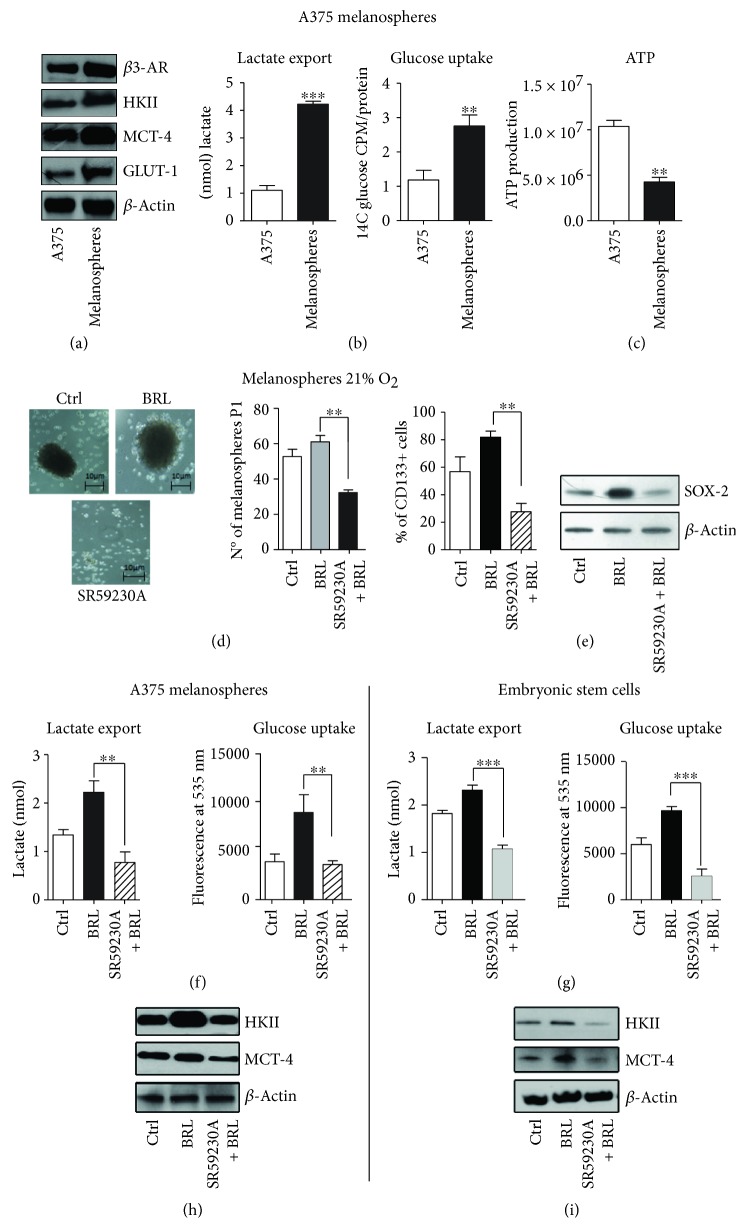
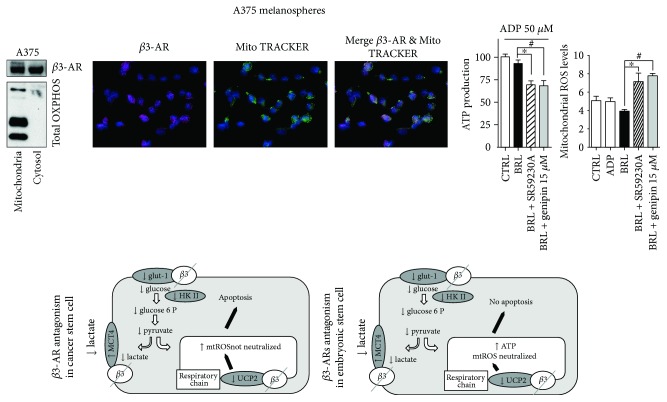
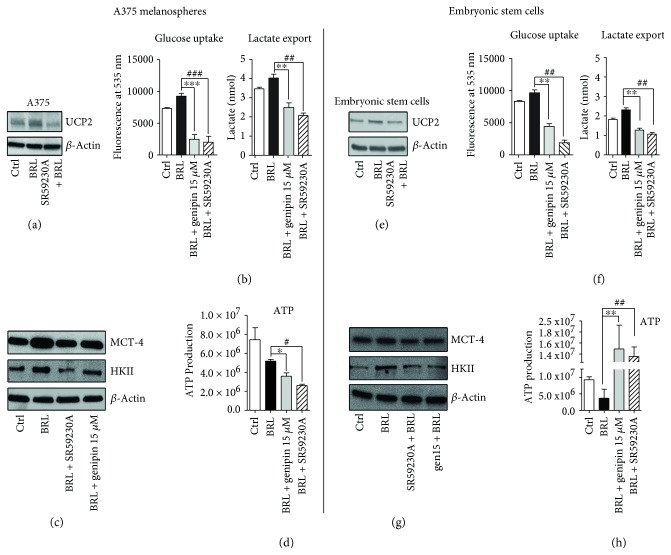
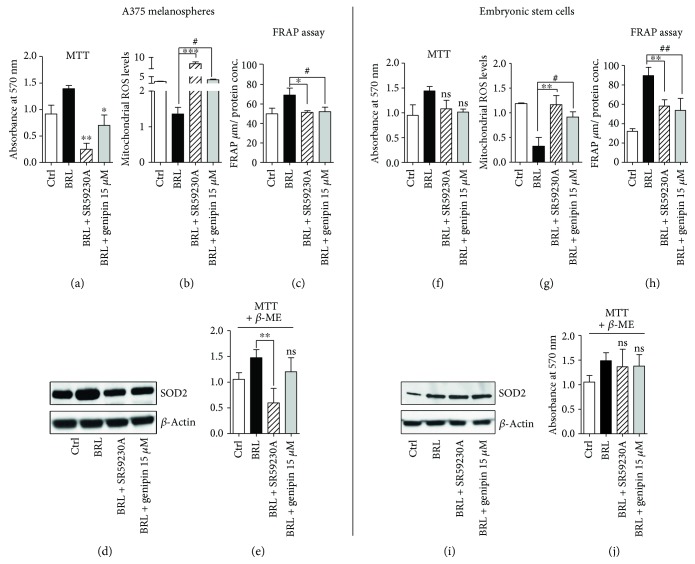
The early phases of embryonic development and cancer share similar strategies to improve their survival in an inhospitable environment: both proliferate in a hypoxic and catecholamine-rich context, increasing aerobic glycolysis. Recent studies show that 3-adrenergic receptor (3-AR) is involved in tumor progression, playing an important role in metastasis. Among -adrenergic receptors, 3-AR is the last identified member of this family, and it is involved in cancer cell survival and induction of stromal reactivity in the tumor microenvironment. 3-AR is well known as a strong activator of uncoupling protein 1 (UCP1) in brown fat tissue. Interestingly, 3-AR is strongly expressed in early embryo development and in many cancer tissues. Induction of uncoupling protein 2 (UCP2) has been related to cancer metabolic switch, leading to accelerated glycolysis and reduced mitochondrial activity. In this study, for the first time, we demonstrate that 3-AR is able to promote this metabolic shift in both cancer and embryonic stem cells, inducing specific glycolytic cytoplasmic enzymes and a sort of mitochondrial dormancy through the induction of UCP2. The 3-AR/UCP2 axis induces a strong reduction of mitochondrial activity by reducing ATP synthesis and mitochondrial reactive oxygen species (mtROS) content. These effects are reverted by SR59230A, the specific 3-AR antagonist, causing an increase in mtROS. The increased level of mtROS is neutralized by a strong antioxidant activity in embryonic stem cells, but not in cancer stem cells, where it causes a dramatic reduction in tumor cell viability. These results lead to the possibility of a selective antitumor therapeutic use of SR59230A. Notably, we demonstrate the presence of 3-AR within the mitochondrial membrane in both cell lines, leading to the control of mitochondrial dormancy.
两者都在缺氧和儿茶酚胺丰富的环境中增殖,增加有氧糖酵解。最近的研究表明,β3 肾上腺素能受体(β3-AR)参与肿瘤进展,在转移中发挥重要作用。在β肾上腺素能受体中,β3-AR 是该家族最后一个被发现的成员,它参与癌细胞的存活,并诱导肿瘤微环境中的基质反应性。β3-AR 是众所周知的棕色脂肪组织中解偶联蛋白 1(UCP1)的强激活剂。有趣的是,β3-AR 在胚胎发育早期和许多癌症组织中都有强烈表达。解偶联蛋白 2(UCP2)的诱导与癌症代谢转换有关,导致糖酵解加速和线粒体活性降低。在这项研究中,我们首次证明β3-AR 能够在癌症和胚胎干细胞中促进这种代谢转变,通过诱导 UCP2 诱导特定的糖酵解细胞质酶和一种线粒体休眠。β3-AR/UCP2 轴通过减少 ATP 合成和线粒体活性氧(mtROS)含量来强烈降低线粒体活性。这些效应通过β3-AR 特异性拮抗剂 SR59230A 逆转,导致 mtROS 增加。mtROS 水平的增加被胚胎干细胞中的强抗氧化活性中和,但在癌症干细胞中没有,这导致肿瘤细胞活力急剧下降。这些结果导致了选择性抗肿瘤治疗 SR59230A 的可能性。值得注意的是,我们在两种细胞系中都证明了β3-AR 存在于线粒体膜内,从而控制线粒体休眠。