Echigoya Yusuke, Lim Kenji Rowel Q, Nakamura Akinori, Yokota Toshifumi
Laboratory of Biomedical Science, Department of Veterinary Medicine, Nihon University College of Bioresource Sciences, Fujisawa 252-0880, Japan.
Department of Medical Genetics, Faculty of Medicine and Dentistry, University of Alberta, Edmonton, AB T6G2H7, Canada.
J Pers Med. 2018 Dec 7;8(4):41. doi: 10.3390/jpm8040041.
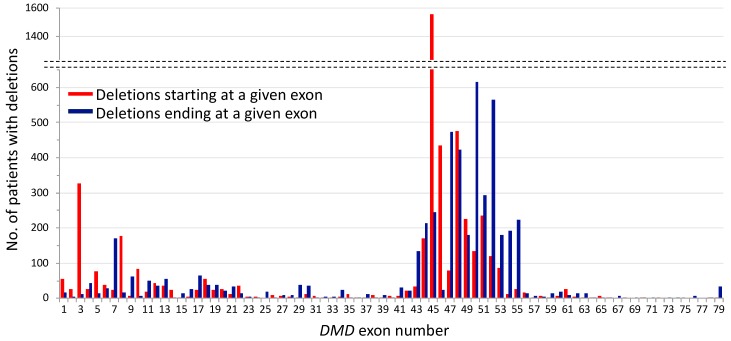
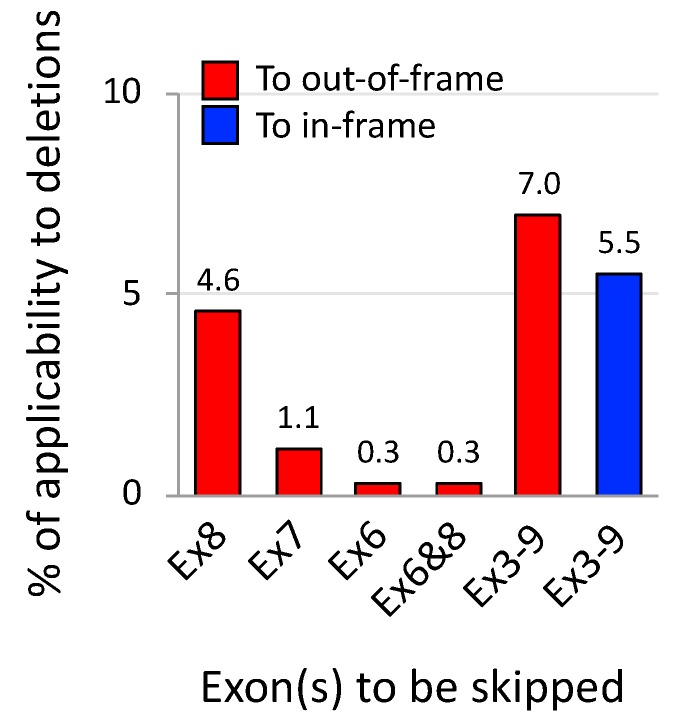
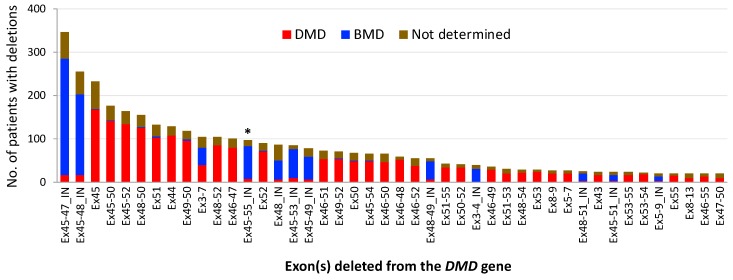
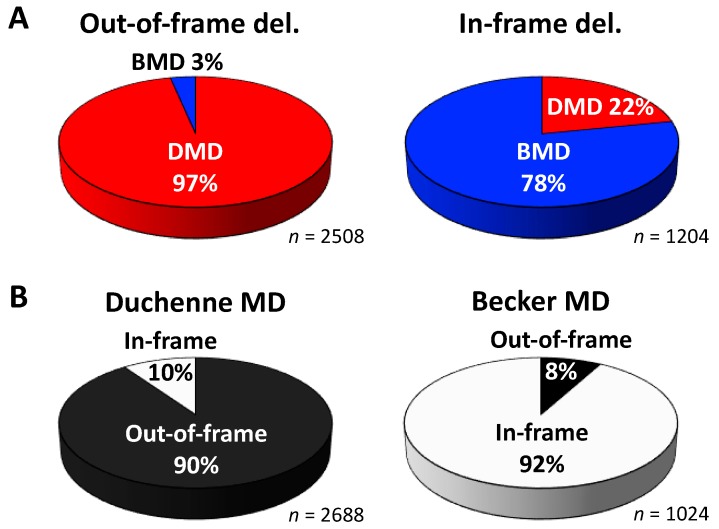
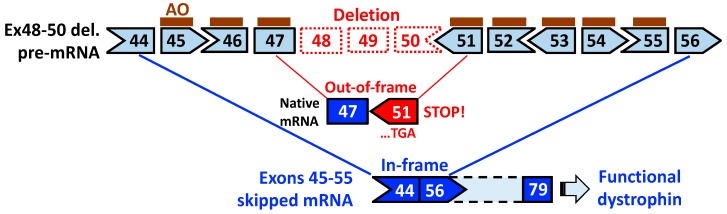
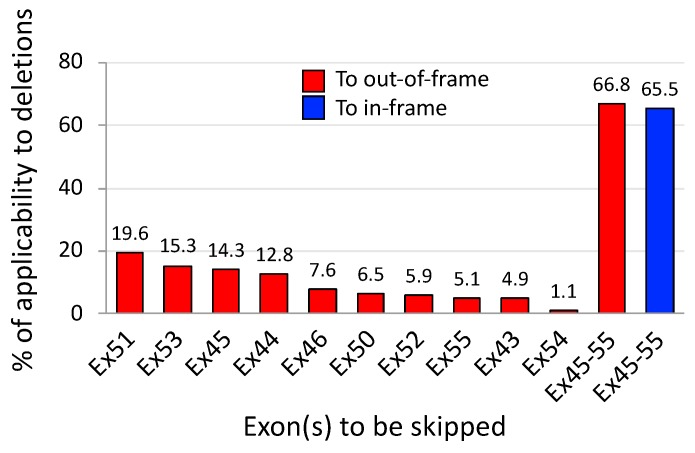
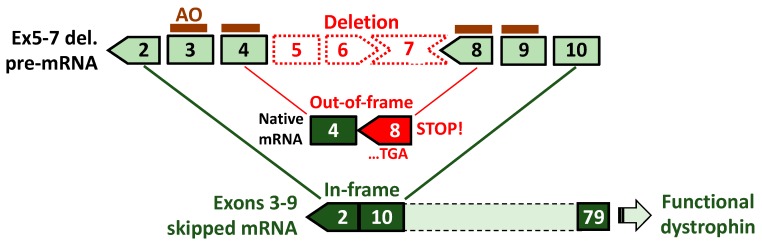
Duchenne muscular dystrophy (DMD), a fatal X-linked recessive disorder, is caused mostly by frame-disrupting, out-of-frame deletions in the () gene. Antisense oligonucleotide-mediated exon skipping is a promising therapy for DMD. Exon skipping aims to convert out-of-frame mRNA to in-frame mRNA and induce the production of internally-deleted dystrophin as seen in the less severe Becker muscular dystrophy. Currently, multiple exon skipping has gained special interest as a new therapeutic modality for this approach. Previous retrospective database studies represented a potential therapeutic application of multiple exon skipping. Since then, public DMD databases have become more useful with an increase in patient registration and advances in molecular diagnosis. Here, we provide an update on genotype-phenotype associations using a global DMD database and further provide the rationale for multiple exon skipping development, particularly for exons 45⁻55 skipping and an emerging therapeutic concept, exons 3⁻9 skipping. Importantly, this review highlights the potential of multiple exon skipping for enabling the production of functionally-corrected dystrophin and for treating symptomatic patients not only with out-of-frame deletions but also those with in-frame deletions. We will also discuss prospects and challenges in multiple exon skipping therapy, referring to recent progress in antisense chemistry and design, as well as disease models.
杜氏肌营养不良症(DMD)是一种致命的X连锁隐性疾病,主要由()基因中的框内破坏、框外缺失引起。反义寡核苷酸介导的外显子跳跃是一种有前景的DMD治疗方法。外显子跳跃旨在将框外mRNA转化为框内mRNA,并诱导产生内部缺失的抗肌萎缩蛋白,如在病情较轻的贝克肌营养不良症中所见。目前,多个外显子跳跃作为这种方法的一种新治疗方式引起了特别关注。以往的回顾性数据库研究代表了多个外显子跳跃的潜在治疗应用。从那时起,随着患者登记数量的增加和分子诊断技术的进步,公共DMD数据库变得更加有用。在这里,我们使用全球DMD数据库提供了基因型-表型关联的最新情况,并进一步提供了多个外显子跳跃开发的基本原理,特别是针对外显子45⁻55跳跃和一个新兴的治疗概念,即外显子3⁻9跳跃。重要的是,本综述强调了多个外显子跳跃在使功能性校正的抗肌萎缩蛋白产生以及治疗不仅有框外缺失而且有框内缺失的症状性患者方面的潜力。我们还将参考反义化学和设计以及疾病模型方面的最新进展,讨论多个外显子跳跃治疗的前景和挑战。