School of Health and Biomedical Sciences, RMIT University, Bundoora, Victoria, Australia (K.D., B.A.C., M.J.S., L.S.); School of Pharmacy, University of East Anglia, Norwich Research Park, Norwich, United Kingdom (M.F., S.M.B., S.W., L.B., J.A., J.S., L.S.); Department of Chemistry and Biotechnology, Swinburne University of Technology, Hawthorn, Victoria, Australia (B.A.C.); and Florey Institute of Neuroscience and Mental Health, Department of Anatomy and Neuroscience, University of Melbourne, Victoria, Australia (M.J.S.).
School of Health and Biomedical Sciences, RMIT University, Bundoora, Victoria, Australia (K.D., B.A.C., M.J.S., L.S.); School of Pharmacy, University of East Anglia, Norwich Research Park, Norwich, United Kingdom (M.F., S.M.B., S.W., L.B., J.A., J.S., L.S.); Department of Chemistry and Biotechnology, Swinburne University of Technology, Hawthorn, Victoria, Australia (B.A.C.); and Florey Institute of Neuroscience and Mental Health, Department of Anatomy and Neuroscience, University of Melbourne, Victoria, Australia (M.J.S.)
Mol Pharmacol. 2019 Feb;95(2):210-221. doi: 10.1124/mol.118.113696. Epub 2018 Dec 13.
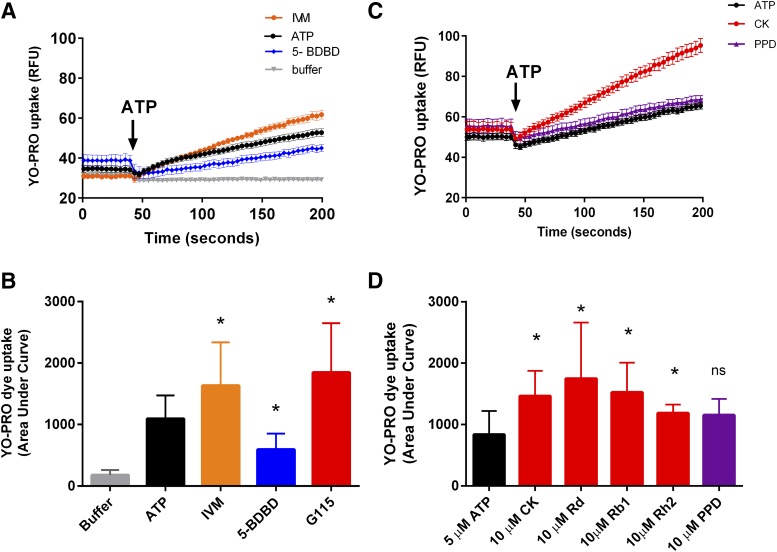
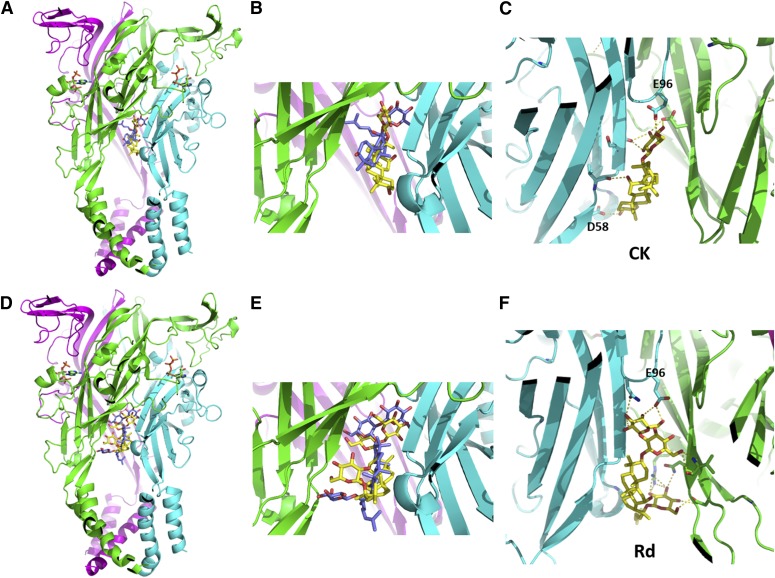
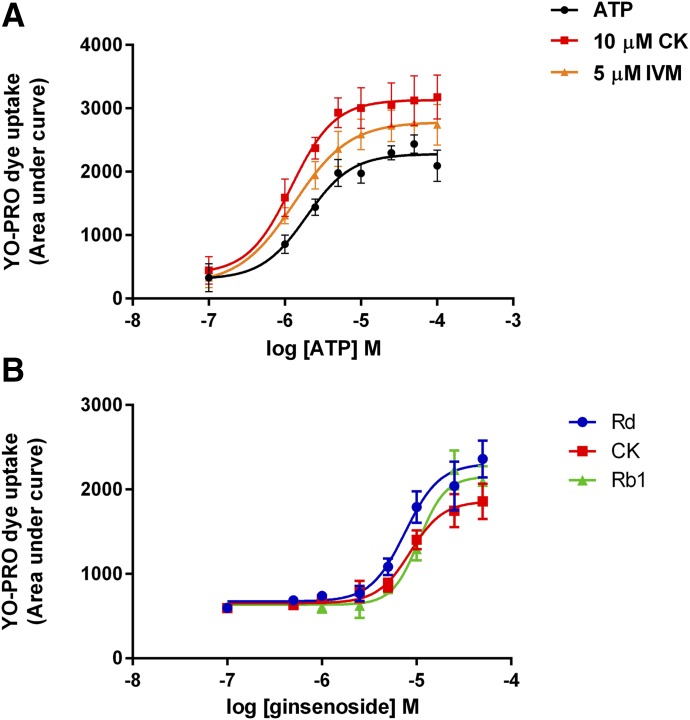
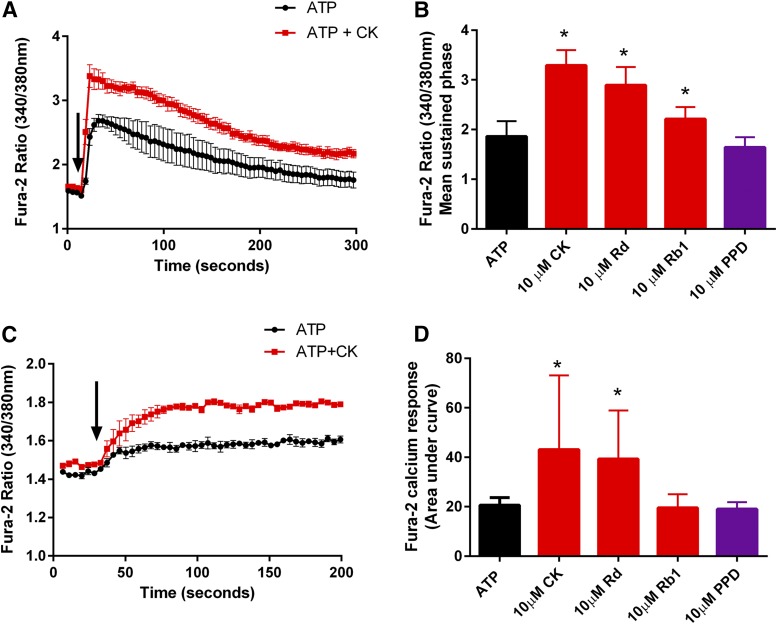
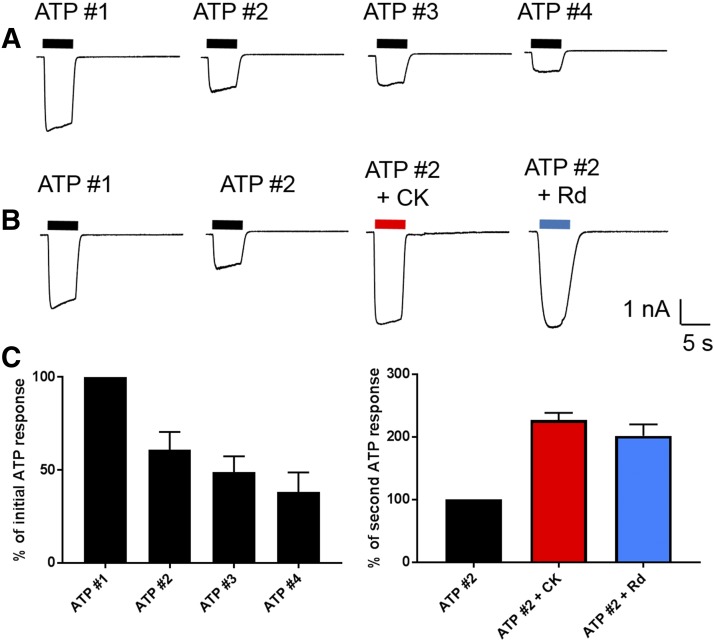
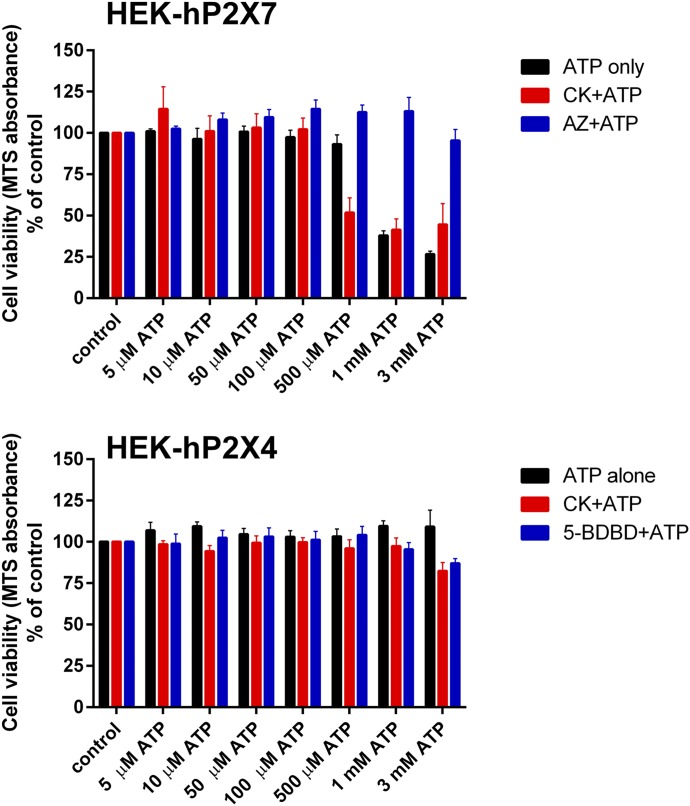
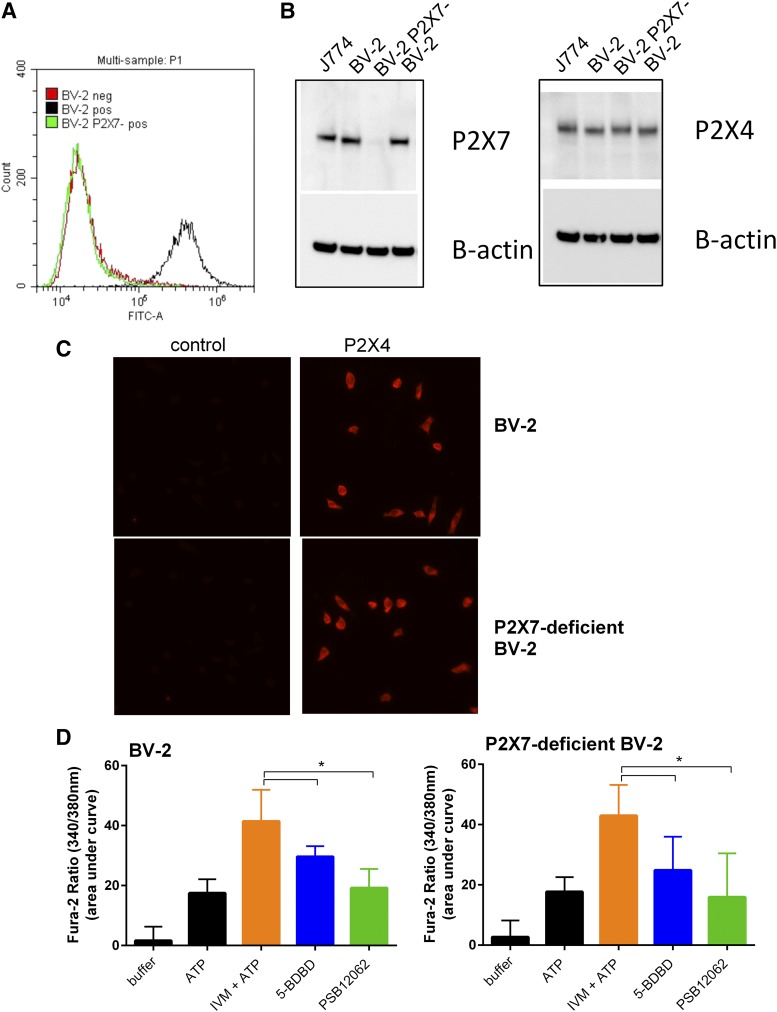
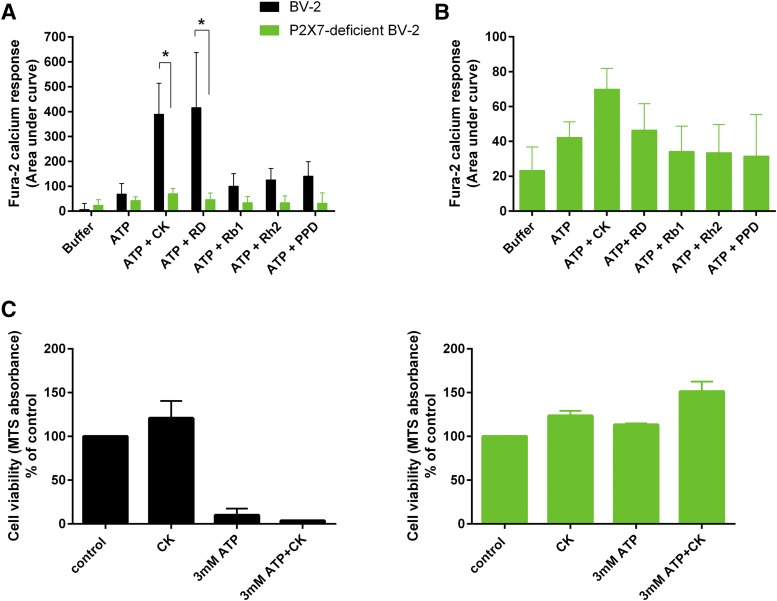
We investigated the selectivity of protopanaxadiol ginsenosides from acting as positive allosteric modulators on P2X receptors. ATP-induced responses were measured in stable cell lines overexpressing human P2X4 using a YOPRO-1 dye uptake assay, intracellular calcium measurements, and whole-cell patch-clamp recordings. Ginsenosides CK and Rd were demonstrated to enhance ATP responses at P2X4 by ∼twofold, similar to potentiation by the known positive modulator ivermectin. Investigations into the role of P2X4 in mediating a cytotoxic effect showed that only P2X7 expression in HEK-293 cells induces cell death in response to high concentrations of ATP, and that ginsenosides can enhance this process. Generation of a P2X7-deficient clone of BV-2 microglial cells using CRISPR/Cas9 gene editing enabled an investigation of endogenous P2X4 in a microglial cell line. Compared with parental BV-2 cells, P2X7-deficient BV-2 cells showed minor potentiation of ATP responses by ginsenosides, and insensitivity to ATP or ATP ginsenoside-induced cell death, indicating a primary role for P2X7 receptors in both of these effects. Computational docking to a homology model of human P2X4, based on the open state of zfP2X4, yielded evidence of a putative ginsenoside binding site in P2X4 in the central vestibule region of the large ectodomain.
我们研究了原人参二醇型人参皂苷作为 P2X 受体正向变构调节剂的选择性。通过 YOPRO-1 染料摄取测定法、细胞内钙测量和全细胞膜片钳记录,在过表达人 P2X4 的稳定细胞系中测量 ATP 诱导的反应。人参皂苷 CK 和 Rd 被证明可将 P2X4 对 ATP 的反应增强约两倍,类似于已知正向调节剂伊维菌素的增强作用。对 P2X4 在介导细胞毒性作用中的作用的研究表明,只有在 HEK-293 细胞中表达 P2X7 才会导致对高浓度 ATP 的细胞死亡,并且人参皂苷可以增强这一过程。使用 CRISPR/Cas9 基因编辑生成 P2X7 缺陷型 BV-2 小胶质细胞克隆,使我们能够在小胶质细胞系中研究内源性 P2X4。与亲本 BV-2 细胞相比,P2X7 缺陷型 BV-2 细胞对人参皂苷增强 ATP 反应的作用较小,并且对 ATP 或 ATP 人参皂苷诱导的细胞死亡不敏感,表明 P2X7 受体在这两种作用中都起主要作用。基于 zfP2X4 的开放状态的人 P2X4 同源模型的计算对接提供了在 P2X4 大胞外域中央前庭区域存在潜在人参皂苷结合位点的证据。