State Key Laboratory of Molecular Vaccinology and Molecular Diagnostics, School of Life Sciences, Xiamen University, Xiamen, China, 361102.
National Institute of Diagnostics and Vaccine Development in Infectious Disease, School of Public Health, Xiamen University, Xiamen, China, 361102.
Nat Commun. 2018 Dec 18;9(1):5360. doi: 10.1038/s41467-018-07199-6.
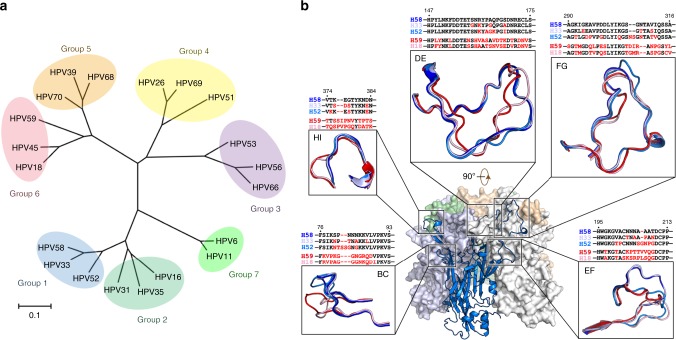
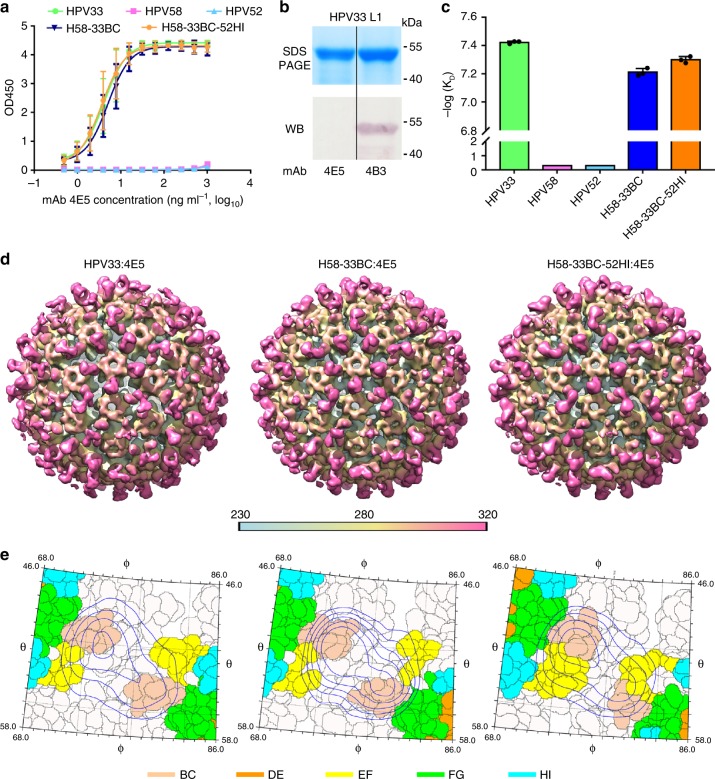
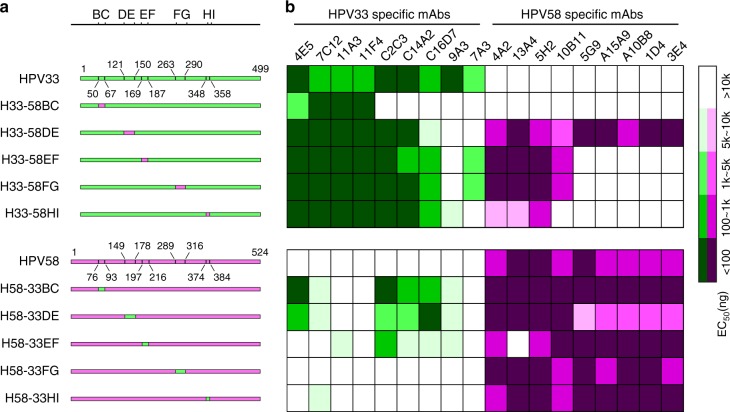
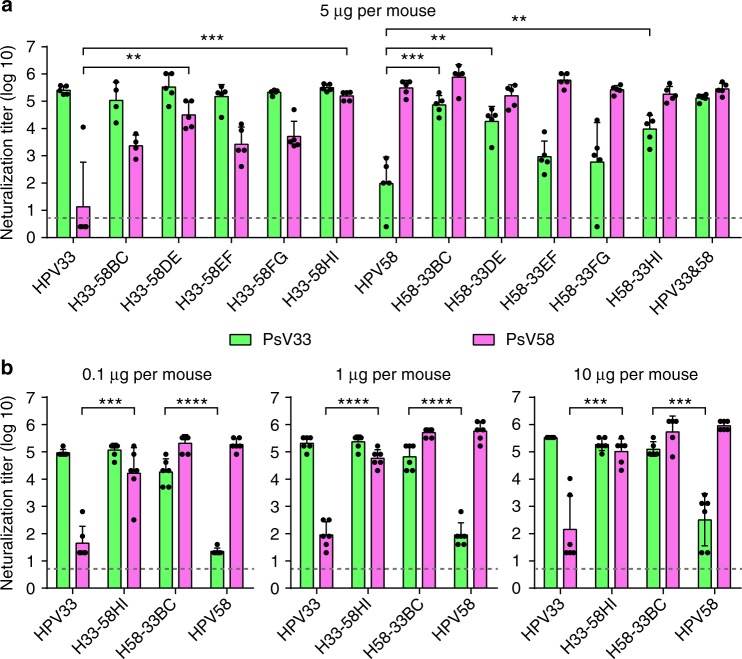
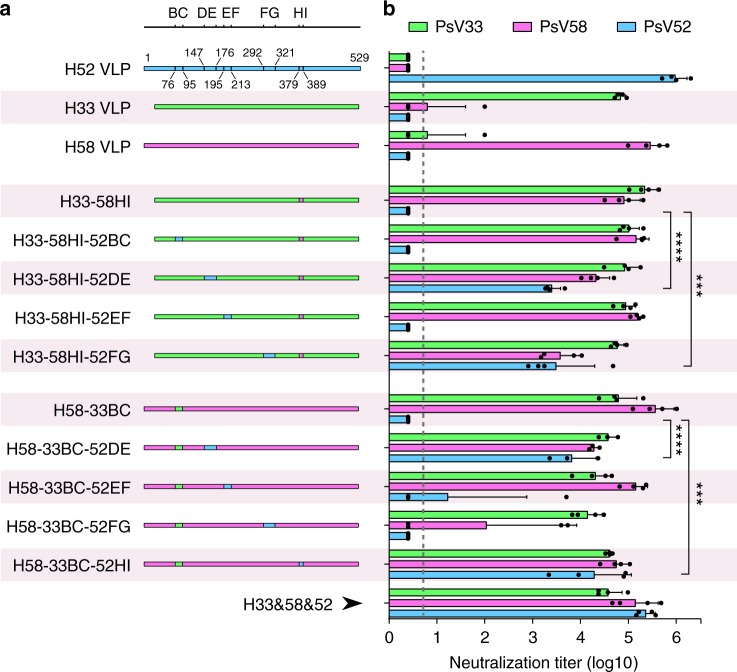
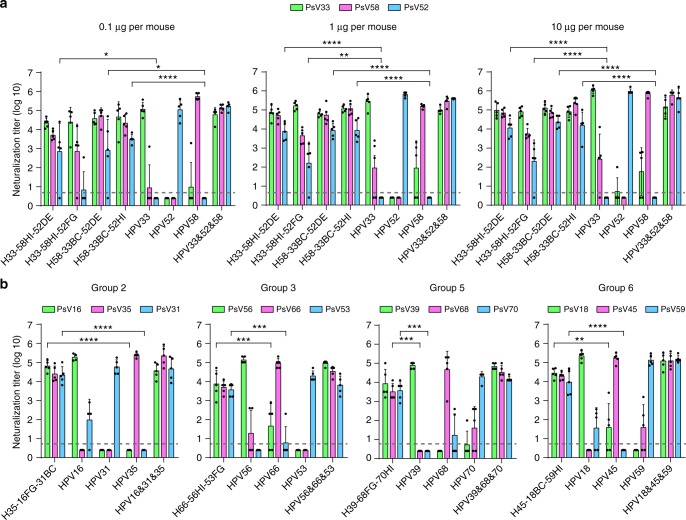
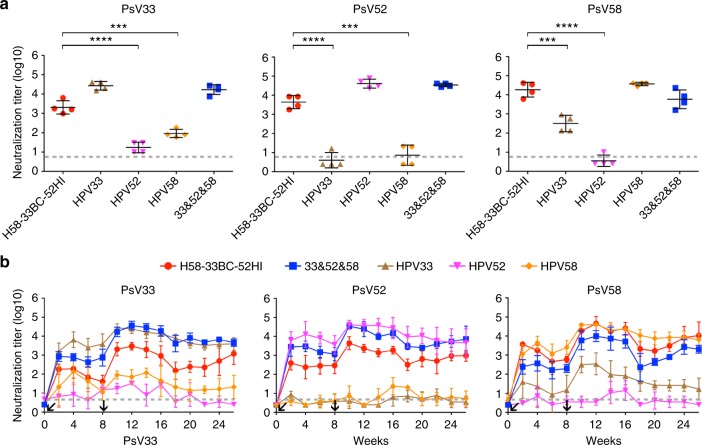
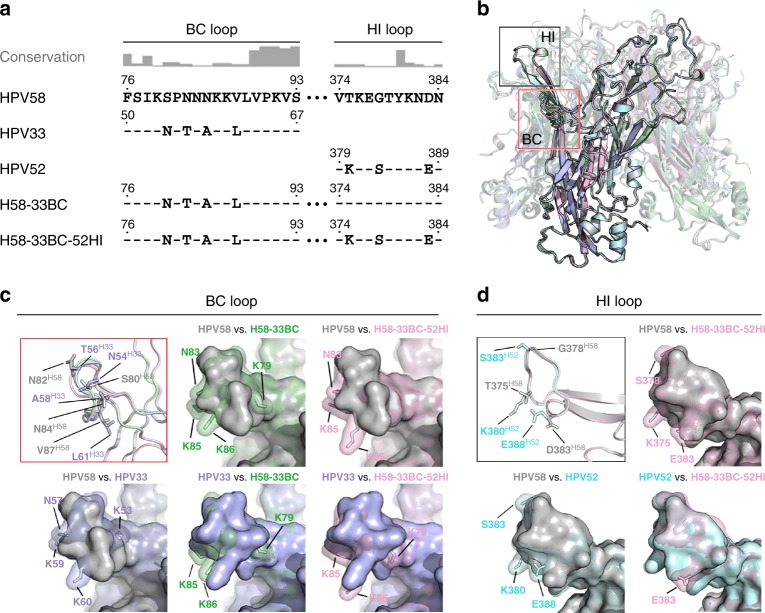
Sequence variability in surface-antigenic sites of pathogenic proteins is an important obstacle in vaccine development. Over 200 distinct genomic sequences have been identified for human papillomavirus (HPV), of which more than 18 are associated with cervical cancer. Here, based on the high structural similarity of L1 surface loops within a group of phylogenetically close HPV types, we design a triple-type chimera of HPV33/58/52 using loop swapping. The chimeric VLPs elicit neutralization titers comparable with a mix of the three wild-type VLPs both in mice and non-human primates. This engineered region of the chimeric protein recapitulates the conformational contours of the antigenic surfaces of the parental-type proteins, offering a basis for this high immunity. Our stratagem is equally successful in developing other triplet-type chimeras (HPV16/35/31, HPV56/66/53, HPV39/68/70, HPV18/45/59), paving the way for the development of an improved HPV prophylactic vaccine against all carcinogenic HPV strains. This technique may also be extrapolated to other microbes.
致病蛋白表面抗原位点的序列变异性是疫苗开发的一个重要障碍。已鉴定出超过 200 种不同的人类乳头瘤病毒(HPV)基因组序列,其中超过 18 种与宫颈癌有关。在这里,基于一组系统发育上密切相关的 HPV 类型中 L1 表面环的高度结构相似性,我们使用环交换设计了 HPV33/58/52 的三型嵌合体。嵌合 VLPs 在小鼠和非人类灵长类动物中均能引发与三种野生型 VLPs 混合物相当的中和效价。该嵌合蛋白的工程化区域再现了亲本型蛋白抗原表面的构象轮廓,为这种高免疫性提供了基础。我们的策略在开发其他三聚体嵌合体(HPV16/35/31、HPV56/66/53、HPV39/68/70、HPV18/45/59)方面同样成功,为开发针对所有致癌 HPV 株的改良 HPV 预防性疫苗铺平了道路。该技术也可推广应用于其他微生物。