Jenner Institute, University of Oxford, Oxford, United Kingdom.
Laboratory of Malaria and Vector Research, National Institute of Allergy and Infectious Disease, National Institutes of Health, Rockville, MD, United States.
Front Immunol. 2018 Dec 4;9:2780. doi: 10.3389/fimmu.2018.02780. eCollection 2018.
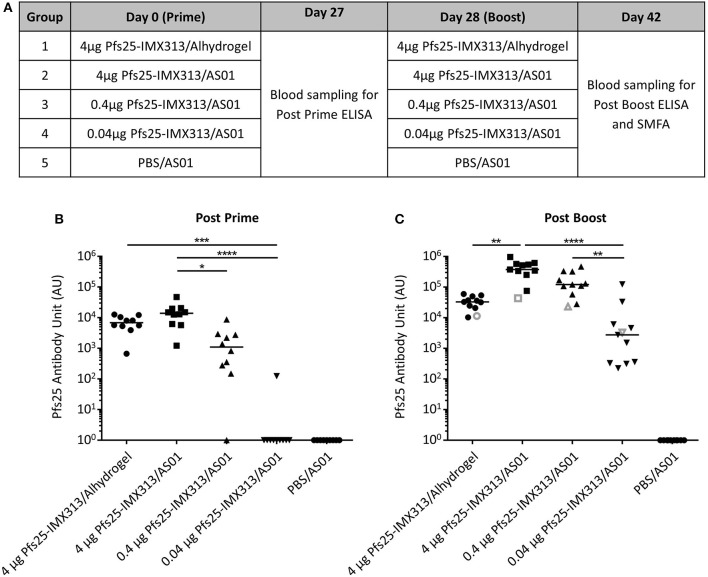
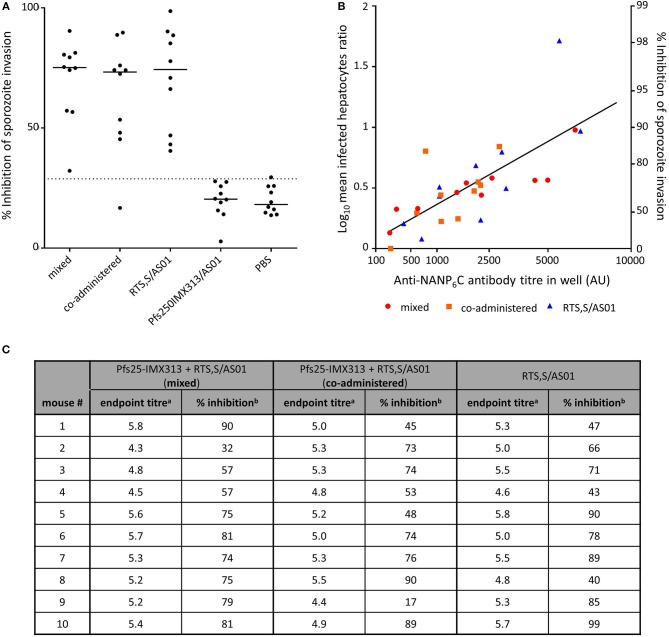
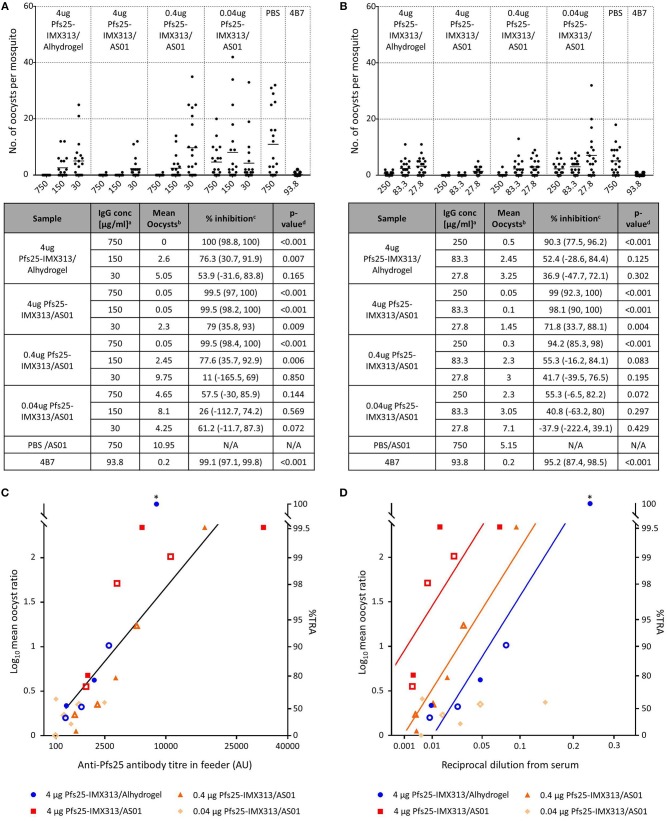
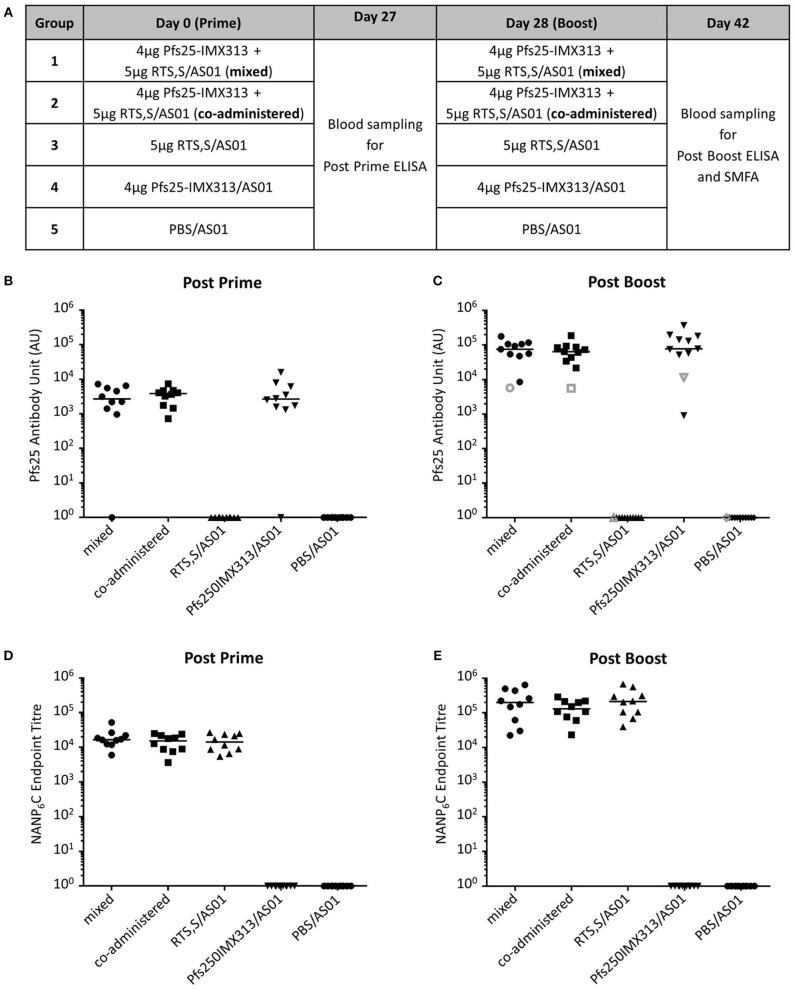
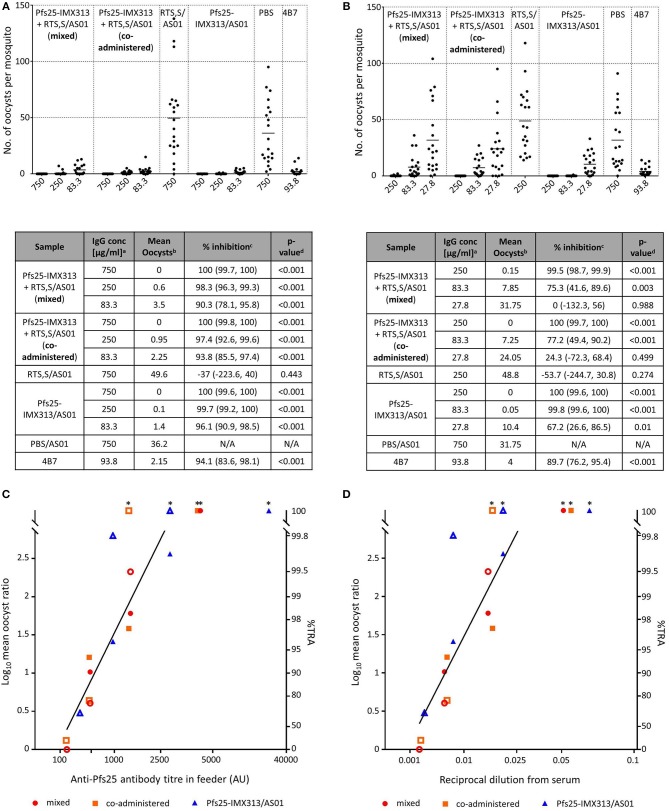
The last two decades saw a dramatic reduction in malaria incidence rates, but this decrease has been stalling recently, indicating control measures are starting to fail. An effective vaccine, particularly one with a marked effect on disease transmission, would undoubtedly be an invaluable tool for efforts to control and eliminate malaria. RTS,S/AS01, the most advanced malaria vaccine to date, targets the parasite before it invades the liver and has the potential to prevent malaria disease as well as transmission by preventing blood stage infection and therefore gametocytogenesis. Unfortunately efficacy in a phase III clinical trial was limited and it is widely believed that a malaria vaccine needed to contain multiple antigens from different life-cycle stages to have a realistic chance of success. A recent study in mice has shown that partially efficacious interventions targeting the pre-erythrocytic and the sexual lifecycle stage synergise in eliminating malaria from a population over multiple generations. Hence, the combination of RTS,S/AS01 with a transmission blocking vaccine (TBV) is highly appealing as a pragmatic and powerful way to increase vaccine efficacy. Here we demonstrate that combining Pfs25-IMX313, one of the TBV candidates currently in clinical development, with RTS,S/AS01 readily induces a functional immune response against both antigens in outbred CD1 mice. Formulation of Pfs25-IMX313 in AS01 significantly increased antibody titres when compared to formulation in Alhydrogel, resulting in improved transmission reducing activity in standard membrane feeding assays (SMFA). Upon co-formulation of Pfs25-IMX313 with RTS,S/AS01, the immunogenicity of both vaccines was maintained, and functional assessment of the induced antibody response by SMFA and inhibition of sporozoite invasion assay (ISI) showed no reduction in biological activity against parasites of both lifecycle stages. Should this findings be translatable to human vaccination this could greatly aid efforts to eliminate and eventually eradicate malaria.
过去二十年里,疟疾发病率大幅下降,但最近这一下降趋势已经停滞,表明控制措施开始失效。一种有效的疫苗,特别是对疾病传播有明显效果的疫苗,无疑将是控制和消除疟疾的宝贵工具。迄今为止,最先进的疟疾疫苗 RTS,S/AS01 针对寄生虫在侵入肝脏之前的阶段,具有通过预防血期感染和因此阻止配子体发生来预防疟疾疾病和传播的潜力。不幸的是,其在 III 期临床试验中的疗效有限,人们普遍认为,一种疟疾疫苗需要包含来自不同生命周期阶段的多种抗原,才有现实的成功机会。最近在小鼠中的一项研究表明,针对前红细胞和有性生命周期阶段的部分有效干预措施在多个世代中协同消除疟疾。因此,RTS,S/AS01 与传播阻断疫苗(TBV)联合使用非常有吸引力,是提高疫苗效力的一种实用而强大的方法。在这里,我们证明,将目前处于临床开发中的 TBV 候选物之一 Pfs25-IMX313 与 RTS,S/AS01 联合使用,很容易在异系 CD1 小鼠中诱导针对两种抗原的功能性免疫反应。与在 Alhydrogel 中的制剂相比,Pfs25-IMX313 在 AS01 中的制剂显著提高了抗体滴度,导致在标准膜喂养测定(SMFA)中改善了传播减少活性。当 Pfs25-IMX313 与 RTS,S/AS01 共同制剂时,两种疫苗的免疫原性得以维持,并且通过 SMFA 和抑制孢子体入侵测定(ISI)对诱导的抗体反应进行功能评估表明,对两种生命周期阶段的寄生虫的生物活性没有降低。如果这些发现能够转化为人类疫苗接种,这将极大地有助于消除并最终消灭疟疾的努力。