Center for Microbial Pathogenesis, The Research Institute at Nationwide Children's Hospital, Columbus, Ohio, USA.
Division of Nutritional Sciences, College of Agricultural, Consumer, and Environmental Sciences, University of Illinois at Urbana-Champaign, Urbana, Illinois, USA.
JPEN J Parenter Enteral Nutr. 2019 Aug;43(6):794-802. doi: 10.1002/jpen.1467. Epub 2018 Nov 22.
Reduced nutrient intake is common in patients after hospitalization, contributing to increased risk for readmission and mortality. Oral nutrition supplements can improve nutrition status and clinical outcomes, but intake of food is prioritized by clinicians. This study examines the impact of a high-protein oral nutrition supplement (S-ONS) on nutrient intake post discharge.
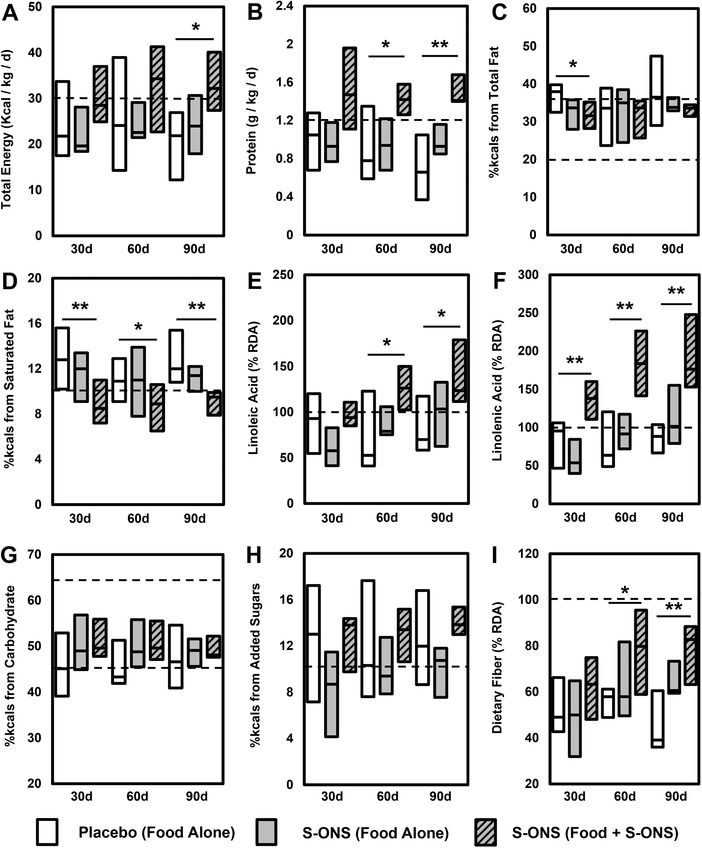
In a subset of patients (14 S-ONS and 16 placebo) from the NOURISH (Nutrition effect On Unplanned ReadmIssions and Survival in Hospitalized patients) trial, 24-hour dietary recalls were conducted on 3 randomly selected days during the weeks of 30, 60, and 90 days post discharge. Nutrient intake was estimated using Nutrition Data System for Research software. Adequate energy and protein intake were defined as 30 kcal/kg/d and 1.2 g/kg/d, respectively. Dietary Reference Intakes (DRIs) were used for other nutrients.
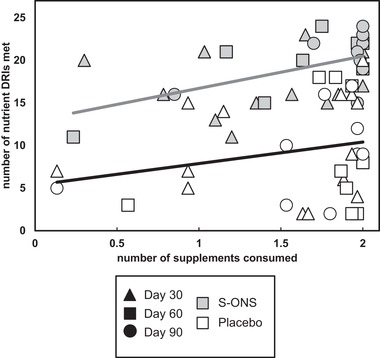
Less than half of patients met the requirements for energy, protein, and 12 micronutrients from food intake alone during the study. Energy and protein intakes from food were not diminished relative to placebo. Considering nutrient intake from both food and S-ONS, 50% and 71% of patients receiving S-ONSs met energy and protein goals respectively at 90 days (compared with 29% and 36%, in the placebo group), and 100% met the DRI for total carbohydrate, iron, phosphorus, copper, selenium, thiamin, and riboflavin at all time points, all of which were consumed at higher amounts vs placebo.
Three months of S-ONS consumption increases intake of numerous nutrients without decreasing nutrient intake from food in older malnourished adults post discharge.
住院后患者的营养摄入减少,这会增加再入院和死亡的风险。口服营养补充剂可以改善营养状况和临床结局,但临床医生优先考虑食物摄入。本研究旨在探讨高蛋白口服营养补充剂(ONS)对出院后营养摄入的影响。
在营养影响未计划再入院和住院患者生存(NOURISH)试验的患者亚组(ONS 组 14 例,安慰剂组 16 例)中,在出院后第 30、60 和 90 天的 3 个随机日进行 24 小时膳食回顾。使用研究营养数据系统软件估算营养素摄入量。充足的能量和蛋白质摄入量分别定义为 30 kcal/kg/d 和 1.2 g/kg/d。其他营养素则使用膳食参考摄入量(DRIs)。
在研究期间,只有不到一半的患者仅通过食物摄入就能满足能量、蛋白质和 12 种微量营养素的需求。ONS 组与安慰剂组相比,食物摄入的能量和蛋白质摄入量并没有减少。考虑到食物和 S-ONS 的营养素摄入,ONS 组在 90 天时分别有 50%和 71%的患者达到能量和蛋白质目标(安慰剂组分别为 29%和 36%),且所有时间点所有患者均达到总碳水化合物、铁、磷、铜、硒、硫胺素和核黄素的 DRI,ONS 组的这些营养素摄入量均高于安慰剂组。
ONS 摄入 3 个月可增加多种营养素的摄入量,而不会减少出院后老年营养不良患者的食物营养素摄入量。