
研发可穿戴微型传感器以诊断心肺系统的初始扰动。
Developed wearable miniature sensor to diagnose initial perturbations of cardiorespiratory system.
作者信息
Abbasi-Kesbi Reza, Nikfarjam Alireza, Akhavan Hezaveh Ardalan
机构信息
Faculty of New Sciences and Technologies, MEMS & NEMS Laboratory, University of Tehran, Tehran, Iran.
Department of Biomedical Engineering, Faculty of Engineering, Science and Research Branch of Tehran, Islamic Azad University, Tehran, Iran.
出版信息
Healthc Technol Lett. 2018 Nov 15;5(6):231-235. doi: 10.1049/htl.2018.5027. eCollection 2018 Dec.
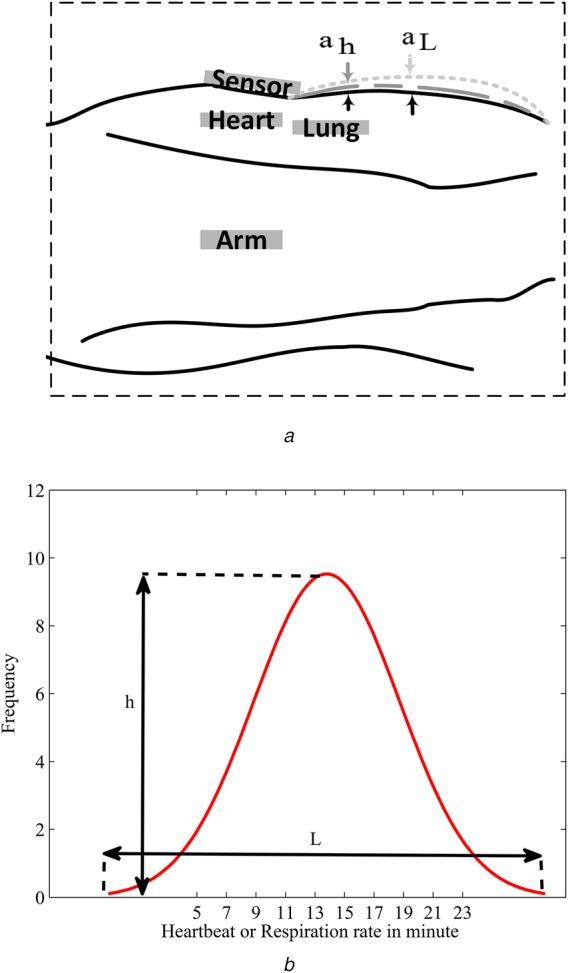
The progress of microelectromechanical systems tends to fabricate miniature motion sensors that can be used for various purposes of biomedical systems, particularly on-body applications. A miniature wireless sensor is developed that not only monitors heartbeat and respiration rate based on chest movements but also identifies initial problems in the cardiorespiratory system, presenting a healthy measure defined based on height and length of the normal distribution of respiration rate and heartbeat. The obtained results of various tests are compared with two commercial sensors consisting of electrocardiogram sensor as well as belt sensor of respiration rate as a reference (gold standard), showing that the root-mean-square errors obtain <2.27 beats/min for a heartbeat and 0.93 breaths/min for respiration rate. In addition, the standard deviation of the errors reaches <1.26 and 0.63 for heartbeat and respiration rates, separately. According to the outcome results, the sensor can be considered an appropriate candidate for in-home health monitoring, particularly early detection of cardiovascular system problems.
微机电系统的发展趋势是制造出可用于生物医学系统各种用途的微型运动传感器,特别是用于身体上的应用。开发了一种微型无线传感器,它不仅能基于胸部运动监测心跳和呼吸频率,还能识别心肺系统的初始问题,并呈现出基于呼吸频率和心跳正态分布的高度和长度定义的健康指标。将各种测试获得的结果与两个商业传感器进行比较,这两个商业传感器分别是心电图传感器和呼吸频率带式传感器作为参考(金标准),结果表明,心跳的均方根误差小于2.27次/分钟,呼吸频率的均方根误差小于0.93次/分钟。此外,心跳和呼吸频率误差的标准差分别小于1.26和0.63。根据结果,该传感器可被视为家庭健康监测的合适候选者,特别是用于心血管系统问题的早期检测。



 Zotero 插件