Rohan Elizabeth A, McDougall Renee, Townsend Julie S
Division of Cancer Prevention and Control, Centers for Disease Control and Prevention, Atlanta, Georgia.
Surgery Department, Animal Medical Center, Manhattan, New York.
Health Equity. 2018 Dec 14;2(1):366-374. doi: 10.1089/heq.2018.0053. eCollection 2018.
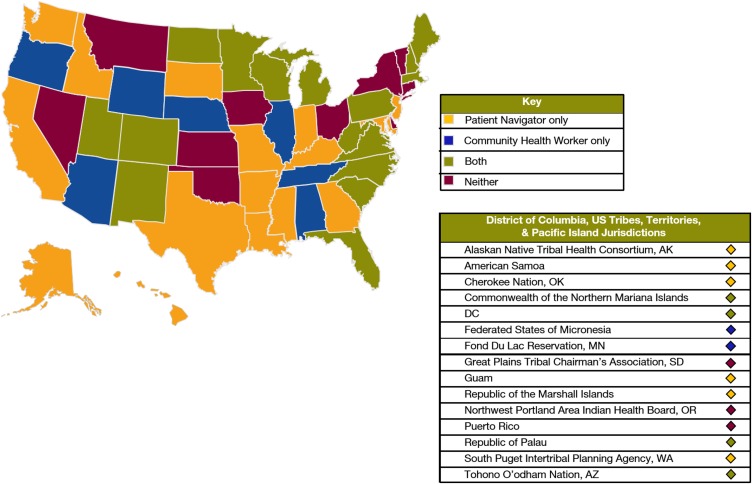
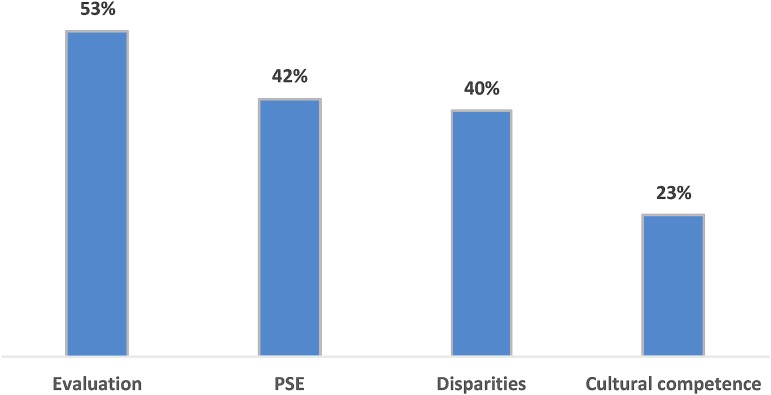
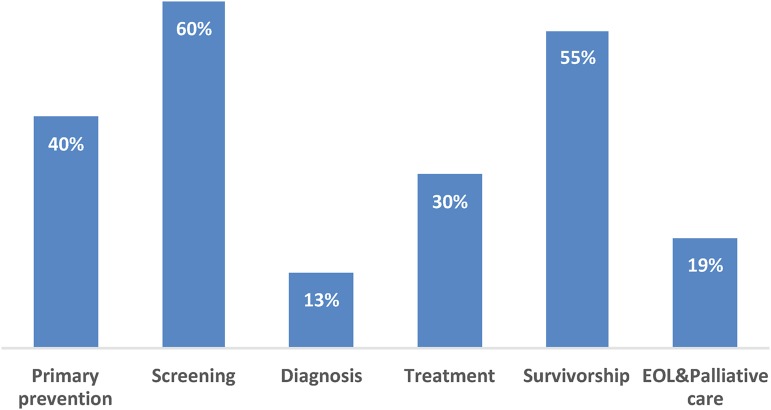
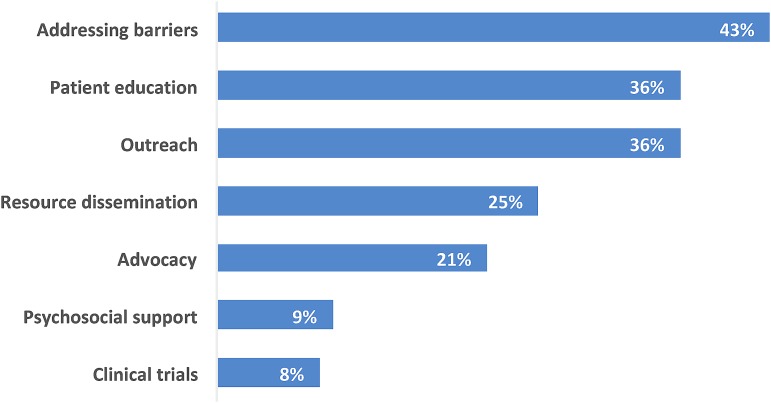
Health disparities persist across the cancer care continuum. Patient navigator (PN) and community health worker (CHW) interventions are designed to increase health equity. National Comprehensive Cancer Control Program (NCCCP) awardees develop and implement plans to coordinate cancer prevention and control activities, including supporting PN and CHW interventions. This content analysis examined NCCCP action plans to assess the extent to which jurisdictions report engaging in PN and/or CHW activities. We abstracted PN and CHW content from NCCCP action plans and coded content according to specific areas of PN and/or CHW intervention (e.g., screening, survivorship, and cancer type), used descriptive statistics to characterize overall results, and calculated chi-squares to determine whether programs engaged PNs and CHWs differently. Eighty-two percent (=53) of 65 NCCCP action plans had content related to PN and/or CHW activities, with more PN language (83%) than CHW (58%). These action plans described engaging PNs and CHWs in activities across the cancer continuum, but particularly for screening (60%) and survivorship (55%). Eighty-one percent of these plans described activities related to workforce development, such as training and standardizing roles and competencies. Programs engaged CHWs more often than PNs for outreach and in community settings. The majority of NCCCP awardees reported engaging in PN and/or CHW activities. Understanding how NCCCP awardees engage PNs and CHWs, including awardees' needs for workforce development in this area, can help Centers for Disease Control and Prevention provide more focused technical assistance as programs increase engagement of PNs and CHWs to improve health equity.
癌症护理全过程中的健康差异依然存在。患者导航员(PN)和社区卫生工作者(CHW)干预措施旨在促进健康公平。国家综合癌症控制计划(NCCCP)的受奖者制定并实施协调癌症预防和控制活动的计划,包括支持PN和CHW干预措施。本内容分析审查了NCCCP行动计划,以评估各司法管辖区报告参与PN和/或CHW活动的程度。我们从NCCCP行动计划中提取了PN和CHW的内容,并根据PN和/或CHW干预的特定领域(如筛查、生存及癌症类型)对内容进行编码,使用描述性统计来描述总体结果,并计算卡方值以确定各项目在使用PN和CHW方面是否存在差异。65份NCCCP行动计划中有82%(=53份)包含与PN和/或CHW活动相关的内容,其中关于PN的表述(83%)多于CHW(58%)。这些行动计划描述了让PN和CHW参与癌症全过程的活动,尤其是筛查(60%)和生存(55%)方面。这些计划中有81%描述了与劳动力发展相关的活动,如培训以及规范角色和能力。在开展外展活动和社区工作方面,各项目使用CHW的频率高于PN。大多数NCCCP受奖者报告参与了PN和/或CHW活动。了解NCCCP受奖者如何使用PN和CHW,包括受奖者在该领域的劳动力发展需求,有助于疾病控制与预防中心在各项目增加PN和CHW的参与以改善健康公平性时提供更有针对性的技术援助。