Fearing Bailey V, Hernandez Paula A, Setton Lori A, Chahine Nadeen O
Department of Biomedical Engineering & Orthopedic Surgery, Washington University in St. Louis, St. Louis, Missouri.
Department of Orthopaedic Surgery, University of Texas Southwestern, Dallas, Texas.
JOR Spine. 2018 Sep;1(3). doi: 10.1002/jsp2.1026. Epub 2018 Jul 3.
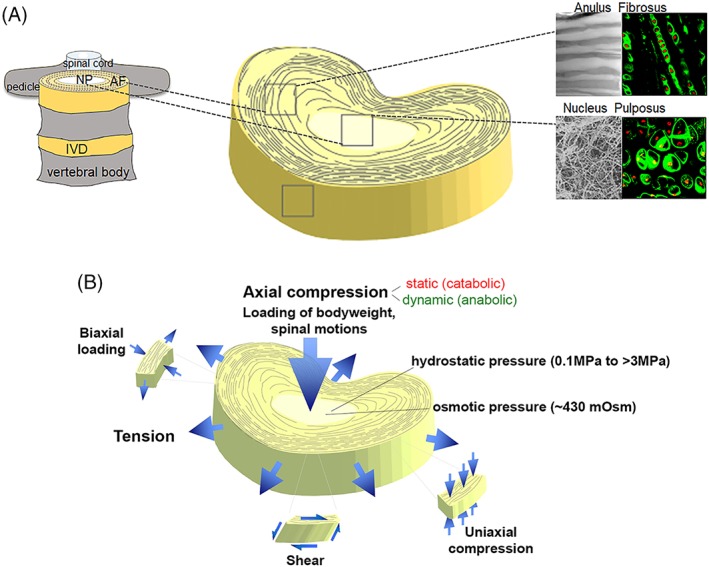
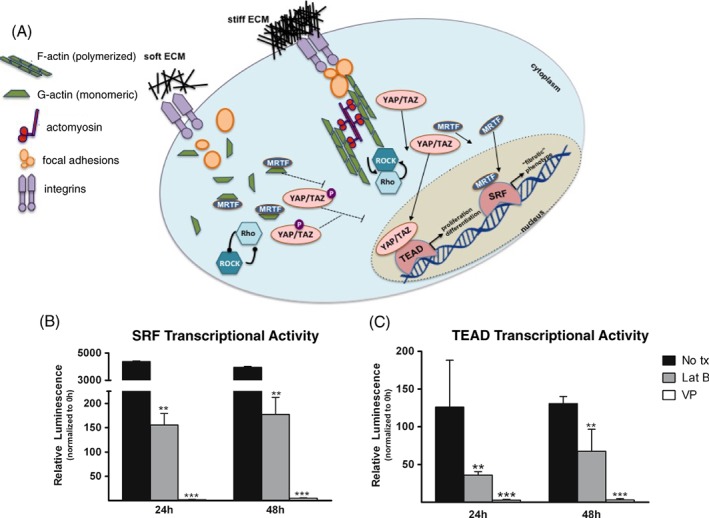
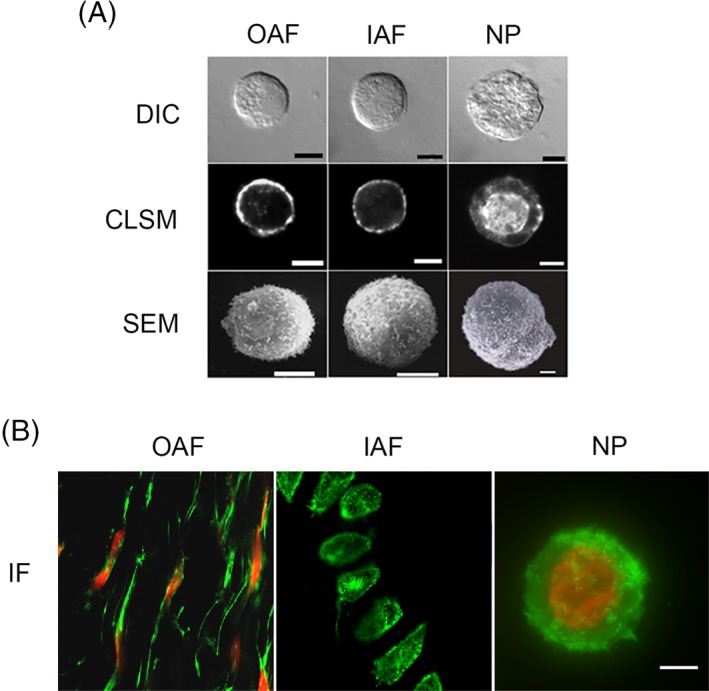
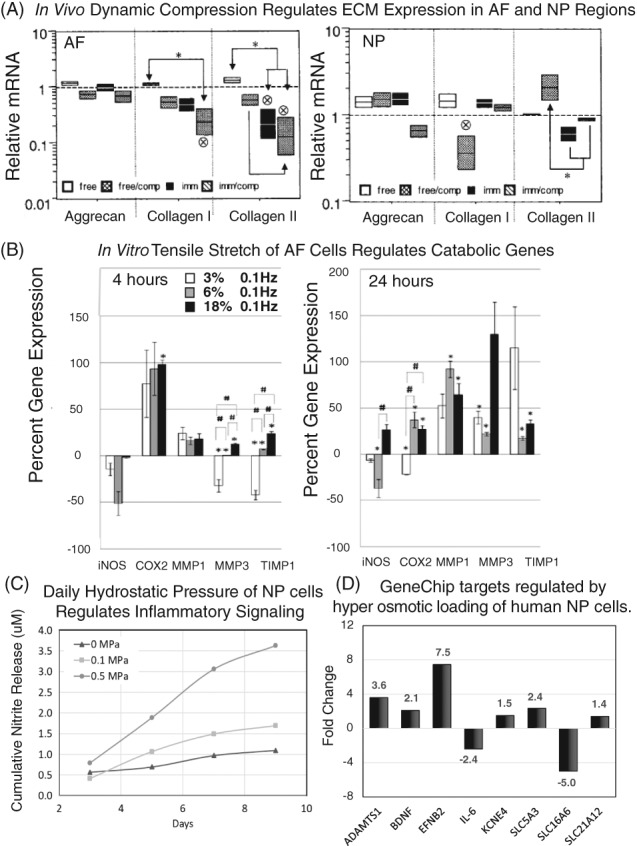
Mechanical loading of the intervertebral disc (IVD) initiates cell-mediated remodeling events that contribute to disc degeneration. Cells of the IVD, nucleus pulposus (NP) and anulus fibrosus (AF), will exhibit various responses to different mechanical stimuli which appear to be highly dependent on loading type, magnitude, duration, and anatomic zone of cell origin. Cells of the NP, the innermost region of the disc, exhibit an anabolic response to low-moderate magnitudes of static compression, osmotic pressure, or hydrostatic pressure, while higher magnitudes promote a catabolic response marked by increased protease expression and activity. Cells of the outer AF are responsive to physical forces in a manner that depends on frequency and magnitude, as are cells of the NP, though they experience different forces, deformations, pressure, and osmotic pressure in vivo. Much remains to be understood of the mechanotransduction pathways that regulate IVD cell responses to loading, including responses to specific stimuli and also differences among cell types. There is evidence that cytoskeletal remodeling and receptor-mediated signaling are important mechanotransduction events that can regulate downstream effects like gene expression and posttranslational biosynthesis, all of which may influence phenotype and bioactivity. These and other mechanotransduction events will be regulated by known and to-be-discovered cell-matrix and cell-cell interactions, and depend on composition of extracellular matrix ligands for cell interaction, matrix stiffness, and the phenotype of the cells themselves. Here, we present a review of the current knowledge of the role of mechanical stimuli and the impact upon the cellular response to loading and changes that occur with aging and degeneration of the IVD.
椎间盘(IVD)的机械负荷引发细胞介导的重塑事件,这些事件会导致椎间盘退变。IVD的细胞,即髓核(NP)和纤维环(AF),会对不同的机械刺激表现出各种反应,这些反应似乎高度依赖于负荷类型、大小、持续时间以及细胞起源的解剖区域。椎间盘最内部区域的NP细胞,对低至中等强度的静态压缩、渗透压或静水压力表现出合成代谢反应,而较高强度则会促进以蛋白酶表达和活性增加为特征的分解代谢反应。AF外层的细胞对物理力的反应方式取决于频率和大小,NP细胞也是如此,尽管它们在体内经历不同的力、变形、压力和渗透压。关于调节IVD细胞对负荷反应的机械转导途径,包括对特定刺激的反应以及细胞类型之间的差异,仍有许多有待了解之处。有证据表明,细胞骨架重塑和受体介导的信号传导是重要的机械转导事件,可调节诸如基因表达和翻译后生物合成等下游效应,所有这些都可能影响细胞表型和生物活性。这些以及其他机械转导事件将受到已知和有待发现的细胞-基质以及细胞-细胞相互作用的调节,并取决于用于细胞相互作用的细胞外基质配体的组成、基质刚度以及细胞自身的表型。在此,我们对机械刺激的作用以及对IVD负荷细胞反应的影响以及随着IVD衰老和退变而发生的变化的当前知识进行综述。