College of Life Science, Nanjing Normal University, Nanjing, Jiangsu 210023, P.R. China.
Department of Surgical Oncology, Jiangsu Province Hospital of TCM, Affiliated Hospital of Nanjing University of TCM, Nanjing, Jiangsu 214504, P.R. China.
Int J Oncol. 2019 Mar;54(3):916-928. doi: 10.3892/ijo.2018.4665. Epub 2018 Dec 12.
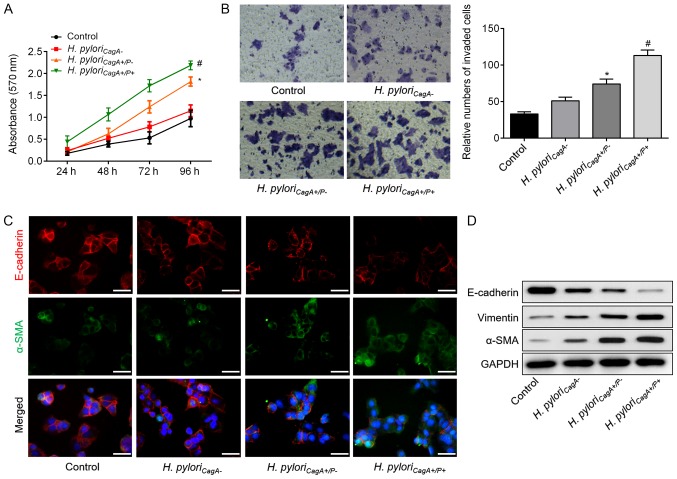
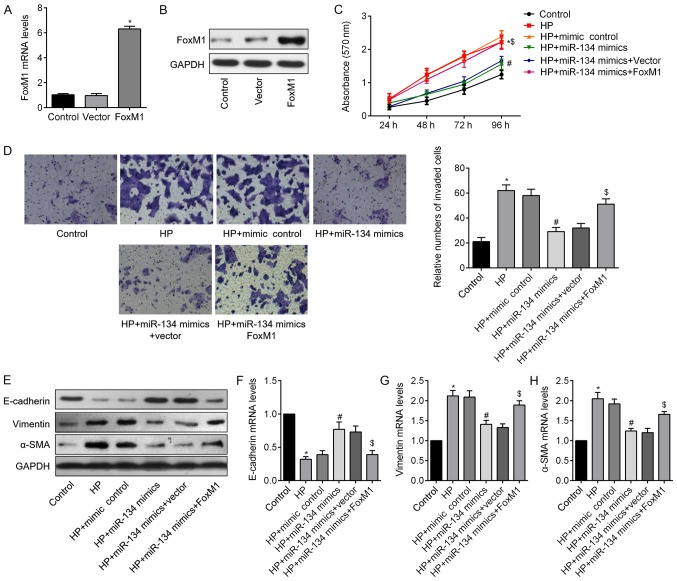
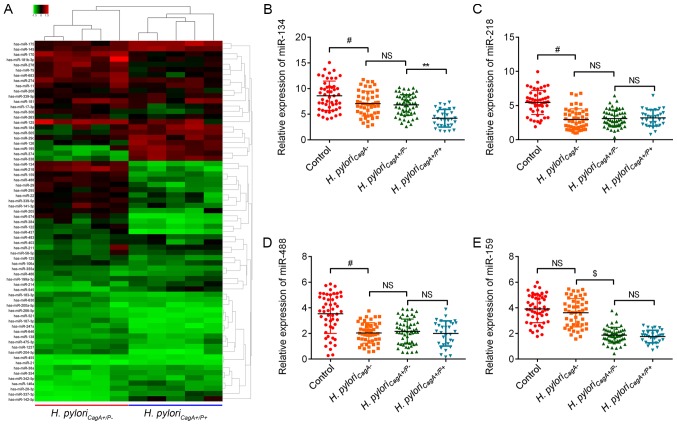
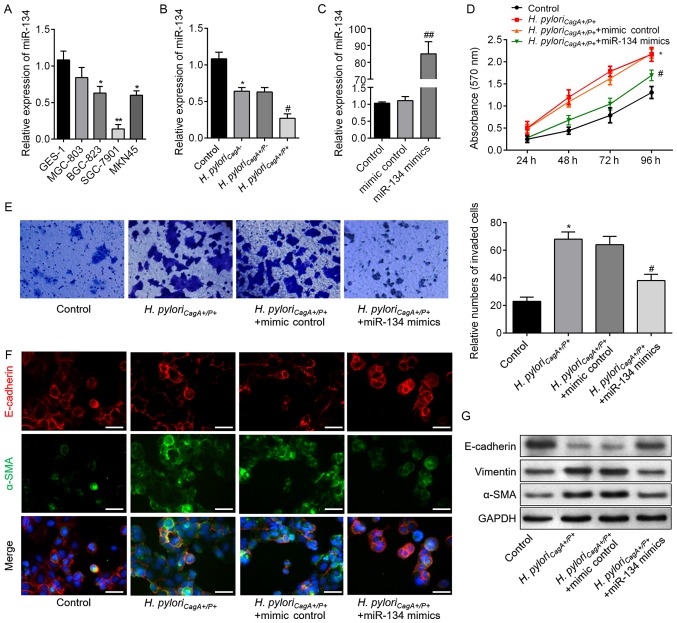
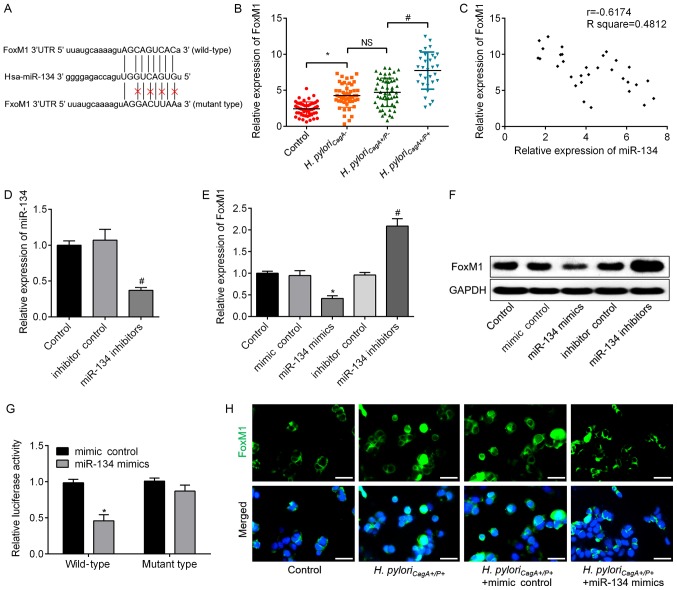
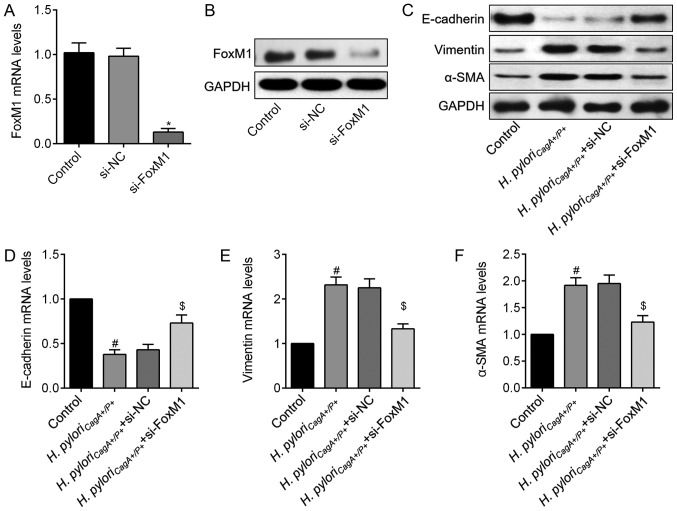
Evidence suggests that Helicobacter pylori (H. pylori) is not only the main cause of gastric cancer (GC), but is also closely associated with its metastasis. One of the major virulence factors in H. pylori is the cytotoxin‑associated gene A (CagA). With the growing proportion of amoxicillin‑resistant H. pylori strains, the present study aimed to explore the effects of CagA‑ and penicillin‑binding protein 1A (PBP1A) mutation‑positive H. pylori (H. pyloriCagA+/P+) on GC cells, and its clinical significance. The clinical significance of H. pyloriCagA+/P+ infection was analyzed in patients with GC. In vitro, GC cells were infected with H. pyloriCagA+/P+ to investigate whether it was involved in the epithelial‑mesenchymal transition (EMT) of SGC‑7901 cells using immunofluorescence and western blot analysis. The results of clinical analysis demonstrated that, although CagA‑negative H. pylori infection had no significant association with the characteristics of patients with GC, H. pyloriCagA+/P+ infection was significantly associated with various clinicopathological parameters, including invasion depth, lymphatic metastasis and distant metastasis. In vitro, the results indicated that H. pyloriCagA+/P+ promoted proliferation, invasion and EMT of SGC‑7901 cells. MicroRNA (miR)‑134 was downregulated in H. pyloriCagA+/P+ infected tissues compared with in those with H. pyloriCagA+/P‑ infection. miR‑134 overexpression significantly reversed H. pyloriCagA+/P+ infection‑associated cell proliferation, invasion and EMT. Furthermore, the results revealed that Forkhead box protein M1 (FoxM1) was a direct target of miR‑134, and FoxM1 knockdown impeded H. pyloriCagA+/P+‑induced EMT. In conclusion, the present study demonstrated that miR‑134 may suppress the proliferation, invasion and EMT of SGC‑7901 cells by targeting FoxM1, and may serve a protective role in the process of H. pyloriCagA+/P+‑induced GC. These findings may lead to an improved understanding of H. pyloriCagA+/P+‑associated poor clinical characteristics in patients with GC.
证据表明,幽门螺杆菌(H. pylori)不仅是胃癌(GC)的主要病因,而且还与胃癌的转移密切相关。H. pylori 的主要毒力因子之一是细胞毒素相关基因 A(CagA)。随着耐阿莫西林 H. pylori 菌株比例的增加,本研究旨在探讨 CagA 和青霉素结合蛋白 1A(PBP1A)突变阳性 H. pylori(H. pylori CagA+/P+)对 GC 细胞的影响及其临床意义。分析了 GC 患者中 H. pylori CagA+/P+感染的临床意义。在体外,用 H. pylori CagA+/P+感染 GC 细胞,通过免疫荧光和 Western blot 分析探讨其是否参与 SGC-7901 细胞的上皮-间充质转化(EMT)。临床分析结果表明,虽然 CagA 阴性 H. pylori 感染与 GC 患者的特征无显著相关性,但 H. pylori CagA+/P+感染与包括浸润深度、淋巴转移和远处转移在内的各种临床病理参数显著相关。在体外,结果表明 H. pylori CagA+/P+促进了 SGC-7901 细胞的增殖、侵袭和 EMT。与 H. pylori CagA+/P-感染组织相比,H. pylori CagA+/P+感染组织中的 microRNA(miR)-134 下调。miR-134 的过表达显著逆转了 H. pylori CagA+/P+感染相关的细胞增殖、侵袭和 EMT。此外,结果表明 Forkhead box protein M1(FoxM1)是 miR-134 的直接靶标,FoxM1 敲低抑制了 H. pylori CagA+/P+诱导的 EMT。综上所述,本研究表明 miR-134 可能通过靶向 FoxM1 抑制 SGC-7901 细胞的增殖、侵袭和 EMT,在 H. pylori CagA+/P+诱导的 GC 过程中发挥保护作用。这些发现可能有助于更好地理解 H. pylori CagA+/P+与 GC 患者不良临床特征的相关性。