Rehman Azeem A, Turner Ryan C, Wright Stephanie, Boo SoHyun, Rai Ansaar T
Department of Neurosurgery, West Virginia University Hospital, Morgantown, West Virginia, USA.
Department of Pathology, West Virginia University Hospital, Morgantown, West Virginia, USA.
BMJ Case Rep. 2018 Dec 19;11(1):e014511. doi: 10.1136/bcr-2018-014511.
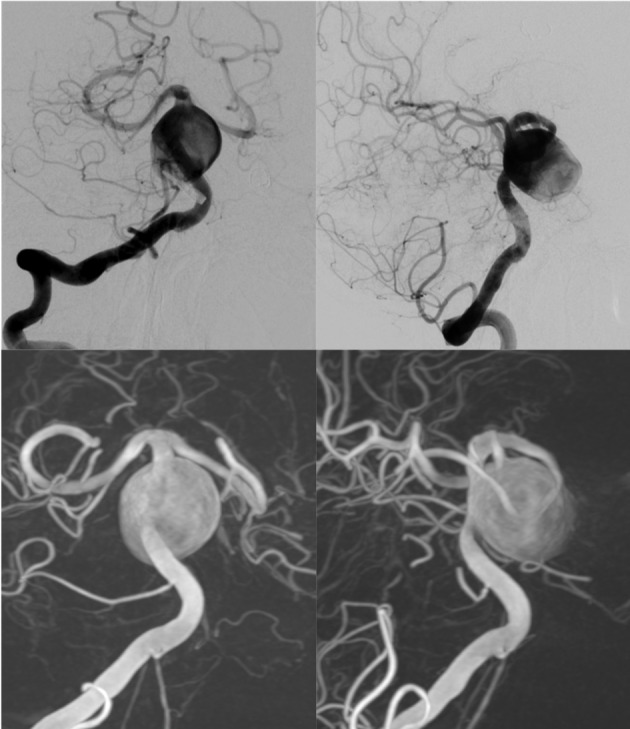
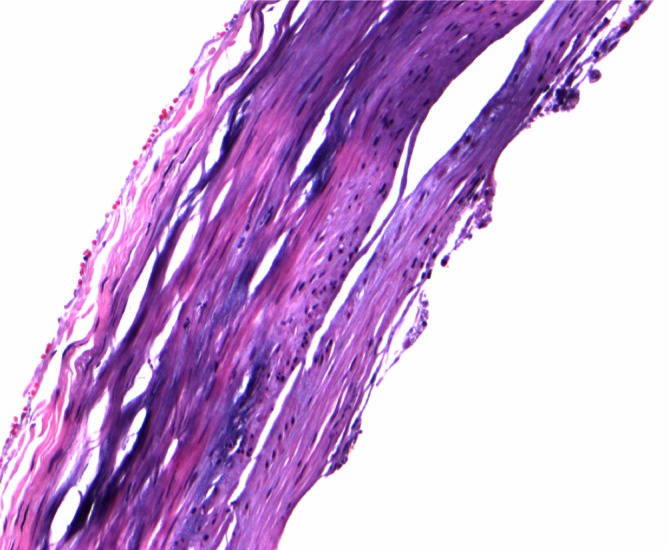
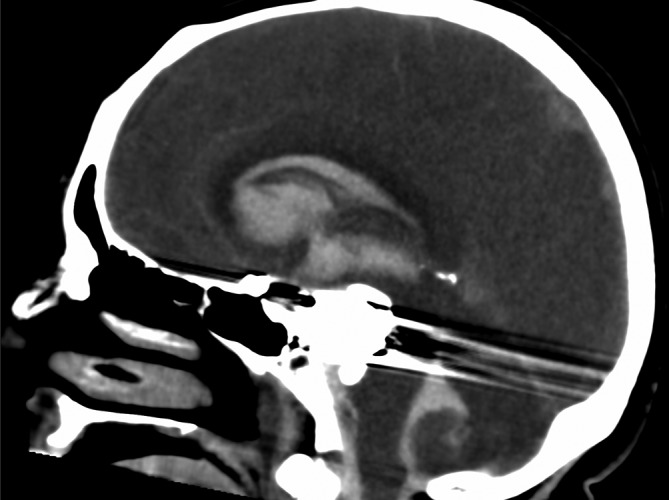
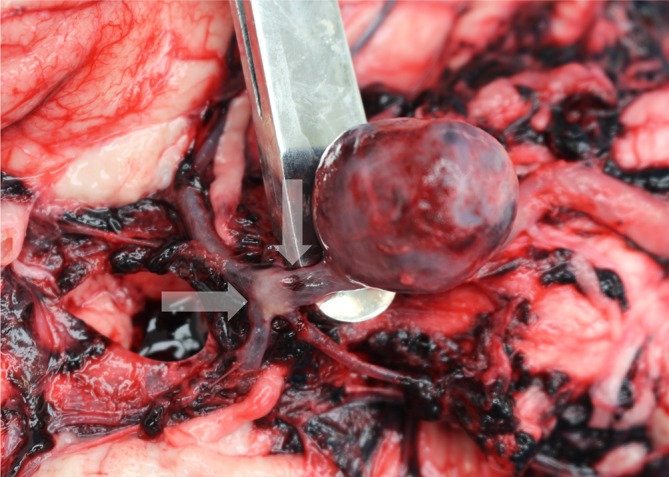
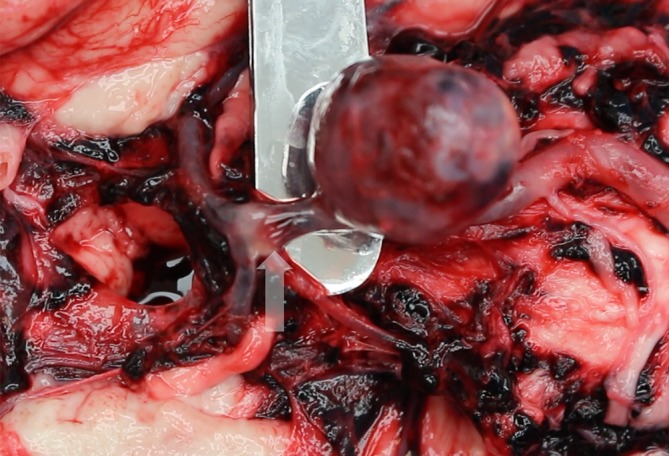
A middle-aged patient presented with posterior circulation symptoms attributable to a large eccentric basilar trunk aneurysm. The planned treatment was flow diversion with loose coil packing which was successfully performed using a Pipeline Flex device deployed from the basilar to the left posterior cerebral artery. The complete procedure including live biplane fluoroscopy was digitally recorded. The patient had symptomatic improvement postoperatively and was discharged on day 1. The patient suffered a cardiac arrest on postoperative day 3 secondary to massive intraventricular and subarachnoid hemorrhage. An aneurysm rupture was suspected; however, postmortem examination showed an intact aneurysm sac. The hemorrhage was attributed to a small focal rent in the distal basilar artery next to an atheromatous plaque. The Pipeline device was visible through the rent. This is an autopsy report documenting an injury to the parent artery and not the aneurysm as a source of fatal delayed subarachnoid hemorrhage following flow diversion.
一名中年患者出现后循环症状,病因是一个大型偏心性基底动脉主干动脉瘤。计划的治疗方法是使用松散弹簧圈填塞进行血流导向,使用从基底动脉至左大脑后动脉置入的Pipeline Flex装置成功完成了该操作。包括实时双平面荧光透视检查在内的整个手术过程都进行了数字记录。患者术后症状改善,术后第1天出院。患者在术后第3天因大量脑室内和蛛网膜下腔出血继发心脏骤停。怀疑动脉瘤破裂;然而,尸检显示动脉瘤囊完整。出血归因于靠近动脉粥样硬化斑块的基底动脉远端一个小的局灶性撕裂。通过撕裂处可见Pipeline装置。这是一份尸检报告,记录了作为血流导向后致命性延迟性蛛网膜下腔出血来源的供血动脉损伤而非动脉瘤。