Department of Information and Communication Engineering, Faculty of Computer Science and Systems Engineering, Okayama Prefectural University, 111 Kuboki, Soja, Okayama 719-1197, Japan.
Graduate School of Information Sciences, Hiroshima City University, 3-4-1, Ozuka-Higashi, Asa-Minami-Ku, Hiroshima 731-3194, Japan.
Sensors (Basel). 2018 Dec 21;19(1):30. doi: 10.3390/s19010030.
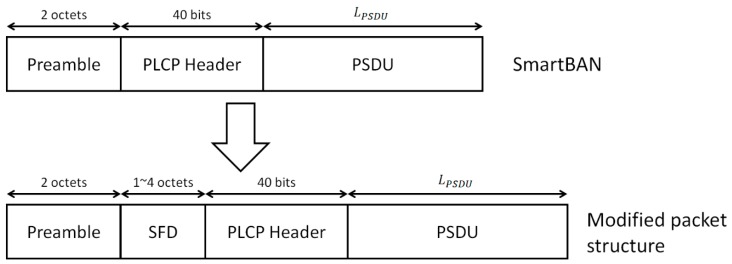
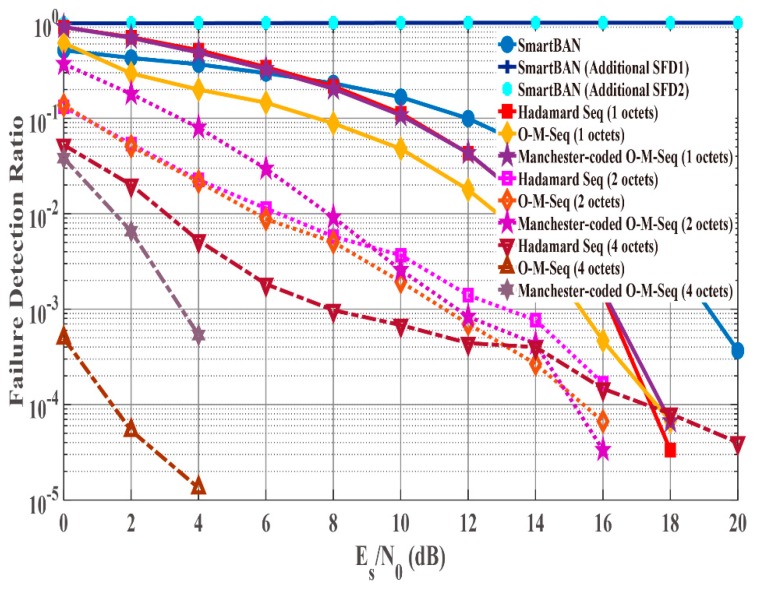
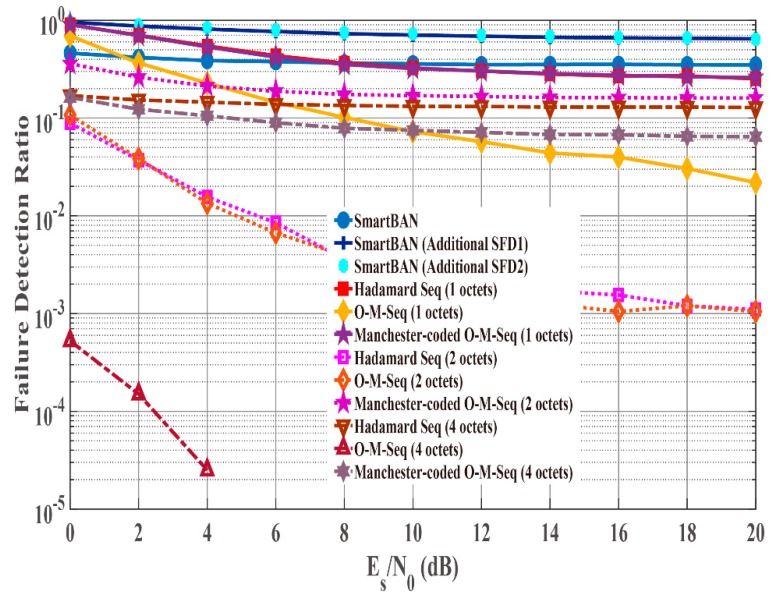
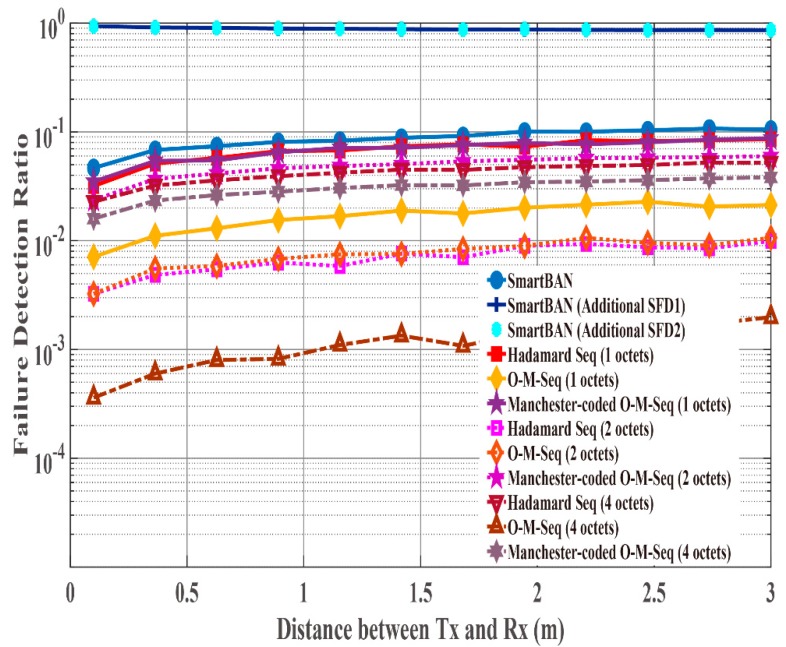
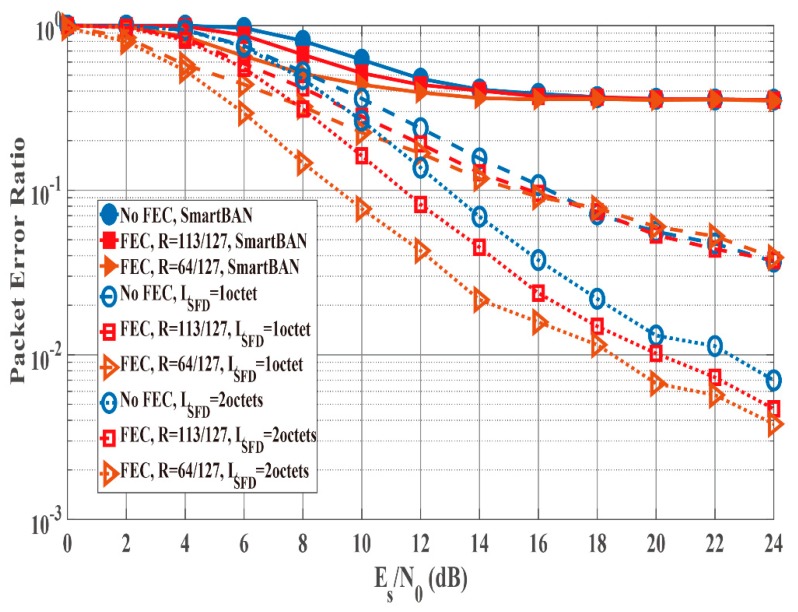
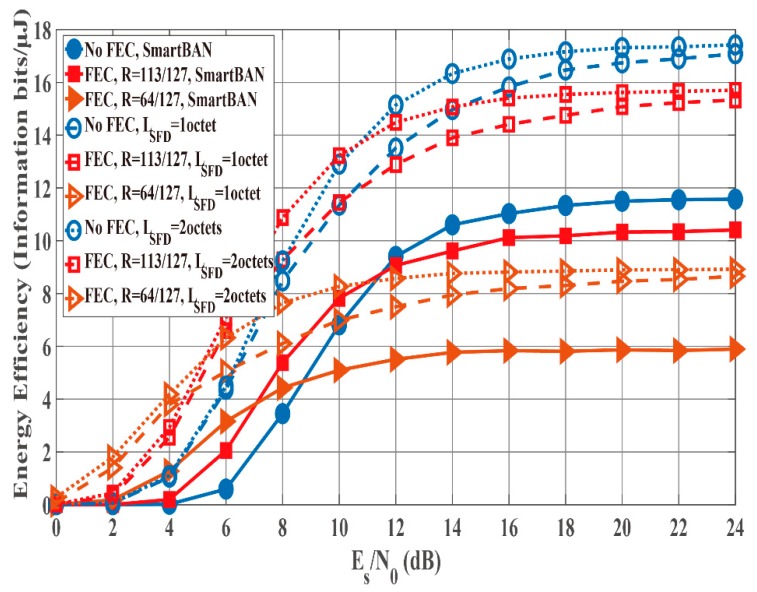
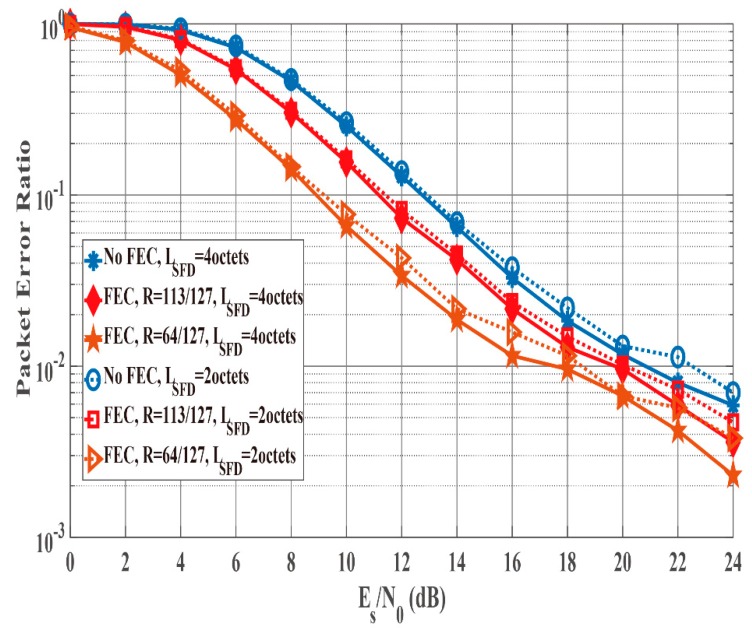
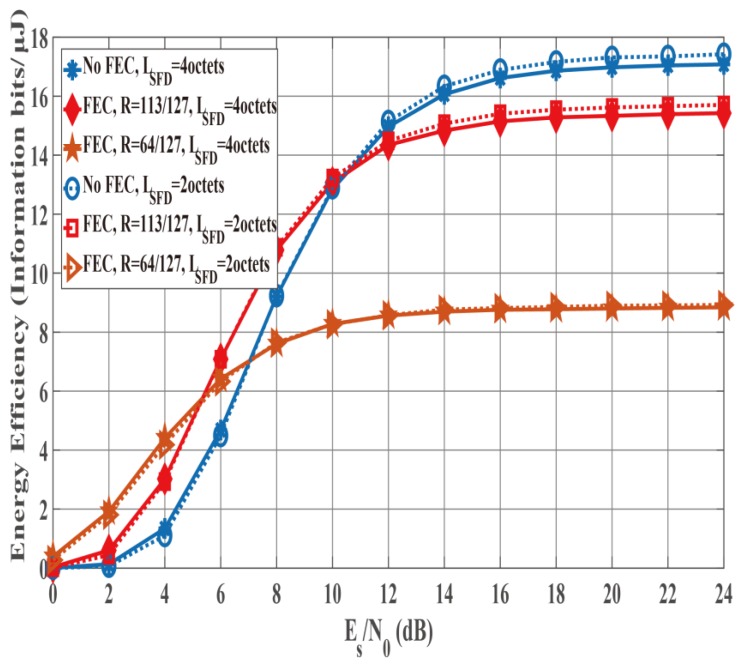
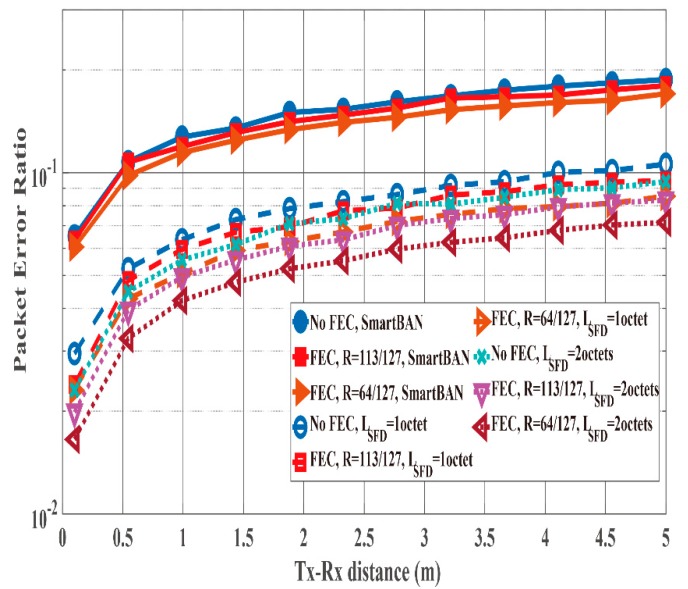
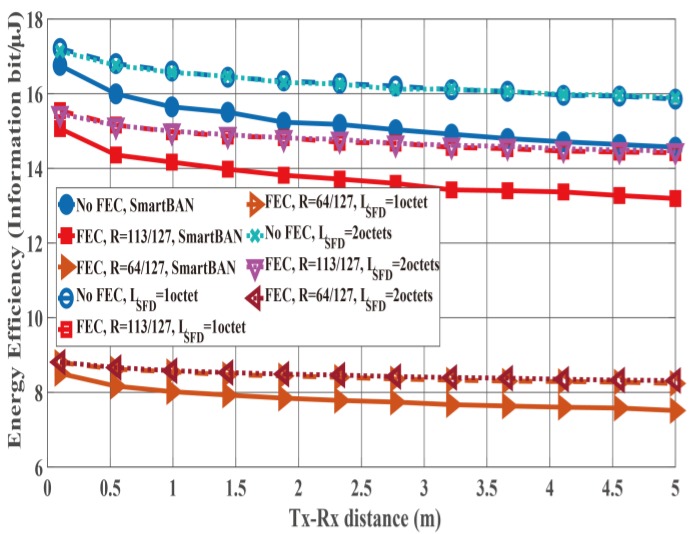
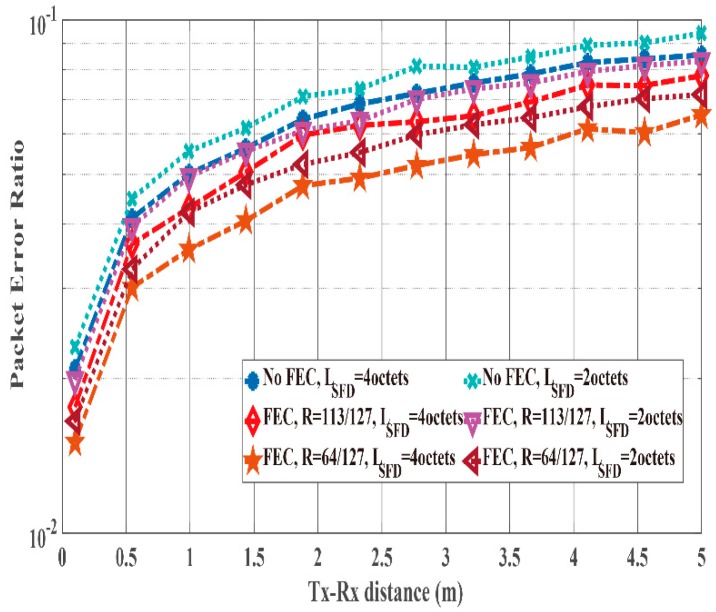
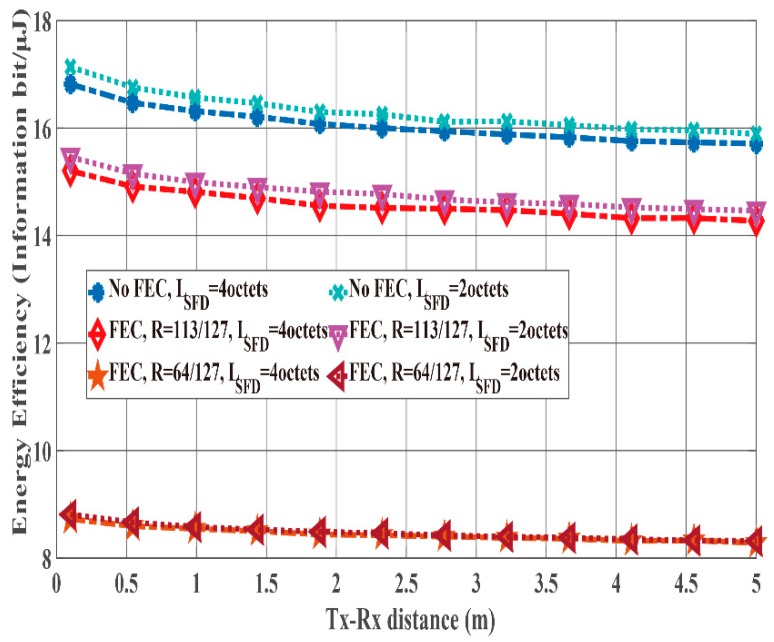
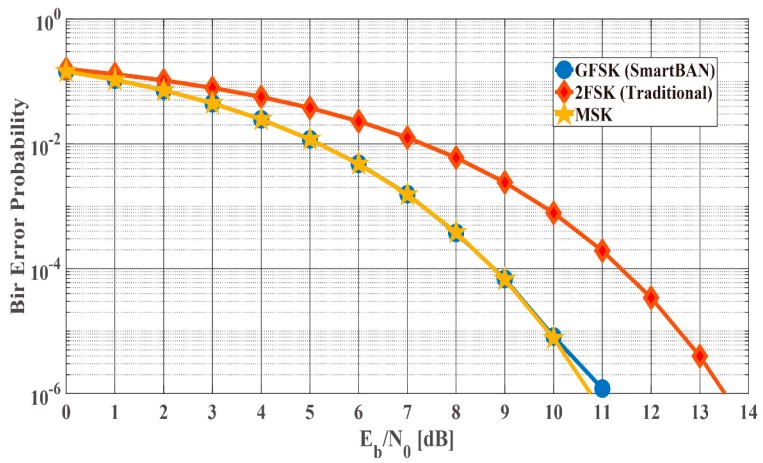
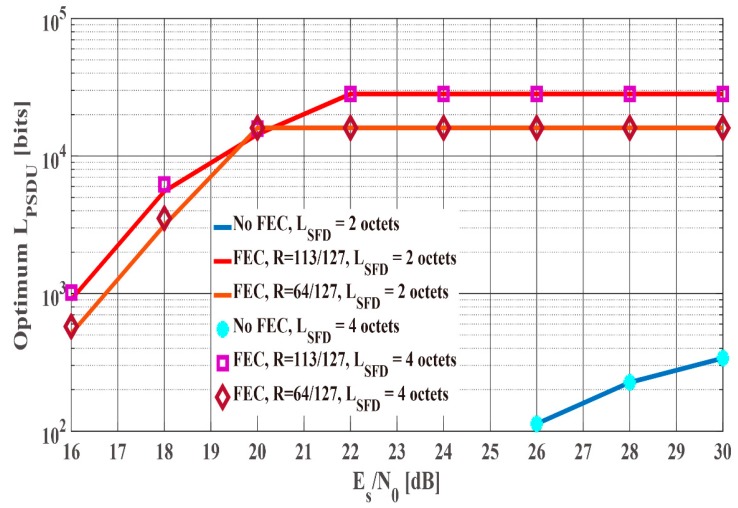
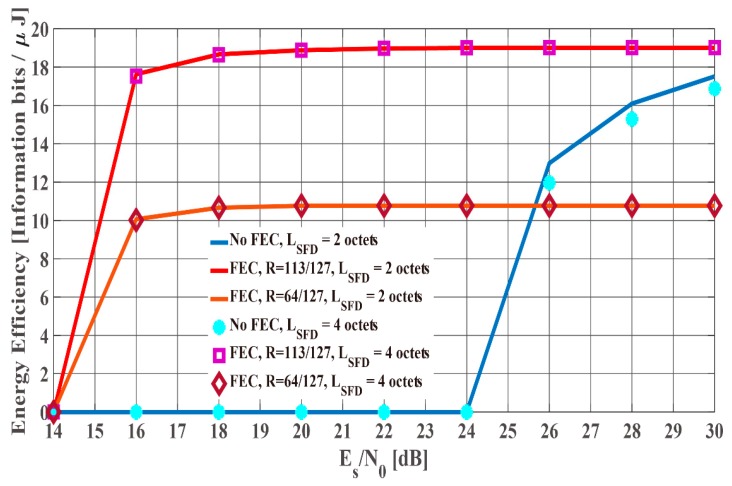
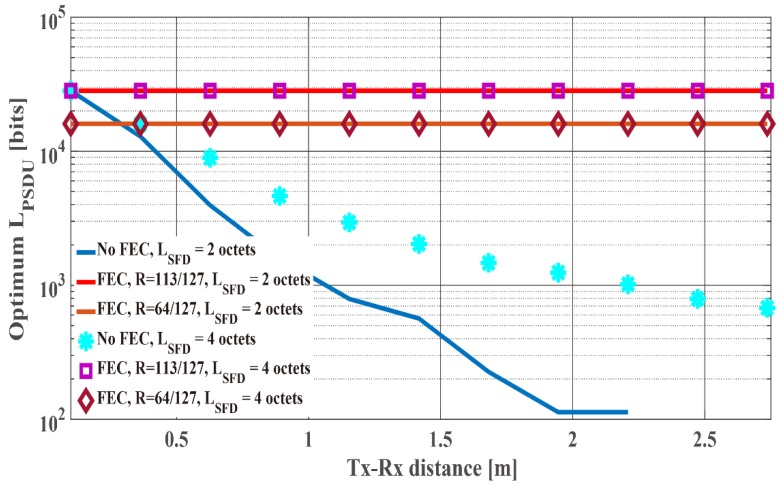
This paper performs integrated performance evaluation, including preamble detection in the Smart Body Area Networks (SmartBAN) physical layer (PHY). The system specifications for a PHY and media access control layer (MAC) in SmartBAN, which is a standard for medical and health care advanced by the European Telecommunications Standards Institute (ETSI), were issued in April 2015. In the PHY, the packet structure has a two-octet preamble, which is used, e.g., for timing synchronization. However, it is considered that the current preamble structure is not appropriate for handling medical and healthcare data that are required to have high reliability because of the too simple structure. Therefore, we propose adding a start frame delimiter (SFD) to correctly detect the header position. Computer simulations indicate that preambles with an SFD consisting of an orthogonal maximal length sequence (M-sequence) perform better than SmartBAN and similar approaches, particularly when transmitting over the IEEE model CM3. In addition, the packet error ratio (PER) and energy efficiency are evaluated in an integrated manner while taking preamble detection into consideration. The numerical results from computer simulations indicated the best performance with respect to PER was achieved using a preamble with orthogonal M-sequences of 4 octets. However, for energy efficiency, better results were obtained using a preamble with orthogonal M-sequences of 2 octets. Additionally, the theoretical analysis found the optimum length of the PHY packet to achieve the maximum energy efficiency with PER less than 10.
本文对包括智能体域网 (SmartBAN) 物理层 (PHY) 前导码检测在内的综合性能进行了评估。SmartBAN 的 PHY 和媒体访问控制层 (MAC) 的系统规范由欧洲电信标准协会 (ETSI) 于 2015 年 4 月发布,该规范是医疗保健的一项先进标准。在 PHY 中,数据包结构具有两个字节的前导码,例如用于定时同步。然而,由于结构过于简单,人们认为当前的前导码结构不适合处理需要高可靠性的医疗和保健数据。因此,我们建议添加起始帧定界符 (SFD) 以正确检测报头位置。计算机仿真表明,具有由正交最大长度序列 (M 序列) 组成的 SFD 的前导码的性能优于 SmartBAN 和类似方法,特别是在 IEEE 模型 CM3 上传输时。此外,在考虑前导码检测的情况下,综合评估了包错误率 (PER) 和能量效率。计算机仿真的数值结果表明,使用 4 个字节的正交 M 序列的前导码可以获得最佳的 PER 性能。然而,对于能量效率,使用 2 个字节的正交 M 序列的前导码可以获得更好的结果。此外,理论分析发现 PHY 数据包的最佳长度可以实现 PER 小于 10 的最大能量效率。