Geng Yunhang, Gai Pengzhou
Qingdao University Medical College, Qingdao, China.
Department of Orthopaedic Surgery, Qindao University Medical College Affiliated Yantai Yuhuangding Hospital, Yantai, Shandong, People's Republic of China.
BMC Musculoskelet Disord. 2018 Dec 22;19(1):454. doi: 10.1186/s12891-018-2376-0.
To evaluate the length and position of femoral tunnel,and exam whether knee stability and clinical functional outcomes are superior in AMP method.
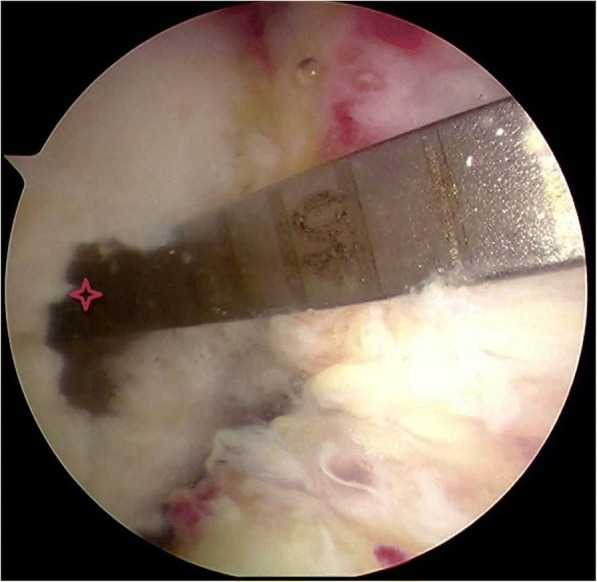
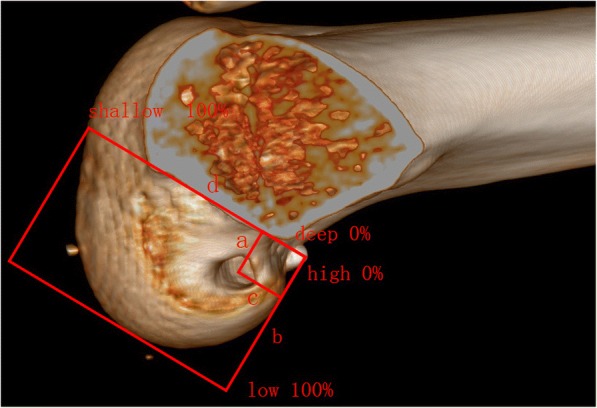
From August 2014 to February 2015, we prospectively recruited 104 patients undergoing anterior cruciate ligament reconstruction. They were randomized to anteromedial portal or transtibial method. All patients underwent Lysholm score, International Knee Documentation Committee score,Tegner score at pre-operative and last follow-up point as subjective assessment of clinical function. The Lachman test, the Pivot-shift test and KT-1000 were performed at the last follow-up as a evaluation of knee joint stability. We measured the length of femoral tunnel intraoperatively and at 1 week post-operatively, CT-based three-dimensional reconstruction was used to assess femoral tunnel location.
The average follow-up time of anteromedial portal group was 25.7 ± 6.8 months (range:12-36.5 months), and the average follow-up time of the transtibial group was 24.9 ± 6.0 months (range:12-37 months). There was no significant difference between the groups pre-operative Lysholm score, IKDC score and Tegner scores. Both groups showed significantly improvement in these clinical function scores at follow up for their ACL reconstruction. However, there was no significant difference in the function scores between the two groups at last follow up. However, the mean femoral tunnel length in the anteromedial portal group was significantly shorter than that in the transtibial group. And tunnel location was significantly lower and deeper with the anteromedial portal technique than with the transtibial technique.
The use of anteromedial portal method resulted in a significantly lower and deeper placement of the femoral tunnel, and a shorter tunnel length compared to the transtibial method. However, there was no statistical difference in terms of clinical function and knee joint stability between the anteromedial portal method and the transtibial method.
Name of the registry: Chinese Clinical Trial Registry. The registration number: ChiCTR1800014874 . The date of registration: 12 February, 2018. The study is retrospectively registered.
评估股骨隧道的长度和位置,并检查在AMP方法中膝关节稳定性和临床功能结果是否更优。
2014年8月至2015年2月,我们前瞻性招募了104例行前交叉韧带重建术的患者。他们被随机分为前内侧入路组或经胫骨入路组。所有患者在术前及末次随访时均接受Lysholm评分、国际膝关节文献委员会评分、Tegner评分,作为临床功能的主观评估。在末次随访时进行Lachman试验、轴移试验和KT-1000检查,以评估膝关节稳定性。我们在术中及术后1周测量股骨隧道的长度,采用基于CT的三维重建评估股骨隧道位置。
前内侧入路组平均随访时间为25.7±6.8个月(范围:12 - 36.5个月),经胫骨入路组平均随访时间为24.9±6.0个月(范围:12 - 37个月)。术前两组间Lysholm评分、IKDC评分和Tegner评分无显著差异。两组在ACL重建术后随访时这些临床功能评分均有显著改善。然而,末次随访时两组功能评分无显著差异。然而,前内侧入路组的平均股骨隧道长度明显短于经胫骨入路组。与经胫骨技术相比,前内侧入路技术的隧道位置明显更低且更深。
与经胫骨方法相比,使用前内侧入路方法导致股骨隧道位置明显更低且更深,隧道长度更短。然而,前内侧入路方法与经胫骨方法在临床功能和膝关节稳定性方面无统计学差异。
注册机构名称:中国临床试验注册中心。注册号:ChiCTR1800014874。注册日期:2018年2月12日。本研究为回顾性注册。