Sewing Sabine, Gubler Marcel, Gérard Régine, Avignon Blandine, Mueller Yasmin, Braendli-Baiocco Annamaria, Odin Marielle, Moisan Annie
Roche Pharma Research and Early Development, Roche Innovation Center Basel, Basel 4070, Switzerland.
Roche Pharma Research and Early Development, Roche Innovation Center Basel, Basel 4070, Switzerland.
Mol Ther Nucleic Acids. 2019 Mar 1;14:67-79. doi: 10.1016/j.omtn.2018.11.005. Epub 2018 Nov 20.
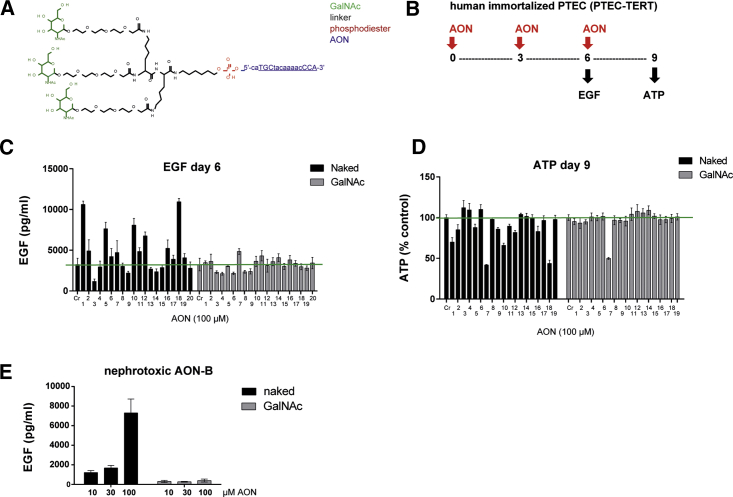
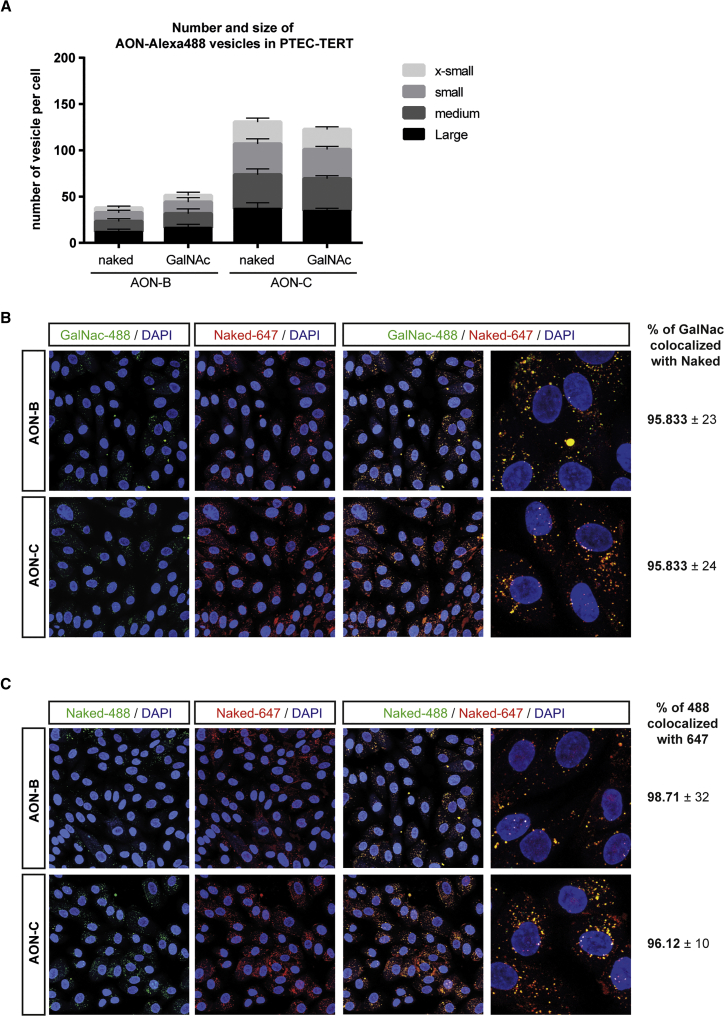
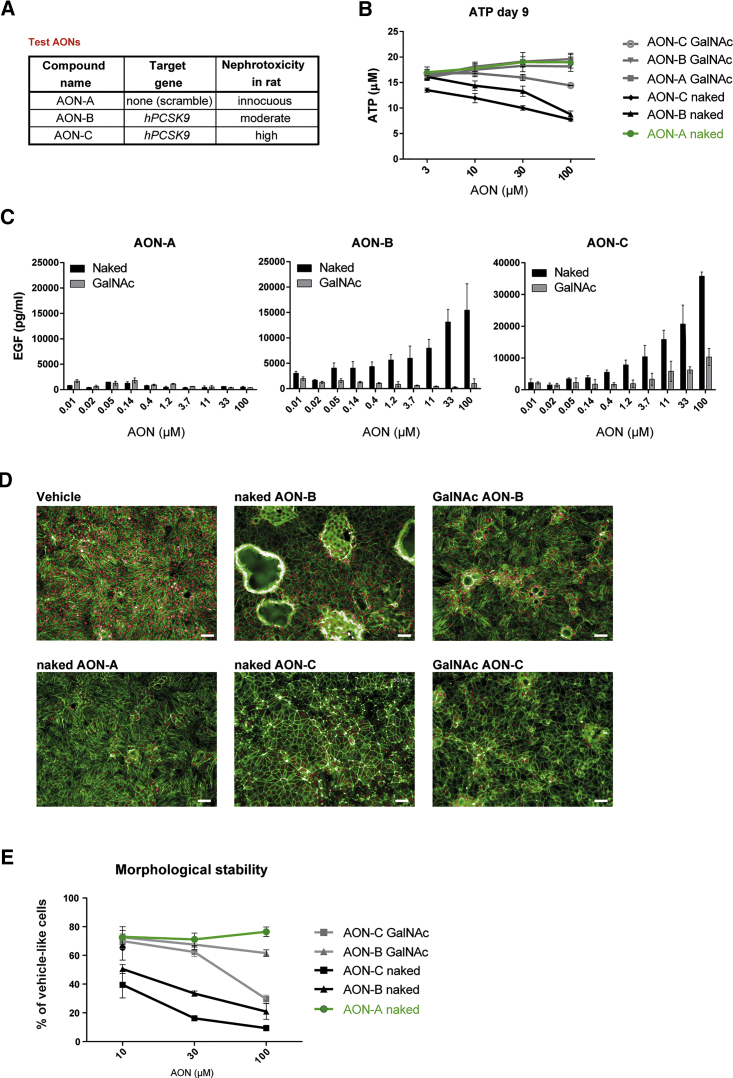
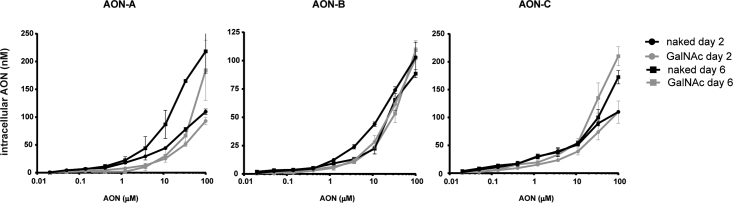
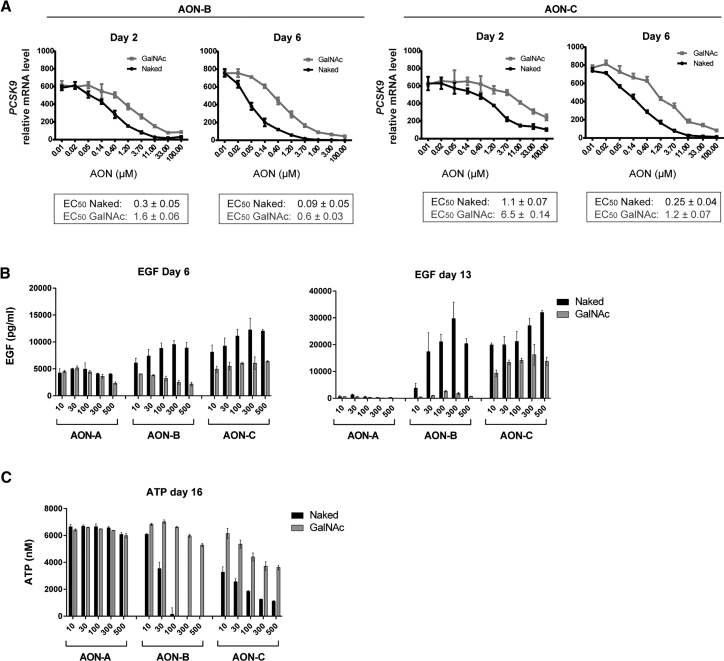
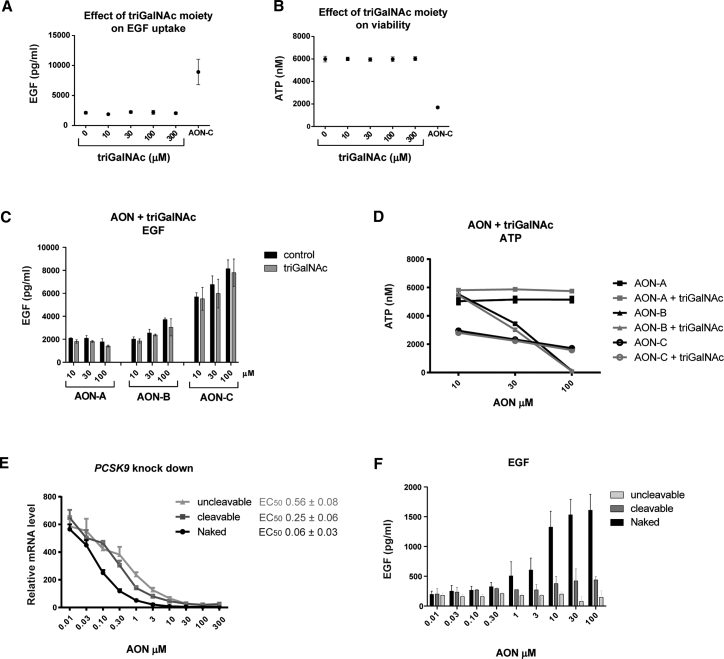
Targeted delivery of antisense oligonucleotide (AON) drugs is a promising strategy to increase their concentration in the desired tissues and cell types while reducing access to other organs. Conjugation of AONs to N-acetylgalactosamine (GalNAc) has been shown to efficiently shift their biodistribution toward the liver via high-affinity binding to the asialoglycoprotein receptor (ASGPR) expressed at the surface of hepatocytes. Nevertheless, GalNAc conjugation does not prevent accumulation of AONs in the kidney cortex, and GalNAc-conjugated AONs might cause kidney toxicities, for example, under conditions of ASGPR saturation. Here, we investigated the nephrotoxicity potential of GalNAc-conjugated AONs by in vitro profiling of AON libraries in renal proximal tubule epithelial cells (PTECs) and in vivo testing of selected candidates. Whereas GalNAc-conjugated AONs appeared generally innocuous to PTECs, some caused mild-to-moderate nephrotoxicity in rats. Interestingly, the in vivo kidney liabilities could be recapitulated in vitro by treating PTECs with the unconjugated (or naked) parental AONs. An in vitro mechanistic study revealed that GalNAc conjugation attenuated AON-induced renal cell toxicity despite intracellular accumulation similar to that of naked AONs and independent of target knockdown. Overall, our in vitro findings reveal ASGPR-independent properties of GalNAc AONs that confer a favorable safety profile at the cellular level, which may variably translate in vivo due to catabolic transformation of circulating AONs.
靶向递送反义寡核苷酸(AON)药物是一种很有前景的策略,可提高其在所需组织和细胞类型中的浓度,同时减少其进入其他器官。已证明将AON与N-乙酰半乳糖胺(GalNAc)偶联可通过与肝细胞表面表达的去唾液酸糖蛋白受体(ASGPR)高亲和力结合,有效地将其生物分布转向肝脏。然而,GalNAc偶联并不能阻止AON在肾皮质中的积累,并且GalNAc偶联的AON可能会导致肾脏毒性,例如在ASGPR饱和的情况下。在这里,我们通过在肾近端小管上皮细胞(PTEC)中对AON文库进行体外分析以及对选定候选物进行体内测试,研究了GalNAc偶联的AON的肾毒性潜力。虽然GalNAc偶联的AON对PTEC通常似乎无害,但有些在大鼠中会引起轻度至中度肾毒性。有趣的是,通过用未偶联(或裸露)的亲本AON处理PTEC,可以在体外重现体内肾脏毒性。一项体外机制研究表明,尽管细胞内积累与裸露的AON相似且与靶点敲低无关,但GalNAc偶联减弱了AON诱导的肾细胞毒性。总体而言,我们的体外研究结果揭示了GalNAc AON的不依赖于ASGPR的特性,这些特性在细胞水平上赋予了良好的安全性,由于循环AON的分解代谢转化,其在体内的转化可能会有所不同。