Tiedemann Kerstin, Sadvakassova Gulzhakhan, Mikolajewicz Nicholas, Juhas Michal, Sabirova Zarina, Tabariès Sébastien, Gettemans Jan, Siegel Peter M, Komarova Svetlana V
Faculty of Dentistry, McGill University, 3640 rue University, Montreal, Quebec, Canada, H3A 0C7; Shriner's Hospital for Children - Canada, 1003 Decarie Boulevard, Montreal, Quebec H4A 0A9.
Faculty of Dentistry, McGill University, 3640 rue University, Montreal, Quebec, Canada, H3A 0C7.
Transl Oncol. 2019 Mar;12(3):462-474. doi: 10.1016/j.tranon.2018.11.014. Epub 2018 Dec 21.
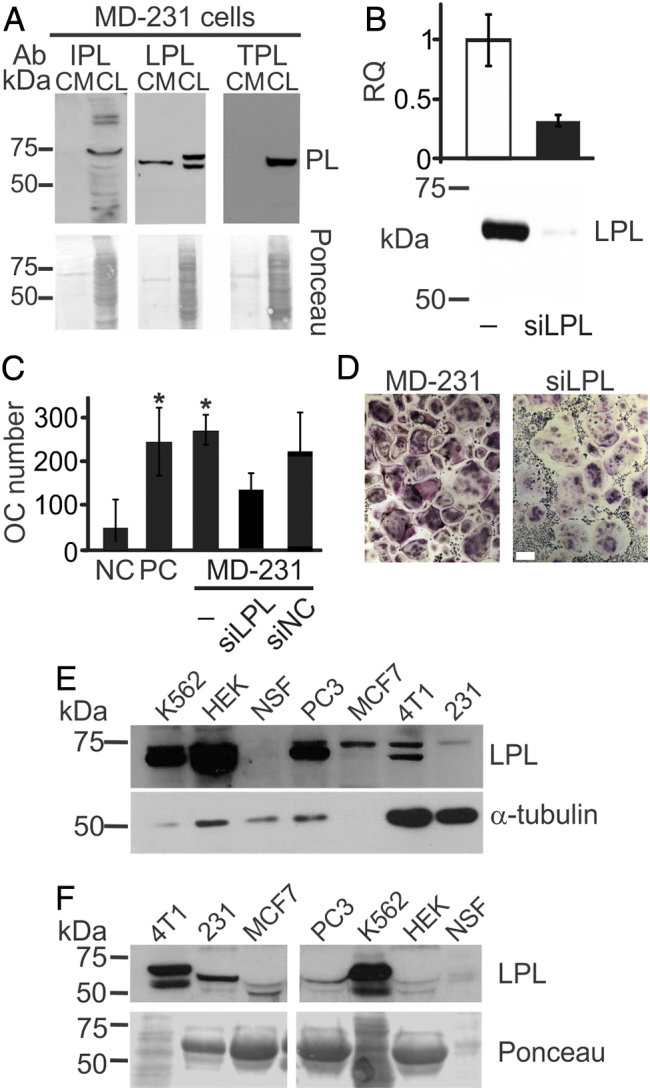
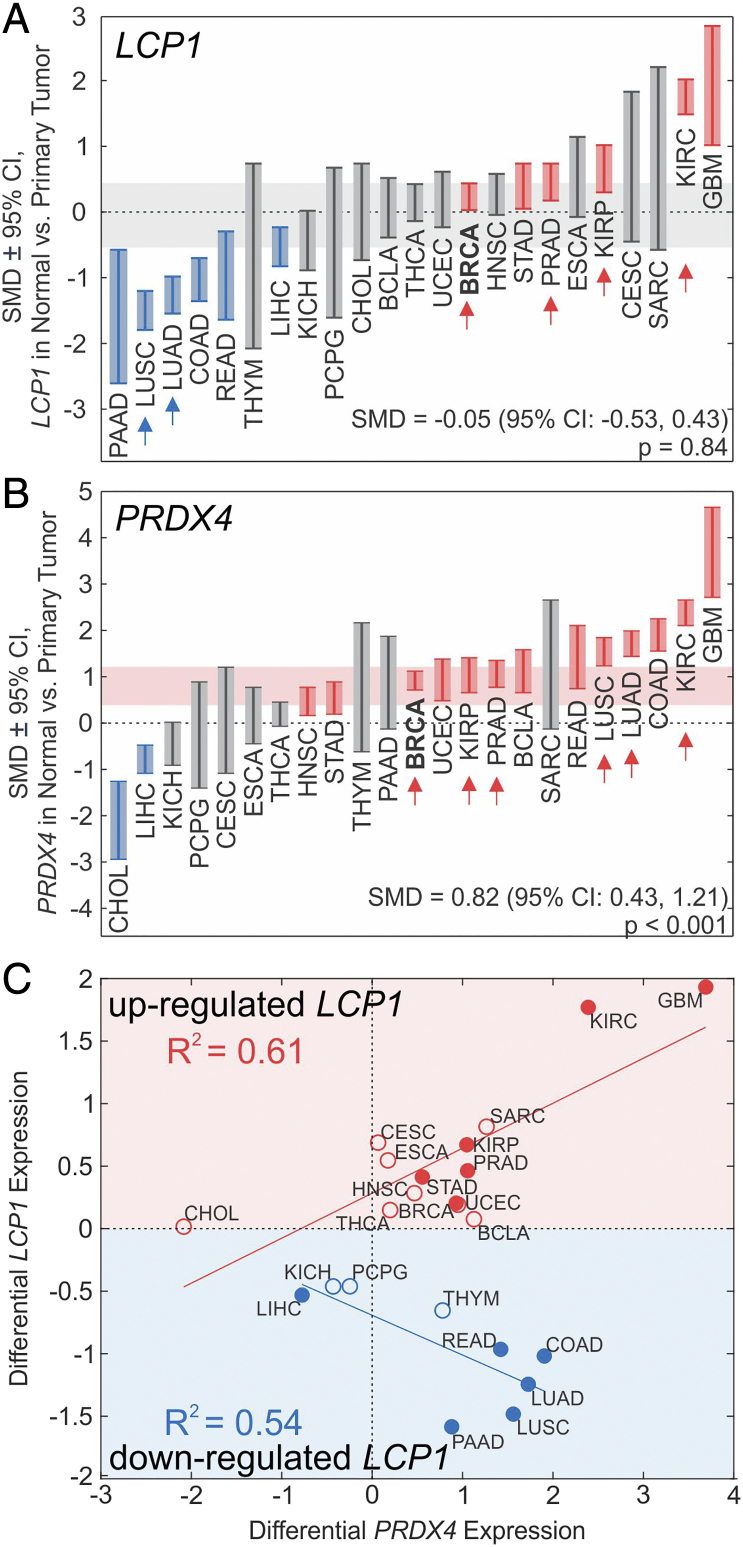
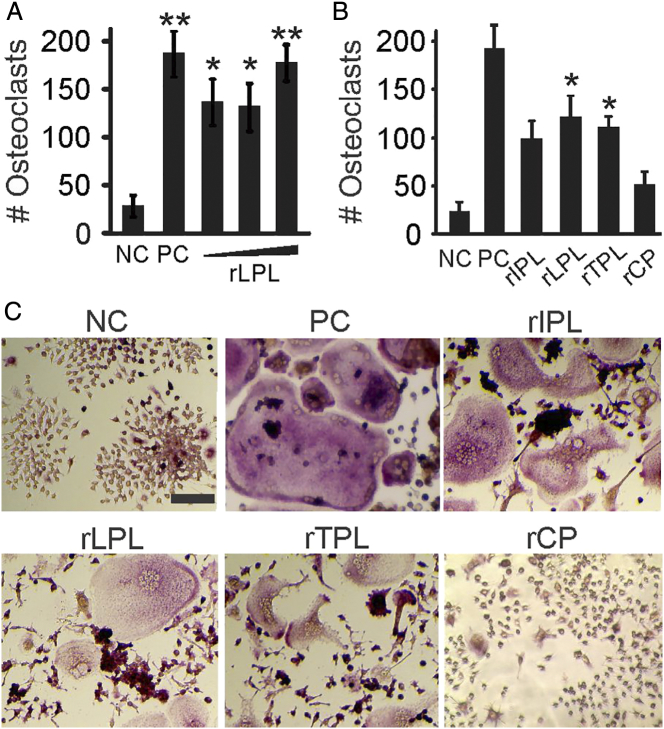
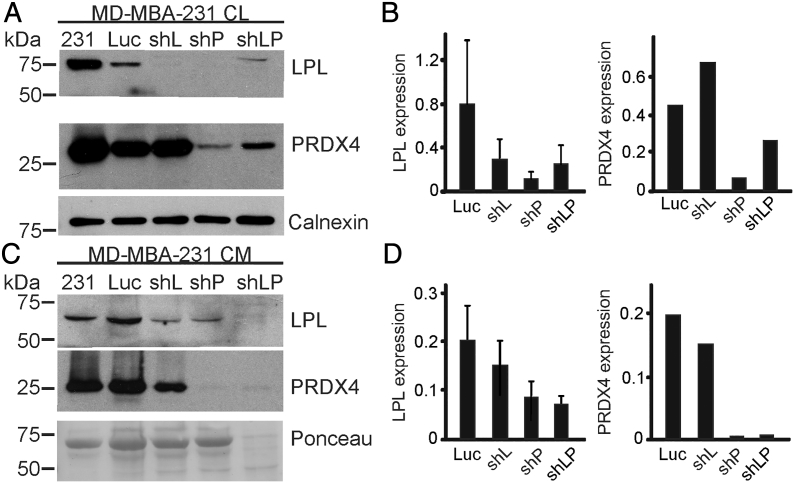
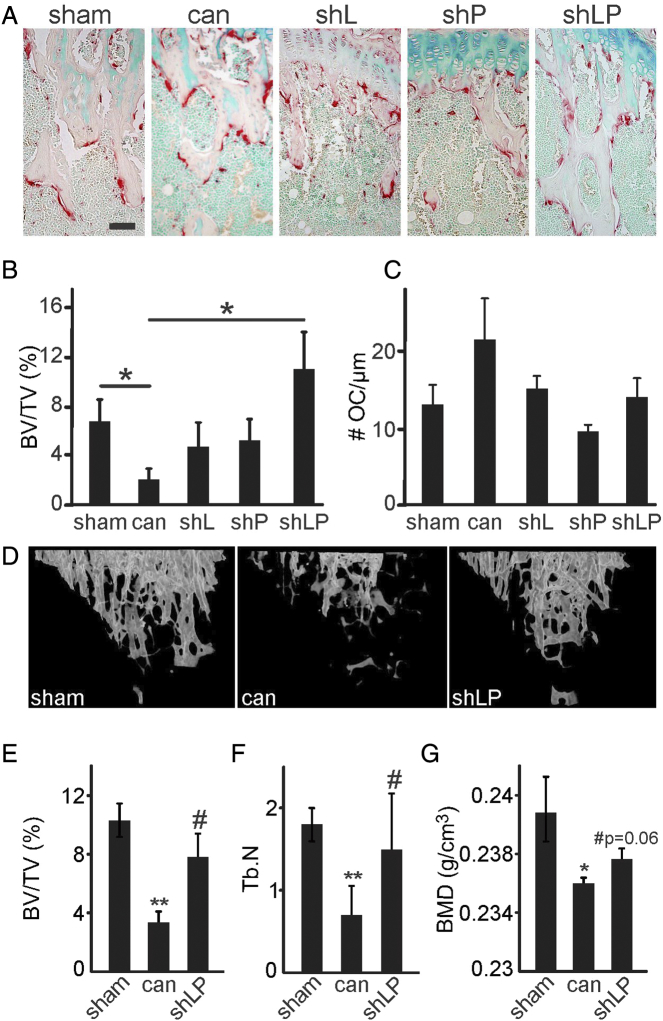
Bone metastasis from breast and prostate carcinomas is facilitated by activation of bone-resorbing osteoclasts. Using proteomics approaches, we have identified peroxiredoxin-4 (PRDX4) as a cancer-secreted mediator of osteoclastogenesis. We now report characterization of L-plastin in the conditioned media (CM) of MDA-MB-231 human breast cancer cells using immunoblotting and mass spectrometry. The osteoclastogenic potential of MDA-MB-231 CM with siRNA-silenced L-plastin was significantly reduced. L-plastin was detected in cancer-derived exosomes, and inhibition of exosomal release significantly decreased the osteoclastogenic capacity of MDA-MB-231 CM. When added to osteoclast precursors primed with RANKL for 2 days, recombinant L-plastin induced calcium/NFATc1-mediated osteoclastogenesis to the levels similar to continuous treatment with RANKL. Using shRNA, we generated MDA-MB-231 cells lacking L-plastin, PRDX4, or both and injected these cell populations intratibially in CD-1 immunodeficient mice. Micro-CT and histomorphometric analysis demonstrated a complete loss of osteolysis when MDA-MB-231 cells lacking both L-plastin and PRDX4 were injected. A meta-analysis established an increase in L-plastin and PRDX4 mRNA expression in numerous human cancers, including breast and prostate carcinomas. This study demonstrates that secreted L-plastin and PRDX4 mediate osteoclast activation by human breast cancer cells.
乳腺癌和前列腺癌的骨转移是由骨吸收破骨细胞的激活所促进的。我们使用蛋白质组学方法,鉴定出过氧化物酶体增殖物激活受体4(PRDX4)是一种癌症分泌的破骨细胞生成介质。我们现在报告使用免疫印迹和质谱法对MDA-MB-231人乳腺癌细胞条件培养基(CM)中的L-肌动蛋白进行表征。用小干扰RNA(siRNA)沉默L-肌动蛋白的MDA-MB-231 CM的破骨细胞生成潜力显著降低。在癌症来源的外泌体中检测到L-肌动蛋白,抑制外泌体释放显著降低了MDA-MB-231 CM的破骨细胞生成能力。当添加到用RANKL预处理2天的破骨细胞前体中时,重组L-肌动蛋白诱导钙/NFATc1介导的破骨细胞生成,达到与连续用RANKL处理相似的水平。我们使用短发夹RNA(shRNA)生成了缺乏L-肌动蛋白、PRDX4或两者的MDA-MB-231细胞,并将这些细胞群体胫骨内注射到CD-1免疫缺陷小鼠中。显微CT和组织形态计量学分析表明,注射缺乏L-肌动蛋白和PRDX4的MDA-MB-231细胞时,骨溶解完全消失。一项荟萃分析表明,在包括乳腺癌和前列腺癌在内的多种人类癌症中,L-肌动蛋白和PRDX4的mRNA表达增加。这项研究表明,分泌的L-肌动蛋白和PRDX4介导人乳腺癌细胞的破骨细胞激活。