Institute of Crop Science, Nutritional Crop Physiology, University of Hohenheim, Fruwirthstr. 20, 70593, Stuttgart, Germany.
BMC Plant Biol. 2018 Dec 27;18(1):372. doi: 10.1186/s12870-018-1603-z.
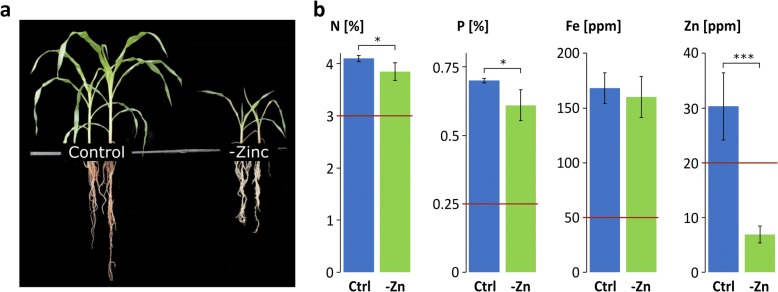
Zinc (Zn) is an essential micronutrient of all organisms. Deficiency of zinc causes disturbance in crucial plant functions, as a high number of enzymes, including transcription factors, depend on zinc for proper performance. The plant responses to zinc deficiency are associated with increased high affinity Zn uptake and translocation, as well as efficient usage of the remaining zinc, but have not been characterized in molecular detail in maize.
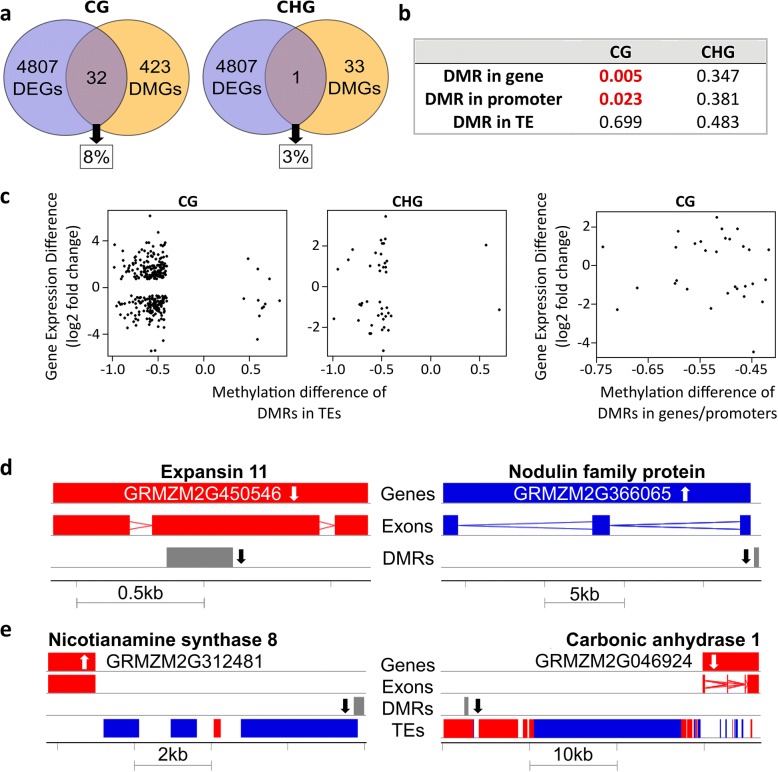
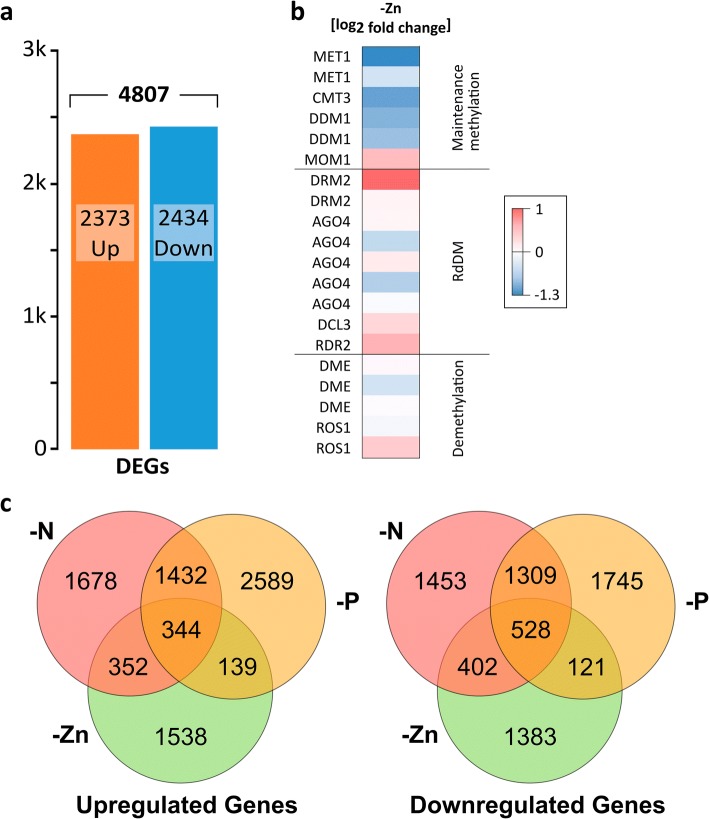
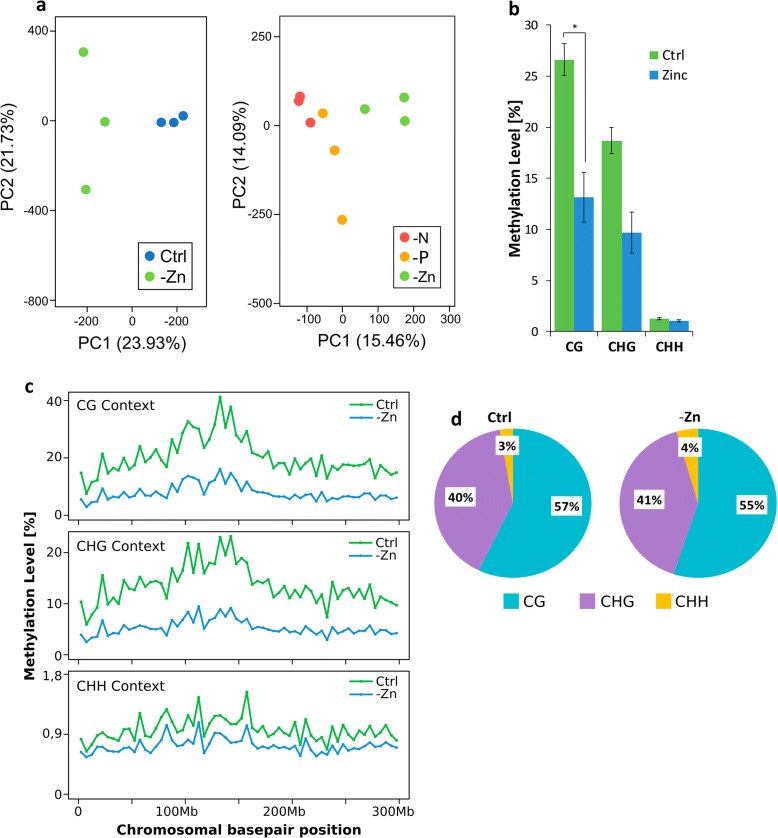
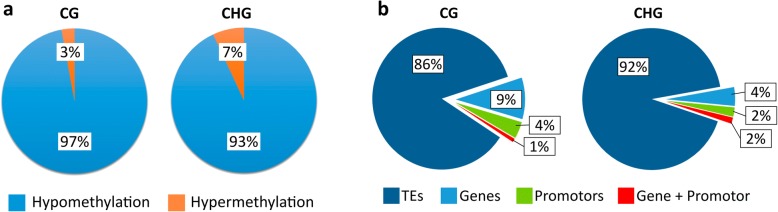
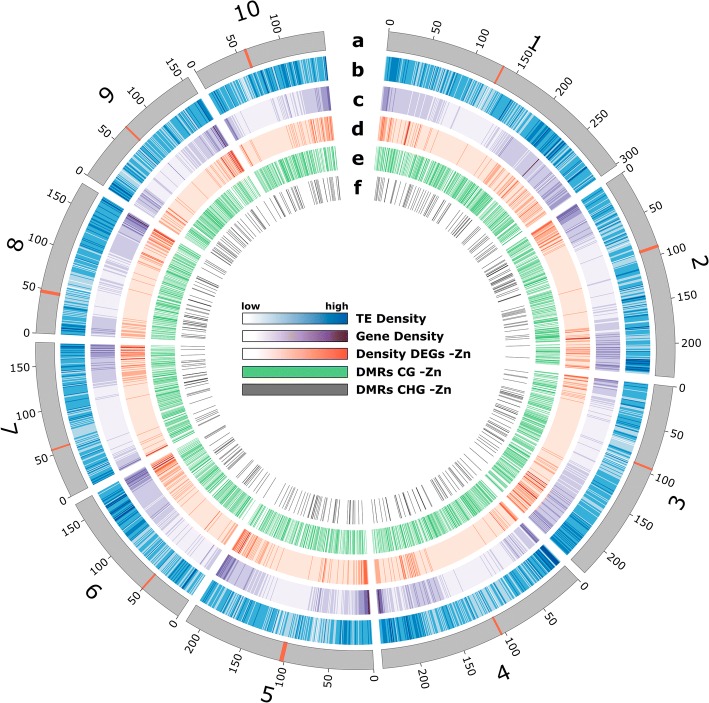
The high affinity transporter genes ZmZIP3,4,5,7 and 8 and nicotianamine synthases, primarily ZmNAS5, were identified as primary up-regulated in maize roots upon prolonged Zn deficiency. In addition to down-regulation of genes encoding enzymes involved in pathways regulating reactive oxygen species and cell wall-related genes, a massive up-regulation of the sucrose efflux channel genes SWEET13a,c was identified, despite that in -Zn sugar is known to accumulate in shoots. In addition, enzymes involved in DNA maintenance methylation tended to be repressed, which coincided with massively reduced DNA methylation in Zn-deficient roots. Reduced representation bisulfate sequencing, which revealed base-specific methylation patterns in ~ 14% of the maize genome, identified a major methylation loss in -Zn, mostly in transposable elements. However, hypermethylated genome regions in -Zn were also identified, especially in both symmetrical cytosine contexts. Differential methylation was partially associated with differentially expressed genes, their promoters, or transposons close to regulated genes. However, hypomethylation was associated with about equal number of up- or down-regulated genes, questioning a simple mechanistic relationship to gene expression.
The transcriptome of Zn-deficient roots identified genes and pathways to cope with the deficiency and a major down-regulation of reactive oxygen metabolism. Interestingly, a nutrient-specific loss of DNA methylation, partially related to gene expression in a context-specific manner, may play a role in long-term stress adaptation.
锌(Zn)是所有生物体必需的微量元素。缺锌会导致关键的植物功能紊乱,因为许多酶,包括转录因子,都依赖锌才能正常发挥作用。植物对缺锌的反应与增加高亲和力锌的吸收和转运有关,以及有效利用剩余的锌,但在玉米中尚未在分子细节上进行描述。
在玉米根系中,高亲和力转运蛋白基因 ZmZIP3、4、5、7 和 8 以及尼克酸合成酶,主要是 ZmNAS5,被鉴定为在长期缺锌时主要上调。除了下调参与调节活性氧和细胞壁相关基因途径的酶编码基因外,还鉴定到蔗糖外排通道基因 SWEET13a、c 的大量上调,尽管在缺锌时糖已知在地上部分积累。此外,参与 DNA 维持甲基化的酶倾向于被抑制,这与缺锌根中大量减少的 DNA 甲基化相吻合。减少代表性的亚硫酸氢盐测序,揭示了约 14%的玉米基因组中碱基特异性甲基化模式,发现缺锌时主要在转座元件中存在大量的甲基化丢失。然而,在缺锌时也鉴定到超甲基化的基因组区域,特别是在两个对称的胞嘧啶环境中。差异甲基化部分与差异表达的基因、其启动子或靠近调节基因的转座子相关。然而,低甲基化与上调或下调基因的数量相等,这对基因表达的简单机制关系提出了质疑。
缺锌根的转录组鉴定出了应对缺锌的基因和途径,以及活性氧代谢的主要下调。有趣的是,一种特定于营养的 DNA 甲基化丢失,部分与特定于上下文的基因表达相关,可能在长期应激适应中发挥作用。