Key Laboratory of Information Fusion Technology of Ministry of Education, School of Automation, Northwestern Polytechnical University, Xi'an, China.
Department of Electrical and Computer Engineering, University of Texas at San Antonio, San Antonio, Texas, United States of America.
PLoS Comput Biol. 2019 Jan 2;15(1):e1006663. doi: 10.1371/journal.pcbi.1006663. eCollection 2019 Jan.
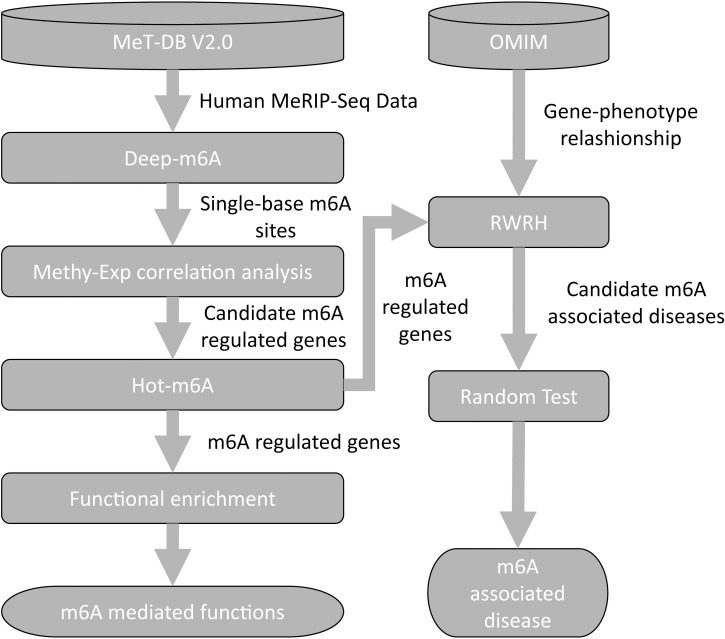
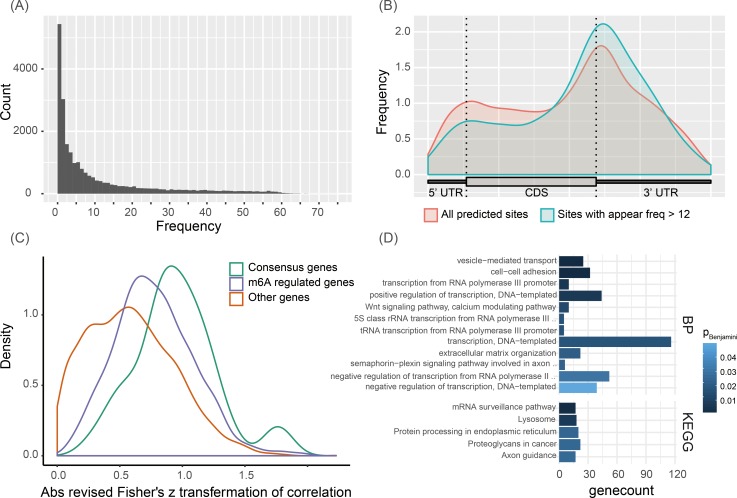
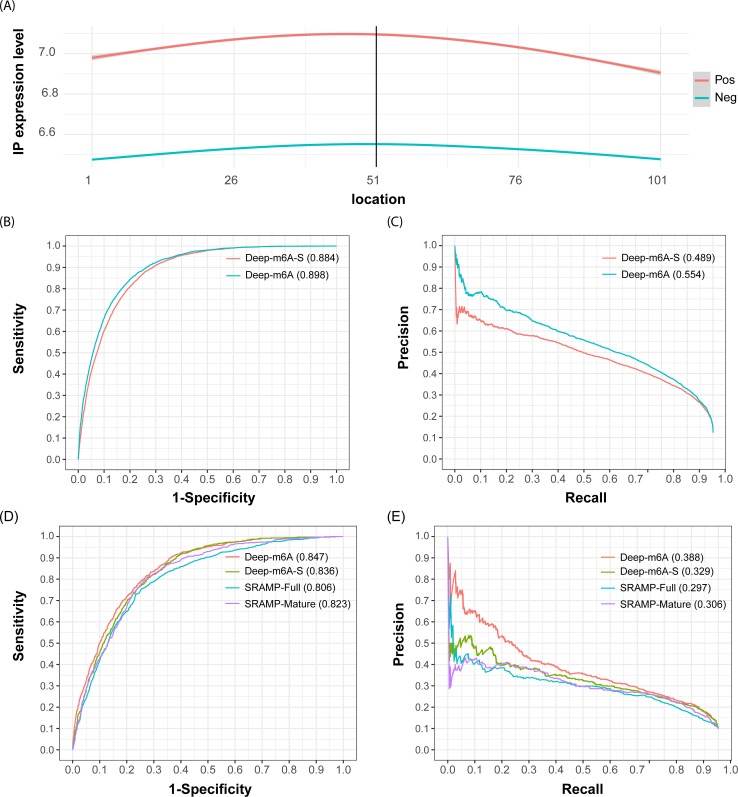
N6-methyladenosine (m6A) is the most abundant methylation, existing in >25% of human mRNAs. Exciting recent discoveries indicate the close involvement of m6A in regulating many different aspects of mRNA metabolism and diseases like cancer. However, our current knowledge about how m6A levels are controlled and whether and how regulation of m6A levels of a specific gene can play a role in cancer and other diseases is mostly elusive. We propose in this paper a computational scheme for predicting m6A-regulated genes and m6A-associated disease, which includes Deep-m6A, the first model for detecting condition-specific m6A sites from MeRIP-Seq data with a single base resolution using deep learning and Hot-m6A, a new network-based pipeline that prioritizes functional significant m6A genes and its associated diseases using the Protein-Protein Interaction (PPI) and gene-disease heterogeneous networks. We applied Deep-m6A and this pipeline to 75 MeRIP-seq human samples, which produced a compact set of 709 functionally significant m6A-regulated genes and nine functionally enriched subnetworks. The functional enrichment analysis of these genes and networks reveal that m6A targets key genes of many critical biological processes including transcription, cell organization and transport, and cell proliferation and cancer-related pathways such as Wnt pathway. The m6A-associated disease analysis prioritized five significantly associated diseases including leukemia and renal cell carcinoma. These results demonstrate the power of our proposed computational scheme and provide new leads for understanding m6A regulatory functions and its roles in diseases.
N6-甲基腺苷(m6A)是最丰富的甲基化修饰,存在于超过 25%的人类 mRNA 中。令人兴奋的最新发现表明,m6A 密切参与调节 mRNA 代谢和癌症等疾病的许多不同方面。然而,我们目前对于 m6A 水平如何受到控制,以及调节特定基因的 m6A 水平是否以及如何在癌症和其他疾病中发挥作用,知之甚少。我们在本文中提出了一种用于预测 m6A 调控基因和 m6A 相关疾病的计算方案,该方案包括 Deep-m6A,这是第一个使用深度学习从 MeRIP-Seq 数据中以单个碱基分辨率检测条件特异性 m6A 位点的模型,以及 Hot-m6A,这是一种新的基于网络的管道,使用蛋白质-蛋白质相互作用(PPI)和基因-疾病异质网络来优先考虑功能显著的 m6A 基因及其相关疾病。我们将 Deep-m6A 和该管道应用于 75 个人类 MeRIP-seq 样本,生成了一组 709 个功能显著的 m6A 调控基因和九个功能丰富的子网络。这些基因和网络的功能富集分析表明,m6A 靶向许多关键生物过程的关键基因,包括转录、细胞组织和运输以及细胞增殖和癌症相关途径,如 Wnt 途径。m6A 相关疾病分析优先考虑了五种显著相关的疾病,包括白血病和肾细胞癌。这些结果证明了我们提出的计算方案的强大功能,并为理解 m6A 调节功能及其在疾病中的作用提供了新的线索。