Carvallo Claudia, Contreras Darwin, Ugarte Gonzalo, Delgado Ricardo, Pancetti Floria, Rozas Carlos, Piña Ricardo, Constandil Luis, Zeise Marc L, Morales Bernardo
Laboratory of Neuroscience, Faculty of Chemistry and Biology, Universidad de Santiago de Chile, Santiago, Chile.
Department of Biology, Faculty of Sciences, Universidad de Chile, Santiago, Chile.
Front Pharmacol. 2018 Dec 19;9:1485. doi: 10.3389/fphar.2018.01485. eCollection 2018.
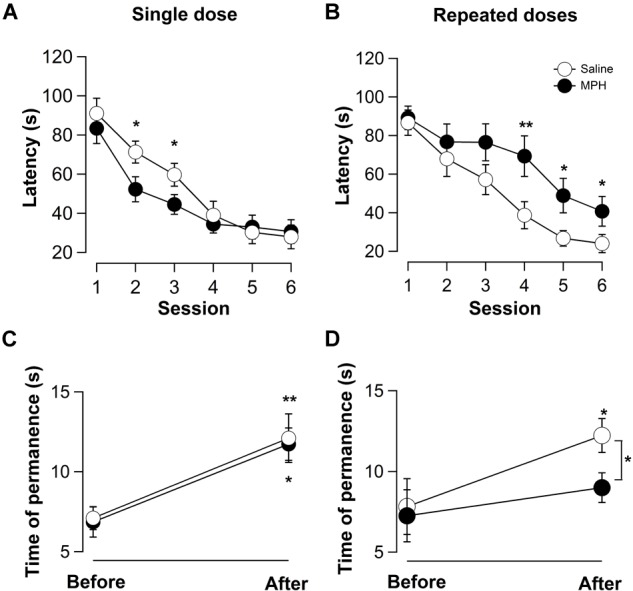
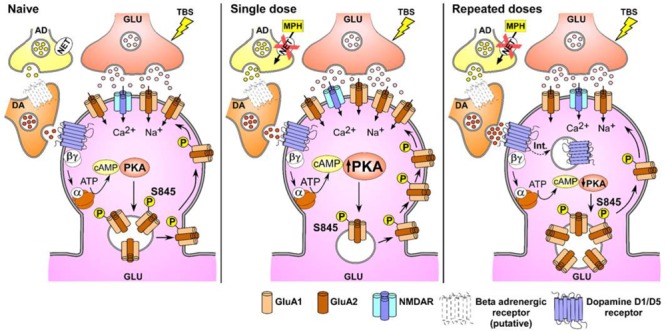
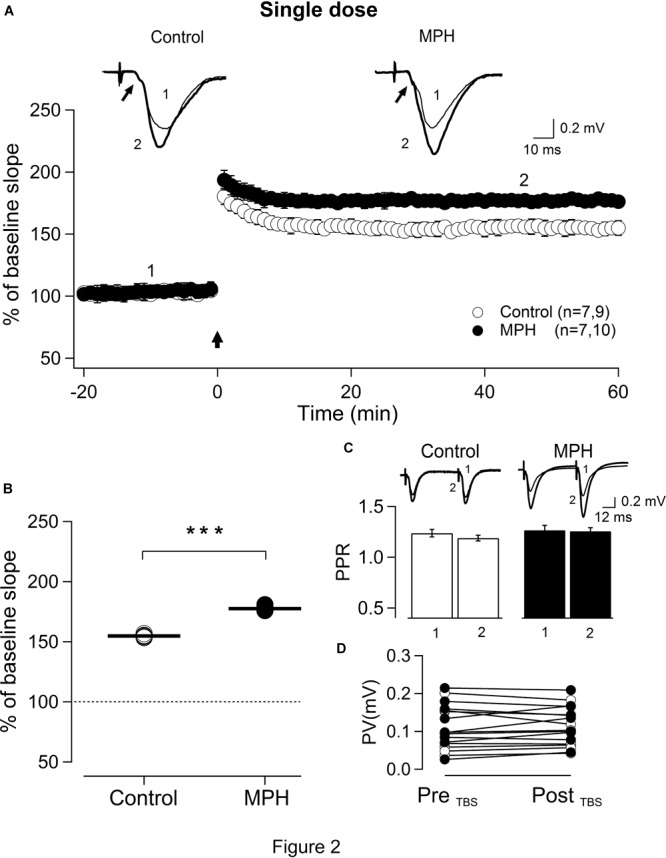
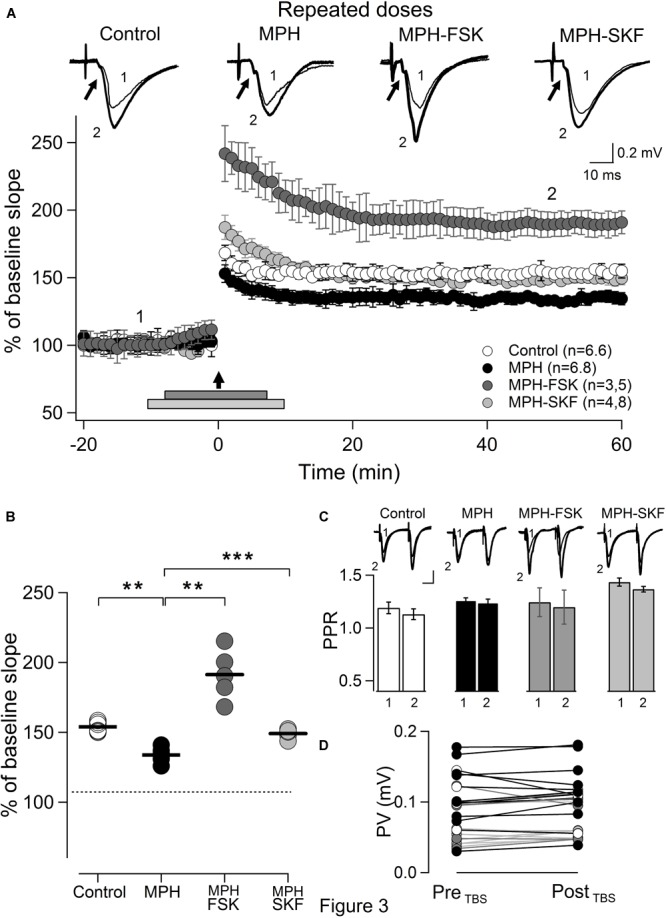
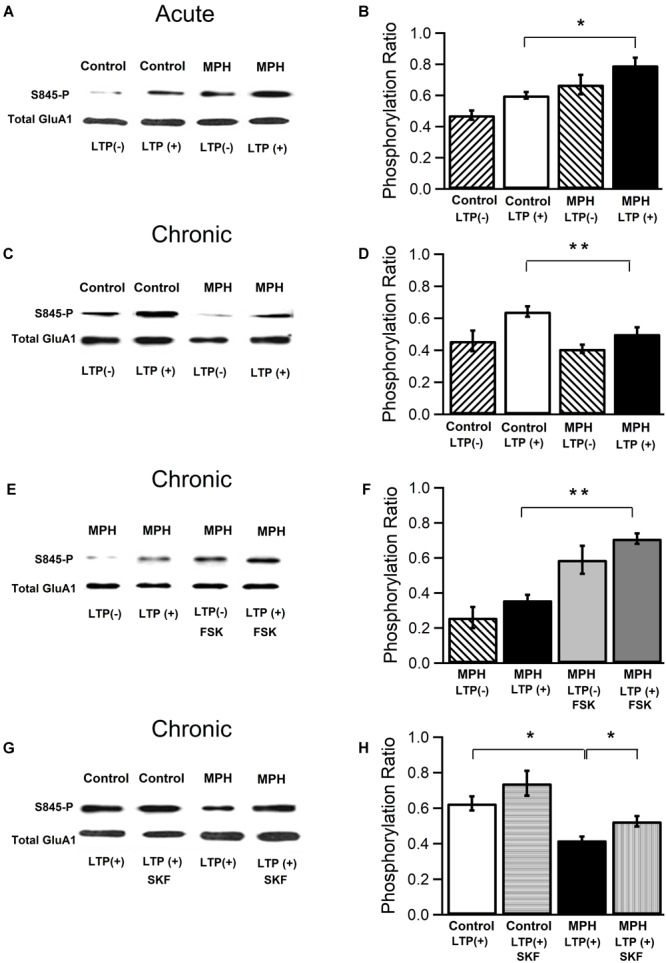
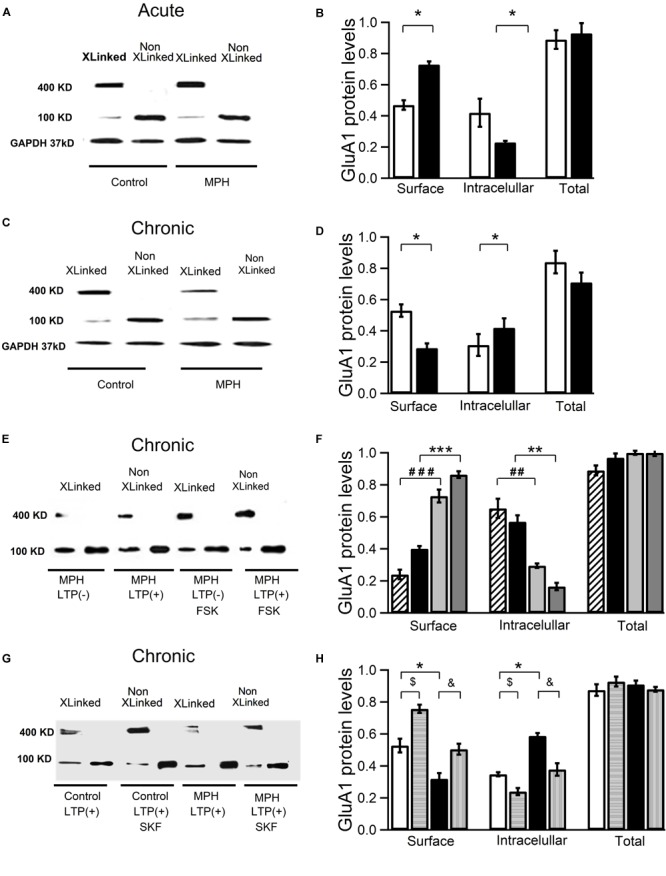
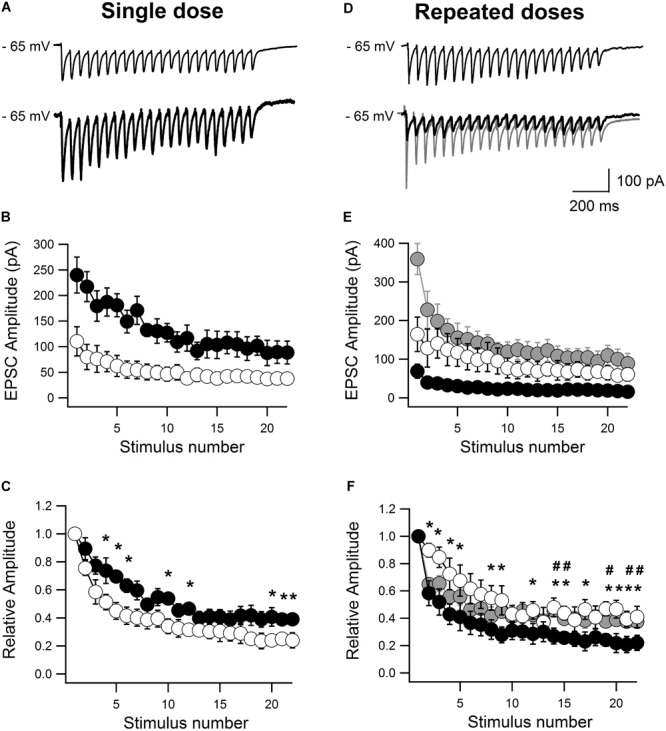
Methylphenidate (MPH) is widely used in the treatment of Attention Deficit Hyperactivity Disorder. Several lines of evidence support that MPH can modulate learning and memory processes in different ways including improvement and impairment of test performances. A relevant factor in the efficacy of treatment is whether administration is performed once or several times. In this study we demonstrate opposite effects of MPH on performance of preadolescent rats in the Morris Water Maze test. Animals treated with a single dose (1 mg/kg) performed significantly better compared to controls, while in animals treated with repetitive administration at the same concentration performance was reduced. We found that hippocampal LTP in slices from rats treated with a single dose was increased, while LTP from rats treated with repetitive injections of MPH was lower than in controls. Using Western blot of CA1 areas from potentiated slices of rats treated with a single dose we found a significant increase of phosphorylation at Ser845 of GluA1 subunits, associated to an increased insertion of GluA1-containing AMPARs in the plasma membrane. These receptors were functional, because AMPA-dependent EPSCs recorded on CA1 were enhanced, associated to a significant increase in short-term plasticity. In contrast, CA1 samples from rats injected with MPH during six consecutive days, showed a significant decrease in the phosphorylation at Ser845 of GluA1 subunits associated to a lower insertion of GluA1-containing AMPARs. Accordingly, a reduction of the AMPA-mediated EPSCs and short-term plasticity was also observed. Taken together, our results demonstrate that single and repeated doses with MPH can induce opposite effects at behavioral, cellular, and molecular levels. The mechanisms demonstrated here in preadolescent rats are relevant to understand the effects of this psychostimulant in the treatment of ADHD.
哌甲酯(MPH)被广泛用于治疗注意力缺陷多动障碍。多条证据支持MPH可通过不同方式调节学习和记忆过程,包括改善和损害测试表现。治疗效果的一个相关因素是给药是一次还是多次进行。在本研究中,我们证明了MPH对青春期前大鼠在莫里斯水迷宫测试中的表现有相反的影响。与对照组相比,单次给药(1mg/kg)的动物表现明显更好,而在相同浓度下重复给药的动物表现则降低。我们发现,单次给药大鼠脑片的海马长时程增强(LTP)增加,而重复注射MPH大鼠的LTP低于对照组。通过对单次给药大鼠增强脑片CA1区进行蛋白质免疫印迹分析,我们发现GluA1亚基Ser845位点的磷酸化显著增加,这与含GluA1的α-氨基-3-羟基-5-甲基-4-异恶唑丙酸受体(AMPAR)插入质膜增加有关。这些受体具有功能,因为在CA1区记录的AMPA依赖性兴奋性突触后电流(EPSC)增强,与短期可塑性显著增加相关。相反,连续六天注射MPH的大鼠CA1样本显示,GluA1亚基Ser845位点的磷酸化显著降低,这与含GluA1的AMPAR插入减少有关。因此,还观察到AMPA介导的EPSC和短期可塑性降低。综上所述,我们的结果表明,MPH单次和重复给药可在行为、细胞和分子水平上诱导相反的效应。在青春期前大鼠中证明的这些机制与理解这种精神兴奋剂在治疗注意力缺陷多动障碍中的作用相关。