Ignacio Rosa Mistica C, Lee Eun-Sook, Wilson Andrew J, Beeghly-Fadiel Alicia, Whalen Margaret M, Son Deok-Soo
Department of Biochemistry and Cancer Biology, Meharry Medical College, Nashville, TN 37208, USA.
Department of Pharmaceutical Sciences, College of Pharmacy, Florida A&M University, Tallahassee, FL 32301, USA.
Immune Netw. 2018 Dec 12;18(6):e47. doi: 10.4110/in.2018.18.e47. eCollection 2018 Dec.
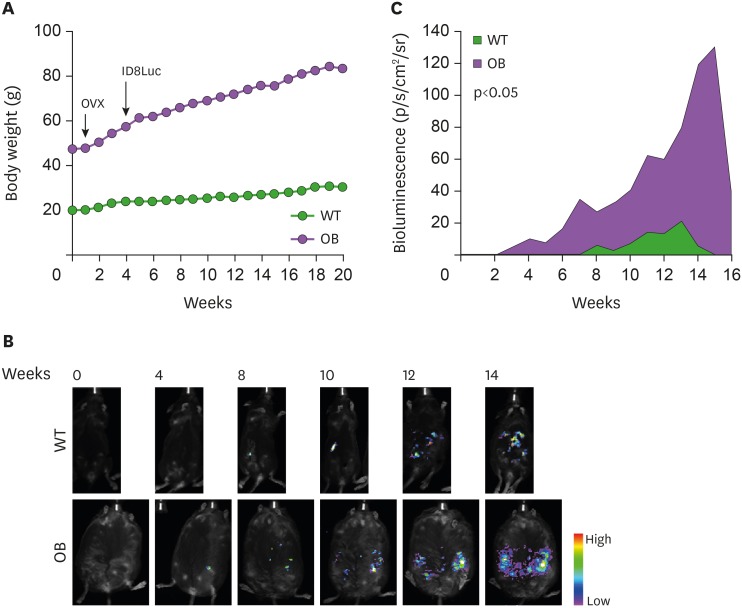
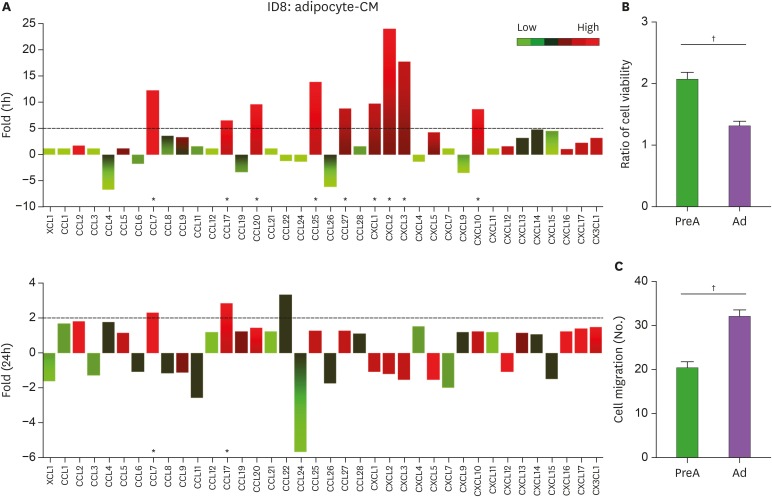
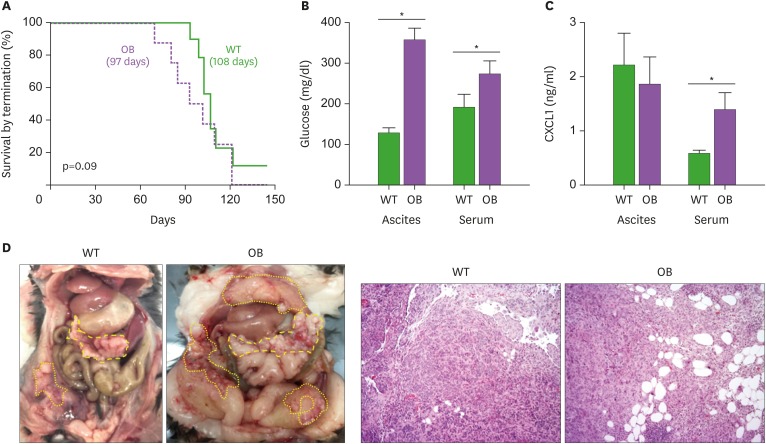
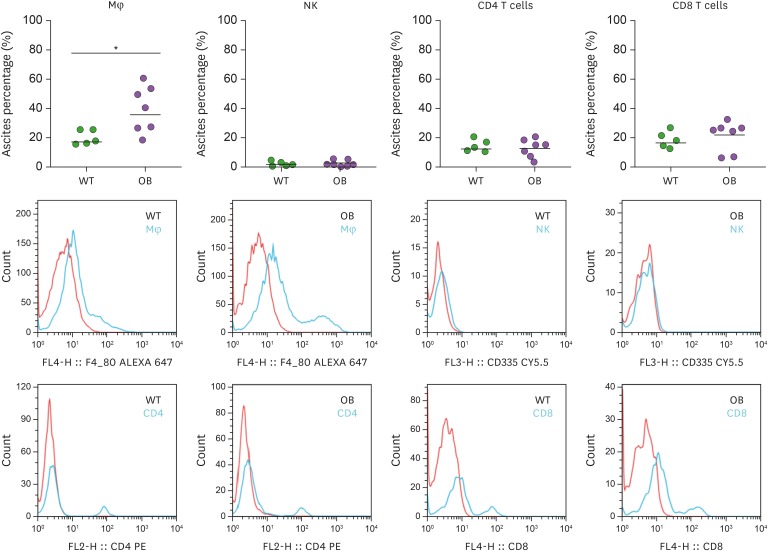
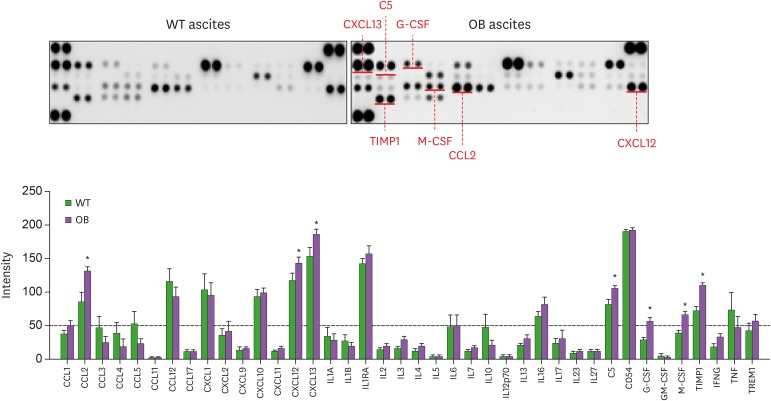
One-fifth of cancer deaths are associated with obesity. Because the molecular mechanisms by which obesity affects the progression of ovarian cancer (OC) are poorly understood, we investigated if obesity could promote the progression of OC cells using the postmenopausal mouse model and peritoneal dissemination of mouse ID8 OC cells. Compared to lean mice, obese mice had earlier OC occurrence, greater metastasis throughout the peritoneal cavity, a trend toward shorter survival, and higher circulating glucose and proinflammatory chemokine CXCL1 levels. Ascites in obese mice had higher levels of macrophages (Mφ) and chemokines including CCL2, CXCL12, CXCL13, G-CSF and M-CSF. Omental tumor tissues in obese mice had more adipocytes than lean mice. Our data suggest that obesity may accelerate the peritoneal dissemination of OC through higher production of pro-inflammatory chemokines and Mφ recruitment.
五分之一的癌症死亡与肥胖有关。由于肥胖影响卵巢癌(OC)进展的分子机制尚不清楚,我们使用绝经后小鼠模型和小鼠ID8 OC细胞的腹膜播散来研究肥胖是否会促进OC细胞的进展。与瘦小鼠相比,肥胖小鼠的OC发病更早,整个腹腔的转移更多,生存时间有缩短趋势,循环葡萄糖和促炎趋化因子CXCL1水平更高。肥胖小鼠腹水中巨噬细胞(Mφ)和趋化因子(包括CCL2、CXCL12、CXCL13、G-CSF和M-CSF)水平更高。肥胖小鼠的网膜肿瘤组织比瘦小鼠有更多脂肪细胞。我们的数据表明,肥胖可能通过促炎趋化因子的更高产生和Mφ募集来加速OC的腹膜播散。