Department of Gynecology and Obstetrics, Guangzhou Women and Children's Medical Center, Guangzhou Medical University, Guangzhou 510623, China.
Biomed Res Int. 2018 Nov 27;2018:9043628. doi: 10.1155/2018/9043628. eCollection 2018.
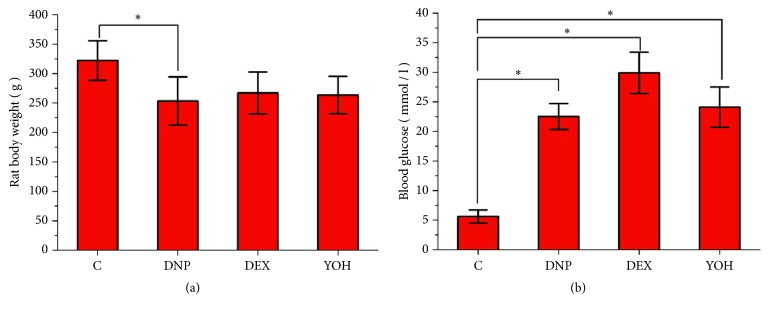
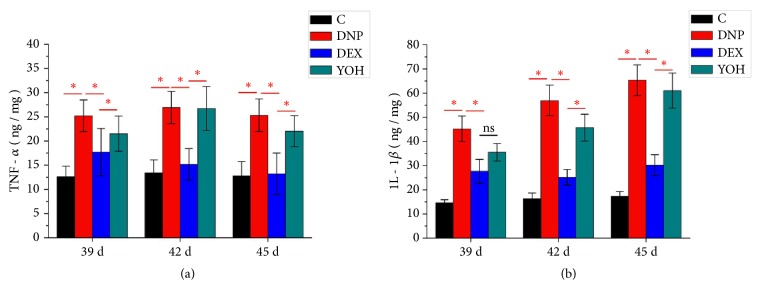
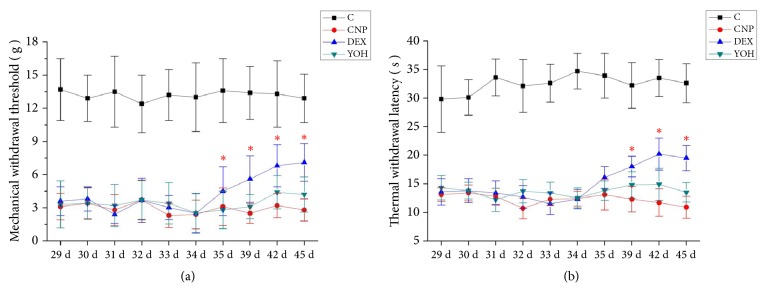
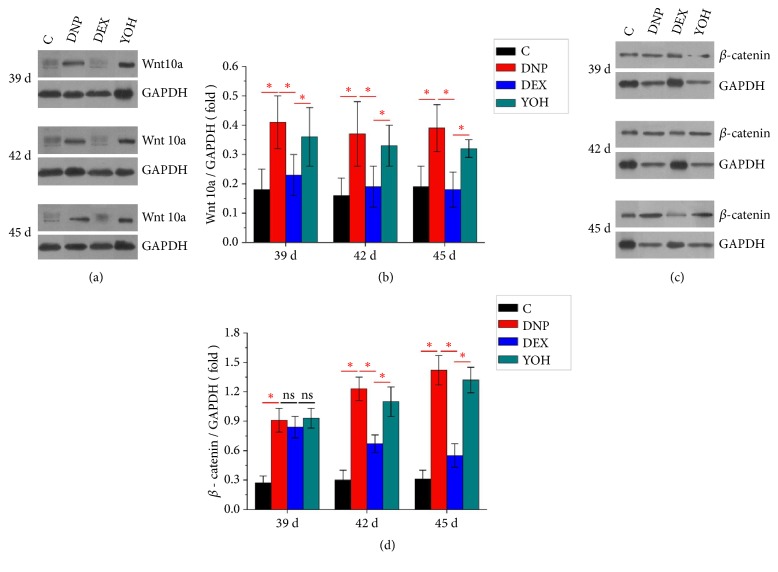
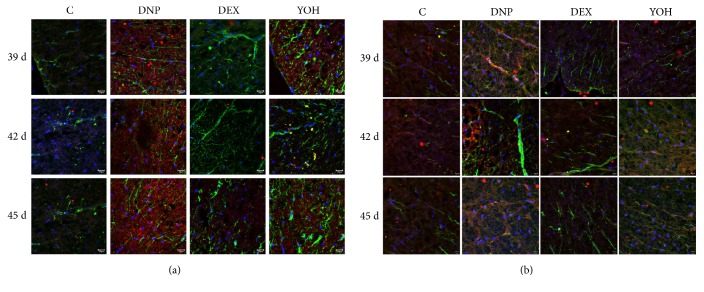
Diabetic neuropathy pain (DNP), a spontaneous pain with hyperalgesia and allodynia, greatly compromises patients' quality of life. Our previous study suggested that dexmedetomidine (DEX) can relieve hyperalgesia in rats by inhibiting inflammation and apoptosis at the level of the spinal cord. In the present study, we aimed to evaluate the role of Wnt 10a/-catenin signaling in DEX-induced alleviation of DNP in rats. Forty-eight rats were randomly allocated to four groups (n=12/group): control, DNP, DEX, and yohimbine groups. The DNP model was established by streptozotocin (STZ) injection. The effects of DEX with or without the adrenergic antagonist yohimbine were assessed by behavior tests (mechanical withdrawal threshold and thermal withdrawal latency). Spinal cord tissue was evaluated by immunofluorescence staining of astrocytes as well as for Wnt 10a and -catenin expression, western blot analysis of Wnt 10a and -catenin expression, and enzyme-linked immunosorbent assay measurement of proinflammatory cytokines (tumor necrosis factor- and interleukin-1). Rats with STZ-induced DNP had a decreased pain threshold, activated astrocytes, increased expression of Wnt 10a and -catenin, and increased levels of proinflammatory cytokines compared to the control group, and these effects were ameliorated by treatment with DEX. Yohimbine administration partly abolished the protective effects of DEX in the DNP model rats. In conclusion, DEX alleviated DNP in rats by inhibiting inflammation and astrocyte activation, which may be attributed to downregulation of the Wnt 10a/-catenin signaling pathway.
糖尿病神经病变性疼痛(DNP)是一种自发性疼痛,伴有痛觉过敏和感觉异常,极大地损害了患者的生活质量。我们之前的研究表明,右美托咪定(DEX)可以通过抑制脊髓水平的炎症和细胞凋亡来缓解大鼠的痛觉过敏。在本研究中,我们旨在评估 Wnt10a/-连环蛋白信号通路在 DEX 缓解大鼠 DNP 中的作用。48 只大鼠随机分为四组(每组 n=12):对照组、DNP 组、DEX 组和育亨宾组。通过链脲佐菌素(STZ)注射建立 DNP 模型。通过行为测试(机械撤足阈值和热撤足潜伏期)评估 DEX 加或不加肾上腺素能拮抗剂育亨宾的作用。通过免疫荧光染色星形胶质细胞以及 Western blot 分析 Wnt10a 和 -连环蛋白表达、酶联免疫吸附试验测量促炎细胞因子(肿瘤坏死因子-α和白细胞介素-1)来评估脊髓组织。与对照组相比,STZ 诱导的 DNP 大鼠疼痛阈值降低,星形胶质细胞激活,Wnt10a 和 -连环蛋白表达增加,促炎细胞因子水平升高,DEX 治疗可改善这些效应。育亨宾给药部分消除了 DNP 模型大鼠中 DEX 的保护作用。总之,DEX 通过抑制炎症和星形胶质细胞激活缓解大鼠的 DNP,这可能归因于下调 Wnt10a/-连环蛋白信号通路。