Wojtukiewicz Marek Z, Hempel Dominika, Sierko Ewa, Tucker Stephanie C, Honn Kenneth V
Department of Oncology, Medical University of Bialystok, 15-089 Bialystok, Poland.
Department of Clinical Oncology, Comprehensive Cancer Center in Bialystok, 15-027 Bialystok, Poland.
Cancers (Basel). 2019 Jan 8;11(1):51. doi: 10.3390/cancers11010051.
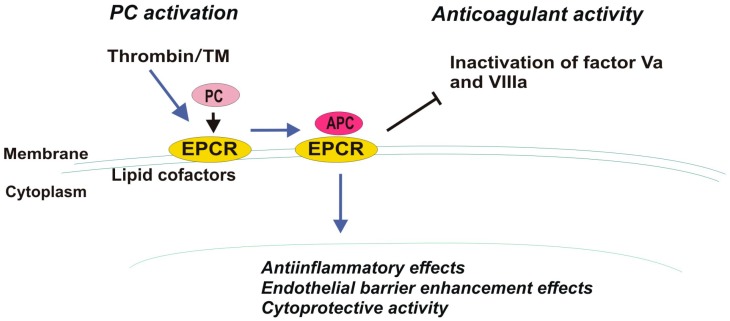
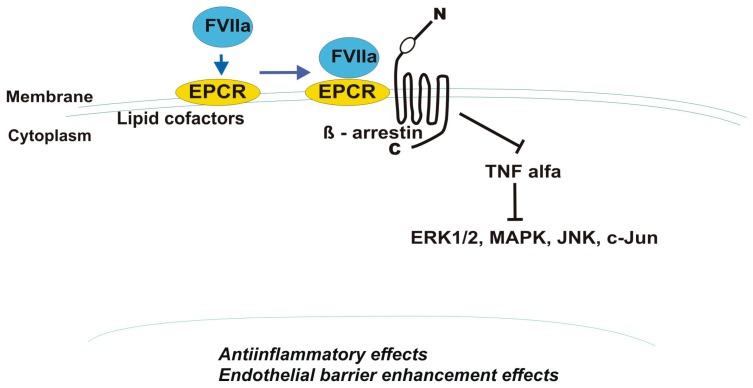
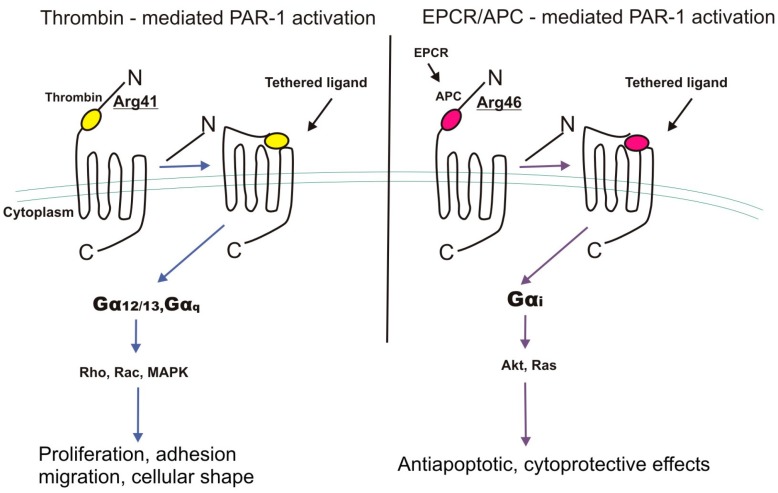
Endothelial protein C receptor (EPCR) and protease activated receptor 1 (PAR-1) by themselves play important role in cancer growth and dissemination. Moreover, interactions between the two receptors are essential for tumor progression. EPCR is a cell surface transmembrane glycoprotein localized predominantly on endothelial cells (ECs). It is a vital component of the activated protein C (APC)-mediated anticoagulant and cytoprotective signaling cascade. PAR-1, which belongs to a family of G protein⁻coupled cell surface receptors, is also widely distributed on endothelial and blood cells, where it plays a critical role in hemostasis. Both EPCR and PAR-1, generally considered coagulation-related receptors, are implicated in carcinogenesis and dissemination of diverse tumor types, and their expression correlates with clinical outcome of cancer patients. Existing data explain some mechanisms by which EPCR/PAR-1 affects cancer growth and metastasis; however, the exact molecular basis of cancer invasion associated with the signaling is still obscure. Here, we discuss the role of EPCR and PAR-1 reciprocal interactions in cancer progression as well as potential therapeutic options targeted specifically to interact with EPCR/PAR-1-induced signaling in cancer patients.
内皮蛋白C受体(EPCR)和蛋白酶激活受体1(PAR-1)自身在癌症生长和扩散中发挥重要作用。此外,这两种受体之间的相互作用对于肿瘤进展至关重要。EPCR是一种主要定位于内皮细胞(ECs)的细胞表面跨膜糖蛋白。它是活化蛋白C(APC)介导的抗凝和细胞保护信号级联反应的重要组成部分。PAR-1属于G蛋白偶联细胞表面受体家族,也广泛分布于内皮细胞和血细胞,在止血过程中起关键作用。EPCR和PAR-1通常被认为是与凝血相关的受体,均参与多种肿瘤类型的发生和扩散,其表达与癌症患者的临床结局相关。现有数据解释了EPCR/PAR-1影响癌症生长和转移的一些机制;然而,与该信号传导相关的癌症侵袭的确切分子基础仍不清楚。在此,我们讨论EPCR和PAR-1相互作用在癌症进展中的作用,以及专门针对癌症患者中与EPCR/PAR-1诱导信号相互作用的潜在治疗选择。