Department of Physiology and Neurobiology, University of Connecticut, Storrs, CT.
Department of Pharmacology, Institute of Biomedical Sciences, University of São Paulo, São Paulo, Brazil.
eNeuro. 2018 Dec 14;5(6). doi: 10.1523/ENEURO.0404-18.2018. eCollection 2018 Nov-Dec.
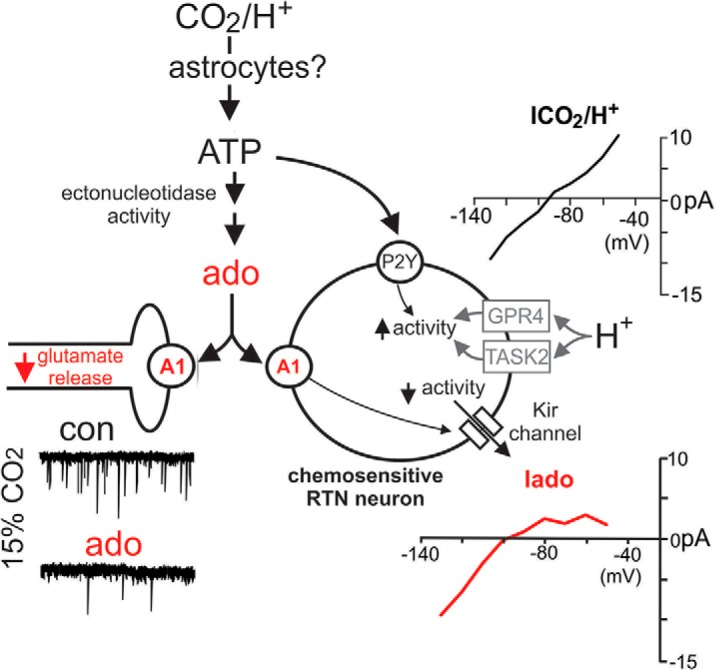
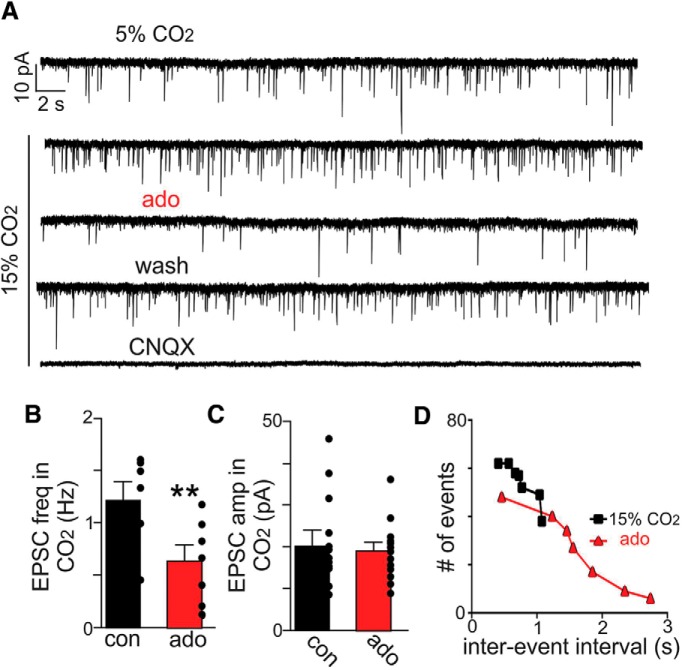
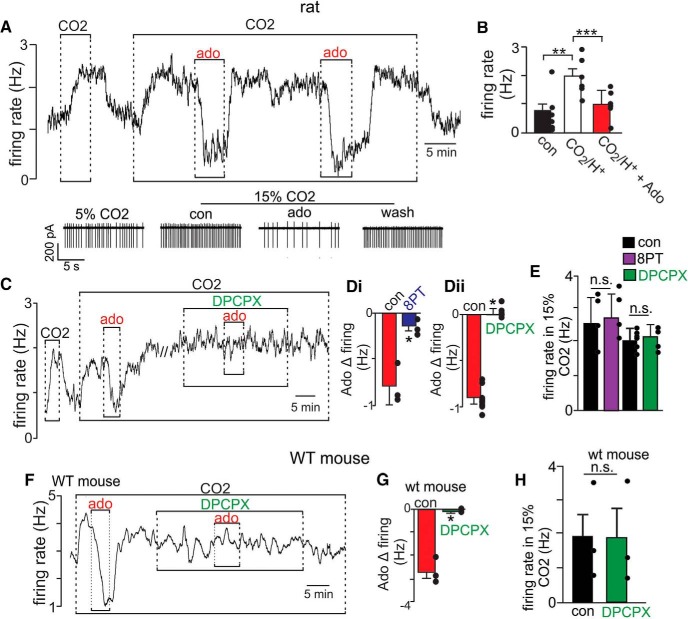
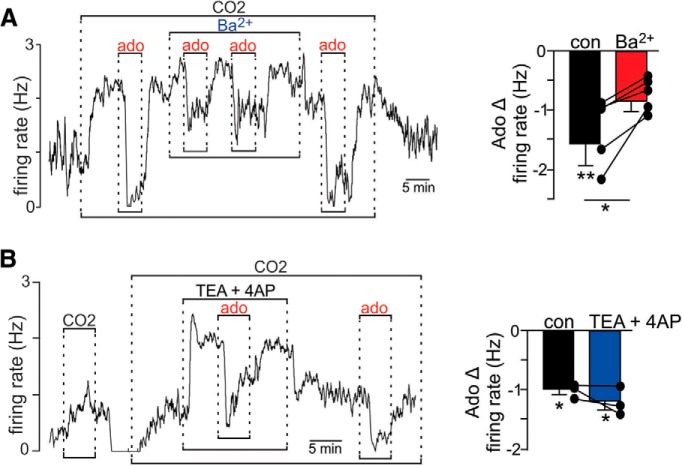
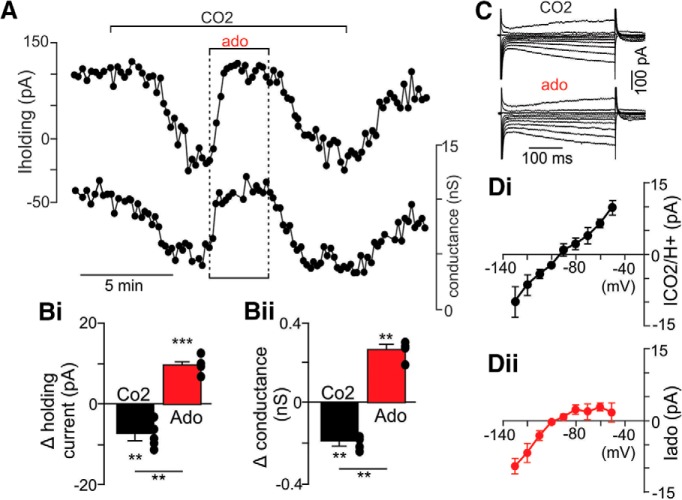
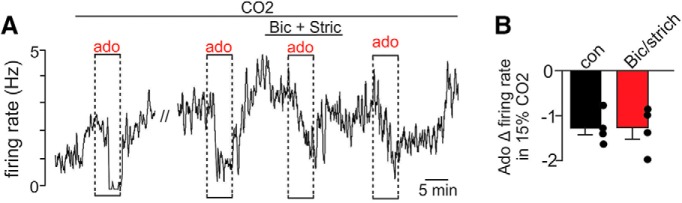
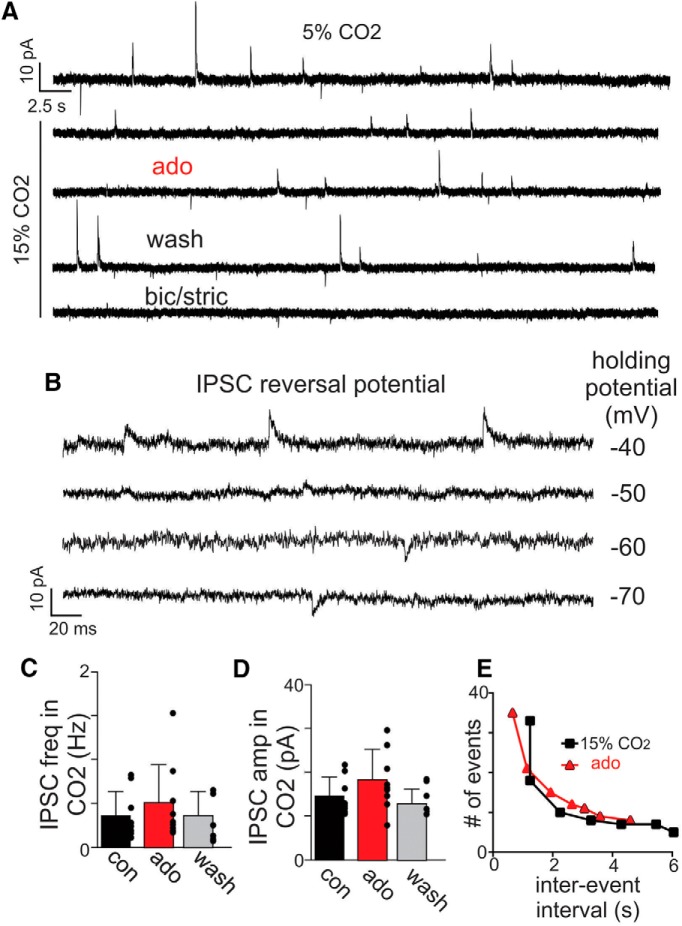
A subset of neurons in the retrotrapezoid nucleus (RTN) function as respiratory chemoreceptors by regulating depth and frequency of breathing in response to changes in tissue CO/H. The activity of chemosensitive RTN neurons is also subject to modulation by CO/H-dependent purinergic signaling. However, mechanisms contributing to purinergic regulation of RTN chemoreceptors are not entirely clear. Recent evidence suggests adenosine inhibits RTN chemoreception by activation of A1 receptors. The goal of this study was to characterize effects of adenosine on chemosensitive RTN neurons and identify intrinsic and synaptic mechanisms underlying this response. Cell-attached recordings from RTN chemoreceptors in slices from rat or wild-type mouse pups (mixed sex) show that exposure to adenosine (1 µM) inhibits chemoreceptor activity by an A1 receptor-dependent mechanism. However, exposure to a selective A1 receptor antagonist (8-cyclopentyl-1,3-dipropylxanthine, DPCPX; 30 nM) alone did not potentiate CO/H-stimulated activity, suggesting activation of A1 receptors does not limit chemoreceptor activity under these reduced conditions. Whole-cell voltage-clamp from chemosensitive RTN neurons shows that exposure to adenosine activated an inward rectifying K conductance, and at the network level, adenosine preferentially decreased frequency of EPSCs but not IPSCs. These results show that adenosine activation of A1 receptors inhibits chemosensitive RTN neurons by direct activation of a G-protein-regulated inward-rectifier K (GIRK)-like conductance, and presynaptically, by suppression of excitatory synaptic input to chemoreceptors.
部分延髓尾侧背核(RTN)神经元通过调节呼吸深度和频率来响应组织 CO/H 的变化,从而发挥呼吸化学感受器的作用。化学敏感 RTN 神经元的活性也受到 CO/H 依赖的嘌呤能信号转导的调节。然而,嘌呤能调节 RTN 化学感受器的机制尚不完全清楚。最近的证据表明,腺苷通过激活 A1 受体抑制 RTN 化学感受。本研究的目的是描述腺苷对化学敏感 RTN 神经元的作用,并确定这种反应的内在和突触机制。来自大鼠或野生型小鼠幼仔(混合性别)切片中 RTN 化学感受器的细胞贴附记录显示,暴露于腺苷(1µM)通过 A1 受体依赖性机制抑制化学感受器活性。然而,单独暴露于选择性 A1 受体拮抗剂(8-环戊基-1,3-二丙基黄嘌呤,DPCPX;30nM)本身并没有增强 CO/H 刺激的活性,这表明在这些减少的条件下,A1 受体的激活不会限制化学感受器的活性。化学敏感 RTN 神经元的全细胞膜片钳记录显示,暴露于腺苷激活了内向整流钾电流,并且在网络水平上,腺苷优先降低 EPSC 的频率,而不降低 IPSC 的频率。这些结果表明,腺苷通过直接激活 G 蛋白调节的内向整流钾(GIRK)样电导以及通过抑制化学感受器的兴奋性突触输入,来抑制 A1 受体激活的化学敏感 RTN 神经元。