Li Haigang, Jiang Yu, Wang Yang, Lv Huiying, Xie Haitang, Yang Guoping, Guo Chengxian, Tang Jing, Tang Tao
Department of Pharmacy, Changsha Medical University, Changsha, China.
Institute of Integrative Chinese Medicine, Xiangya Hospital, Central South University, Changsha, China.
Front Pharmacol. 2018 Dec 12;9:1461. doi: 10.3389/fphar.2018.01461. eCollection 2018.
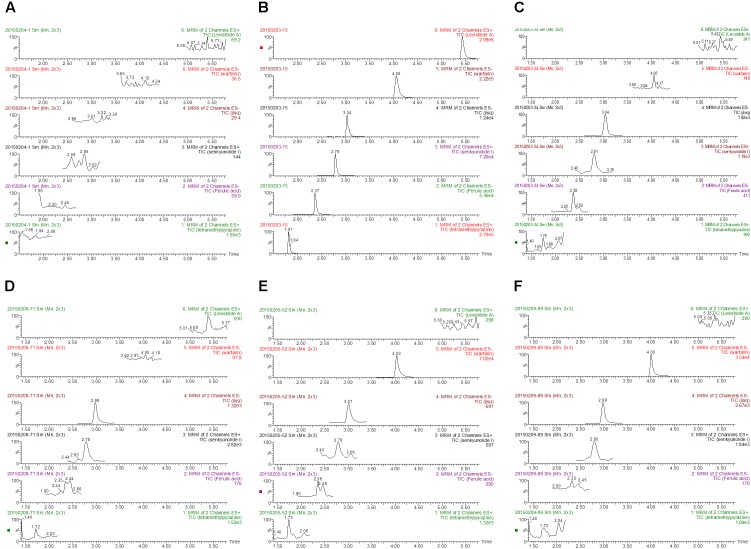
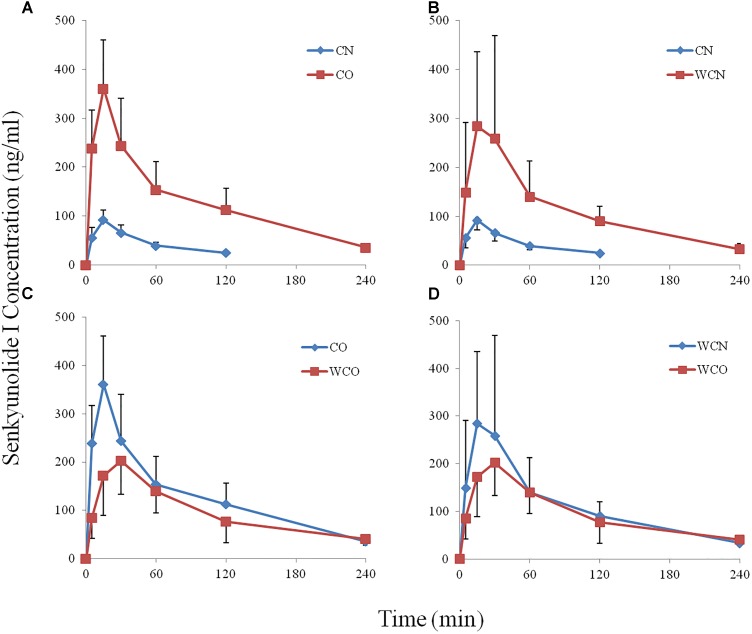
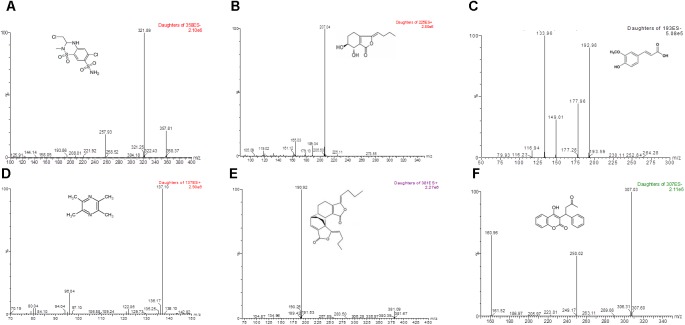
The aim of this study was to elucidate the effects of warfarin on senkyunolide I in a rat model of biliary drainage after oral administration Chuanxiong extract based on pharmacokinetics. Thirty-two rats were randomly divided into four groups: CN, healthy rats after a single administration of Chuanxiong; CO, rats with biliary drainage after a single administration of Chuanxiong; WCN, healthy rats after the administration of Chuanxiong and warfarin; WCO, rats with biliary drainage after the administration of Chuanxiong and warfarin. A series of blood samples were collected at different time points before and after oral administration. An ultra-performance liquid chromatography coupled to tandem mass spectrometry (UPLC-MS/MS) method for quantification of the main components of Chuanxiong and methyclothiazide (internal standard) have been established. The validated method was successfully applied to a comparative pharmacokinetics study. After calculated by the DAS 2.1.1 software, the pharmacokinetics parameters of senkyunolide I showed a significant difference between the CN and CO groups, the AUC, and C of CO group increased by 5.45, 4.02 folds, respectively. There was a significant difference between the WCO and WCN groups, the T of WCO group prolonged 67%; compared to the CN group, the AUC, and C of WCN group raised 4.84, 3.49 folds, respectively; the T and C between the CO and WCO groups also showed a significant difference. The drug warfarin significantly affected the senkyunolide I disposition, which partly due to its enterohepatic circulation process in rat plasma after oral administration of Chuanxiong. The present study highlights an urgent evidence for drug-herb interactions.
本研究旨在基于药代动力学,阐明在大鼠口服川芎提取物后进行胆汁引流的模型中,华法林对川芎内酯I的影响。32只大鼠随机分为四组:CN组,单次给予川芎后的健康大鼠;CO组,单次给予川芎后的胆汁引流大鼠;WCN组,给予川芎和华法林后的健康大鼠;WCO组,给予川芎和华法林后的胆汁引流大鼠。在口服给药前后的不同时间点采集一系列血样。建立了一种超高效液相色谱-串联质谱(UPLC-MS/MS)方法,用于定量川芎的主要成分和甲基氯噻嗪(内标)。该验证方法成功应用于比较药代动力学研究。经DAS 2.1.1软件计算,川芎内酯I的药代动力学参数在CN组和CO组之间存在显著差异,CO组的AUC和C分别增加了5.45倍和4.02倍。WCO组和WCN组之间存在显著差异,WCO组的T延长了67%;与CN组相比,WCN组的AUC和C分别升高了4.84倍和3.49倍;CO组和WCO组之间的T和C也显示出显著差异。药物华法林显著影响川芎内酯I的处置,这部分归因于口服川芎后其在大鼠血浆中的肠肝循环过程。本研究突出了药物-草药相互作用的迫切证据。