Zimmerman Kurt A, Gonzalez Nancy M, Chumley Phillip, Chacana Teresa, Harrington Laurie E, Yoder Bradley K, Mrug Michal
Department of Cell, Developmental and Integrative Biology, The University of Alabama at Birmingham, Birmingham, Alabama.
Department of Medicine, The University of Alabama at Birmingham, Birmingham, Alabama.
Physiol Rep. 2019 Jan;7(1):e13951. doi: 10.14814/phy2.13951.
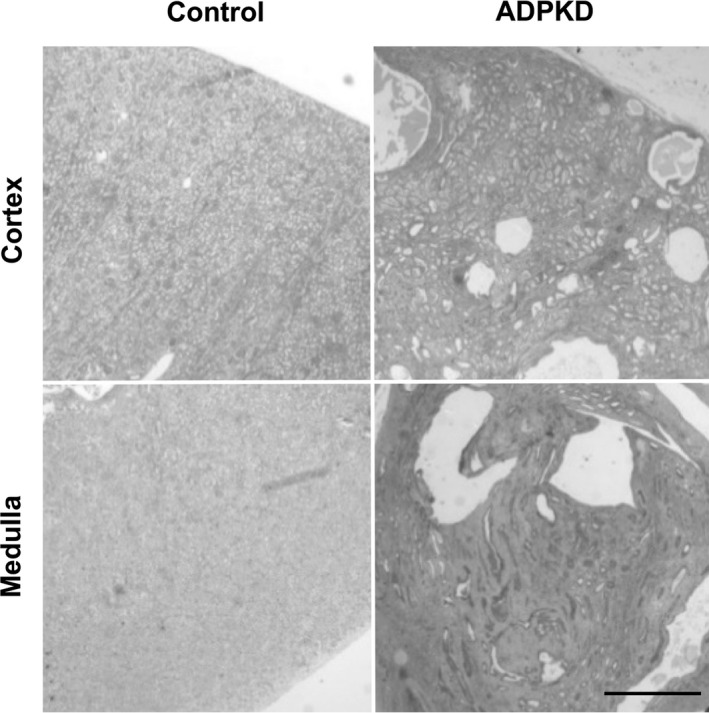
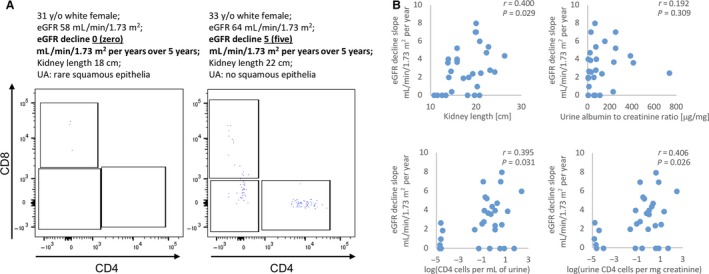
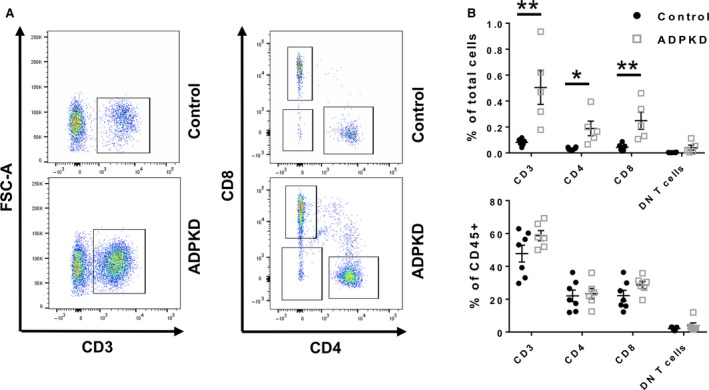
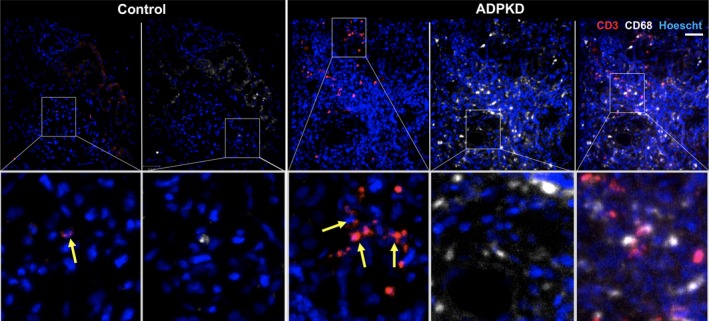
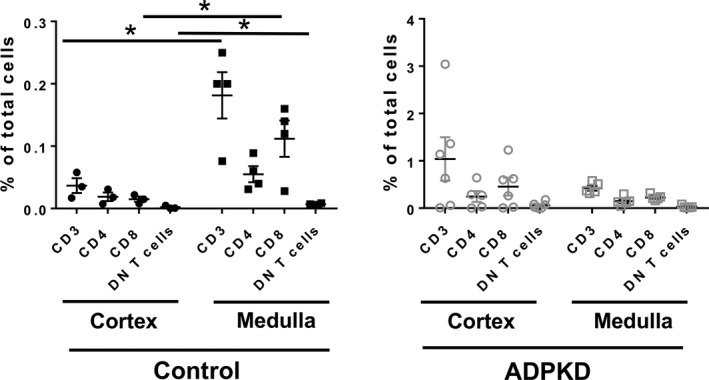
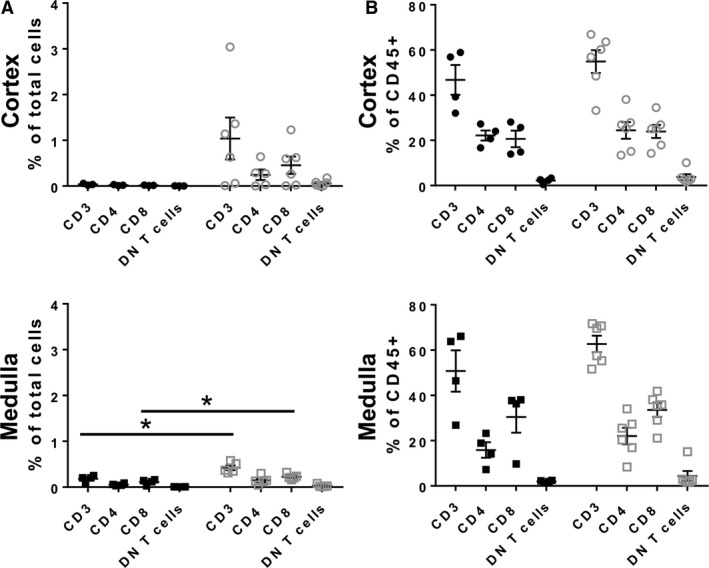
Several innate immune response components were recognized as outcome predictors in autosomal dominant polycystic kidney disease (ADPKD) and their causative role in disease pathogenesis was confirmed in animal models. In contrast, the role of adaptive immunity in ADPKD remains relatively unexplored. Therefore, we evaluated T cell populations in kidney and urine of ADPKD patients using flow cytometry and confocal immunofluorescence microscopy approaches. These analyses revealed ADPKD-associated overall increases in the number of intrarenal CD4 and CD8 T cells that were associated with a loss of polarity in distribution between the cortex and medulla (higher in medulla vs. cortex in controls). Also, the urinary T cell-based index correlated moderately with renal function decline in a small cohort of ADPKD patients. Together, these data suggest that similar to innate immune responses, T cells participate in ADPKD pathogenesis. They also point to urinary T cells as a novel candidate marker of the disease activity in ADPKD.
几种先天性免疫反应成分被认为是常染色体显性多囊肾病(ADPKD)的预后预测指标,并且它们在疾病发病机制中的致病作用在动物模型中得到了证实。相比之下,适应性免疫在ADPKD中的作用仍相对未被探索。因此,我们使用流式细胞术和共聚焦免疫荧光显微镜方法评估了ADPKD患者肾脏和尿液中的T细胞群体。这些分析显示,ADPKD患者肾内CD4和CD8 T细胞数量总体增加,且与皮质和髓质之间分布极性丧失有关(与对照组相比,髓质中的数量高于皮质)。此外,在一小群ADPKD患者中,基于尿液T细胞的指标与肾功能下降呈中度相关。总之,这些数据表明,与先天性免疫反应类似,T细胞参与了ADPKD的发病机制。它们还指出尿液T细胞是ADPKD疾病活动的一种新型候选标志物。