Walker Ashley E, Kronquist Elise K, Chinen Kerrick T, Reihl Kelly D, Li Dean Y, Lesniewski Lisa A, Donato Anthony J
Department of Human Physiology, University of Oregon, Eugene, OR, USA.
Department of Internal Medicine, University of Utah, Salt Lake City, UT, USA.
Exp Physiol. 2019 Mar;104(3):434-442. doi: 10.1113/EP087453. Epub 2019 Feb 3.
What is the central question of this study? Greater large artery stiffness is associated with dysfunctional resistance artery vasodilatory responses, impaired memory and greater risk of Alzheimer's disease. However, it is unknown whether stiffer large arteries affect cerebral and skeletal muscle feed artery responses to vasoconstrictors. What is the main finding and its importance? In a mouse model with greater large artery stiffness (Eln ), we find an exacerbated vasoconstrictor response to angiotensin II in cerebral arteries, but not skeletal muscle feed arteries, thus implicating altered cerebral artery angiotensin II responsiveness in the poor brain outcomes associated with greater large artery stiffness.
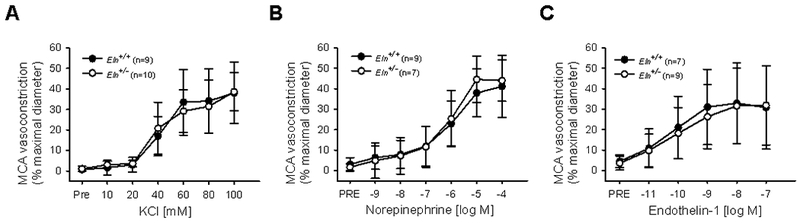
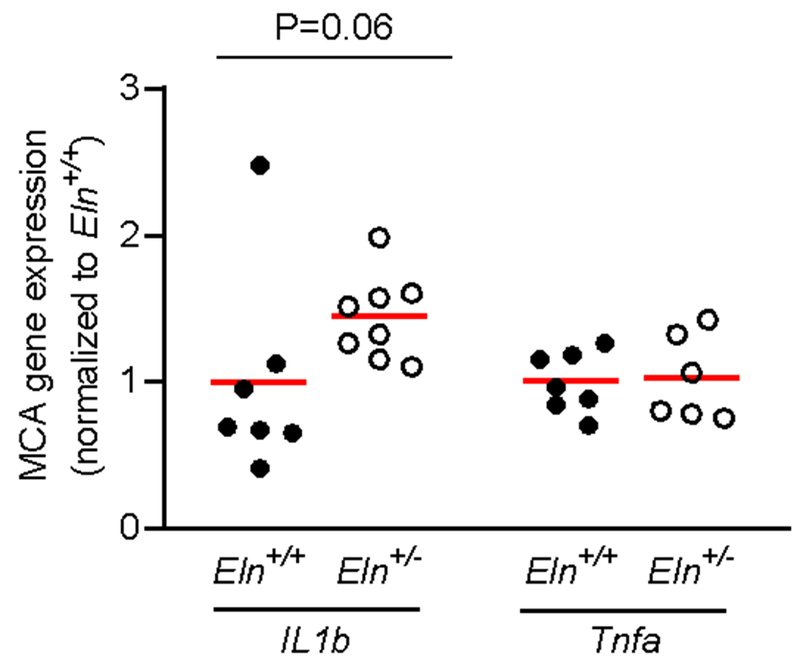
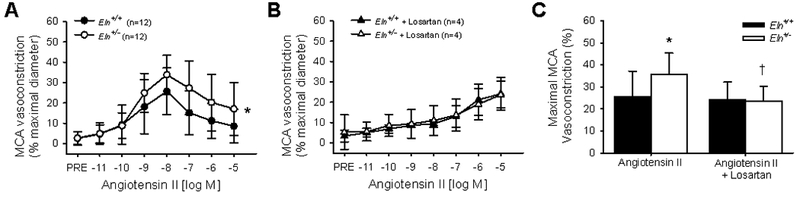
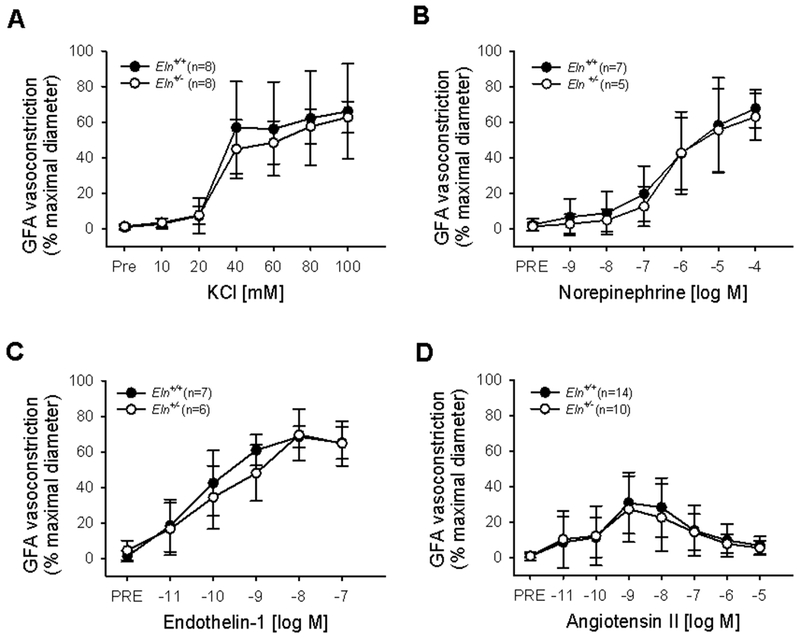
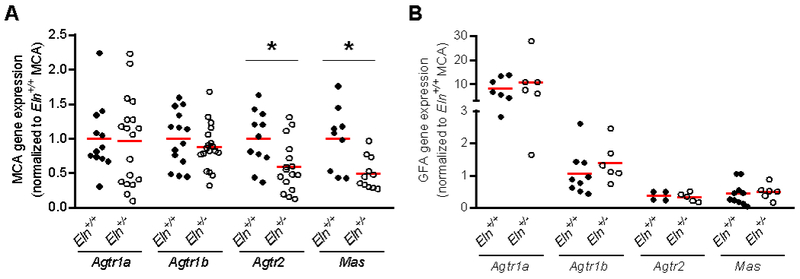
Greater stiffness of the large elastic arteries is associated with end-organ damage and dysfunction. At the same time, resistance artery vasoconstrictor responsiveness influences vascular tone and organ blood flow. However, it is unknown whether large elastic artery stiffness modulates the responsiveness to vasoconstrictors in resistance arteries of the cerebral or skeletal muscle circulations. We previously described the elastin haploinsufficient (Eln ) mouse as a model with greater aortic stiffness, but with similar cerebral and skeletal muscle feed artery stiffness to wild-type (Eln ) mice. Here, we used this model to examine the relationship between large elastic artery stiffness and resistance artery vasoconstrictor responses. In middle cerebral arteries (MCAs), vasoconstriction in response to angiotensin II (Ang II) was ∼40% greater in Eln compared with Eln mice (P = 0.02), and this group difference was ameliorated by losartan, indicating a role for Ang II type 1 receptors (AT1Rs). In gastrocnemius feed arteries, Eln and Eln mice did not differ in the response to Ang II. In addition, the vasoconstrictor responses to noradrenaline, endothelin-1 and potassium chloride were not different between Eln and Eln mice for either MCAs or gastrocnemius feed arteries. The MCA AT1R gene expression did not differ between groups, whereas Ang II type 2 receptor gene expression was ∼50% lower in MCAs from Eln versus Eln mice (P = 0.01). In conclusion, greater large elastic artery stiffness is associated with an exacerbated vasoconstriction response to Ang II in cerebral arteries, but is not associated with the responses to other vasoconstrictors in either cerebral or skeletal muscle feed arteries.
本研究的核心问题是什么?大动脉僵硬度增加与阻力动脉舒张功能障碍、记忆力受损以及患阿尔茨海默病的风险增加有关。然而,尚不清楚较僵硬的大动脉是否会影响脑和骨骼肌供血动脉对血管收缩剂的反应。主要发现及其重要性是什么?在一个具有较大大动脉僵硬度(Eln)的小鼠模型中,我们发现脑动脉对血管紧张素II的血管收缩反应加剧,但骨骼肌供血动脉未出现这种情况,因此表明与较大大动脉僵硬度相关的不良脑结局中脑动脉血管紧张素II反应性发生了改变。
大弹性动脉僵硬度增加与终末器官损伤和功能障碍有关。同时,阻力动脉血管收缩反应性影响血管张力和器官血流量。然而,尚不清楚大弹性动脉僵硬度是否会调节脑循环或骨骼肌循环中阻力动脉对血管收缩剂的反应性。我们之前将弹性蛋白单倍体不足(Eln)小鼠描述为一种主动脉僵硬度增加但脑和骨骼肌供血动脉僵硬度与野生型(Eln)小鼠相似的模型。在此,我们使用该模型来研究大弹性动脉僵硬度与阻力动脉血管收缩反应之间的关系。在大脑中动脉(MCA)中,与Eln小鼠相比,Eln小鼠对血管紧张素II(Ang II)的血管收缩反应大约高40%(P = 0.02),并且这种组间差异被氯沙坦改善,表明1型血管紧张素II受体(AT1R)起作用。在腓肠肌供血动脉中,Eln和Eln小鼠对Ang II的反应没有差异。此外,对于MCA或腓肠肌供血动脉,Eln和Eln小鼠对去甲肾上腺素、内皮素-1和氯化钾的血管收缩反应没有差异。各组间MCA的AT1R基因表达没有差异,而与Eln小鼠相比,Eln小鼠MCA中2型血管紧张素II受体基因表达大约低50%(P = 0.01)。总之,大弹性动脉僵硬度增加与脑动脉对Ang II的血管收缩反应加剧有关,但与脑或骨骼肌供血动脉对其他血管收缩剂的反应无关。