Department of Food and Nutrition, Hallym University, Chuncheon, Kangwon-do 24252, Korea.
Nutrients. 2019 Jan 9;11(1):127. doi: 10.3390/nu11010127.
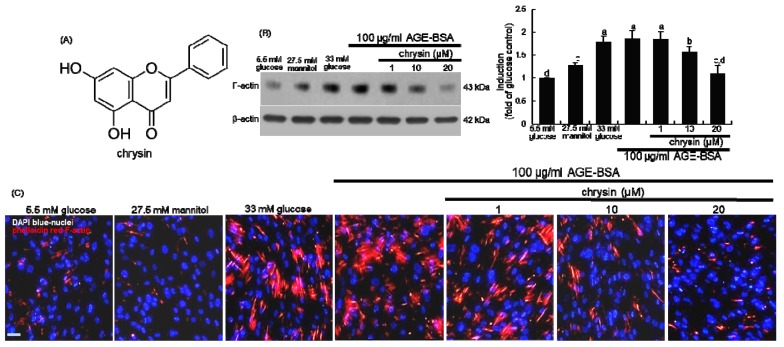
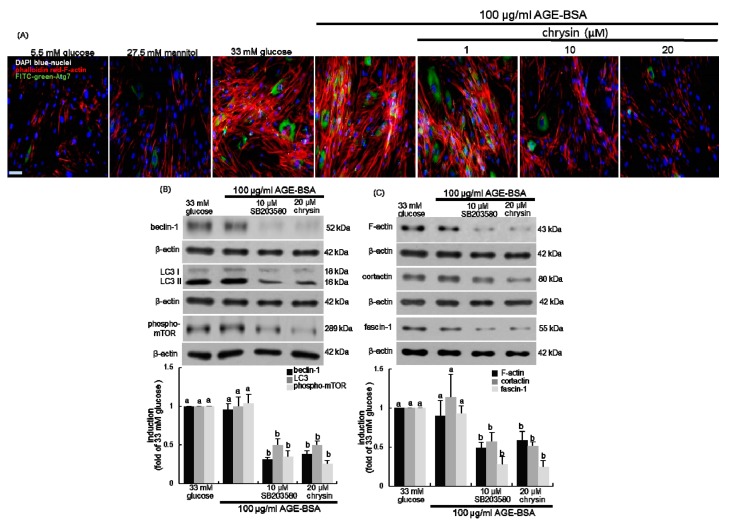
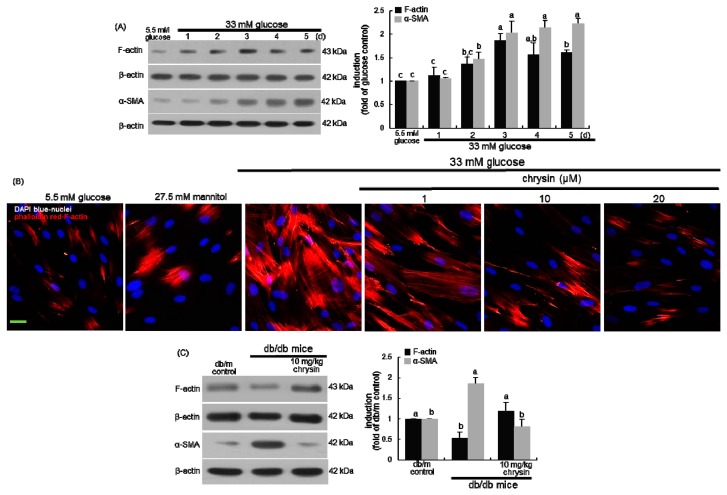
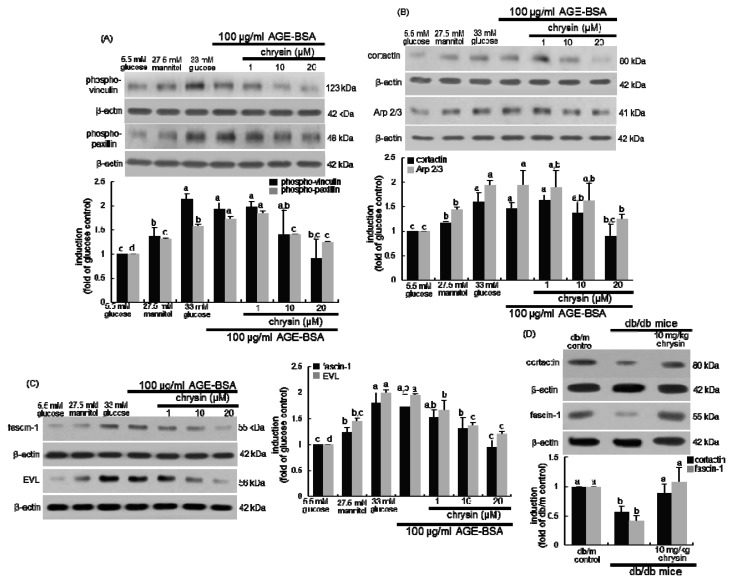
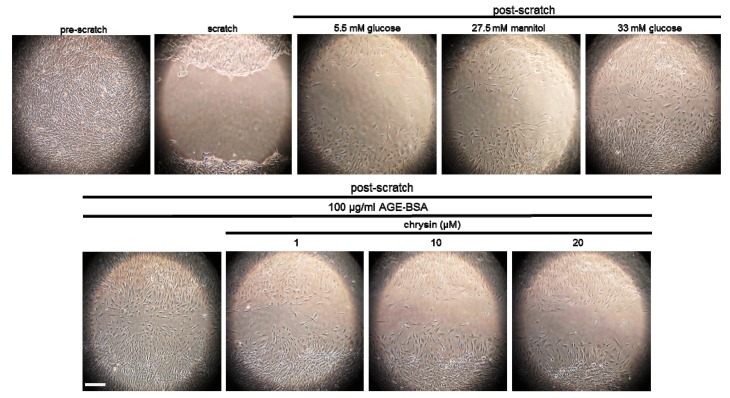
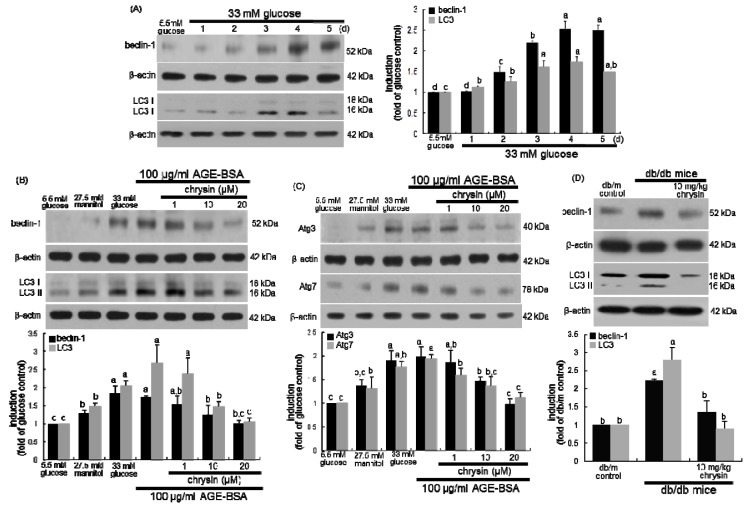
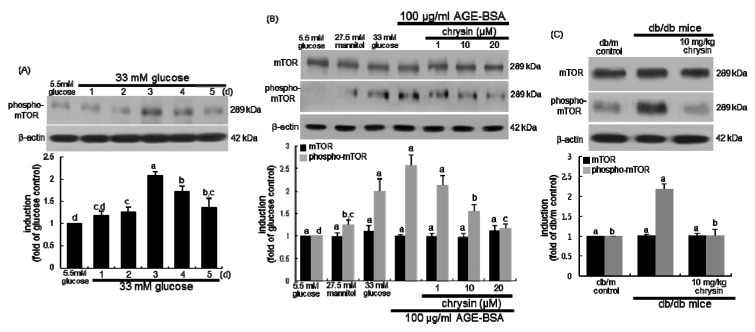
Advanced glycation end products (AGE) play a causative role in the development of aberrant phenotypes of intraglomerular mesangial cells, contributing to acute/chronic glomerulonephritis. The aim of this study was to explore mechanistic effects of the flavonoid chrysin present in bee propolis and herbs on actin dynamics, focal adhesion, and the migration of AGE-exposed mesangial cells. The in vitro study cultured human mesangial cells exposed to 33 mM glucose and 100 μg/mL AGE-bovine serum albumin (AGE-BSA) for up to 5 days in the absence and presence of 1⁻20 μM chrysin. The in vivo study employed mice orally administrated for 10 weeks with 10 mg/kg chrysin. The presence of ≥10 μM chrysin attenuated mesangial F-actin induction and bundle formation enhanced by AGE. Chrysin reduced the mesangial induction of α-smooth muscle actin (α-SMA) by glucose, and diminished the tissue α-SMA level in diabetic kidneys, indicating its blockade of mesangial proliferation. The treatment of chrysin inhibited the activation of vinculin and paxillin and the induction of cortactin, ARP2/3, fascin-1, and Ena/VASP-like protein in AGE-exposed mesangial cells. Oral administration of chrysin diminished tissue levels of cortactin and fascin-1 elevated in diabetic mouse kidneys. Mesangial cell motility was enhanced by AGE, which was markedly attenuated by adding chrysin to cells. On the other hand, chrysin dampened the induction of autophagy-related genes of beclin-1, LC3 I/II, Atg3, and Atg7 in mesangial cells exposed to AGE and in diabetic kidneys. Furthermore, chrysin reduced the mTOR activation in AGE-exposed mesangial cells and diabetic kidneys. The induction of mesangial F-actin, cortactin, and fascin-1 by AGE was deterred by the inhibition of autophagy and mTOR. Thus, chrysin may encumber diabetes-associated formation of actin bundling and focal adhesion and mesangial cell motility through disturbing autophagy and mTOR pathway.
晚期糖基化终产物 (AGE) 在肾小球系膜细胞异常表型的发展中起因果作用,导致急性/慢性肾小球肾炎。本研究旨在探讨存在于蜂胶和草药中的类黄酮白杨素对肌动蛋白动力学、焦点粘附和暴露于 AGE 的系膜细胞迁移的机制作用。体外研究培养人系膜细胞,在 33 mM 葡萄糖和 100 μg/mL AGE-牛血清白蛋白 (AGE-BSA) 存在下培养长达 5 天,不添加和添加 1⁻20 μM 白杨素。体内研究采用 10 周龄小鼠口服给予 10 mg/kg 白杨素。存在 ≥10 μM 白杨素可减弱 AGE 增强的系膜 F-肌动蛋白诱导和束形成。白杨素降低葡萄糖诱导的系膜α-平滑肌肌动蛋白 (α-SMA) 的诱导,并减少糖尿病肾脏中的组织α-SMA 水平,表明其阻断系膜细胞增殖。白杨素处理抑制了 vinculin 和 paxillin 的激活以及 cortactin、ARP2/3、fascin-1 和 Ena/VASP 样蛋白在暴露于 AGE 的系膜细胞中的诱导。口服给予白杨素可降低糖尿病小鼠肾脏中升高的组织 cortactin 和 fascin-1 水平。AGE 增强了系膜细胞的迁移,而添加白杨素可显著减弱该迁移。另一方面,白杨素抑制了暴露于 AGE 的系膜细胞和糖尿病肾脏中自噬相关基因 beclin-1、LC3 I/II、Atg3 和 Atg7 的诱导。此外,白杨素降低了暴露于 AGE 的系膜细胞和糖尿病肾脏中 mTOR 的激活。自噬和 mTOR 的抑制阻止了 AGE 诱导的系膜 F-肌动蛋白、cortactin 和 fascin-1 的诱导。因此,白杨素可能通过扰乱自噬和 mTOR 通路来阻碍与糖尿病相关的肌动蛋白束形成和焦点粘附以及系膜细胞迁移。