Research Institute of Clinical and Experimental Lymphology-Branch of the Institute of Cytology and Genetics, Siberian Branch of Russian Academy of Sciences (RICEL-Branch of IC&G SB RAS), Timakov Str. 2, 630060 Novosibirsk, Russia.
Institute of Cytology and Genetics, Siberian Branch of Russian Academy of Sciences (IC&G SB RAS), Lavrentjev Prospect 10, 630090 Novosibirsk, Russia.
Int J Mol Sci. 2020 Apr 23;21(8):2987. doi: 10.3390/ijms21082987.
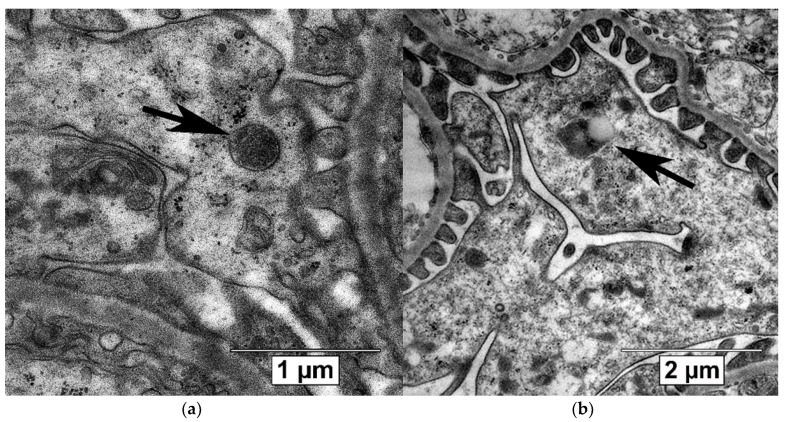
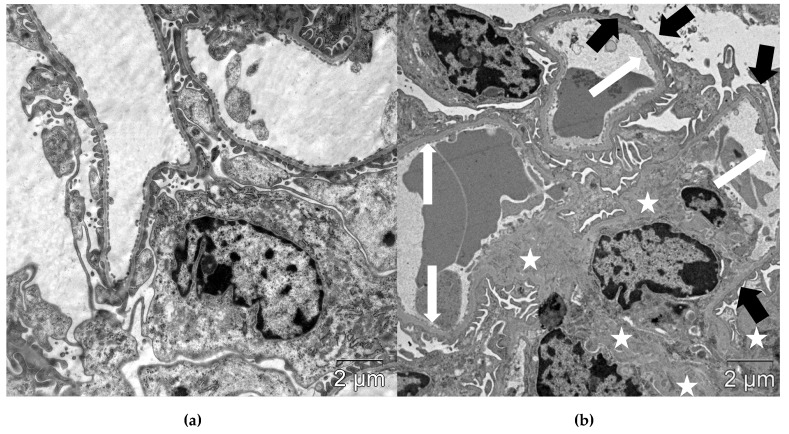
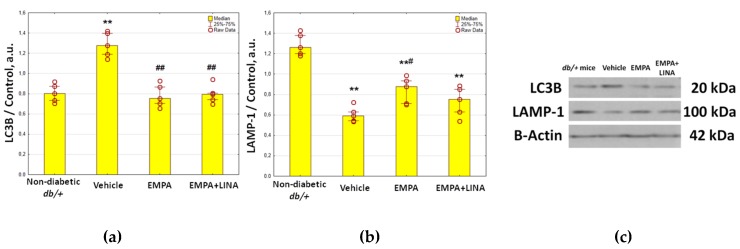
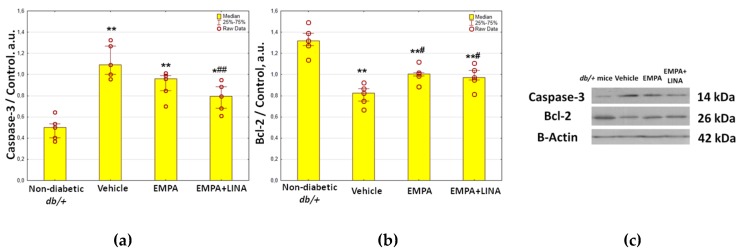
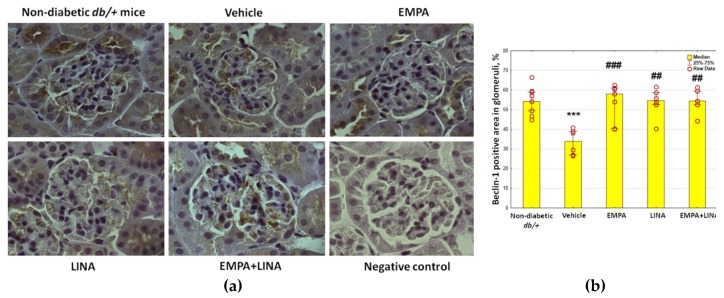
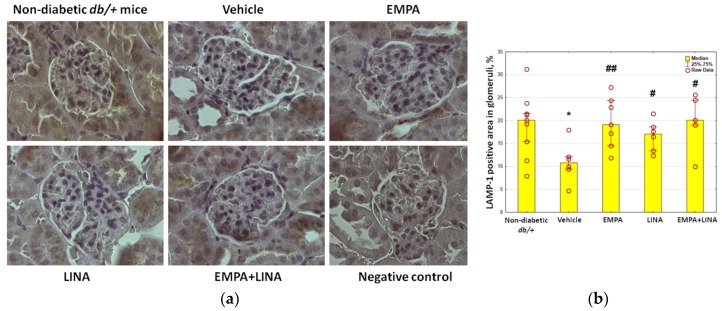
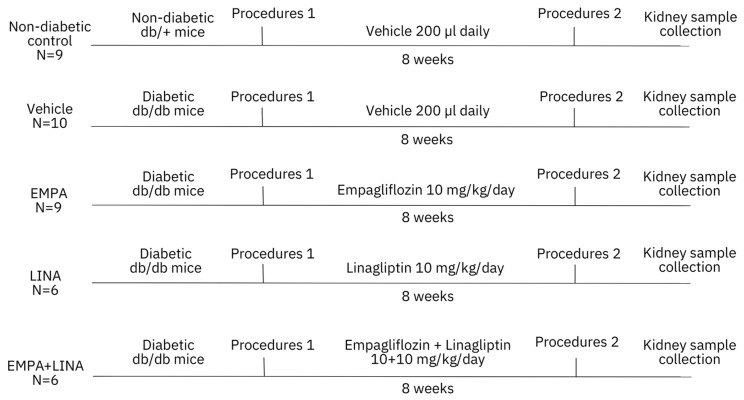
Recent data have indicated the emerging role of glomerular autophagy in diabetic kidney disease. We aimed to assess the effect of the SGLT2 inhibitor empagliflozin, the DPP4 inhibitor linagliptin, and their combination, on glomerular autophagy in a model of type 2 diabetes. Eight-week-old male mice were randomly assigned to treatment with empagliflozin, linagliptin, empagliflozin-linagliptin or vehicle for 8 weeks. Age-matched non-diabetic mice acted as controls. To estimate glomerular autophagy, immunohistochemistry for beclin-1 and LAMP-1 was performed. Podocyte autophagy was assessed by counting the volume density (Vv) of autophagosomes, lysosomes and autolysosomes by transmission electron microscopy. LC3B and LAMP-1, autophagy markers, and caspase-3 and Bcl-2, apoptotic markers, were evaluated in renal cortex by western blot. Vehicle-treated mice had weak glomerular staining for beclin-1 and LAMP-1 and reduced Vv of autophagosomes, autolysosomes and lysosomes in podocytes. Empagliflozin and linagliptin, both as monotherapy and in combination, enhanced the areas of glomerular staining for beclin-1 and LAMP-1 and increased Vv of autophagosomes and autolysosomes in podocytes. Renal LC3B and Bcl-2 were restored in actively treated animals. LAMP-1 expression was enhanced in the empagliflozin group; caspase-3 expression decreased in the empagliflozin-linagliptin group only. Mesangial expansion, podocyte foot process effacement and urinary albumin excretion were mitigated by both agents. The data provide further explanation for the mechanism of the renoprotective effect of SGLT2 inhibitors and DPP4 inhibitors in diabetes.
最近的数据表明,肾小球自噬在糖尿病肾病中发挥着新的作用。我们旨在评估 SGLT2 抑制剂恩格列净、DPP4 抑制剂利拉利汀及其联合应用在 2 型糖尿病模型中对肾小球自噬的影响。将 8 周龄雄性 小鼠随机分为恩格列净组、利拉利汀组、恩格列净-利拉利汀组或对照组,接受相应药物或载体治疗 8 周。年龄匹配的非糖尿病 小鼠作为对照。通过免疫组织化学检测 beclin-1 和 LAMP-1 来评估肾小球自噬。通过透射电镜计数自噬体、溶酶体和自溶酶体的体积密度(Vv)来评估足细胞自噬。采用 Western blot 法检测肾皮质中 LC3B 和 LAMP-1(自噬标志物)、caspase-3 和 Bcl-2(凋亡标志物)。与对照组相比,载体处理的 小鼠肾小球 beclin-1 和 LAMP-1 染色较弱,足细胞中自噬体、自溶酶体和溶酶体的 Vv 减少。恩格列净和利拉利汀单药及联合应用均增强了肾小球 beclin-1 和 LAMP-1 的染色面积,并增加了足细胞中自噬体和自溶酶体的 Vv。活性治疗动物的肾 LC3B 和 Bcl-2 得到恢复。恩格列净组 LAMP-1 表达增强;仅在恩格列净-利拉利汀组,caspase-3 表达降低。两种药物均可减轻系膜扩张、足细胞足突融合和尿白蛋白排泄。这些数据为 SGLT2 抑制剂和 DPP4 抑制剂在糖尿病中的肾脏保护作用机制提供了进一步的解释。