
基于水动力分析的新型两栖球形机器人射流推进器建模与实验验证。
Hydrodynamic Analysis-Based Modeling and Experimental Verification of a New Water-Jet Thruster for an Amphibious Spherical Robot.
机构信息
Key Laboratory of Convergence Medical Engineering System and Healthcare Technology, The Ministry of Industry and Information Technology, Beijing Institute of Technology, Beijing 100081, China.
Faculty of Engineering, Kagawa University, 2217-20 Hayashicho, Takamatsu, Kagawa 761-0396, Japan.
出版信息
Sensors (Basel). 2019 Jan 10;19(2):259. doi: 10.3390/s19020259.
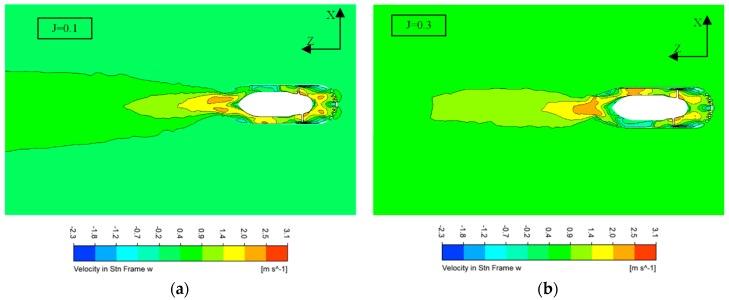
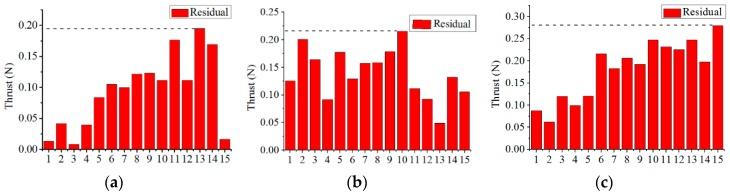
Thrusters are the bottom actuators of the amphibious spherical robot, and play an important role in the motion control of these robots. To realize accurate motion control, a thrust model for a new water-jet thruster based on hydrodynamic analyses is proposed in this paper. First, the hydrodynamic characteristics of the new thruster were numerically analyzed using computational fluid dynamics (CFD) commercial software CFX. The moving reference frame (MRF) technique was utilized to simulate propeller rotation. In particular, the hydrodynamics of the thruster were studied not only in the axial flow but also in oblique flow. Then, the basic framework of the thrust model was built according to hydromechanics theory. Parameters in the basic framework were identified through the results of the hydrodynamic simulation. Finally, a series of relevant experiments were conducted to verify the accuracy of the thrust model. These proved that the thrust model-based simulation results agreed well with the experimental results. The maximum error between the experimental results and simulation results was only 7%, which indicates that the thrust model is precise enough to be utilized in the motion control of amphibious spherical robots.
推进器是两栖球形机器人的底部执行器,在这些机器人的运动控制中起着重要作用。为了实现精确的运动控制,本文提出了一种基于水动力学分析的新型射流推进器推力模型。首先,使用计算流体动力学(CFD)商业软件 CFX 对新型推进器的水动力特性进行数值分析。采用动参考系(MRF)技术模拟螺旋桨旋转。特别是,不仅在轴向流中,而且在斜向流中研究了推进器的水动力。然后,根据流体力学理论建立了推力模型的基本框架。通过水动力模拟的结果确定了基本框架中的参数。最后,进行了一系列相关实验来验证推力模型的准确性。实验结果表明,基于推力模型的模拟结果与实验结果吻合良好。实验结果与模拟结果之间的最大误差仅为 7%,这表明推力模型足够精确,可以用于两栖球形机器人的运动控制。





 Zotero 插件