Pharmacology, Cancer Biology Department, National Cancer Institute, Cairo University, Cairo, 11796, Egypt.
Department of Pharmacology and Toxicology, College of Pharmacy, King Saud University, P.O. Box 2457, Riyadh, 11451, Kingdom of Saudi Arabia.
Cardiovasc Toxicol. 2019 Aug;19(4):344-356. doi: 10.1007/s12012-018-9500-0.
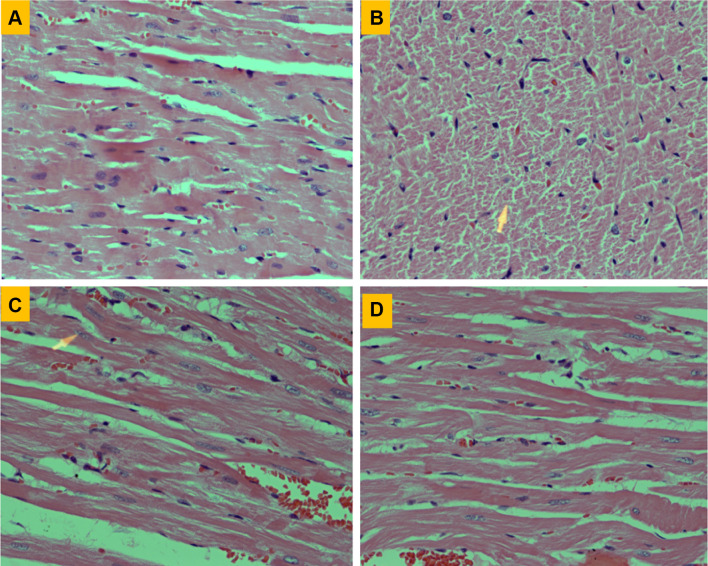
This study has been initiated to investigate whether sunitinib (SUN) alters the expression of key genes engaged in mitochondrial transport and oxidation of long chain fatty acids (LCFA), and if so, whether these alterations should be viewed as a mechanism of SUN-induced cardiotoxicity, and to explore the molecular mechanisms whereby carnitine supplementation could attenuate SUN-induced cardiotoxicity. Adult male Wister albino rats were assigned to one of the four treatment groups: Rats in group 1 received no treatment but free access to tap water for 28 days. Rats in group 2 received L-carnitine (200 mg/kg/day) in drinking water for 28 days. Rats in group 3 received SUN (25 mg/kg/day) in drinking water for 28 days. Rats in group 4 received the same doses of L-carnitine and SUN in drinking water for 28 days. Treatment with SUN significantly increased heart weight, cardiac index, and cardiotoxicity enzymatic indices, as well as severe histopathological changes. Moreover, SUN significantly decreased level of adenosine monophosphate-activated protein kinase (AMPKα2), total carnitine, adenosine triphosphate (ATP) and carnitine palmitoyltransferase I (CPT I) expression and significantly increased acetyl-CoA carboxylase-2 (ACC2) expression and malonyl-CoA level in cardiac tissues. Interestingly, carnitine supplementation resulted in a complete reversal of all the biochemical, gene expression and histopathological changes-induced by SUN to the control values. In conclusion, data from this study suggest that SUN inhibits AMPK downstream signaling with the consequent inhibition of mitochondrial transport of LCFA and energy production in cardiac tissues. Carnitine supplementation attenuates SUN-induced cardiotoxicity.
这项研究旨在探讨舒尼替尼(SUN)是否改变参与线粒体转运和长链脂肪酸(LCFA)氧化的关键基因的表达,如果是这样,这些改变是否应被视为 SUN 诱导的心脏毒性的机制,并探讨肉碱补充如何减轻 SUN 诱导的心脏毒性的分子机制。雄性 Wistar 白化大鼠被分配到四个治疗组之一:第 1 组大鼠未接受任何治疗,但可自由饮用自来水 28 天;第 2 组大鼠在饮用水中接受 L-肉碱(200mg/kg/天)28 天;第 3 组大鼠在饮用水中接受 SUN(25mg/kg/天)28 天;第 4 组大鼠在饮用水中接受相同剂量的 L-肉碱和 SUN 28 天。SUN 治疗显著增加了心脏重量、心脏指数和心脏毒性酶指数,以及严重的组织病理学变化。此外,SUN 显著降低了心脏组织中腺苷一磷酸激活蛋白激酶(AMPKα2)、总肉碱、三磷酸腺苷(ATP)和肉碱棕榈酰转移酶 I(CPT I)的表达水平,显著增加了乙酰辅酶 A 羧化酶-2(ACC2)和丙二酰辅酶 A 的表达水平。有趣的是,肉碱补充完全逆转了 SUN 引起的所有生化、基因表达和组织病理学变化,使其恢复到对照值。总之,这项研究的数据表明,SUN 抑制 AMPK 下游信号通路,导致心脏组织中 LCFA 的线粒体转运和能量产生受到抑制。肉碱补充可减轻 SUN 诱导的心脏毒性。