Institute of Physical Chemistry, University of Hamburg, Martin-Luther-King-Platz 6, 20146 Hamburg, Germany.
Nanoscale. 2019 Jan 23;11(4):1988-1994. doi: 10.1039/c8nr08200f.
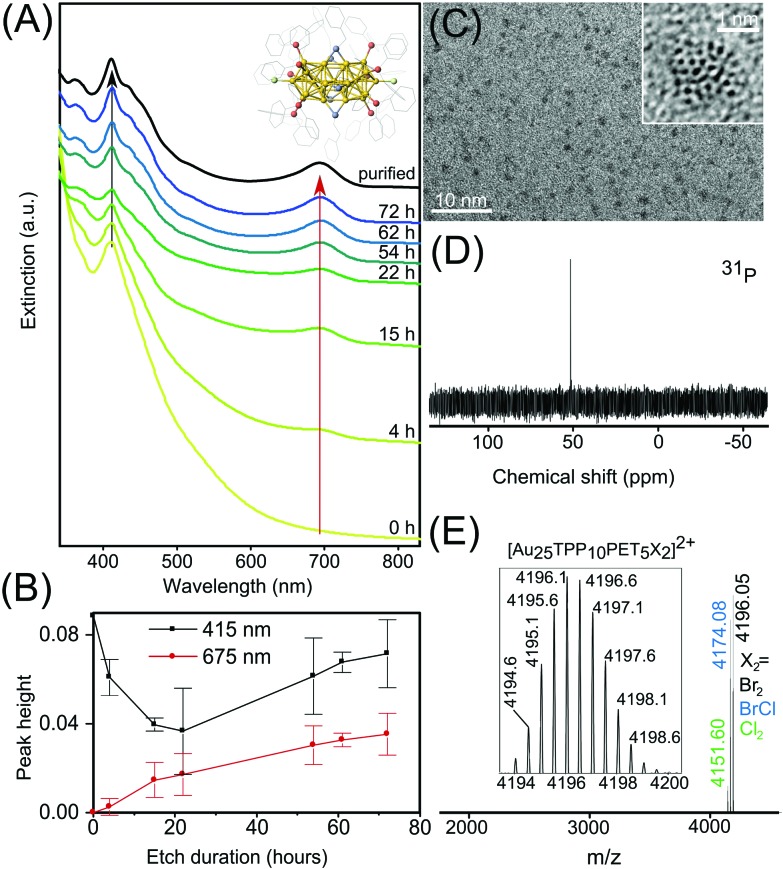
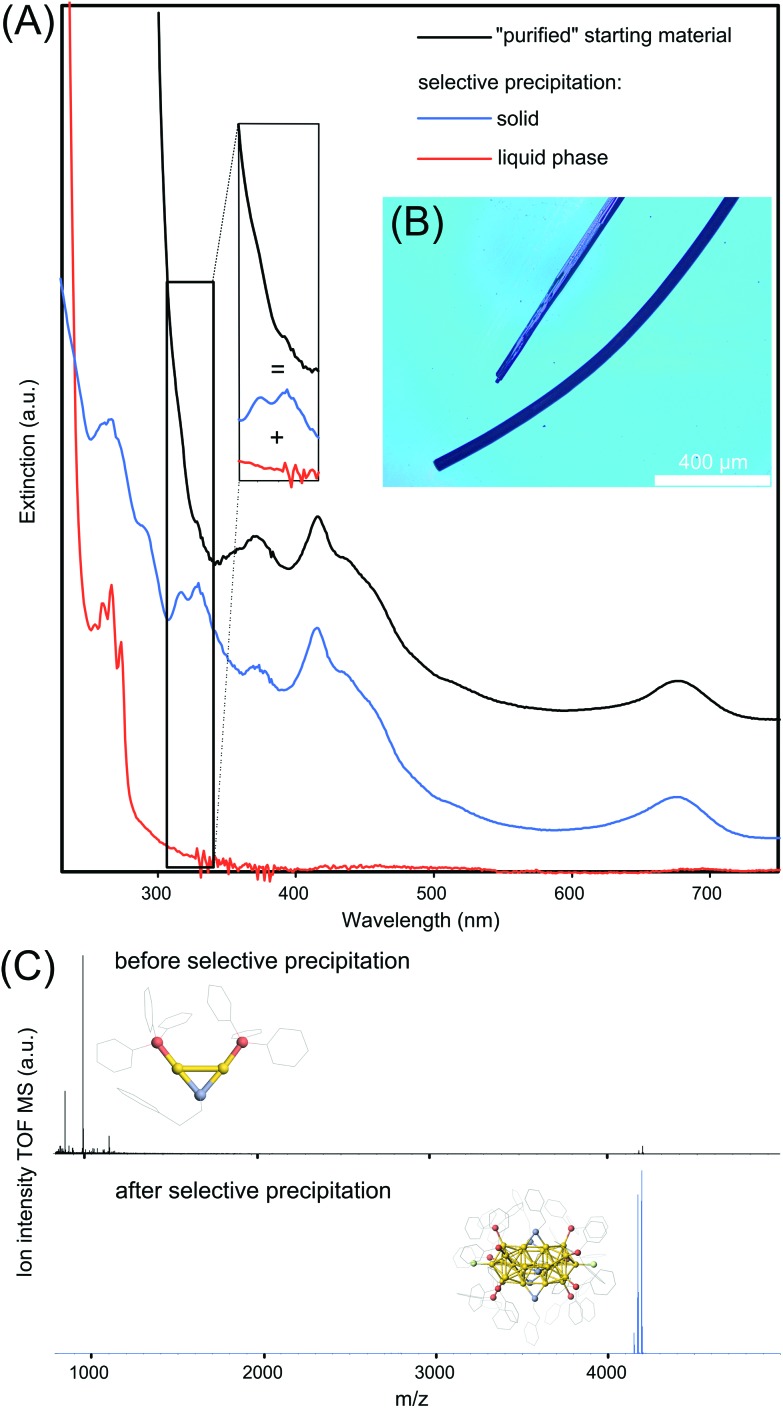
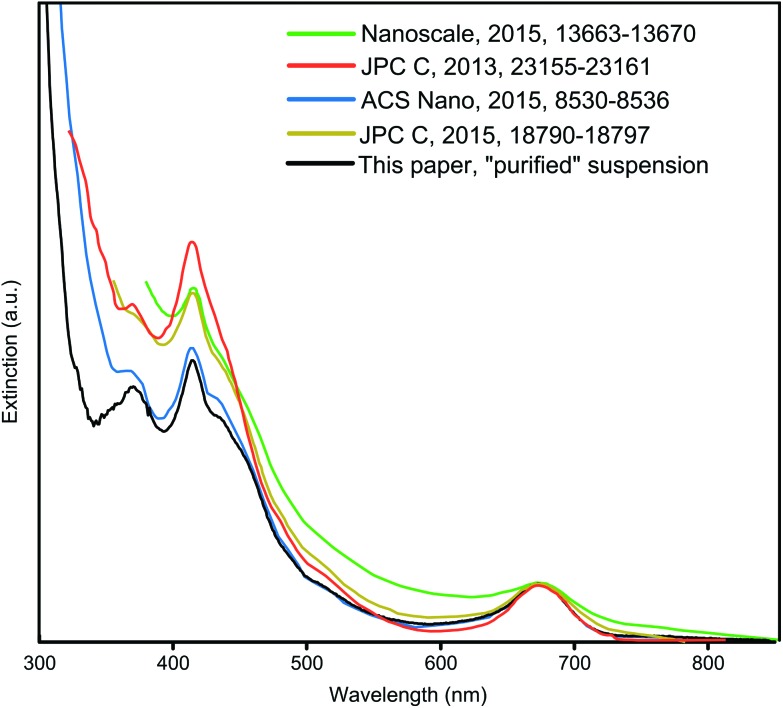
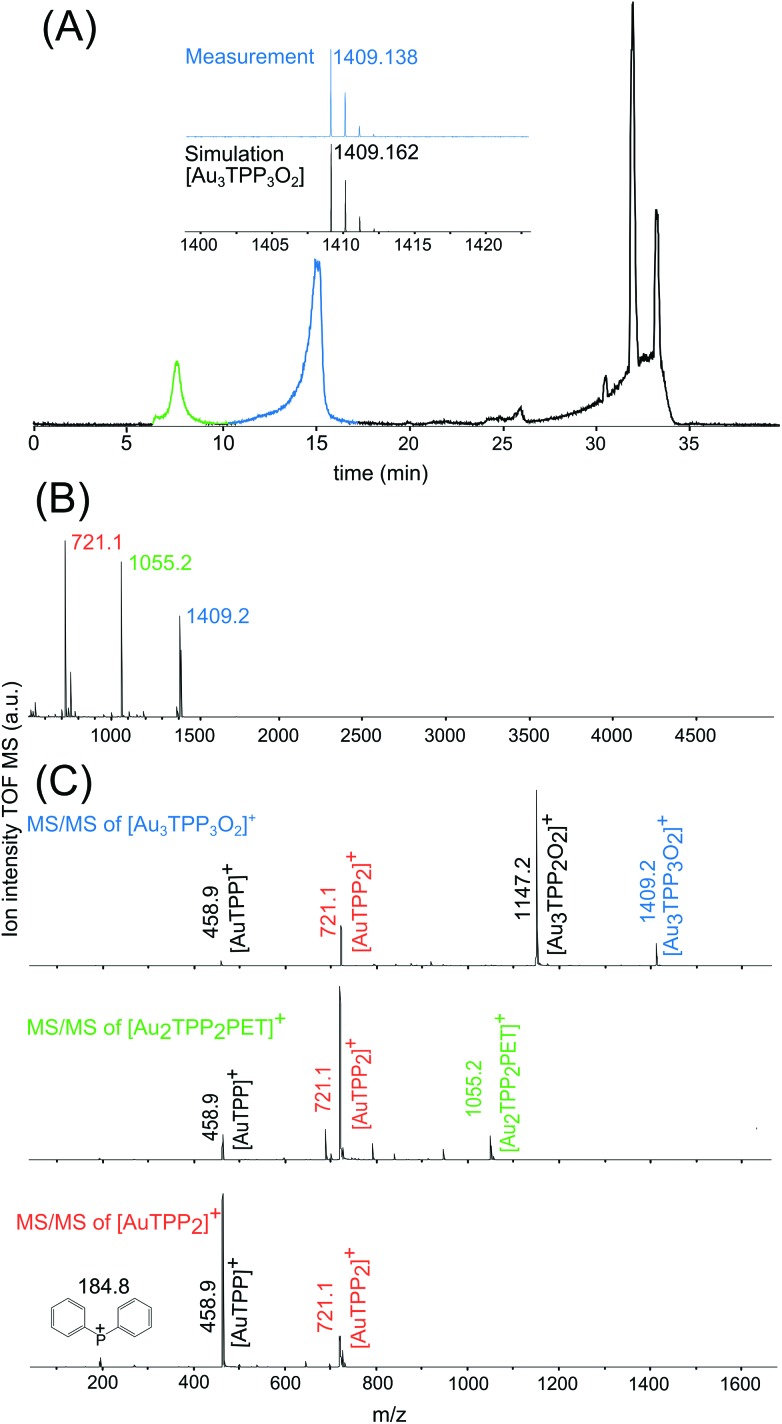
Colloidal approaches allow for the synthesis of Au nanoclusters (NCs) with atomic precision and sizes ranging from a few to hundreds of atoms. In most of the cases, these processes involve a common strategy of thiol etching of initially polydisperse Au nanoparticles into atomically precise NCs, resulting in the release of Au-thiolate complexes as byproducts. To the best of our knowledge, neither the removal of these byproducts nor the mass spectra in the relevant mass region were shown in previous studies. A thorough analysis of inorganic byproducts in the synthesis of [Au25(PPh3)10(PET)5X2]2+ NC, abbreviated as Au25 NC, reveals that published protocols lead to Au25 NCs in vanishingly small quantities compared to their byproducts. Three purification methods are presented to separate byproducts from the desired Au25 NCs which are proposed to be applicable to other promising Au NC systems. Additionally, critical factors for a successful synthesis of Au25 NCs are identified and discussed including the role of residual water. An important finding is that the etching duration is very critical and must be monitored by UV-Vis spectroscopy resulting in synthetic yields as high as 40%.
胶粒方法可以实现具有原子精度和几到几百个原子大小的 Au 纳米团簇 (NCs) 的合成。在大多数情况下,这些过程涉及到一种常见的巯基蚀刻策略,即将最初多分散的 Au 纳米颗粒蚀刻成原子精确的 NCs,从而释放出 Au-硫醇配合物作为副产物。据我们所知,在以前的研究中,既没有显示这些副产物的去除,也没有显示相关质量区域的质谱。对 [Au25(PPh3)10(PET)5X2]2+ NC(缩写为 Au25 NC)合成中无机副产物的彻底分析表明,与副产物相比,已发表的方案导致 Au25 NC 的产量微乎其微。提出了三种从所需的 Au25 NC 中分离副产物的纯化方法,这些方法被认为适用于其他有前途的 Au NC 体系。此外,还确定并讨论了成功合成 Au25 NC 的关键因素,包括残留水的作用。一个重要的发现是,蚀刻时间非常关键,必须通过紫外可见光谱进行监测,从而导致高达 40%的合成产率。