Lin Cheng-Li, Yeh Ming-Long, Su Fong-Chin, Wang Yu-Chih, Chiang Chen-Hao, Hong Chih-Kai, Su Wei-Ren
Department of Orthopaedic Surgery, National Cheng Kung University Hospital, College of Medicine, National Cheng Kung University, No.138, Sheng-Li Road, 70428, Tainan City, Taiwan.
Department of Biomedical Engineering, National Cheng Kung University, Tainan, Taiwan.
BMC Musculoskelet Disord. 2019 Jan 17;20(1):26. doi: 10.1186/s12891-019-2412-8.
Suture anchor-based fixations of humeral greater tuberosity (GT) fractures have yielded good outcomes in both clinical and biomechanical studies. Be that as it may, the interface contact properties of these fixations have yet to be elaborated. In response, the contact characteristics of two double-row suture anchor fixations for the management of GT fracture were compared.
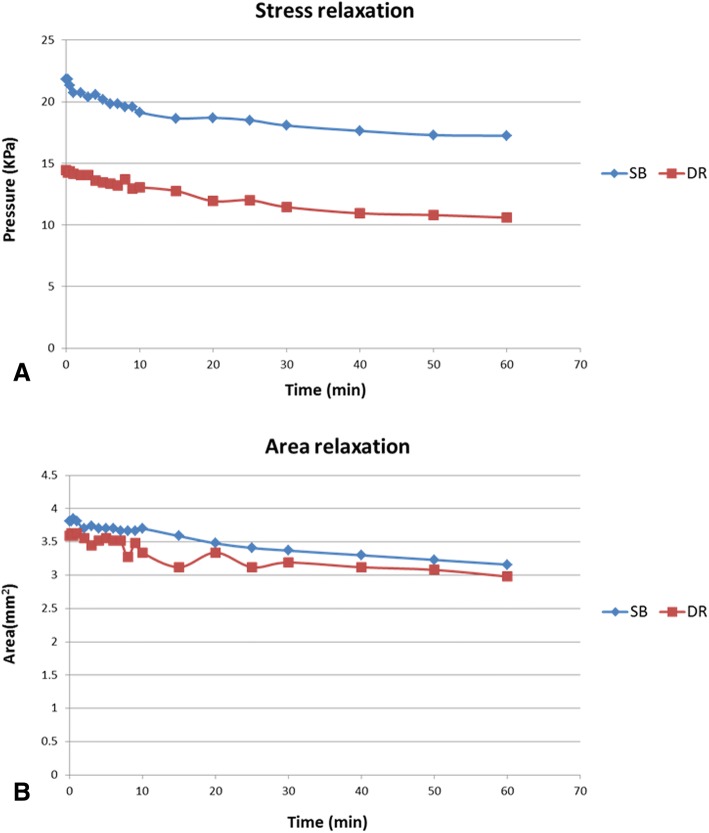
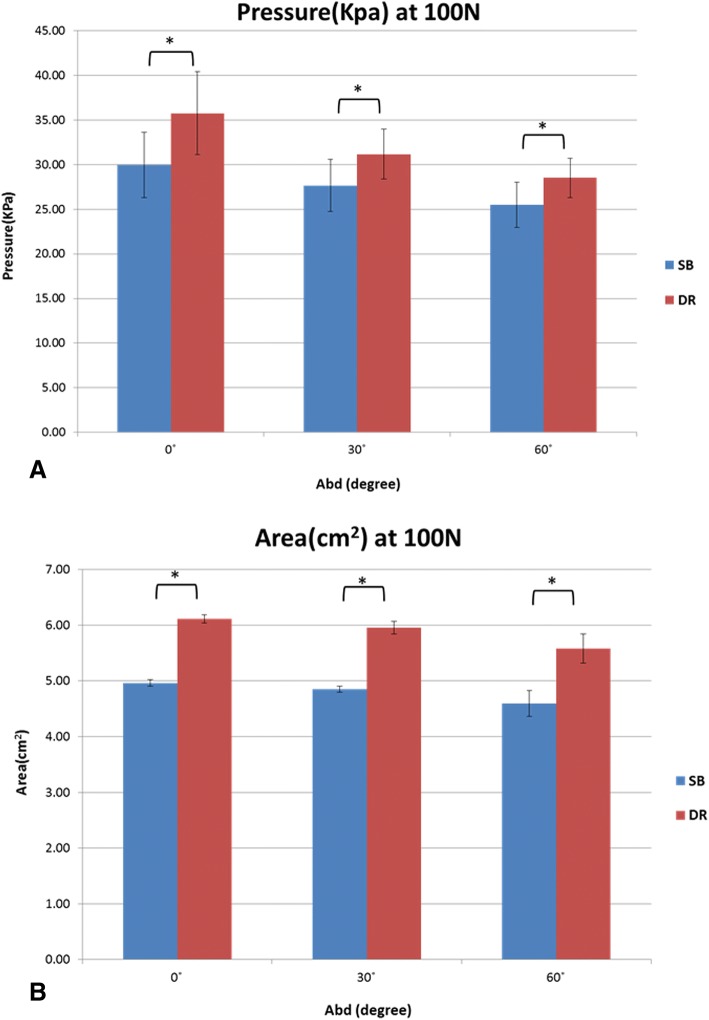
Two suture anchor-based fixation techniques, namely the Double-Row Suture Anchor Fixation (DR) and Suture-Bridge Technique (SB), were used to repair humeral GT fractures in 12 fresh-frozen human cadaveric shoulders. A Tekscan pressure sensor placed between the repaired tuberosity and humerus recorded continuous data points directly after repair and for 60 min at set time intervals. The constructs were then cyclically loaded until 100 N, and the shoulders tested at 0°, 30°, and 60° of abduction. Under an applied force, the contact pressure and contact area of the interface were determined.
Although both fixation configurations showed decreased contact pressure and area over time, the SB group had higher contact pressure right after fixation and at all time points thereafter. In contrast, the DR group demonstrated significantly more contact pressure and area at each abduction position with the applied load. Nevertheless, contact pressure and area decreased in response to increasing abduction position for both fixation constructs.
Findings suggest that despite the SB construct having superior interface contact immediately after fixation, the DR construct offered better contact performance at all abduction angles with applied force.
Basic Science, Biomechanics.
在临床和生物力学研究中,基于缝线锚钉的肱骨大结节(GT)骨折固定术均取得了良好的效果。尽管如此,这些固定术的界面接触特性尚未得到详细阐述。为此,比较了两种用于治疗GT骨折的双排缝线锚钉固定术的接触特性。
采用两种基于缝线锚钉的固定技术,即双排缝线锚钉固定术(DR)和缝线桥接技术(SB),对12具新鲜冷冻的人体尸体肩部的肱骨GT骨折进行修复。在修复后立即以及每隔设定的时间间隔持续60分钟,使用放置在修复后的结节与肱骨之间的Tekscan压力传感器记录连续的数据点。然后对构建体进行循环加载直至100 N,并在0°、30°和60°外展角度下对肩部进行测试。在施加力的情况下,确定界面的接触压力和接触面积。
尽管两种固定结构的接触压力和面积均随时间降低,但SB组在固定后即刻及之后的所有时间点接触压力均较高。相比之下,DR组在每个外展位置施加负荷时,接触压力和面积均显著更大。然而,两种固定结构的接触压力和面积均随着外展角度的增加而降低。
研究结果表明,尽管SB结构在固定后即刻具有更好的界面接触,但DR结构在所有外展角度施加力时均具有更好的接触性能。
基础科学,生物力学。