Institute of Diabetes Research, Helmholtz Zentrum München (German Research Center for Environmental Health), Munich-Neuherberg, Germany.
Forschergruppe Diabetes, Klinikum rechts der Isar, Technical University Munich, Munich, Germany.
Diabetes. 2019 Apr;68(4):847-857. doi: 10.2337/db18-0882. Epub 2019 Jan 17.
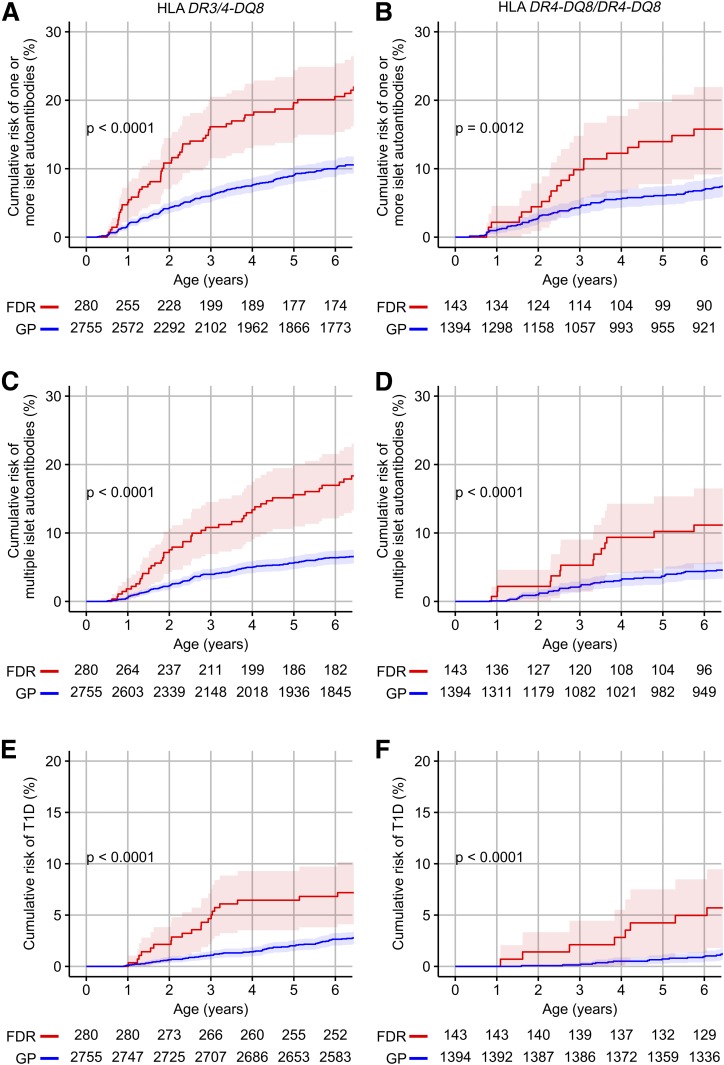
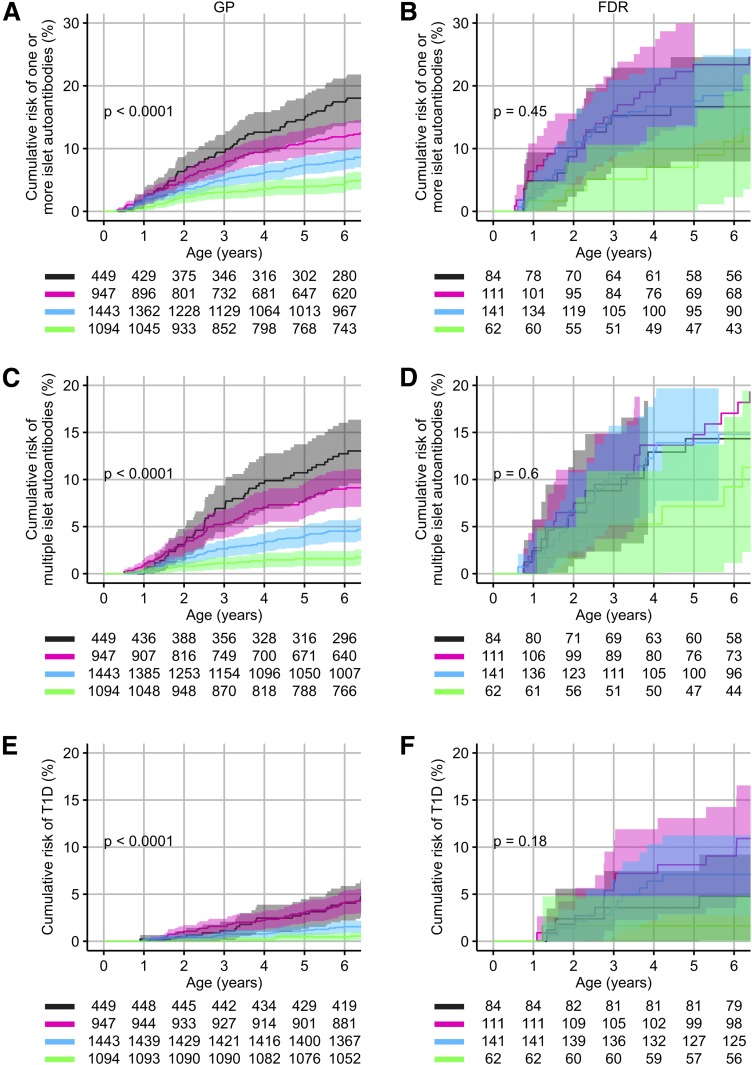
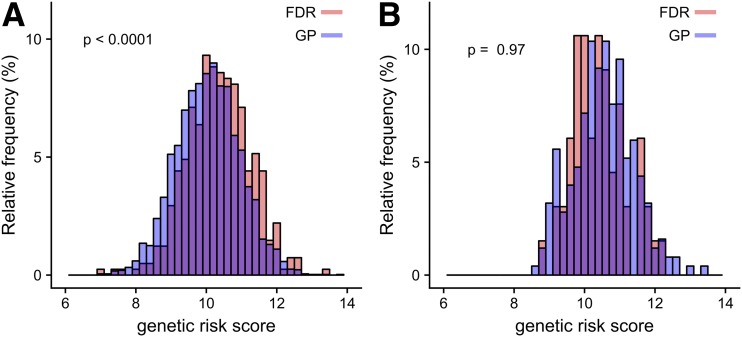
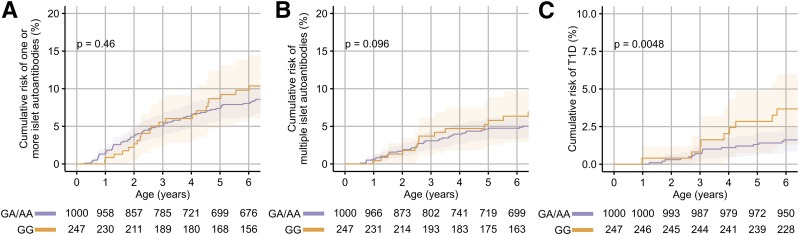
The risk for autoimmunity and subsequently type 1 diabetes is 10-fold higher in children with a first-degree family history of type 1 diabetes (FDR children) than in children in the general population (GP children). We analyzed children with high-risk HLA genotypes ( = 4,573) in the longitudinal TEDDY birth cohort to determine how much of the divergent risk is attributable to genetic enrichment in affected families. Enrichment for susceptible genotypes of multiple type 1 diabetes-associated genes and a novel risk gene, , was identified in FDR children compared with GP children. After correction for genetic enrichment, the risks in the FDR and GP children converged but were not identical for multiple islet autoantibodies (hazard ratio [HR] 2.26 [95% CI 1.6-3.02]) and for diabetes (HR 2.92 [95% CI 2.05-4.16]). Convergence varied depending upon the degree of genetic susceptibility. Risks were similar in the highest genetic susceptibility group for multiple islet autoantibodies (14.3% vs .12.7%) and diabetes (4.8% vs. 4.1%) and were up to 5.8-fold divergent for children in the lowest genetic susceptibility group, decreasing incrementally in GP children but not in FDR children. These findings suggest that additional factors enriched within affected families preferentially increase the risk of autoimmunity and type 1 diabetes in lower genetic susceptibility strata.
一级亲属(父母、兄弟姐妹、子女)中有 1 型糖尿病病史的儿童发生自身免疫和随后的 1 型糖尿病的风险比普通人群中的儿童高 10 倍(FDR 儿童)。我们分析了具有高风险 HLA 基因型(= 4573)的 TEDDY 纵向出生队列中的儿童,以确定受影响家庭中遗传富集对差异风险的影响程度。与 GP 儿童相比,FDR 儿童中存在多个 1 型糖尿病相关基因和新的风险基因()易感基因型的富集。在遗传富集校正后,FDR 和 GP 儿童的风险趋同,但对多种胰岛自身抗体(危险比 [HR] 2.26 [95%CI 1.6-3.02])和糖尿病(HR 2.92 [95%CI 2.05-4.16])并不相同。趋同程度取决于遗传易感性的程度。在最高遗传易感性组中,多种胰岛自身抗体(14.3% vs.12.7%)和糖尿病(4.8% vs.4.1%)的风险相似,在遗传易感性最低的组中,风险高达 5.8 倍,在 GP 儿童中逐渐降低,但在 FDR 儿童中没有。这些发现表明,受影响家庭中富集的其他因素优先增加遗传易感性较低的自身免疫和 1 型糖尿病的风险。