Department of Physiology, Development and Neuroscience, University of Cambridge, Downing Site, Cambridge, CB2 3EG, UK.
Department of Psychology, University of Cambridge, Downing Site, Cambridge, CB2 3EB, UK.
Psychopharmacology (Berl). 2019 Jan;236(1):111-132. doi: 10.1007/s00213-018-5121-3. Epub 2019 Jan 17.
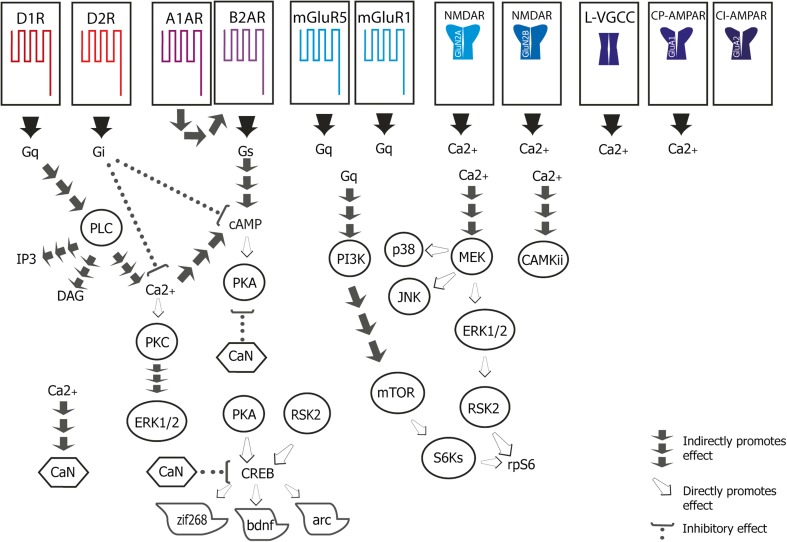
Extinction within the reconsolidation window, or 'retrieval-extinction', has received much research interest as a possible technique for targeting the reconsolidation of maladaptive memories with a behavioural intervention. However, it remains to be determined whether the retrieval-extinction effect-a long-term reduction in fear behaviour, which appears resistant to spontaneous recovery, renewal and reinstatement-depends specifically on destabilisation of the original memory (the 'reconsolidation-update' account) or represents facilitation of an extinction memory (the 'extinction-facilitation' account). We propose that comparing the neurotransmitter systems, receptors and intracellular signalling pathways recruited by reconsolidation, extinction and retrieval-extinction will provide a way of distinguishing between these accounts.
在再巩固窗口内的灭绝,或“检索-灭绝”,作为一种针对适应不良记忆的再巩固的行为干预的可能技术,已经引起了广泛的研究兴趣。然而,检索-灭绝效应——恐惧行为的长期减少,似乎抵抗自发恢复、更新和恢复——是否特别取决于原始记忆的不稳定性(“再巩固更新”解释)或代表了一种促进灭绝记忆的机制(“灭绝促进”解释),这还有待确定。我们提出,比较再巩固、灭绝和检索-灭绝所招募的神经递质系统、受体和细胞内信号通路,将提供一种区分这些解释的方法。