Martínez-Pañeda Emilio
Department of Engineering, Cambridge University, Cambridge CB2 1PZ, UK.
Materials (Basel). 2019 Jan 17;12(2):287. doi: 10.3390/ma12020287.
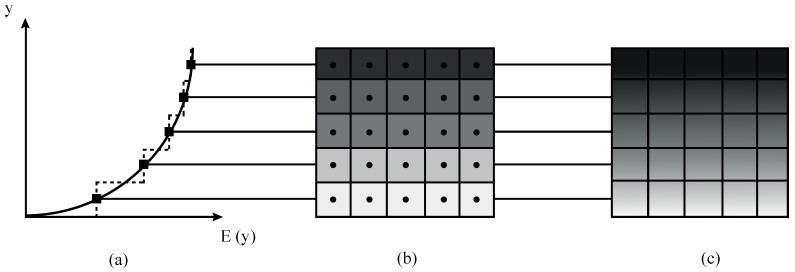
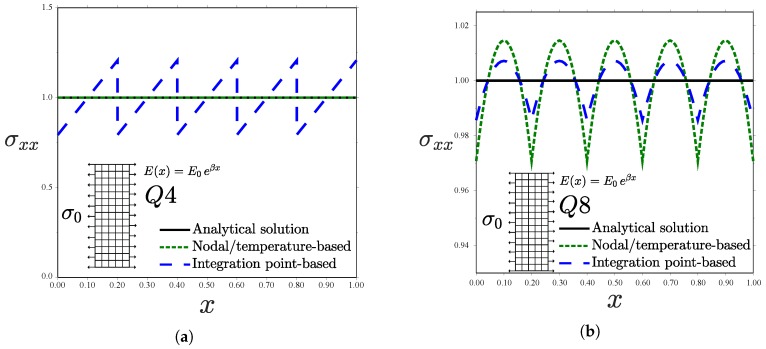
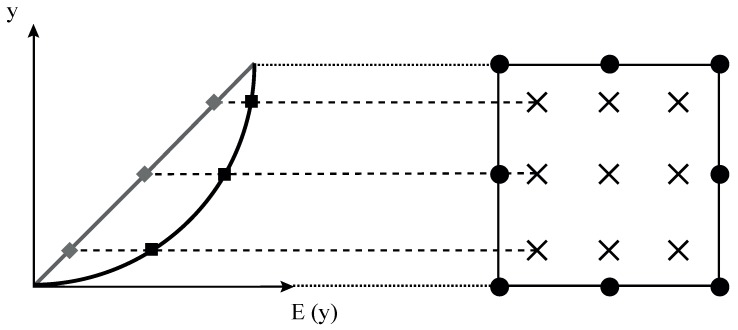
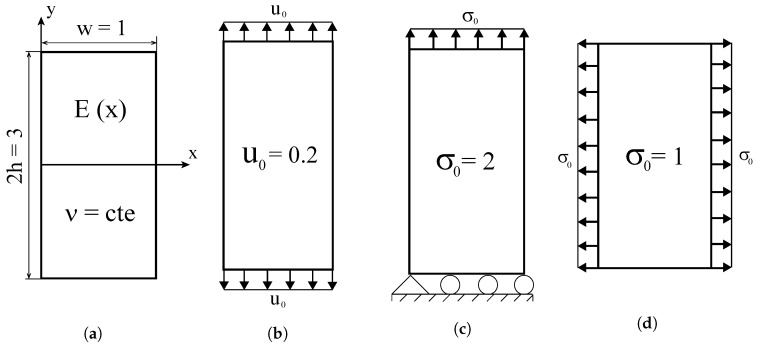
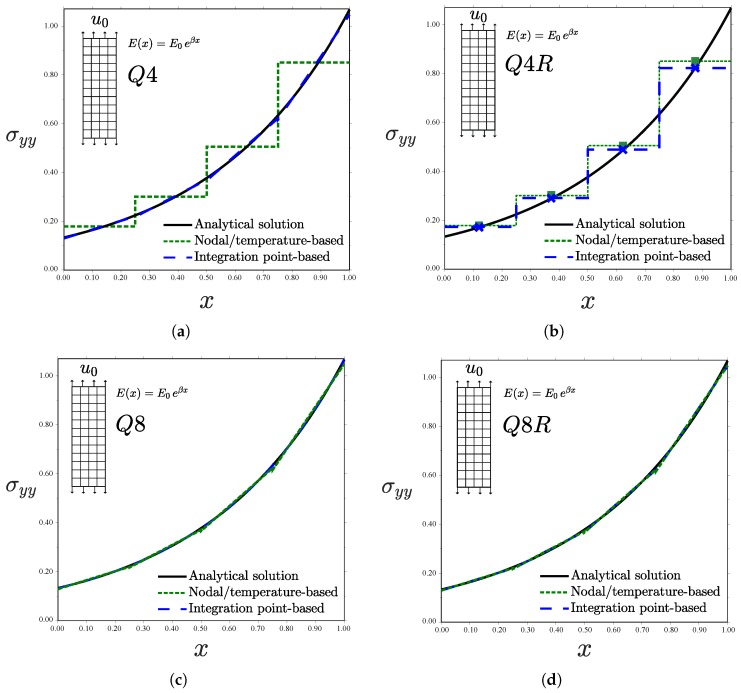
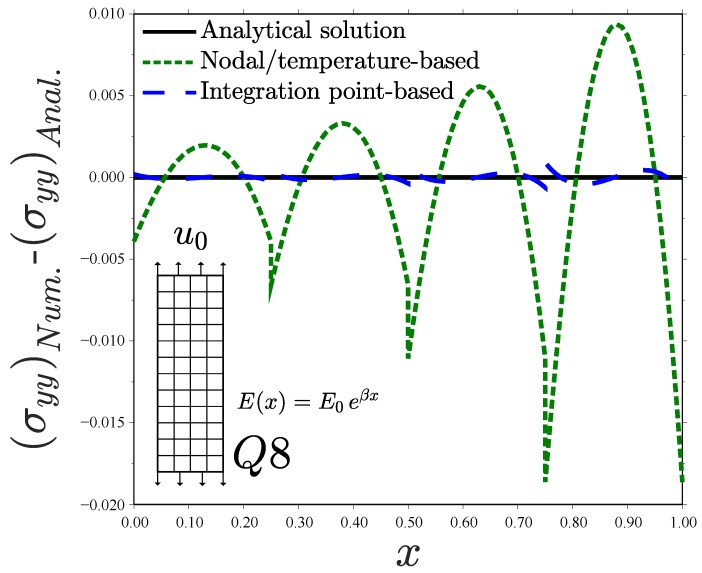
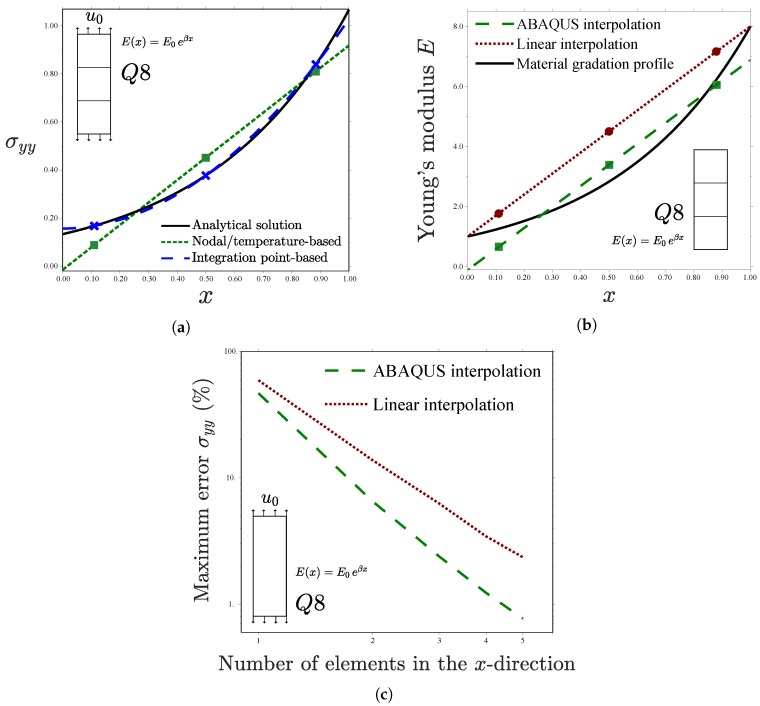
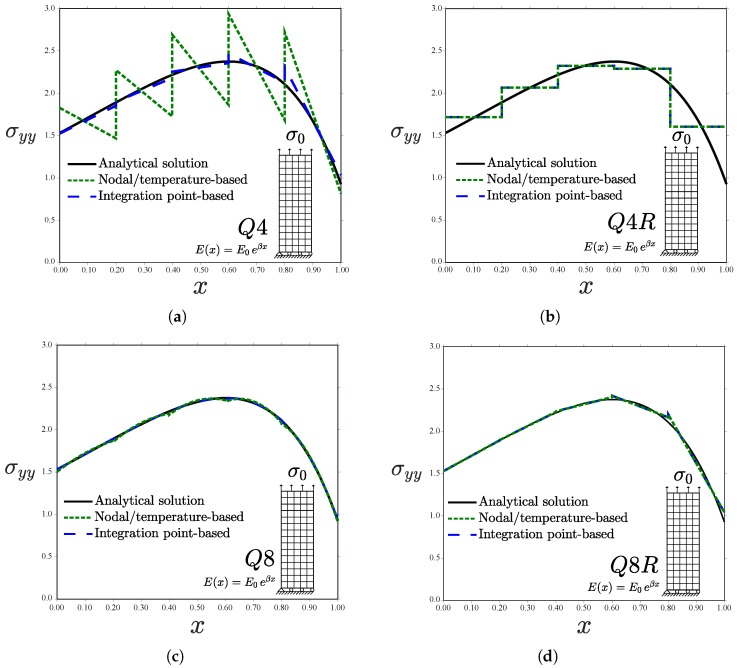
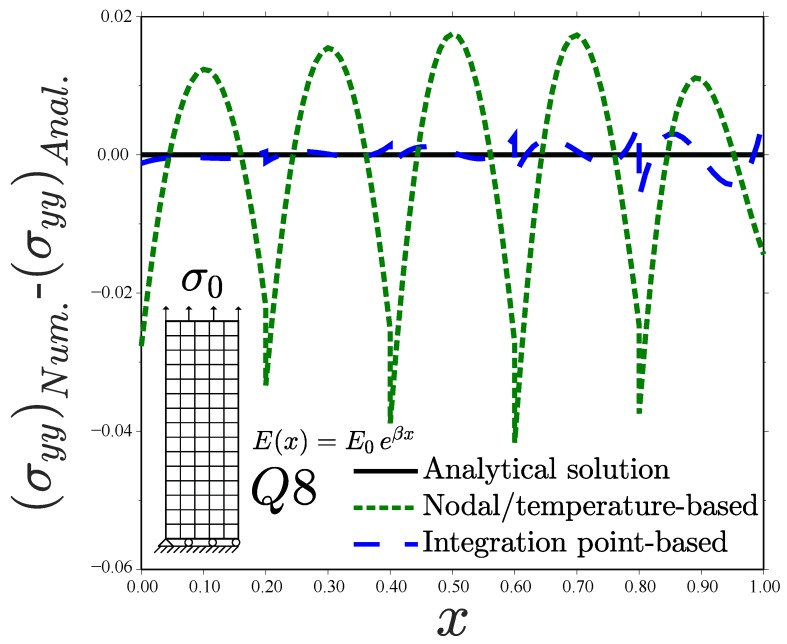
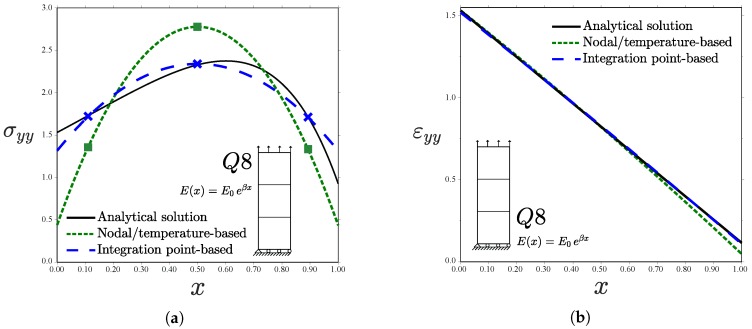
We investigate the numerical implementation of functionally graded properties in the context of the finite element method. The macroscopic variation of elastic properties inherent to functionally graded materials (FGMs) is introduced at the element level by means of the two most commonly used schemes: (i) nodal based gradation, often via an auxiliary (non-physical) temperature-dependence, and (ii) Gauss integration point based gradation. These formulations are extensively compared by solving a number of paradigmatic boundary value problems for which analytical solutions can be obtained. The nature of the notable differences revealed by the results is investigated in detail. We provide a user subroutine for the finite element package ABAQUS to overcome the limitations of the most popular approach for implementing FGMs in commercial software. The use of reliable, element-based formulations to define the material property variation could be key in fracture assessment of FGMs and other non-homogeneous materials.
我们研究了在有限元方法背景下功能梯度特性的数值实现。功能梯度材料(FGMs)固有的弹性特性的宏观变化通过两种最常用的方案在单元级别引入:(i)基于节点的渐变,通常通过辅助(非物理)温度依赖性,以及(ii)基于高斯积分点的渐变。通过求解一系列可获得解析解的典型边值问题,对这些公式进行了广泛比较。详细研究了结果揭示的显著差异的性质。我们为有限元软件包ABAQUS提供了一个用户子程序,以克服商业软件中实现功能梯度材料最常用方法的局限性。使用可靠的、基于单元的公式来定义材料属性变化可能是功能梯度材料和其他非均匀材料断裂评估的关键。